Basic medical sciences and understanding medicine: Insights from medical students
Dima Alhomsi, Mhd Khaled Tello, Dania Abdalsalam, Majd Barmo, Hamzeh Al Asadi, Hasan Najjar, Bayan Alsaid

TL;DR
This study explores medical students' perceptions of basic medical sciences, highlighting their importance but also challenges like content overload and lack of practical training.
Contribution
The study provides insights into how medical students perceive basic sciences, identifying key challenges and suggesting practical improvements for medical education.
Findings
76.9% of students found the extensive content of basic medical sciences to be a major hindrance.
Anatomy was perceived as the easiest subject, while pharmacology and biochemistry were considered the hardest.
Only 20.9% of students believed basic sciences were relevant for practical training.
Abstract
Basic medical sciences form the cornerstone of any medical knowledge and are essential for understanding various diseases. This study aims to shed light on students’ viewpoints toward those sciences while delving into their motivations and hindrances and investigating individual subjects. This cross-sectional study was carried out at Damascus University in Syria, targeting final-year medical students. Data collection occurred on a designated clerkship day, during which students were invited to complete an anonymous, self-administered questionnaire. The questionnaire evaluated students’ overall perception and academic interest in studying basic medical sciences in pre-clinical years and their willingness to pursue these sciences as a prospective career. The study surveyed 350 medical students, with 40% rating their interest as good/very good. The extensive content was perceived as a…
Genes, proteins, chemicals, diseases, species, mutations and cell lines named across the full text — each resolved to its canonical identifier and authoritative record.
Click any figure to enlarge with its caption.
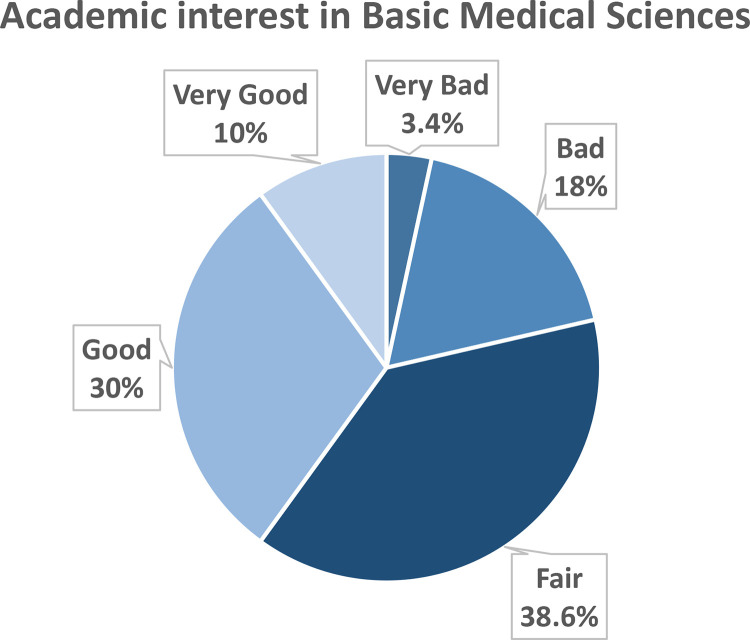 Figure 1
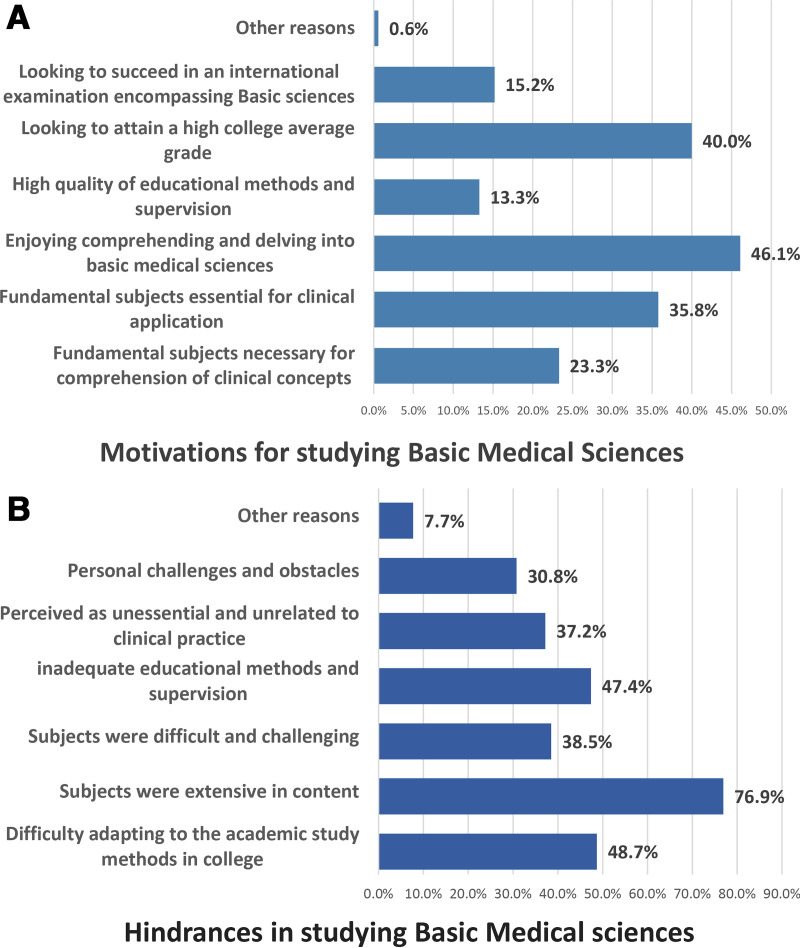 Figure 2
 Figure 3
 Figure 4
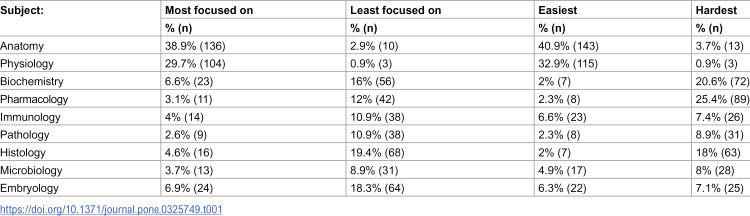 Figure 5
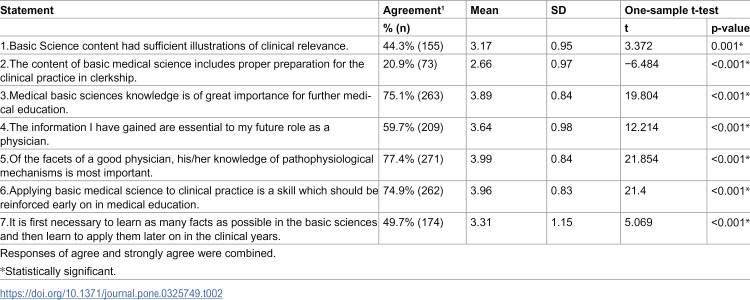 Figure 6
Peer Reviews
No public reviews on file for this paper yet. If you reviewed it on a platform where reviews are public (OpenReview, ICLR, NeurIPS, ICML), you can paste yours below so the community can read it here.
Videos
No videos yet. Explain this paper in a talk, walkthrough, or lecture? Add one.
Taxonomy
TopicsInnovations in Medical Education · Empathy and Medical Education · Health and Medical Research Impacts