Kinesthetic illusions induced by muscle tendon vibration: The orientation of the vibration motor as a new methodological factor?
Lydiane Lauzier, Jacques Abboud, François Nougarou, Louis-David Beaulieu, Monika Błaszczyszyn, Monika Błaszczyszyn, Rasool Abedanzadeh, Rasool Abedanzadeh

TL;DR
This study shows that the direction of a vibrating motor's rotation affects the type of movement illusions people experience, with some directions causing clearer and more predictable sensations.
Contribution
The study introduces the rotational orientation of the vibration motor as a new methodological factor influencing kinesthetic illusions.
Findings
Distoproximal rotation was more effective in evoking expected wrist extension illusions compared to lateromedial rotation.
Lateromedial rotation caused more complex and variable movement illusions, especially with ulnar deviation components.
Rotational orientation influences, but does not strongly determine, the nature of kinesthetic illusions.
Abstract
To investigate the impact of changing the rotational orientation of the vibrating motor on kinesthestic illusions. Twenty healthy individuals received vibration over the wrist flexor muscles of dominant and non-dominant sides (80 Hz, 1 mm, 10 seconds) using four conditions (3 trials/conditions) defined by the rotational direction of the vibrator’s eccentric rotating mass according to the anatomical position: (1) proximodistal, (2) distoproximal, (3) mediolateral and (4) lateromedial. Non-parametric statistical analyses were used to compare illusion characteristics across conditions. Lateromedial rotation created illusions that were more often in unexpected directions compared to the other rotational orientations. Distoproximal rotation was more likely to evoke kinesthetic illusions of wrist extension (76.8%) compared to lateromedial rotation (57.7%; p = 0.009). The latter led more…
Genes, proteins, chemicals, diseases, species, mutations and cell lines named across the full text — each resolved to its canonical identifier and authoritative record.
Click any figure to enlarge with its caption.
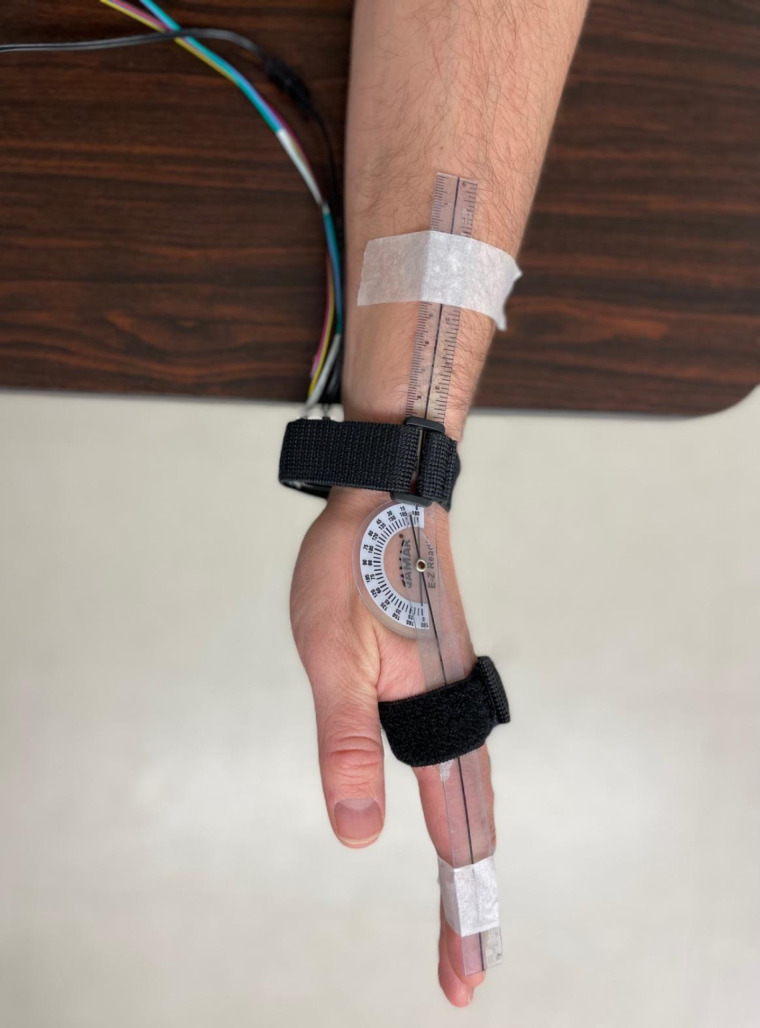 Figure 1
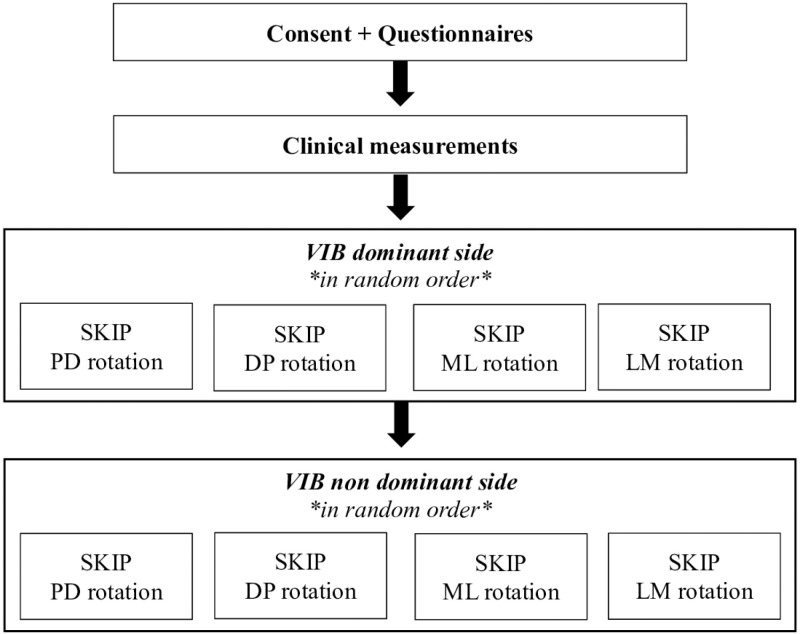 Figure 2
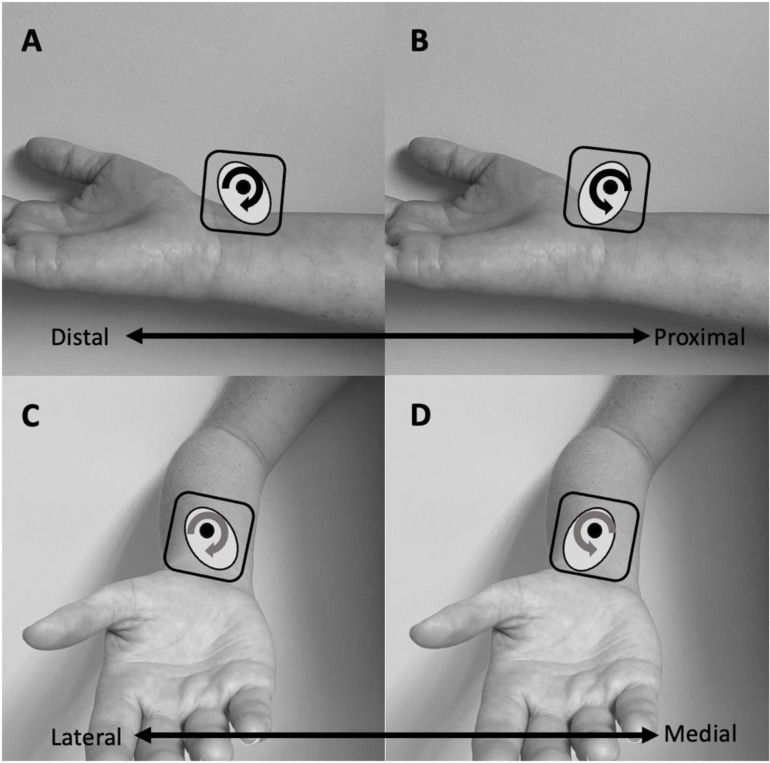 Figure 3
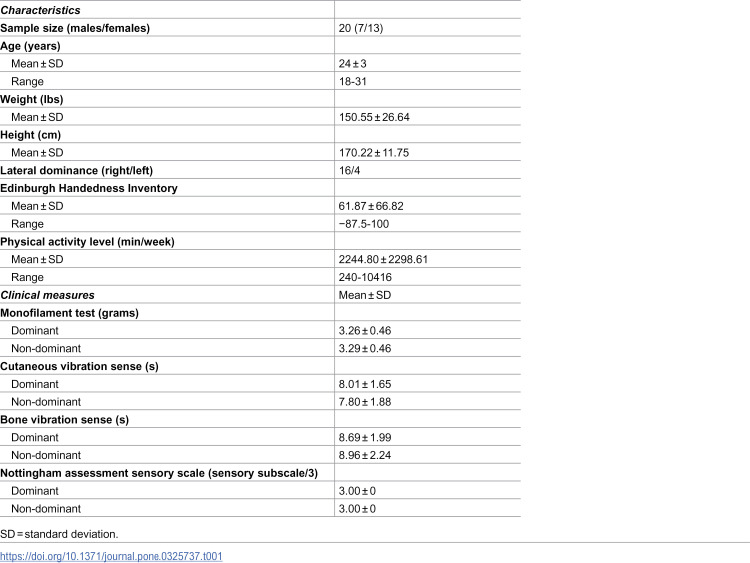 Figure 4
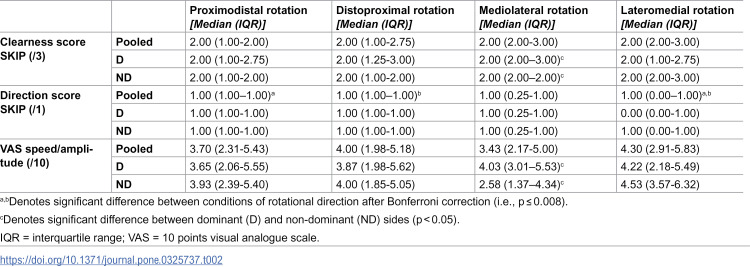 Figure 5
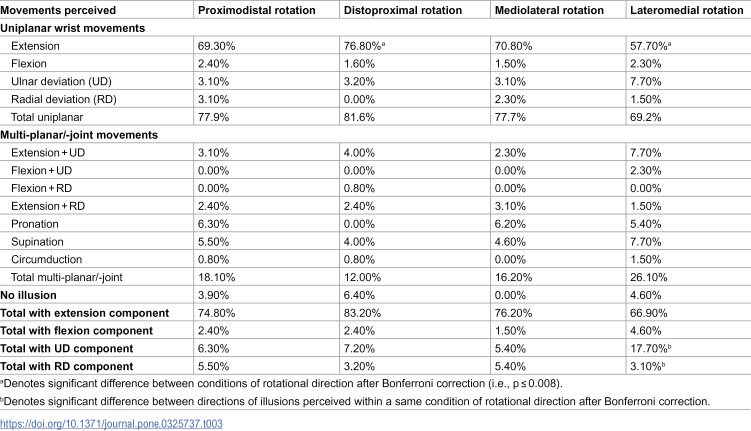 Figure 6
Peer Reviews
No public reviews on file for this paper yet. If you reviewed it on a platform where reviews are public (OpenReview, ICLR, NeurIPS, ICML), you can paste yours below so the community can read it here.
Videos
No videos yet. Explain this paper in a talk, walkthrough, or lecture? Add one.
Taxonomy
TopicsMotor Control and Adaptation · Muscle activation and electromyography studies · Musculoskeletal pain and rehabilitation