Quantitative comparison of fluorescent proteins using protein nanocages in live cells
Giulia Viola, Yasmeen W. Ibrahim, Kyle A. Jacobs, Joël Lemière, Matthew L. Kutys, Torsten Wittmann

TL;DR
This study compares fluorescent proteins in live cells using self-assembling nanocages to determine which ones perform best for microscopy.
Contribution
The study introduces a standardized method using protein nanocages to quantitatively compare fluorescent proteins in live cells.
Findings
mStayGold outperforms other green and red fluorescent proteins in brightness and photostability.
mStayGold has a functional lifetime 8–10 times longer than EGFP or mEmerald.
Recent red fluorescent proteins like mScarlet and mRuby did not significantly outperform mCherry.
Abstract
To standardize comparison of fluorescent protein performance on a molecule-by-molecule basis in a physiological intracellular environment, we constructed fluorescent protein-tagged I3-01 peptides that self-assemble into stable 60-subunit dodecahedrons inside live mammalian cells. We were especially interested in determining which of the recently published monomeric StayGold variants is best for live microscopy in mammalian cells. Combining nanocage brightness and photobleaching measurements into a single metric, mStayGold stood out as far superior to all other green and red fluorescent proteins we tested with a functional lifetime that is at least 8–10-fold longer compared with EGFP or mEmerald. Analysis of intracellular nanocage diffusion further confirmed the monomeric nature of mStayGold, and we demonstrate that mStayGold-tagged nanocages can serve as highly photostable nanoparticles…
Genes, proteins, chemicals, diseases, species, mutations and cell lines named across the full text — each resolved to its canonical identifier and authoritative record.
Click any figure to enlarge with its caption.
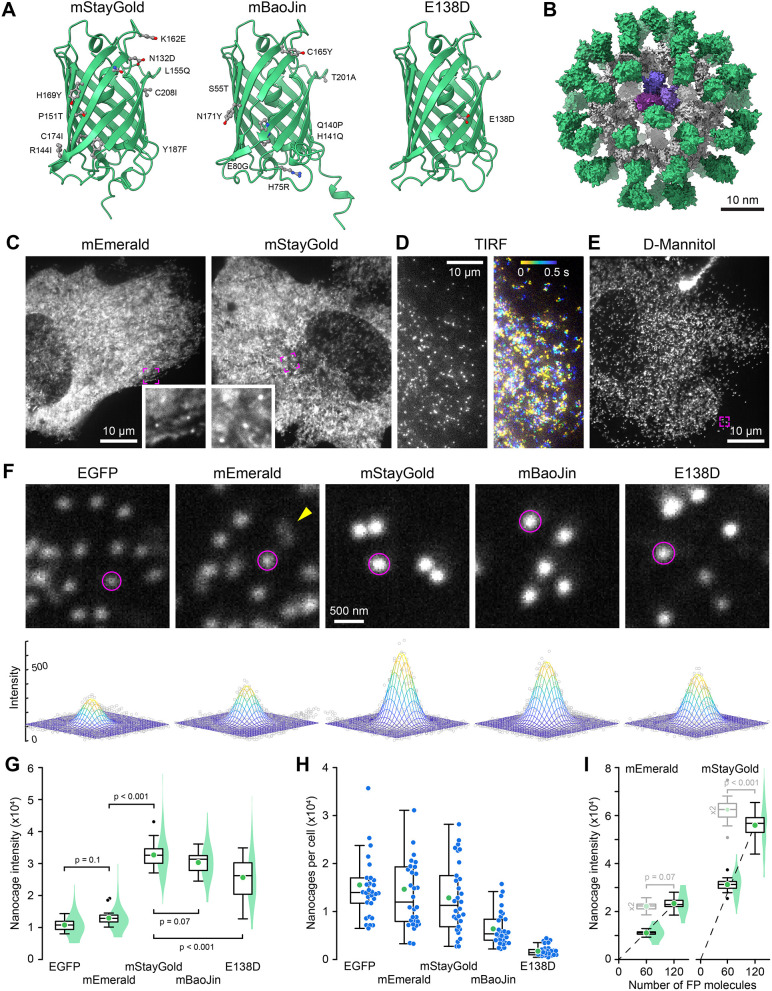 Figure 1
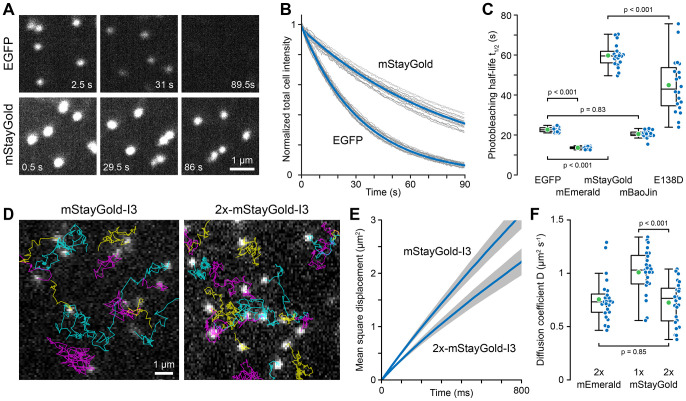 Figure 2
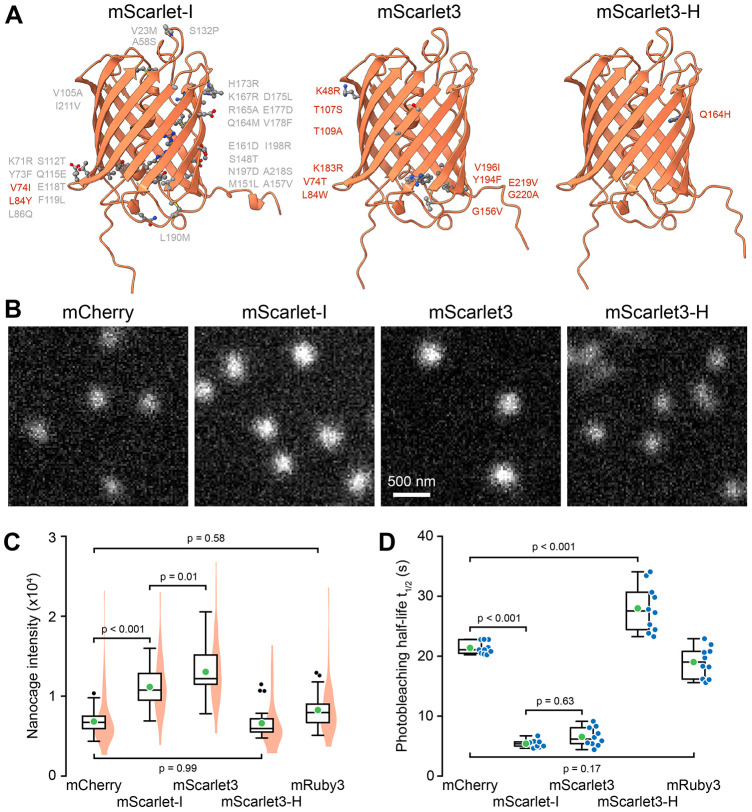 Figure 3
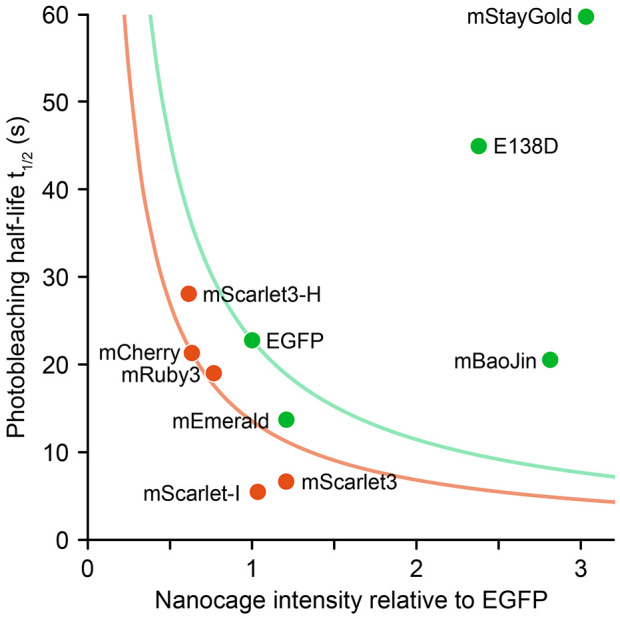 Figure 4
Peer Reviews
No public reviews on file for this paper yet. If you reviewed it on a platform where reviews are public (OpenReview, ICLR, NeurIPS, ICML), you can paste yours below so the community can read it here.
Videos
No videos yet. Explain this paper in a talk, walkthrough, or lecture? Add one.
Taxonomy
TopicsAdvanced Biosensing Techniques and Applications · Monoclonal and Polyclonal Antibodies Research · Glycosylation and Glycoproteins Research