Dive-by-dive variation in the diving respiratory air volume of southern elephant seals (Mirounga leonina)
George Sato, Taiki Adachi, Christophe Guinet, Patrick Miller

TL;DR
Southern elephant seals adjust their diving air volume to manage buoyancy during dives, but this adjustment doesn't fully offset the costs of their dense bodies.
Contribution
A new method was developed to estimate dive-by-dive respiratory air volume in seals using hydrodynamic glide models.
Findings
Dive-by-dive DRAV was positively correlated with per-stroke effort and initial descent depth.
DRAV increased with tissue density and maximum dive depth, but did not achieve neutral buoyancy at half the maximum depth.
Seals adjusted DRAV to reach neutral buoyancy at around 30 m, less than 10% of their maximum dive depth.
Abstract
The role of diving respiratory air volume (DRAV) in deep-diving phocid seals remains poorly understood, largely because of the lack of methods for measuring DRAV in free-ranging divers that exhale before diving. We developed a method to estimate DRAV using a hydrodynamic glide model applied to descent glides recorded using multi-sensor data loggers. We estimated dive-by-dive DRAV for six negatively buoyant female southern elephant seals (Mirounga leonina). During shallow descent glides, rapid compression of DRAV influenced net buoyancy and gliding speed, making this phase suitable for estimating DRAV. Our results revealed dive-by-dive variation in DRAV, which was positively correlated with root mean square (RMS) sway acceleration (a proxy for per-stroke effort) and the depth at which gliding began during the initial descent. DRAV increased with both tissue density and maximum dive…
Genes, proteins, chemicals, diseases, species, mutations and cell lines named across the full text — each resolved to its canonical identifier and authoritative record.
Click any figure to enlarge with its caption.
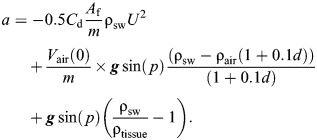 Figure 1
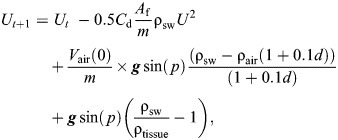 Figure 2
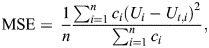 Figure 3
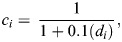 Figure 4
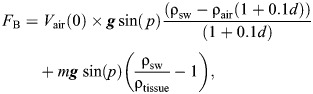 Figure 5
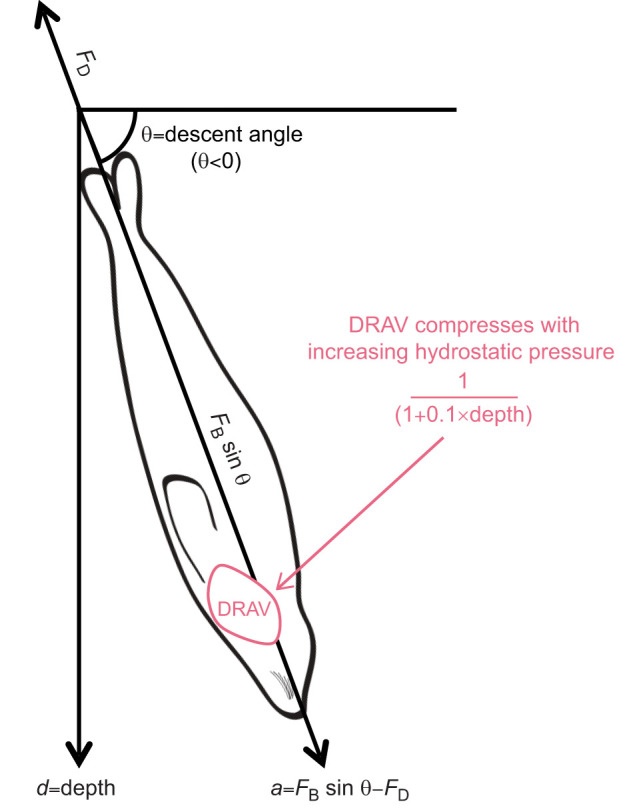 Figure 6
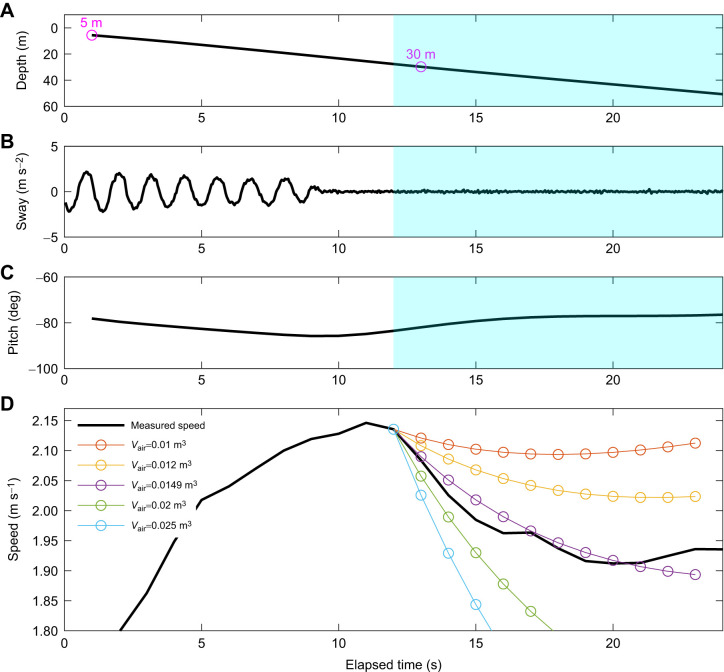 Figure 7
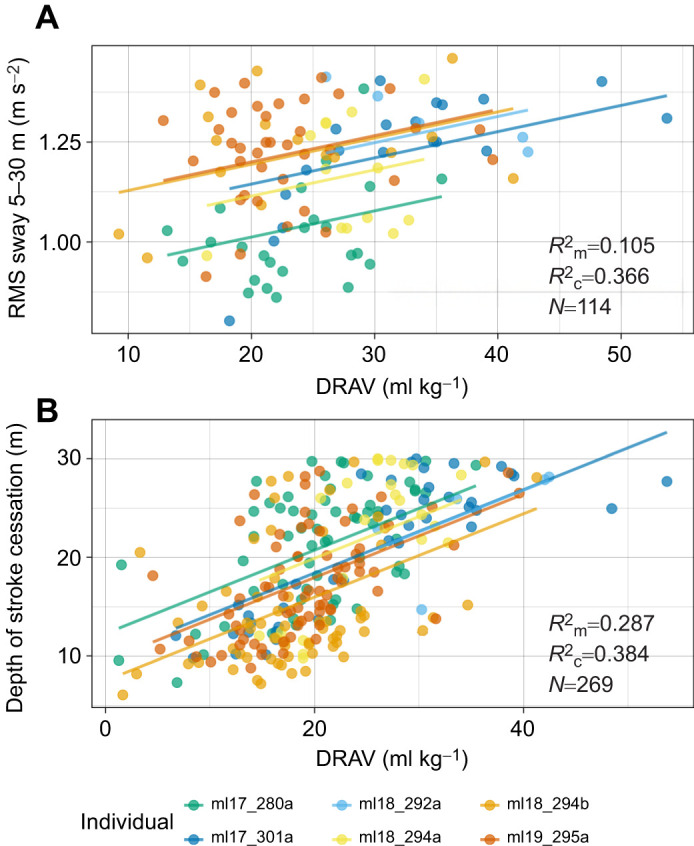 Figure 8
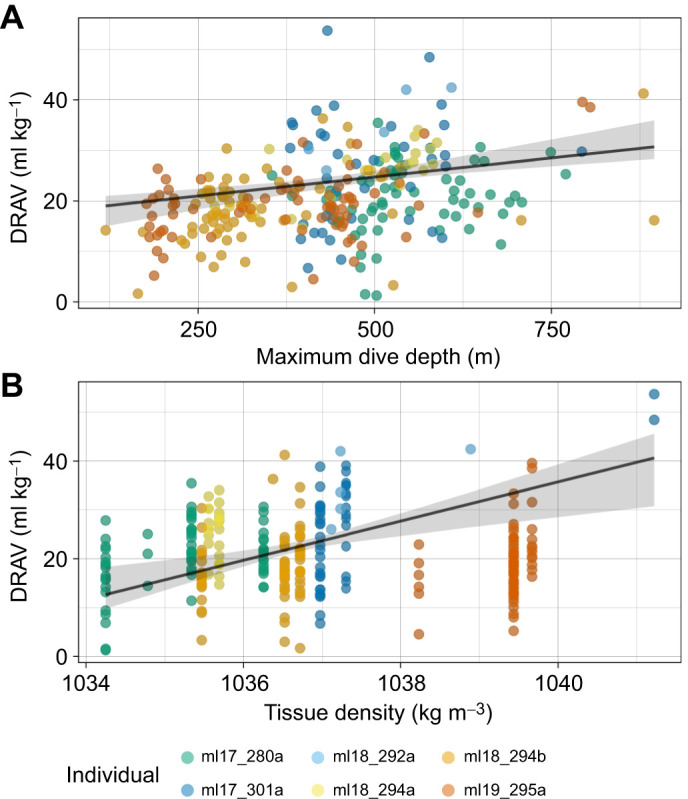 Figure 9
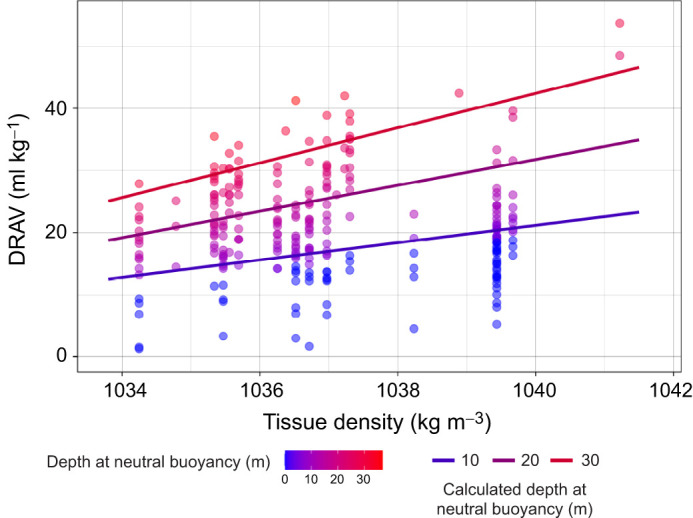 Figure 10
Peer Reviews
No public reviews on file for this paper yet. If you reviewed it on a platform where reviews are public (OpenReview, ICLR, NeurIPS, ICML), you can paste yours below so the community can read it here.
Videos
No videos yet. Explain this paper in a talk, walkthrough, or lecture? Add one.
Taxonomy
TopicsMarine animal studies overview · Aerospace Engineering and Energy Systems · Arctic and Antarctic ice dynamics