The Early Evolution of Tudor Genes in Holozoa and How Their Distribution Was Influenced by Life History Traits in Metazoa
Giovanni Piccinini, Umberto Valdrè, Liliana Milani

TL;DR
This paper explores how Tudor genes evolved in early animals and how their distribution relates to life history traits like reproduction and genome complexity.
Contribution
The study provides a holozoan-wide analysis of Tudor gene evolution and links their expansion to life history traits and genomic events in metazoans.
Findings
Tudor genes expanded in metazoans, especially those involved in Piwi-interacting RNA pathways.
Variability in Tudor gene numbers correlates with life history traits and genomic events like whole-genome duplications.
Elements of the Piwi-interacting RNA pathway were likely present in the holozoan common ancestor.
Abstract
Early metazoan evolution was characterized by the expansion of multiple gene families, such as the Tudor family, involved in novel multicellularity-related functions. In eukaryotes, Tudor genes (i.e. genes including at least one Tudor domain) are numerous, heterogeneous, and mostly associated with gene expression regulation. However, they underwent an animal-specific expansion, with novel elements almost exclusively involved in retrotransposon regulation through Piwi-interacting RNAs, as spatiotemporal regulators of the key-element Piwi, another previously considered animal-specific gene. Here, we used online-available proteomes covering 25 major taxonomic groups to characterize the Tudor gene family at a holozoan-wide level, confirming the apomorphic metazoan expansion of Piwi-interacting RNA-related Tudor genes. However, we also annotated elements of the Piwi-interacting RNA pathway…
Genes, proteins, chemicals, diseases, species, mutations and cell lines named across the full text — each resolved to its canonical identifier and authoritative record.
Click any figure to enlarge with its caption.
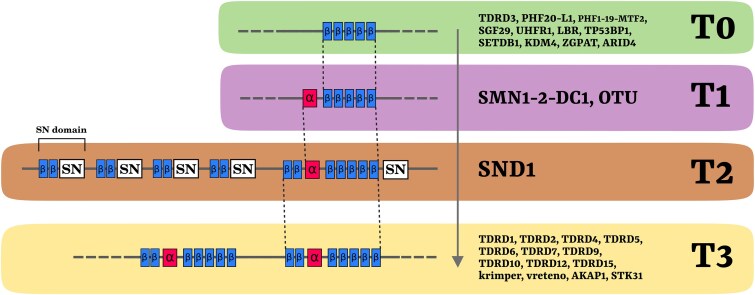 Figure 1
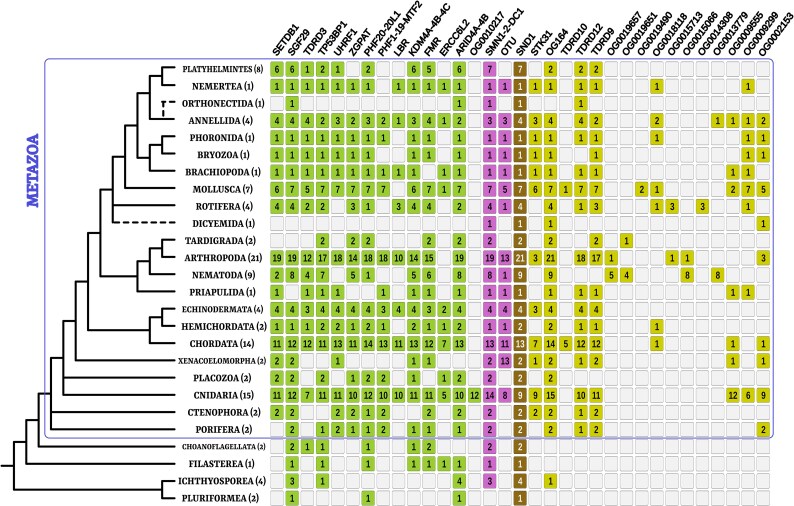 Figure 2
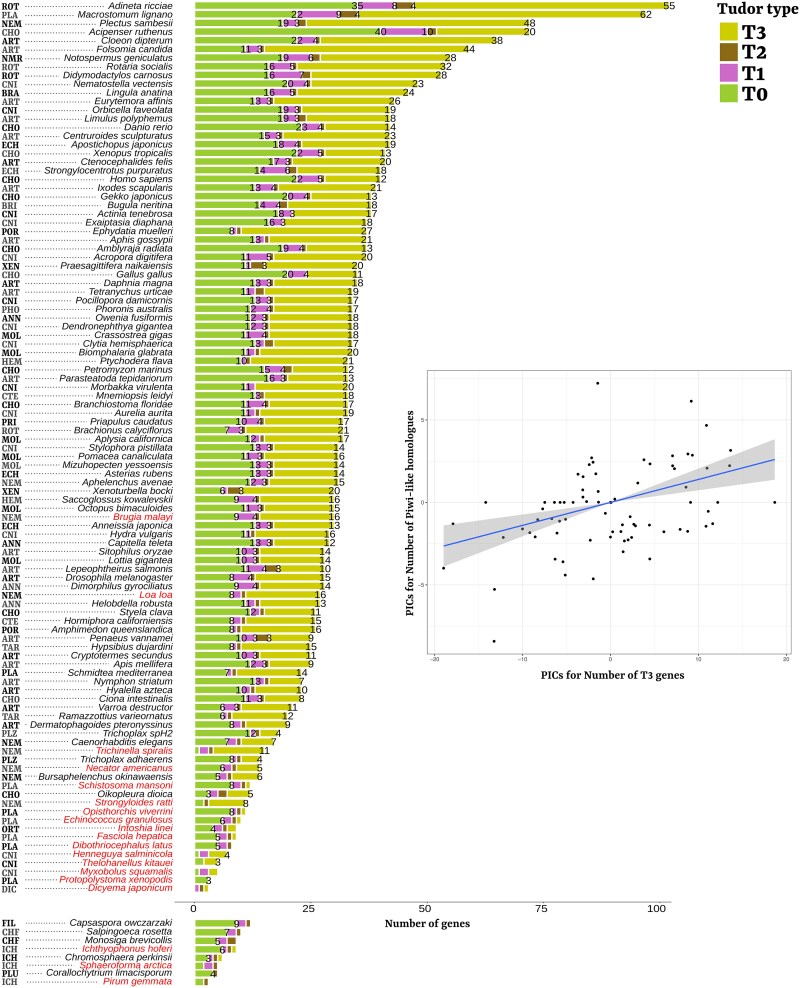 Figure 3
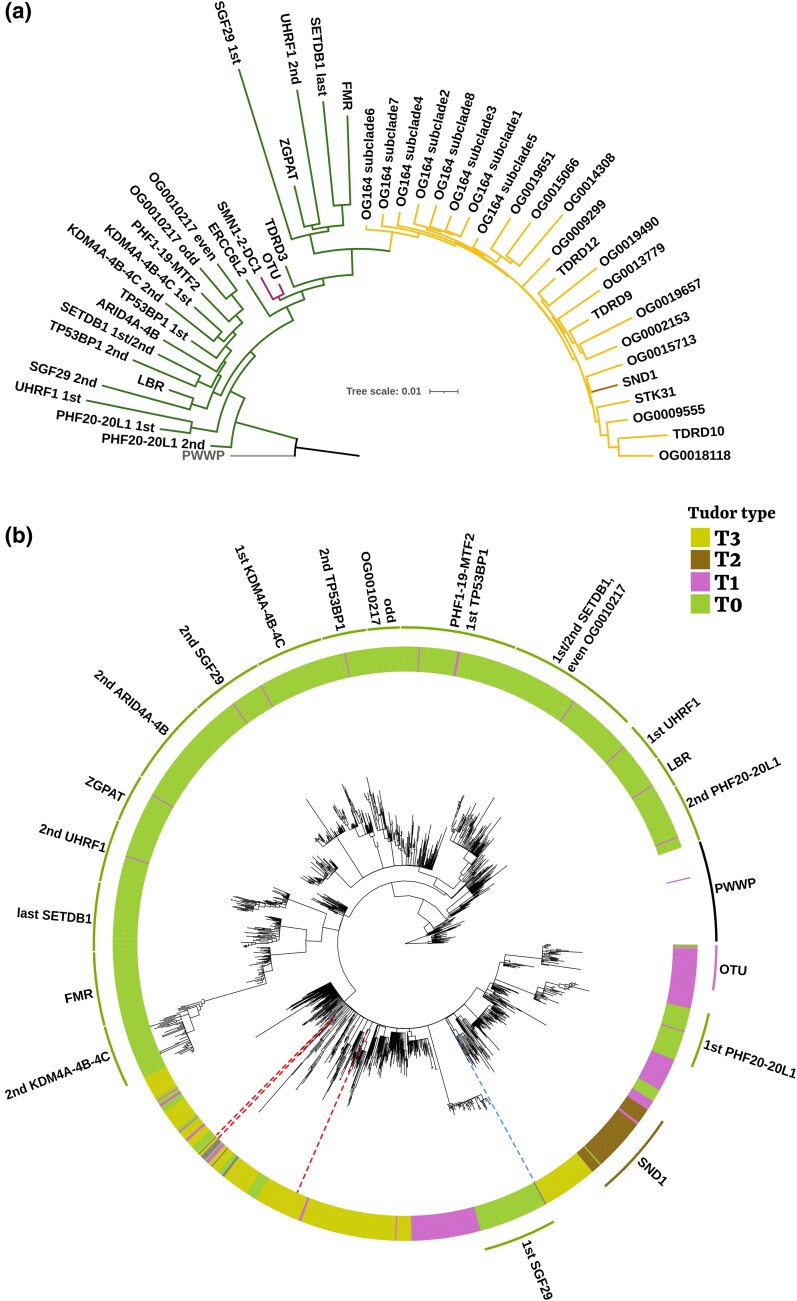 Figure 4
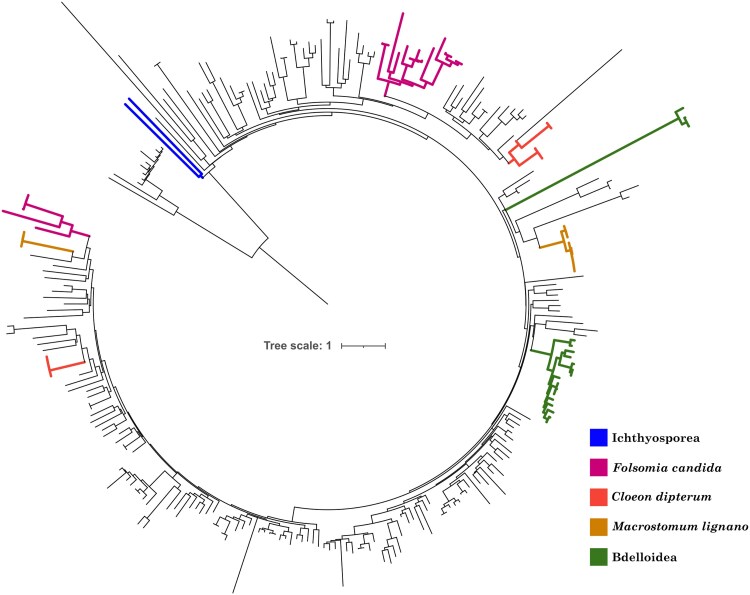 Figure 5
Peer Reviews
No public reviews on file for this paper yet. If you reviewed it on a platform where reviews are public (OpenReview, ICLR, NeurIPS, ICML), you can paste yours below so the community can read it here.
Videos
No videos yet. Explain this paper in a talk, walkthrough, or lecture? Add one.
Taxonomy
TopicsProtist diversity and phylogeny