Prediction of Bone Formation Rate of Artificial Bone With Machine Learning Models Considering the Variation of Experimental Results
Yuta Sakai, Shota Horikawa, Mamoru Aizawa, Hiromasa Kaneko

TL;DR
This study uses machine learning to predict the variation in bone formation rates of artificial bone materials, aiming to improve their development and reduce reliance on animal testing.
Contribution
The study introduces the use of Jensen–Shannon divergence as a metric to evaluate model accuracy for predicting variation in bone formation rates.
Findings
A machine learning model was developed to predict variation in bone formation rates using multiple sub-datasets.
Jensen–Shannon divergence was validated as an effective metric for evaluating model accuracy.
An optimal combination of explanatory variables was identified to enhance predictive accuracy.
Abstract
The proportion of older people in the world's total population is expected to increase. Bone diseases are more prevalent in older people; therefore, the number of patients with such diseases is expected to increase worldwide. Artificial bone is a biomaterial used in the treatment of bone diseases. Artificial bones with high bone formation rates are desired; however, the results of artificial bone implantation vary. There are also ethical issues associated with animal experiments. Our purpose in this study is to predict the variation in bone formation rates. We created multiple sub‐datasets and constructed a machine learning model to predict the variation in bone formation rates by considering the results of multiple measurements. We also propose a metric, Jensen–Shannon (JS) divergence, to evaluate the accuracy of the model for predicting variation. We tested the validity of JS…
Genes, proteins, chemicals, diseases, species, mutations and cell lines named across the full text — each resolved to its canonical identifier and authoritative record.
Click any figure to enlarge with its caption.
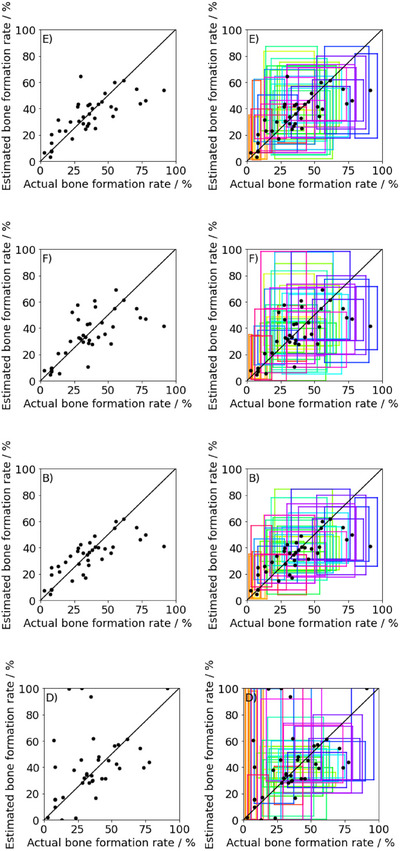 Figure 1
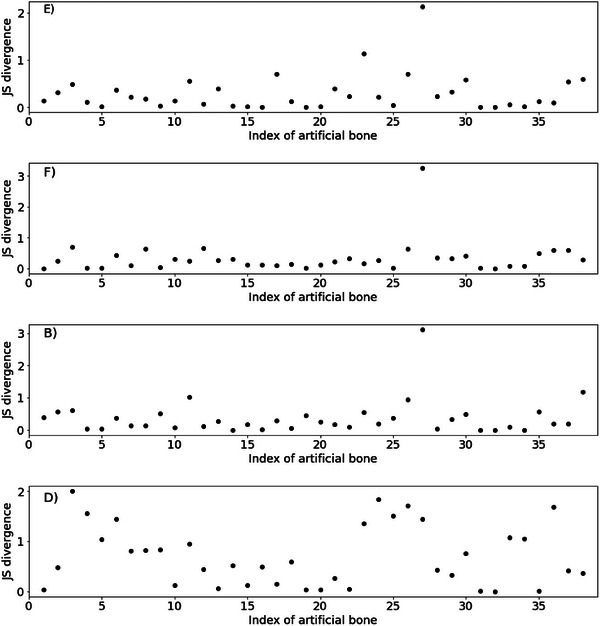 Figure 2
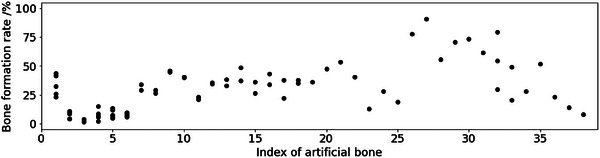 Figure 3
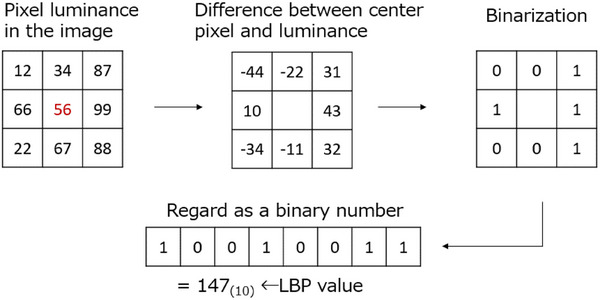 Figure 4
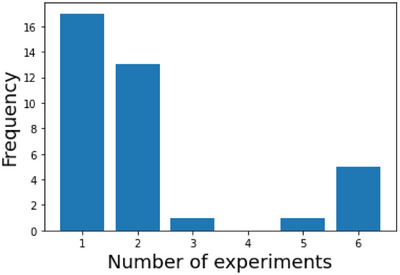 Figure 5
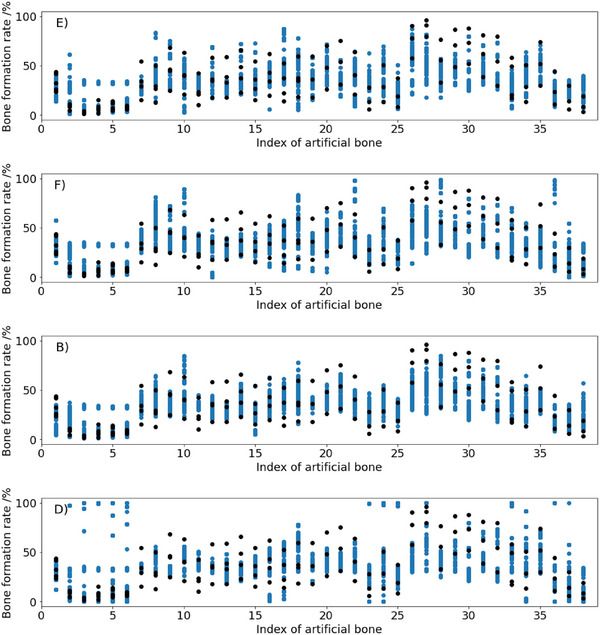 Figure 6
Peer Reviews
No public reviews on file for this paper yet. If you reviewed it on a platform where reviews are public (OpenReview, ICLR, NeurIPS, ICML), you can paste yours below so the community can read it here.
Videos
No videos yet. Explain this paper in a talk, walkthrough, or lecture? Add one.
Taxonomy
TopicsSpectroscopy and Chemometric Analyses