A dual perception of an ageing orofacial appearance— an interview study
Sara Henricsson, Nina Lundegren, Viveca Wallin Bengtsson, Pia Andersson

TL;DR
This study explores how older adults perceive their aging facial appearance, revealing a complex balance between acceptance and societal expectations.
Contribution
The study introduces a novel dual perception framework of orofacial aging based on qualitative interviews with older adults.
Findings
Older adults perceive their orofacial aging as a gradual decline that they must accept.
Participants felt societal pressure to maintain a youthful appearance, but this was viewed negatively.
Only individuals with dental problems reported significant impact of teeth on their orofacial appearance perception.
Abstract
This study aimed to explore how people aged 65 years and older experience their orofacial appearance (OA). Semi-structured interviews were conducted with 20 strategically recruited participants aged 65–79 years from the Swedish National Study on Aging and Care—Blekinge (SNAC-B) in Karlskrona. A semi-structured interview guide was developed, and the interviews were analysed using thematic analysis to identify patterns in the data. The older adults’ experience of their OA was represented in four themes: (i) you kind of have to like the situation as it is now—to accept orofacial appearance in its current state; (ii) an ageing orofacial appearance—a slow continuous downhill slope; (iii) looking good for others to fit the social norm; and (iv) keeping up orofacial appearance—seemingly without effort. The older adults in this study had a dual perception in relation to their own OA.…
Genes, proteins, chemicals, diseases, species, mutations and cell lines named across the full text — each resolved to its canonical identifier and authoritative record.
Click any figure to enlarge with its caption.
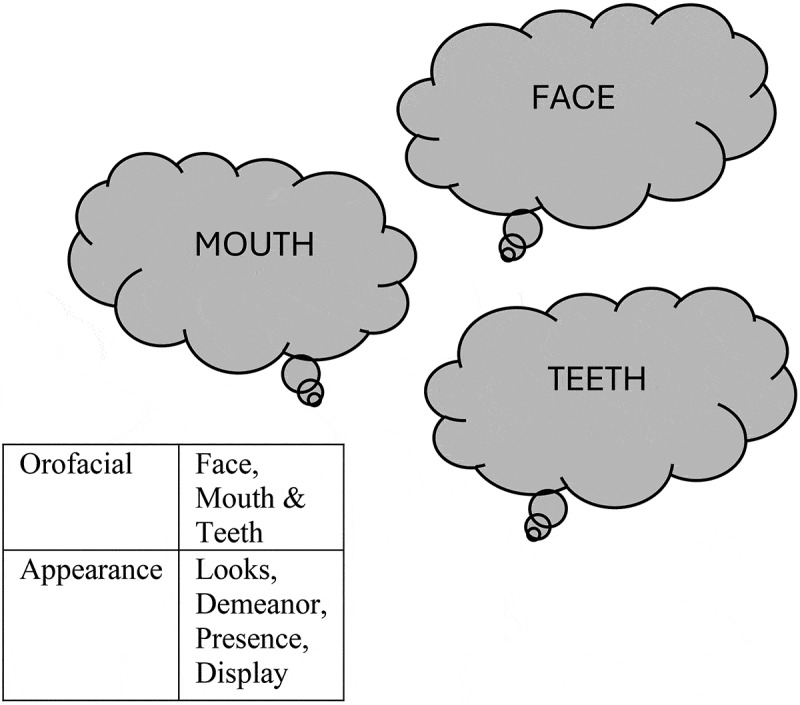 Figure 1
Peer Reviews
No public reviews on file for this paper yet. If you reviewed it on a platform where reviews are public (OpenReview, ICLR, NeurIPS, ICML), you can paste yours below so the community can read it here.
Videos
No videos yet. Explain this paper in a talk, walkthrough, or lecture? Add one.
Taxonomy
TopicsBody Image and Dysmorphia Studies · Aging and Gerontology Research