Compassionate use of tezepelumab in near fatal asthma: A case report and review of the literature
Mako Nakajima, Masashi Matsuyama, Yuki Yamazaki, Hiroya Sunabe, Yuta Takahashi, Keishun Boku, Takeshi Miura, Tomohiro Tamura, Yoshiaki Inoue, Nobuyuki Hizawa

TL;DR
A man with near fatal asthma was successfully treated with a single dose of tezepelumab after other treatments failed.
Contribution
This is a rare case of using a biologic agent as rescue therapy for near fatal asthma.
Findings
Tezepelumab was administered on a compassionate basis after high-dose corticosteroids failed.
The patient was successfully extubated 7 days after tezepelumab administration.
The case highlights the potential of biologics in treating severe asthma.
Abstract
A 38-year-old man with near fatal asthma requiring intubation and invasive mechanical ventilation (IMV) was transferred to our hospital. Veno-venous extracorporeal membrane oxygenation (VV-ECMO) was initiated due to hypotension and mediastinal emphysema secondary to barotrauma. Since high-dose systemic corticosteroid therapy failed to relieve the severe bronchospasm, a single dose of tezepelumab was administered on a compassionate basis. This intervention resulted in successful extubation 7 days later. This is a rare case in which a biologic agent was used as a rescue therapy for near fatal asthma. This case is presented along with a review of the relevant literature.
Genes, proteins, chemicals, diseases, species, mutations and cell lines named across the full text — each resolved to its canonical identifier and authoritative record.
Click any figure to enlarge with its caption.
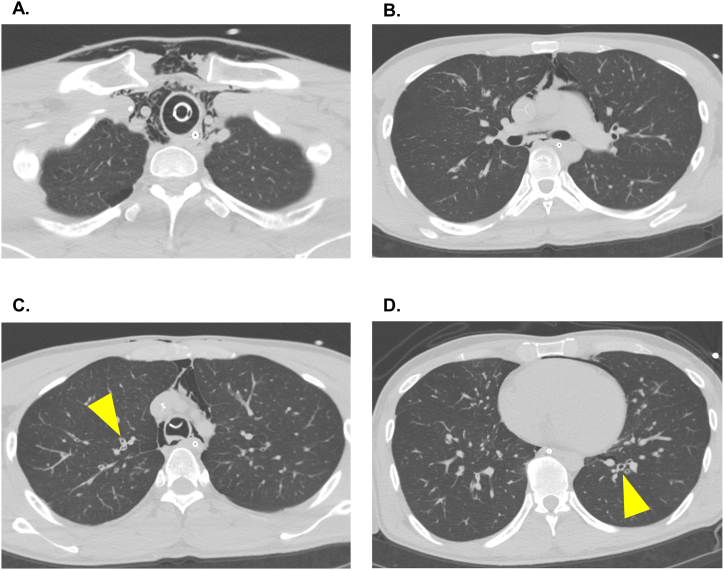 Figure 1
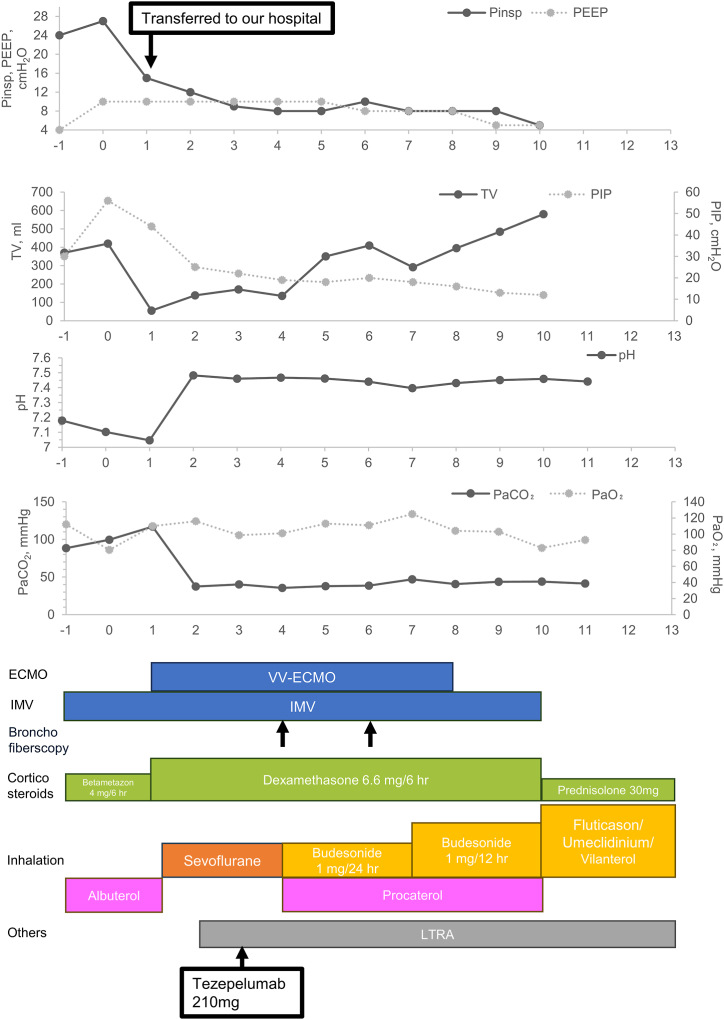 Figure 2
Peer Reviews
No public reviews on file for this paper yet. If you reviewed it on a platform where reviews are public (OpenReview, ICLR, NeurIPS, ICML), you can paste yours below so the community can read it here.
Videos
No videos yet. Explain this paper in a talk, walkthrough, or lecture? Add one.
Taxonomy
TopicsAsthma and respiratory diseases · Pediatric Pain Management Techniques · Stress Responses and Cortisol