Swine influenza A virus infection sets the local immunological landscape in subsequent infection with porcine reproductive and respiratory syndrome virus
Janaïna Grevelinger, Olivier Bourry, Selma Schmidt, François Meurens, Céline Deblanc, Caroline Hervet, Aline Perrin, Stéphane Gorin, Mireille Le Dimna, Stéphane Quéguiner, Thibaut Larcher, Patricia Renson, Frédéric Paboeuf, Wilhelm Gerner, Nicolas Bertho, Gaëlle Simon

TL;DR
This study shows that a prior swine influenza A virus infection can boost immune responses when pigs are later infected with another virus called PRRSV.
Contribution
The study explores the previously unexamined scenario of swIAV followed by PRRSV infection and reveals enhanced immune responses in pigs.
Findings
Primary swIAV infection did not worsen PRRSV clinical progression or viral loads.
swIAV pre-infection increased conventional dendritic cells, T cells, and NK-related lymphocytes in the lungs.
swIAV infection was linked to higher PRRSV-specific IFN-γ producing CD4 T cells in the blood.
Abstract
Farmed pigs are frequently exposed to respiratory infections, with swine influenza A virus (swIAV) and porcine reproductive and respiratory syndrome virus (PRRSV) being key drivers. Most co-infection studies with these viruses have focused on PRRSV infection followed by swIAV. However, the reverse scenario, where swIAV is given first and then PRRSV, has not been explored. This infection sequence is plausible under natural conditions and warrants further study, especially given that influenza A virus has been shown in mice to impair alveolar macrophages, which are the target cells for PRRSV. This study aimed to evaluate the impact of swIAV infection on the alveolar macrophage population, clinical signs, immune responses, and viral loads during a secondary infection with PRRSV initiated 7 days after the initial swIAV exposure. Results demonstrated that primary swIAV infection did not…
Genes, proteins, chemicals, diseases, species, mutations and cell lines named across the full text — each resolved to its canonical identifier and authoritative record.
Click any figure to enlarge with its caption.
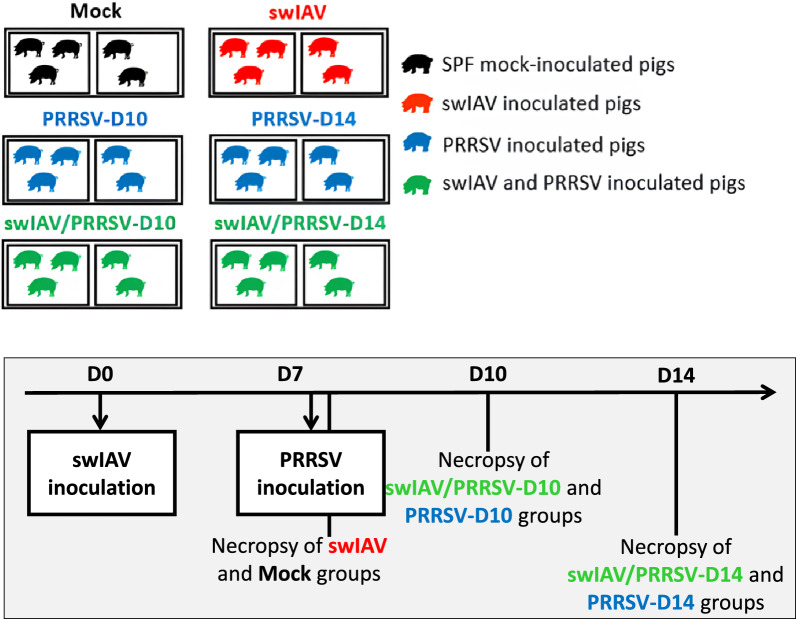 Figure 1
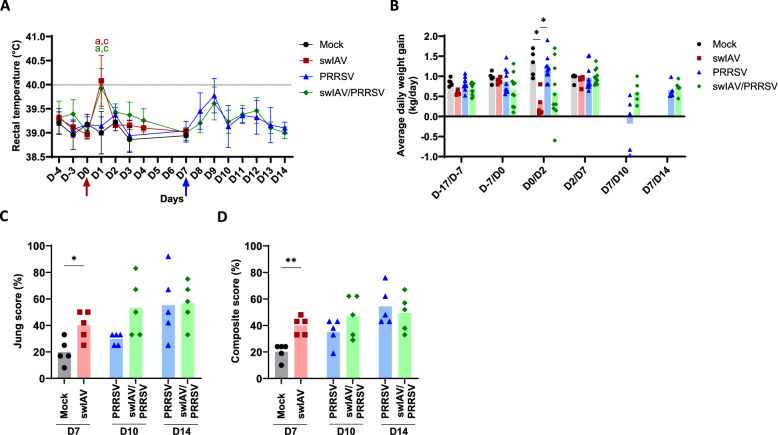 Figure 2
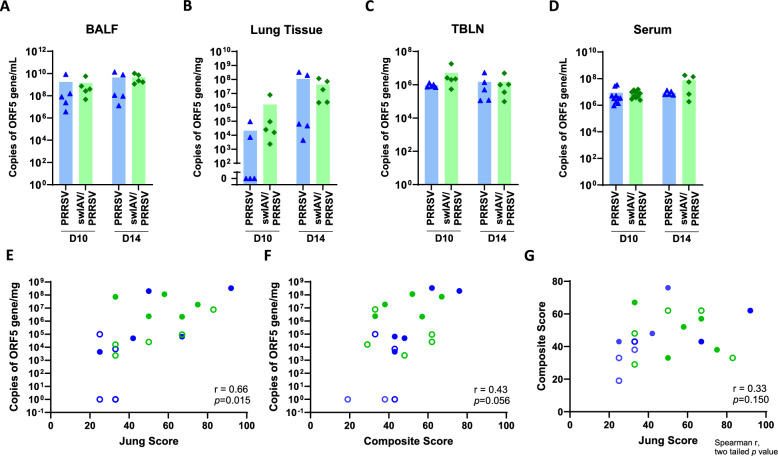 Figure 3
 Figure 4
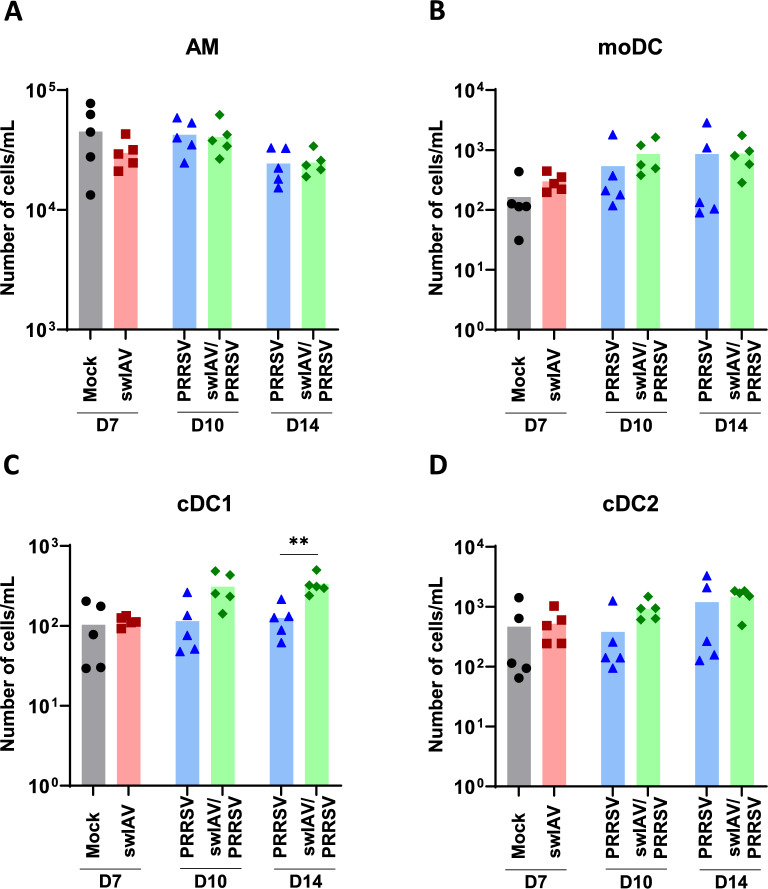 Figure 5
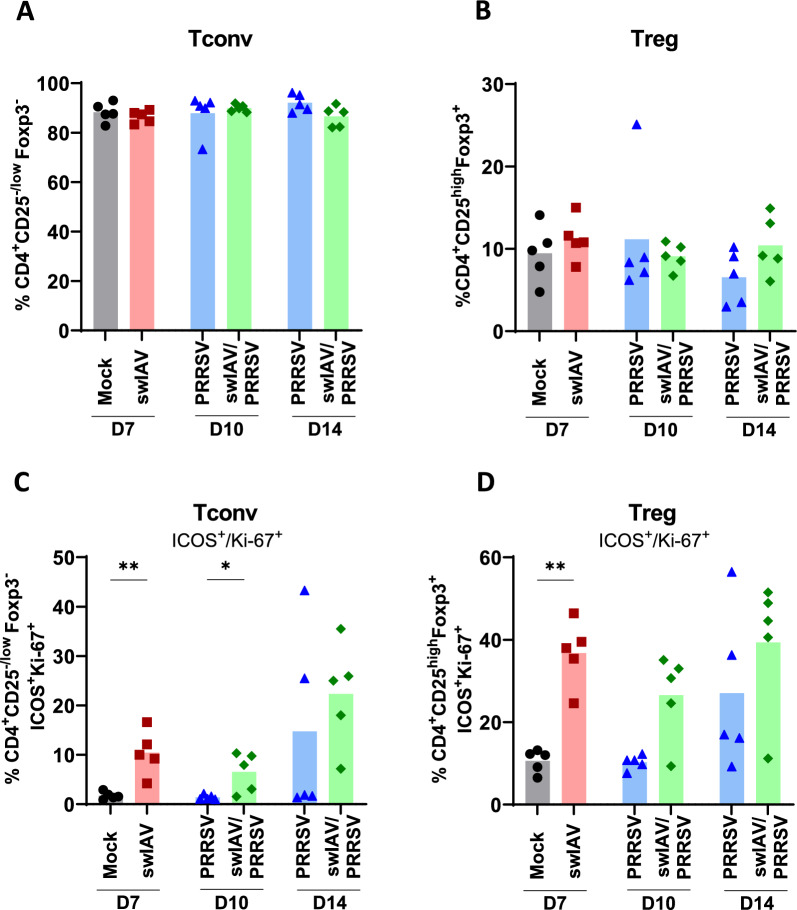 Figure 6
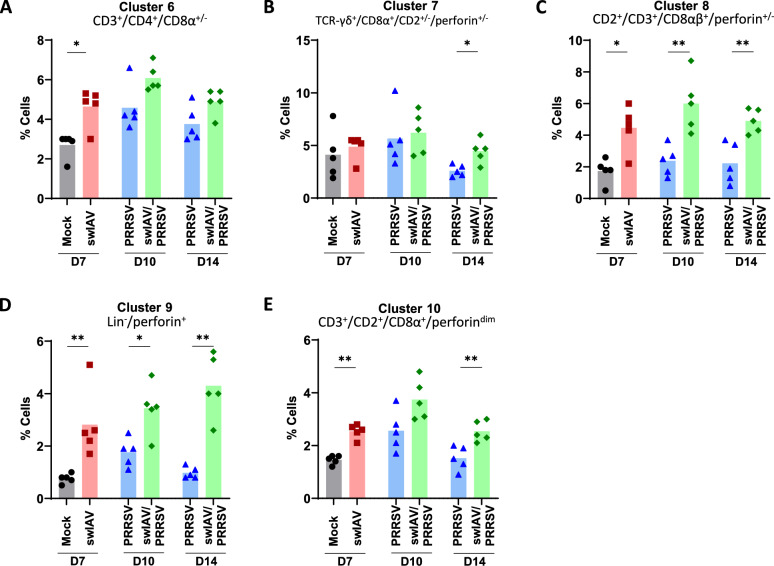 Figure 7
 Figure 8
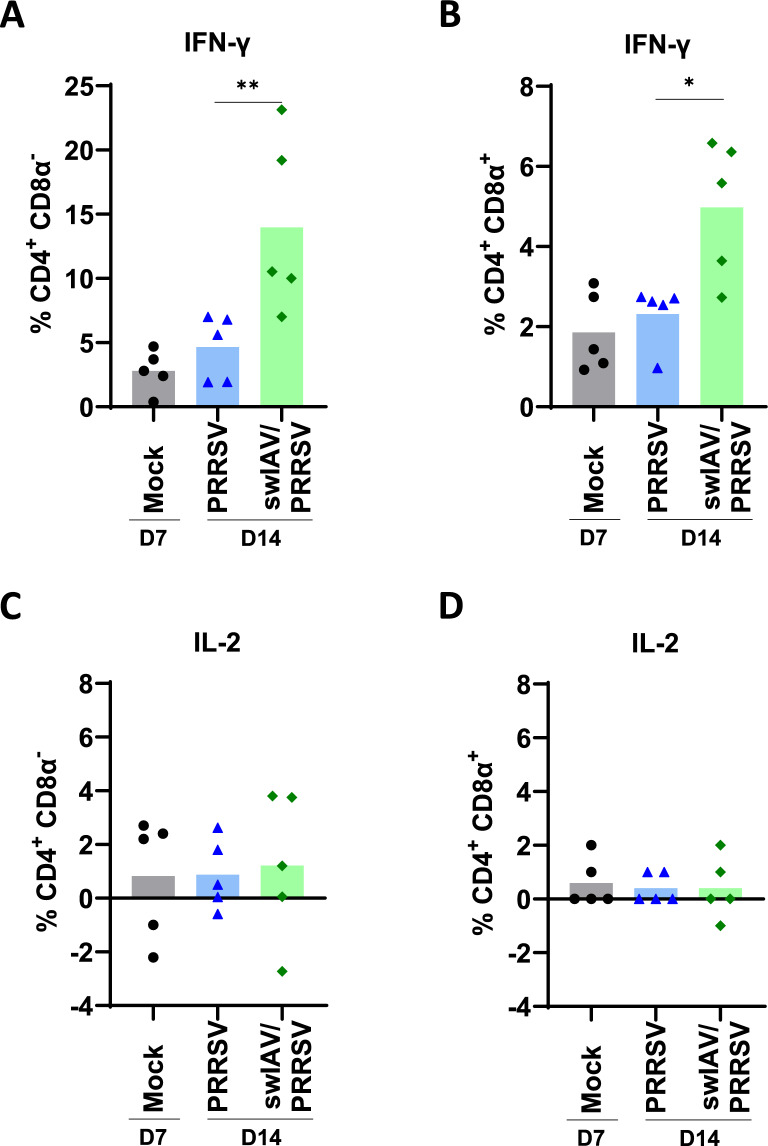 Figure 9
Peer Reviews
No public reviews on file for this paper yet. If you reviewed it on a platform where reviews are public (OpenReview, ICLR, NeurIPS, ICML), you can paste yours below so the community can read it here.
Videos
No videos yet. Explain this paper in a talk, walkthrough, or lecture? Add one.
Taxonomy
TopicsAnimal Virus Infections Studies · Virus-based gene therapy research · Viral gastroenteritis research and epidemiology