Nut consumption, linoleic and α-linolenic acid intakes, and genetics: how fatty acid desaturase 1 impacts plasma fatty acids and type 2 diabetes risk in EPIC-InterAct and PREDIMED studies
Susanne Jäger, Olga Kuxhaus, Marcela Prada, Inge Huybrechts, Tammy Y. N. Tong, Nita G. Forouhi, Cristina Razquin, Dolores Corella, Miguel A. Martinez-Gonzalez, Christina C. Dahm, Daniel B. Ibsen, Anne Tjønneland, Jytte Halkjær, Chloé Marques, Claire Cadeau, Xuan Ren

TL;DR
This study examines how a genetic variant in the FADS1 gene affects how people respond to eating nuts and how that influences their risk of type 2 diabetes.
Contribution
The study reveals how a specific FADS1 genetic variant modifies the relationship between nut consumption and plasma fatty acid levels.
Findings
Nut consumption increased plasma linoleic acid and decreased arachidonic acid, with stronger effects in individuals with a specific FADS1 variant.
The genetic variant FADS1 rs174547 modified how nut consumption affects fatty acid levels, but not necessarily diabetes risk.
Findings suggest individual genetic differences may influence how dietary fats impact health outcomes.
Abstract
Dietary guidelines recommend replacing saturated fatty acid with unsaturated fats, particularly polyunsaturated fatty acids. Cohort studies do not suggest a clear benefit of higher intake of polyunsaturated fatty acids but, in contrast, higher circulating linoleic acid (LA) levels—reflective of dietary LA intake, are associated with a reduced risk of type 2 diabetes. However, genetic variants in the fatty acid desaturase 1 gene (FADS1) may influence individual responses to plant-based fats. We explored whether FADS1 variants influence the relationships of LA and α-linolenic acid (ALA) intakes and nut consumption with plasma phospholipid fatty acid profiles and type 2 diabetes risk in a large-scale cohort study and a randomized controlled trial. In the EPIC-InterAct case-cohort (7,498 type 2 diabetes cases, 10,087 subcohort participants), we investigated interactions of dietary and…
Genes, proteins, chemicals, diseases, species, mutations and cell lines named across the full text — each resolved to its canonical identifier and authoritative record.
Click any figure to enlarge with its caption.
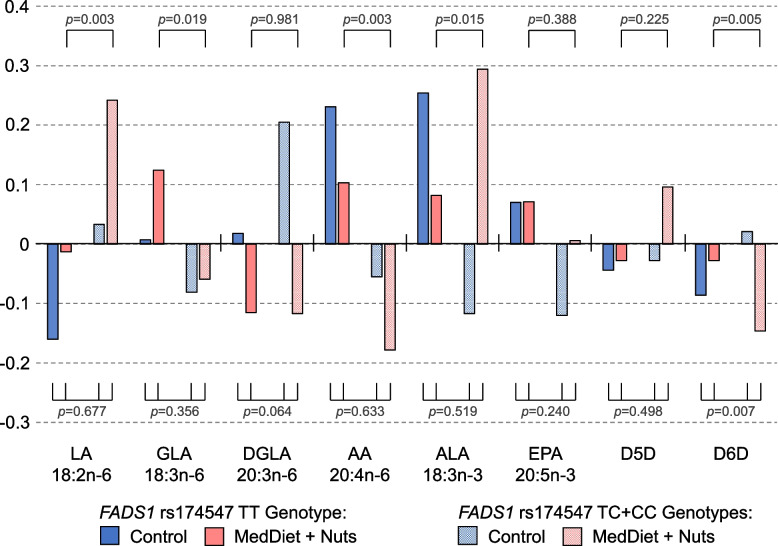 Figure 1
Peer Reviews
No public reviews on file for this paper yet. If you reviewed it on a platform where reviews are public (OpenReview, ICLR, NeurIPS, ICML), you can paste yours below so the community can read it here.
Videos
No videos yet. Explain this paper in a talk, walkthrough, or lecture? Add one.
Taxonomy
TopicsLipid metabolism and biosynthesis · Fatty Acid Research and Health · Adipose Tissue and Metabolism