Visualize neuronal membrane cholesterol with split-fluorescent protein tagged YDQA sensor
Yi Xu, Saixuan Li, Yiran Xu, Xiaoqin Sun, Yuqing Wei, Yuejun Wang, Shuang Li, Yongqi Ji, Keyi Hu, Yuxia Xu, Cuiqing Zhu, Bin Lu, Dandan Wang

TL;DR
This study creates a new sensor to visualize cholesterol in neurons, revealing abnormal cholesterol patterns in Alzheimer's disease models.
Contribution
A novel sfPMcho sensor combining split-fluorescent protein tags and YDQA for in vivo neuronal membrane cholesterol detection.
Findings
sfPMcho efficiently detects neuronal plasma membrane cholesterol in cell and C. elegans models.
In AD-related mouse models, neuronal cholesterol becomes sparse in bodies but accumulates in nerve fibers.
The sensor reveals cellular-level cholesterol abnormalities in Alzheimer's disease pathology.
Abstract
Cholesterol is a major component of the cellular plasma membrane (PM), and its homeostasis is essential for brain health. Dysregulated cholesterol homeostasis has been strongly implicated in the pathogenesis of various neurological disorders, including Alzheimer’s disease (AD). However, in vivo visualization of cholesterol has remained challenging, hindering a comprehensive understanding of AD pathology. In this study, we generated a new sensor combining the split-fluorescent protein tags with YDQA, a derivate of cholesterol-dependent cytolysin PFO. Through a series of validations in cell and C. elegans models, we demonstrate that the new sensor (name as sfPMcho) efficiently detects neuronal PM cholesterol. We further applied this sensor in 5X FAD and APOE KO mice models and revealed the cholesterol changes within neurons. PM cholesterol became sparse and locally aggregated in neuron…
Genes, proteins, chemicals, diseases, species, mutations and cell lines named across the full text — each resolved to its canonical identifier and authoritative record.
Click any figure to enlarge with its caption.
 Figure 1
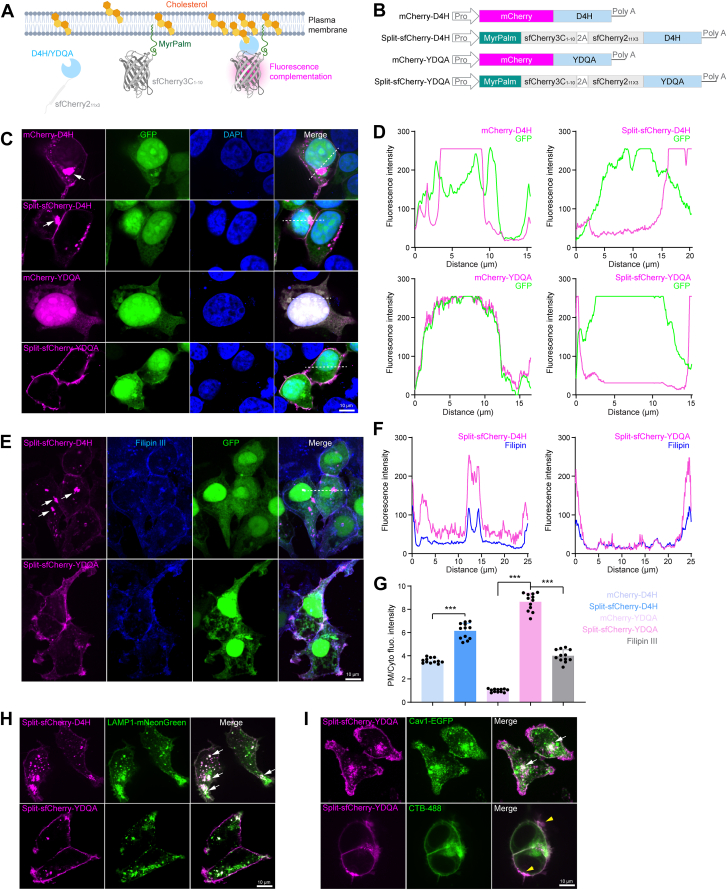 Figure 2
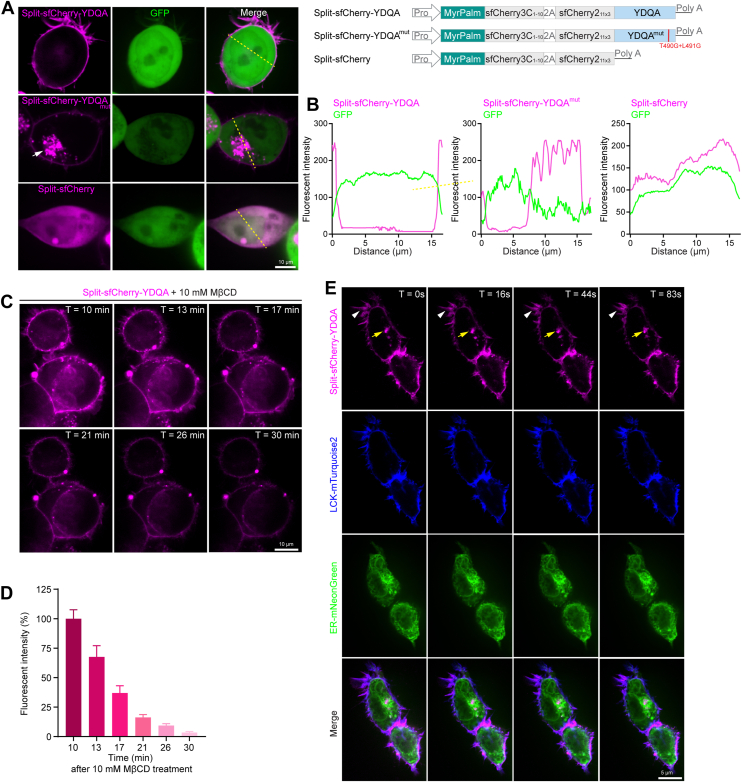 Figure 3
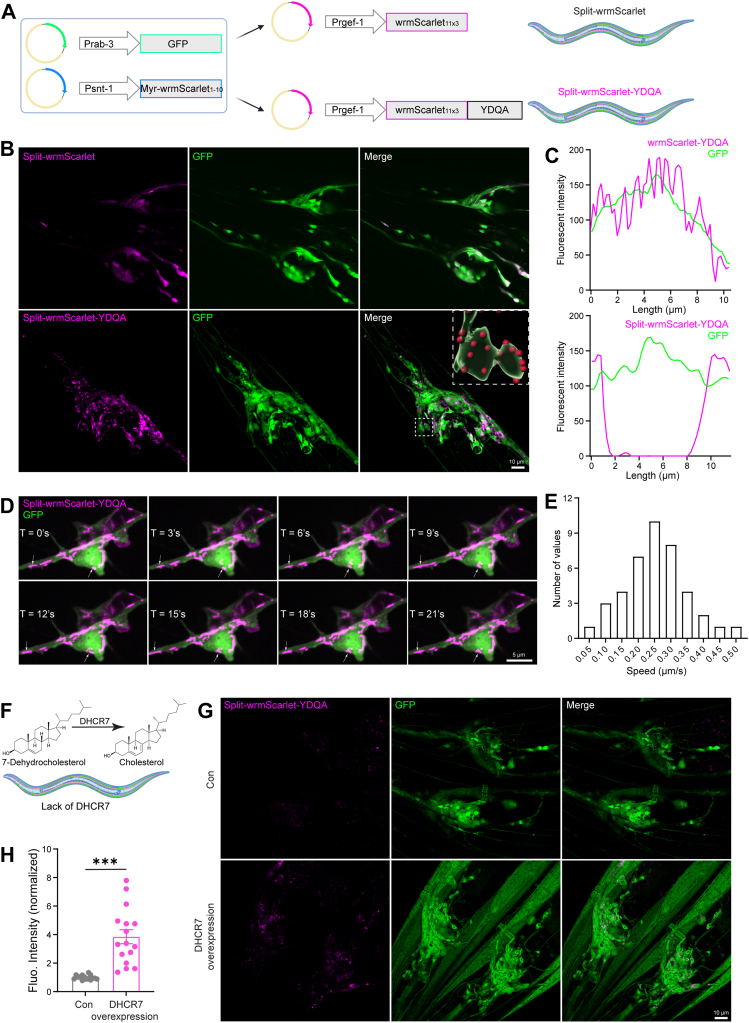 Figure 4
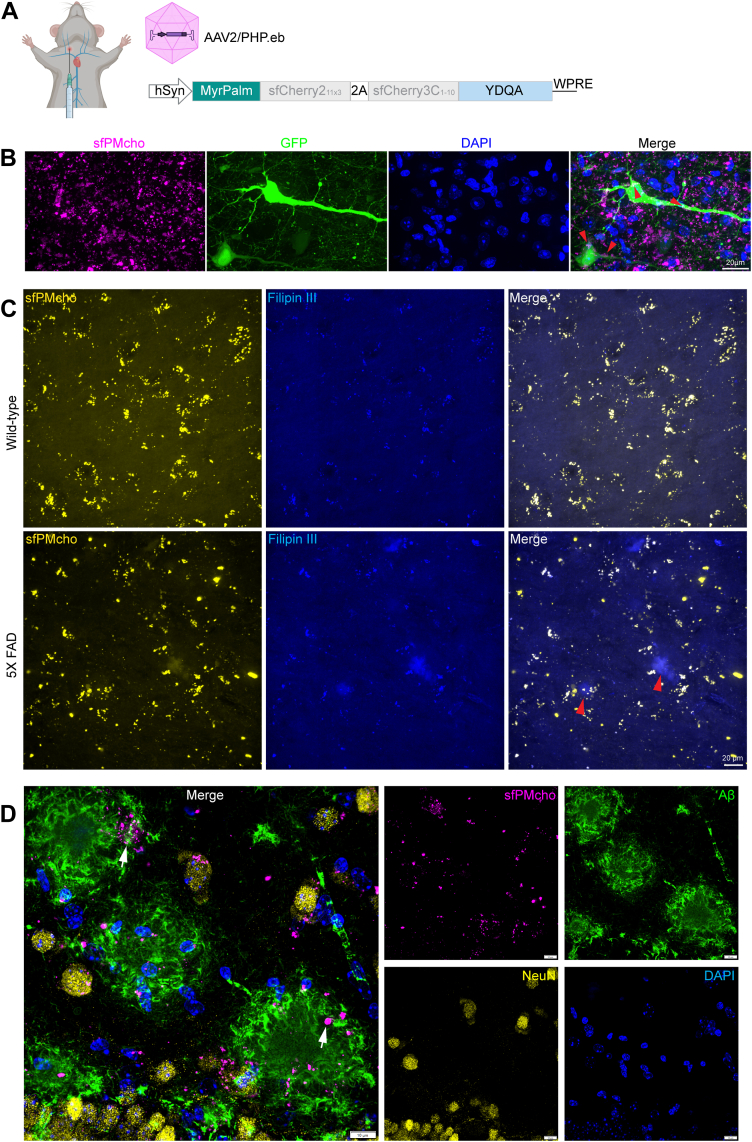 Figure 5
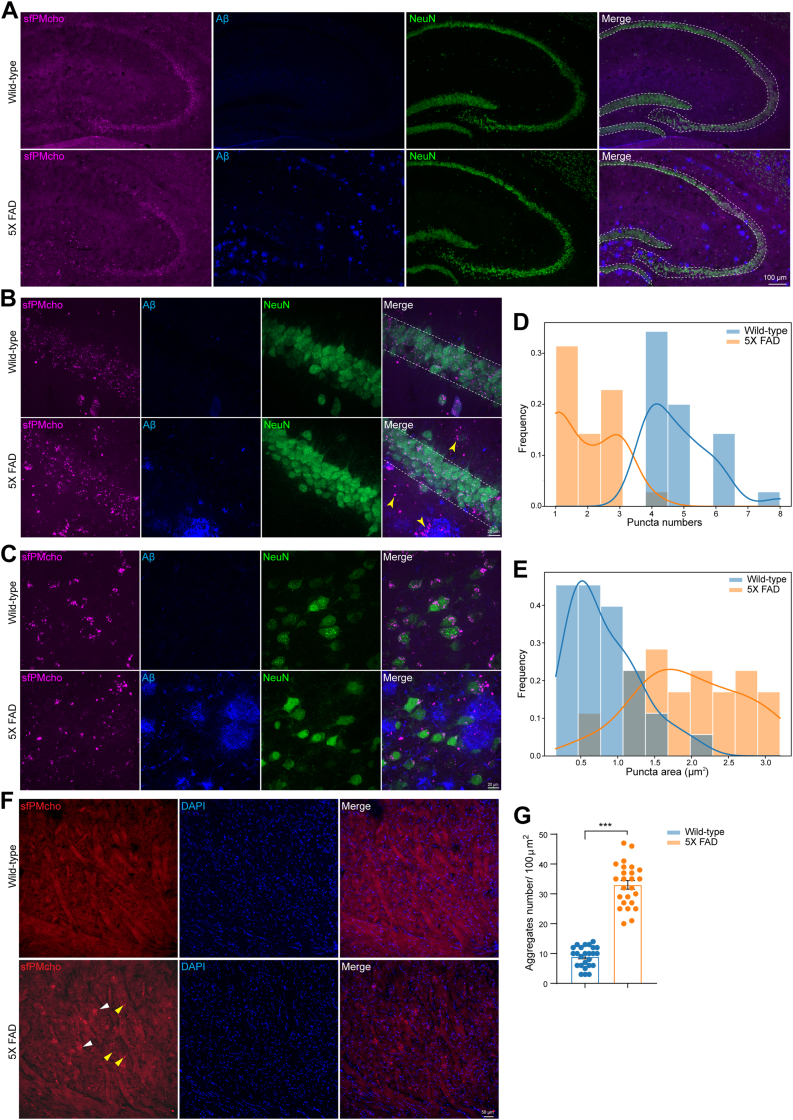 Figure 6
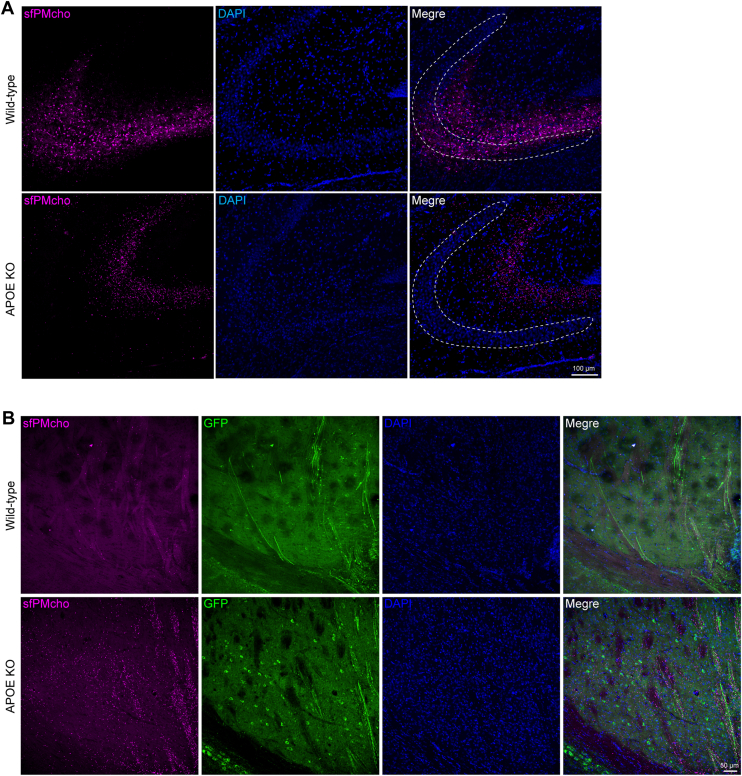 Figure 7
Peer Reviews
No public reviews on file for this paper yet. If you reviewed it on a platform where reviews are public (OpenReview, ICLR, NeurIPS, ICML), you can paste yours below so the community can read it here.
Videos
No videos yet. Explain this paper in a talk, walkthrough, or lecture? Add one.
Taxonomy
TopicsLipid Membrane Structure and Behavior · Neuroscience and Neuropharmacology Research · Receptor Mechanisms and Signaling