YTHDF2 suppresses the 2C-like state in mouse embryonic stem cells via the DUX-ZSCAN4 molecular circuit
Xiang Wu, Wanting Cai, Junjie He, Shiyin Zhang, Shen Wang, Lingci Huang, Haotian Zhang, Xiaoyan Sun, Jun Zhou, Xiao-Min Liu

TL;DR
This study shows how an RNA modification reader, YTHDF2, suppresses a 2-cell-like state in mouse embryonic stem cells through interactions with a key molecular circuit.
Contribution
The study identifies YTHDF2 as a novel regulator of the 2C-like state via m6A modification and the DUX-ZSCAN4 circuit.
Findings
YTHDF2 depletion increases 2C-signature gene expression and promotes transition to 2CLCs.
YTHDF2 binds and degrades m6A-modified 2C transcripts.
YTHDF2 interacts with CNOT1 to suppress the 2C-like program.
Abstract
Mouse embryonic stem cells (ESCs) consist of a rare population of heterogeneous 2-cell-like cells (2CLCs). These cells transiently recapitulate the transcriptional and epigenetic features of the 2-cell embryos, serving as a unique model for studying totipotency acquisition and embryonic development. Accumulating evidence has demonstrated that transcription factors and epigenetic modifications exert crucial functions in the transition of ESCs to 2CLCs. However, the roles of RNA modification in the regulation of the 2C-like state remain elusive. Using a DUX-induced 2CLCs system, we examine N6-methyladenosine (m6A) modification landscape transcriptome-wide and observe dynamic regulation of m6A during DUX-driven 2C-like reprogramming. Notably, many core 2C transcripts like Dux and Zscan4 are highly methylated. We identify the m6A reader protein YTHDF2 as a critical regulator of 2C-like…
Genes, proteins, chemicals, diseases, species, mutations and cell lines named across the full text — each resolved to its canonical identifier and authoritative record.
Click any figure to enlarge with its caption.
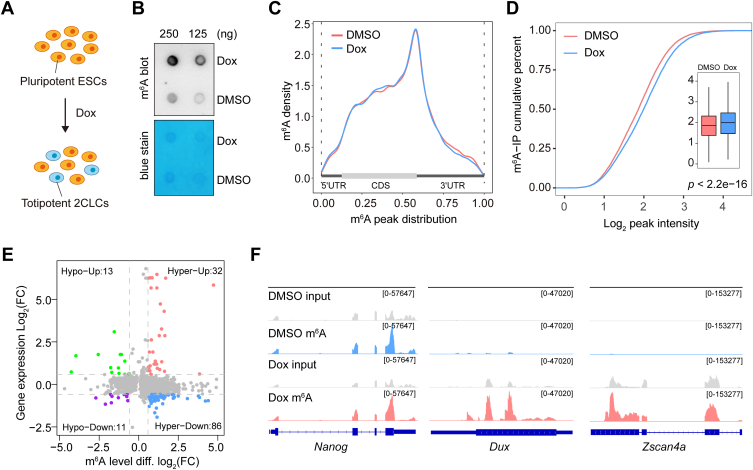 Figure 1
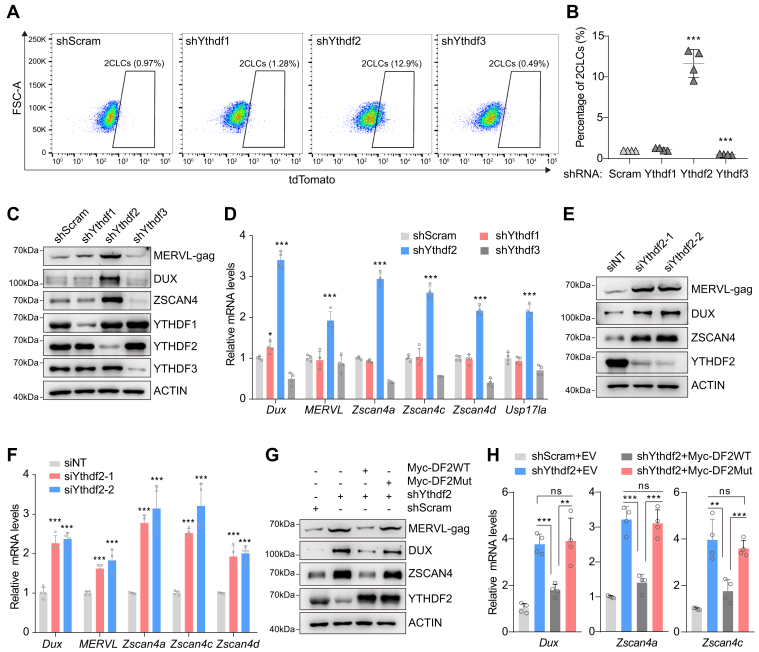 Figure 2
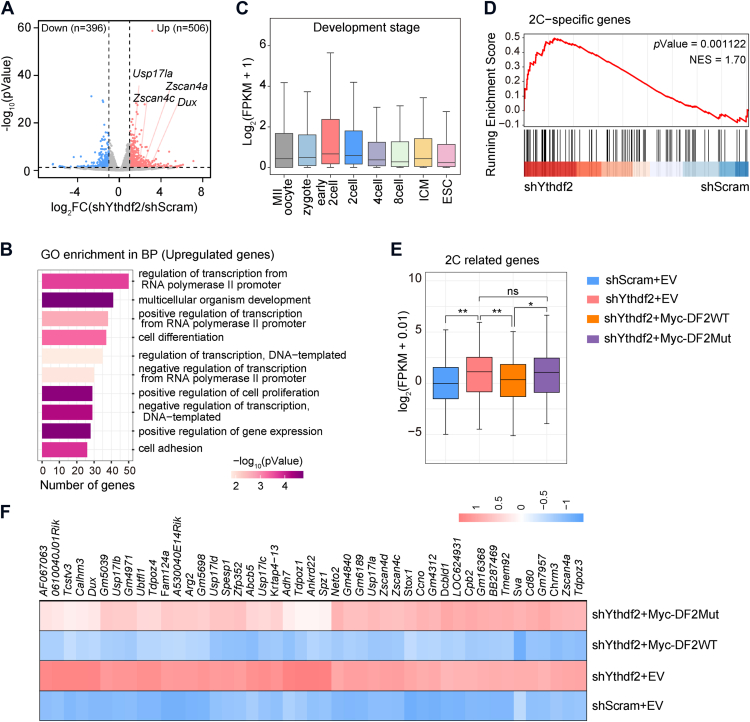 Figure 3
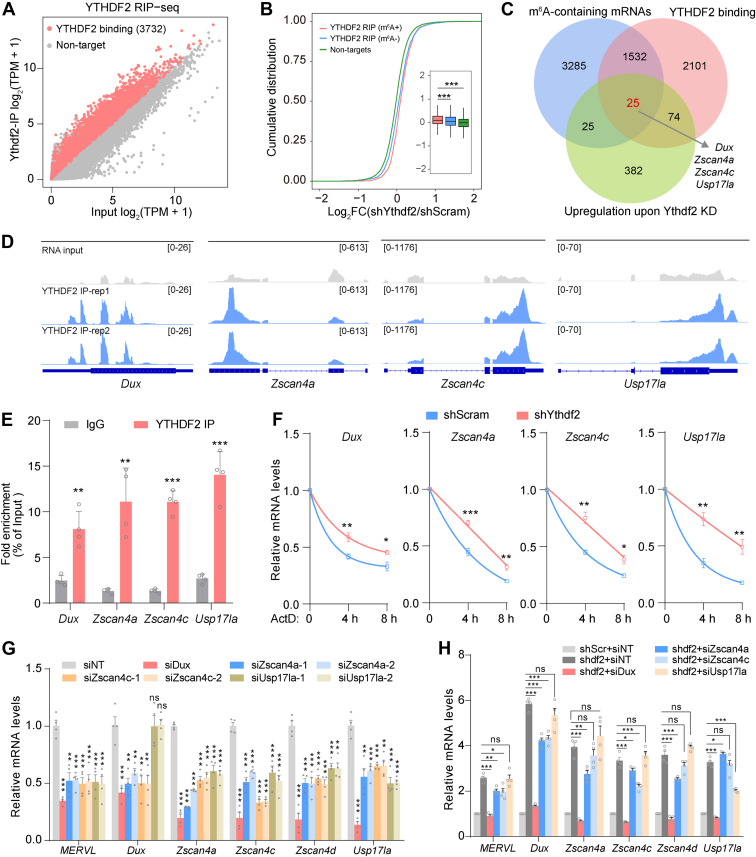 Figure 4
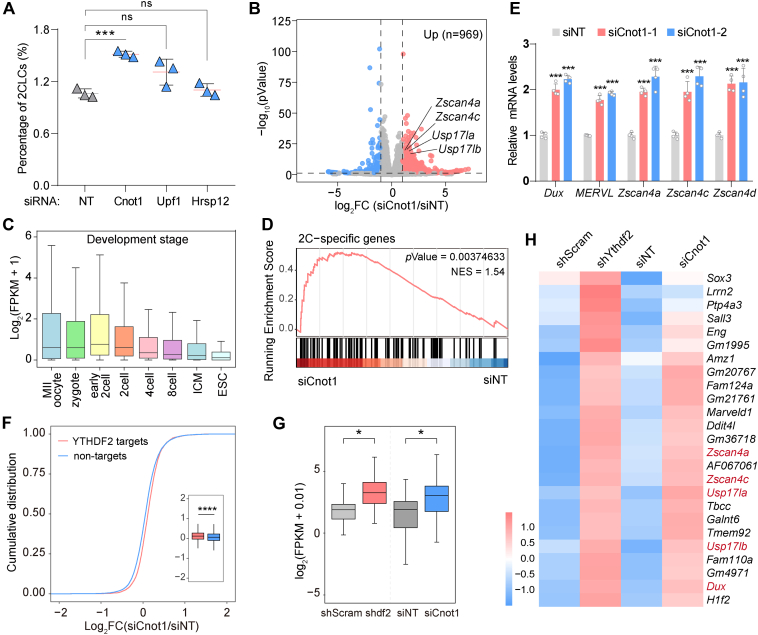 Figure 5
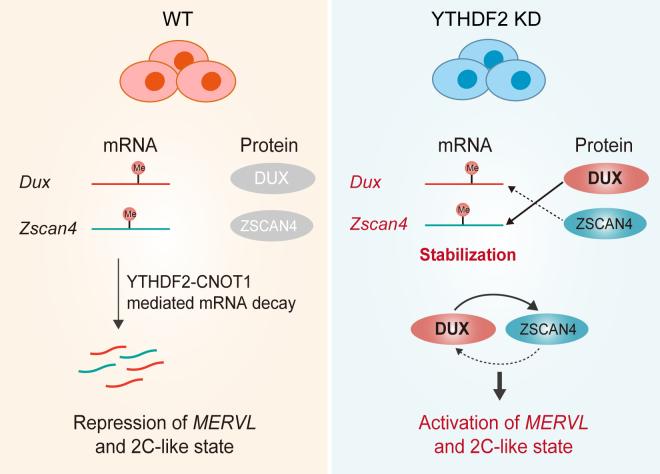 Figure 6
Peer Reviews
No public reviews on file for this paper yet. If you reviewed it on a platform where reviews are public (OpenReview, ICLR, NeurIPS, ICML), you can paste yours below so the community can read it here.
Videos
No videos yet. Explain this paper in a talk, walkthrough, or lecture? Add one.
Taxonomy
TopicsRNA modifications and cancer · RNA Research and Splicing · RNA and protein synthesis mechanisms