Turkish physicians’ approach to lesbian, gay, bisexual, transgender, and other gender and sexual minority individuals and their sexual health
Gökhan Çeker, Ersan Arda, Özer Ural Çakıcı, Murat Gül, Muhammed Arif İbiş, Kerem Gençer Kutman, Rahime Duygu Temeltürk, Tufan Çiçek, İrem Akdemir, Meral Çeker, Özlem Gökçe, Mehmet Hamza Gültekin, Yalçın Kızılkan, Hakan Anıl, Murat Demir, Emre Ünal, Ugur Akgün, Batuhan Turgay

TL;DR
This study explores how Turkish physicians view and treat LGBT+ individuals, revealing significant gaps in knowledge and attitudes that affect healthcare quality.
Contribution
The study provides novel insights into physicians' attitudes and practices regarding LGBT+ healthcare in Turkey.
Findings
Only 58.8% of physicians considered LGBT+ identities normal, while 22.9% viewed them as psychiatric disorders.
Physicians' views were primarily shaped by education and socio-cultural environment, with only 28.2% feeling competent in LGBT+ care.
Only 18% of surgical specialists supported gender-affirming procedures due to lack of experience and ethical concerns.
Abstract
Lesbian, gay, bisexual, transgender, and other gender and sexual minority (LGBT+) individuals often face healthcare disparities, and physicians’ knowledge, attitudes, and clinical preparedness significantly impact access to competent care. This study evaluated Turkish physicians’ perspectives, knowledge, and clinical approaches to LGBT+ sexual health, highlighting educational and clinical gaps. A nationwide cross-sectional survey was conducted among physicians from 10 specialties involved in LGBT+ sexual health. The survey, administered anonymously via Google Forms between June 4, 2024, and February 1, 2025, included sociodemographic questions and items assessing attitudes, clinical experience, and guideline familiarity. Statistical analyses included descriptive statistics, chi-square, Fisher’s exact tests, and binary logistic regression to identify predictors of physician attitudes…
Genes, proteins, chemicals, diseases, species, mutations and cell lines named across the full text — each resolved to its canonical identifier and authoritative record.
Click any figure to enlarge with its caption.
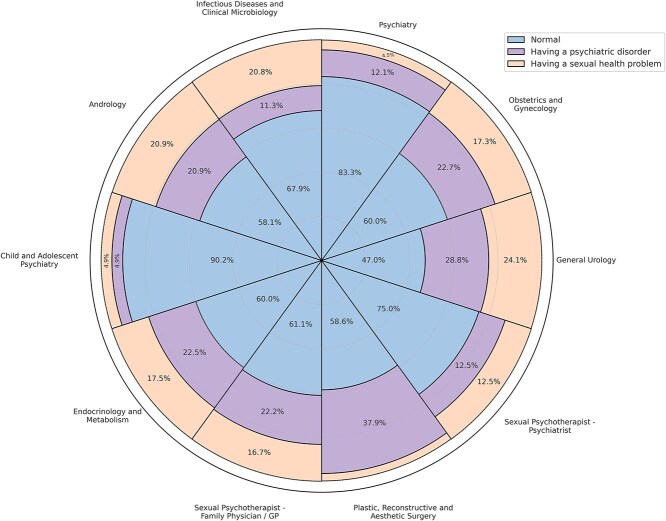 Figure 1
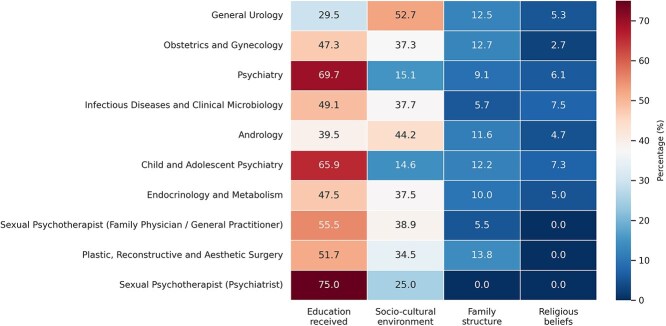 Figure 2
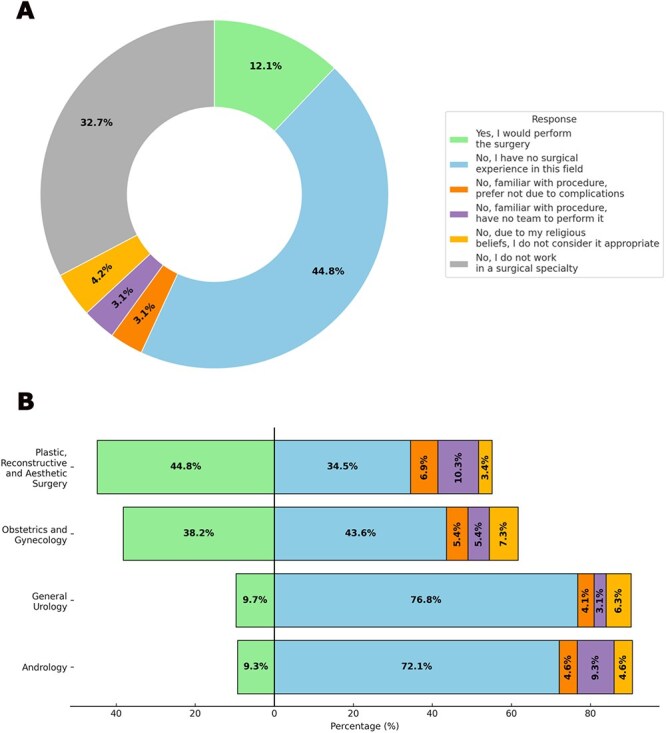 Figure 3
 Figure 4
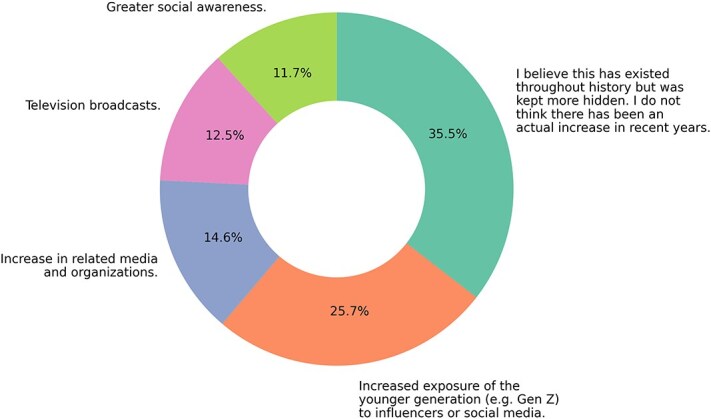 Figure 5
Peer Reviews
No public reviews on file for this paper yet. If you reviewed it on a platform where reviews are public (OpenReview, ICLR, NeurIPS, ICML), you can paste yours below so the community can read it here.
Videos
No videos yet. Explain this paper in a talk, walkthrough, or lecture? Add one.
Taxonomy
TopicsLGBTQ Health, Identity, and Policy · Reproductive Health and Technologies · African Sexualities and LGBTQ+ Issues