Performance of Density Functional Approximations in Calculations of Electronic Two-Photon Transition Strengths of Fluorescent Dyes
Marta Chołuj

TL;DR
This study compares the accuracy of three DFT functionals in predicting two-photon absorption strengths of fluorescent dyes against a high-level CC2 method.
Contribution
The work evaluates B3LYP, PBE0, and CAM-B3LYP for two-photon transition strengths in donor–acceptor dyes using a generalized few-state model.
Findings
All three functionals show significant deviations from reference CC2 results for two-photon transition strengths.
The discrepancies are most pronounced in molecules with the highest two-photon absorption strength.
The generalized few-state model helps explain the behavior of the functionals based on electronic structure parameters.
Abstract
The performance of B3LYP, PBE0, and CAM-B3LYP functionals in the prediction of the two-photon transition strengths (for low-energy transitions) of 18 dipolar donor–acceptor systems containing a difluoroborate moiety was evaluated against results obtained using the resolution-of-identity implementation of the coupled-cluster CC2 model. The generalized few-state model approach, in which the two-photon transition strength is expressed in terms of electronic structure parameters, i.e., excitation energies, dipole moments, and transition dipole moments, was applied to gain deeper insight into the behavior of selected exchange-correlation functionals. The obtained results show that all three functionals provide two-photon transition strengths that differ significantly from the reference strengths, especially in the case of molecules exhibiting the highest 2PA strength.
Genes, proteins, chemicals, diseases, species, mutations and cell lines named across the full text — each resolved to its canonical identifier and authoritative record.
Click any figure to enlarge with its caption.
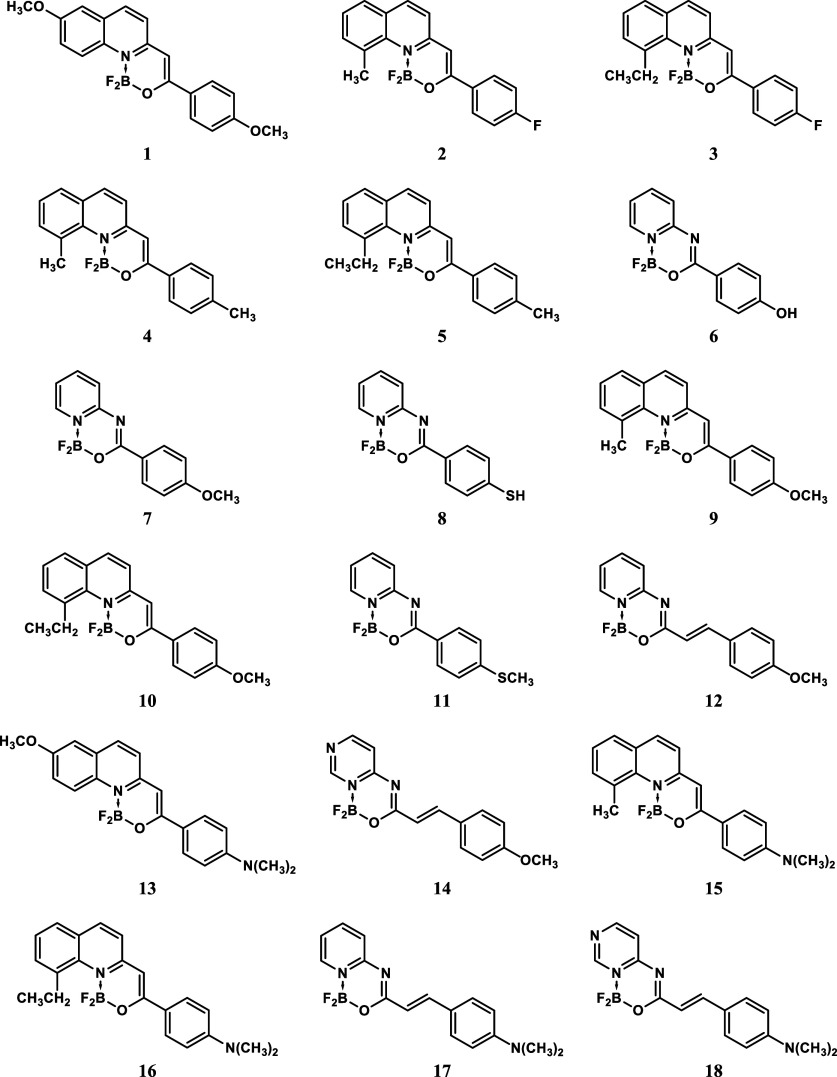 Figure 1
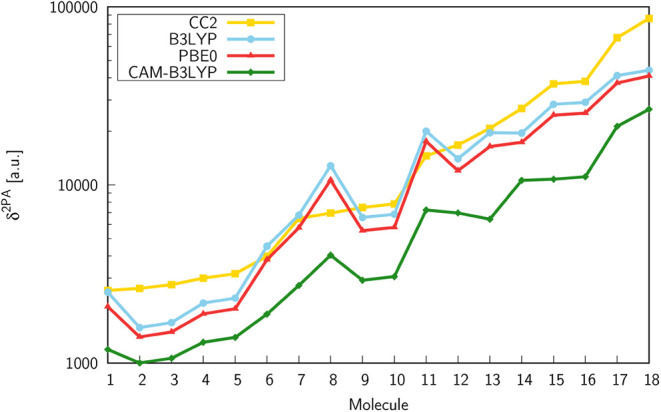 Figure 2
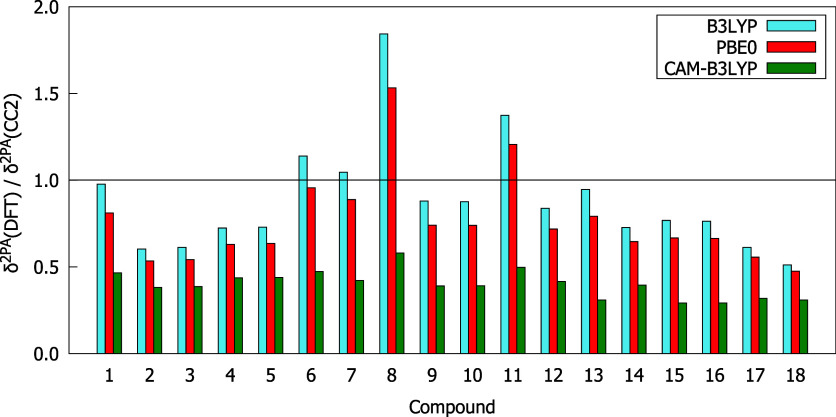 Figure 3
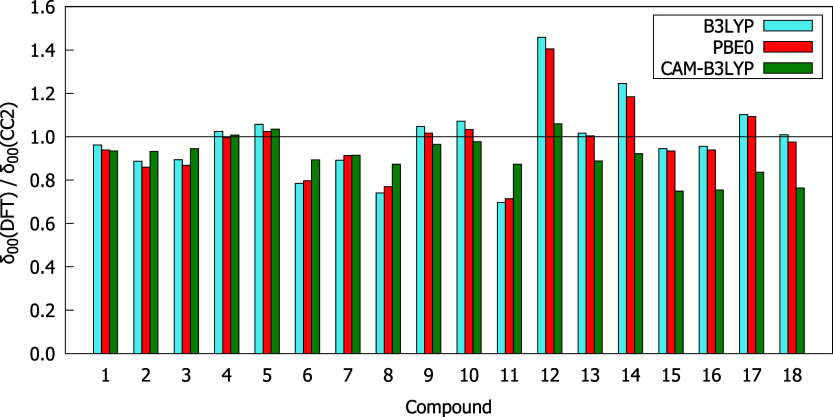 Figure 4
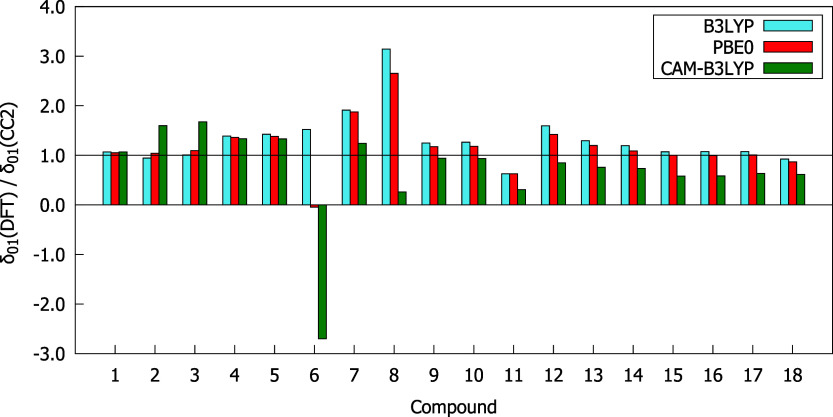 Figure 5
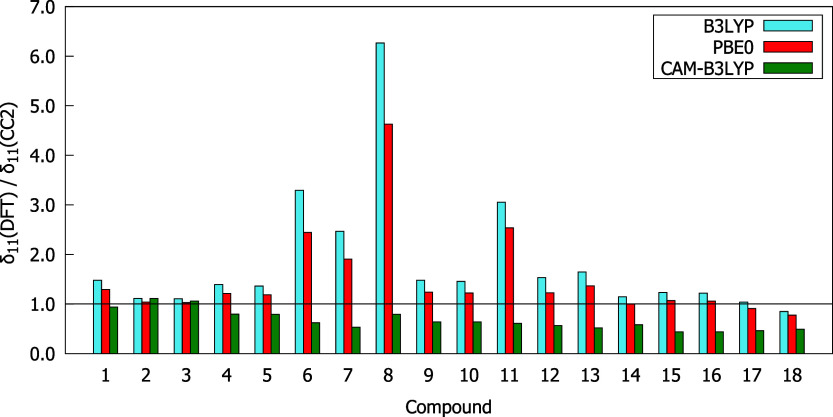 Figure 6
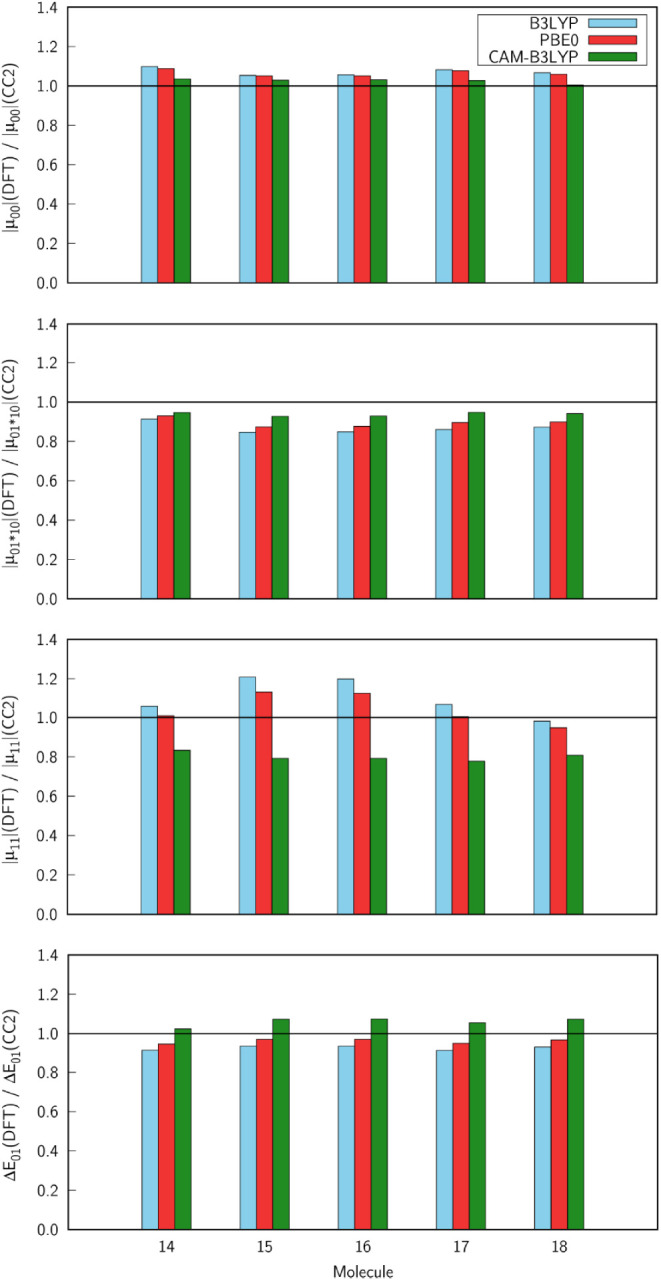 Figure 7
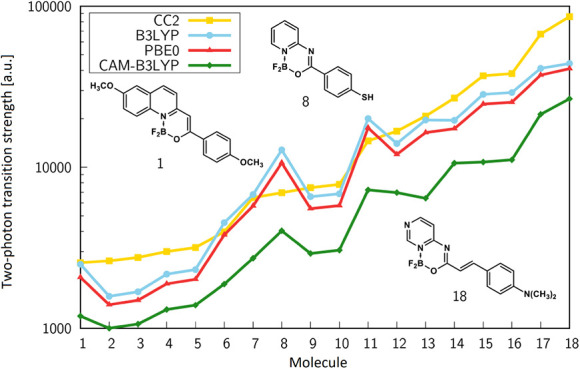 Figure 8
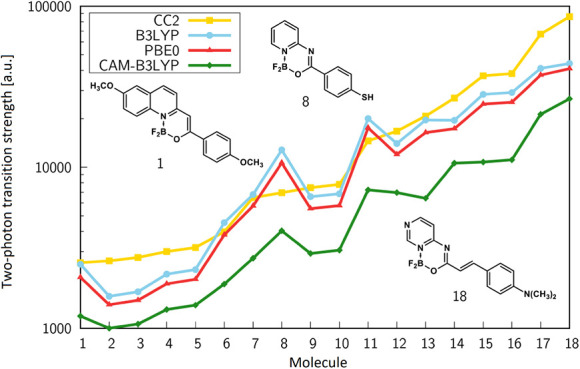 Figure 9
 Figure 10
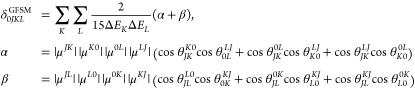 Figure 11
 Figure 12
 Figure 13
 Figure 14
 Figure 15
 Figure 16
Peer Reviews
No public reviews on file for this paper yet. If you reviewed it on a platform where reviews are public (OpenReview, ICLR, NeurIPS, ICML), you can paste yours below so the community can read it here.
Videos
No videos yet. Explain this paper in a talk, walkthrough, or lecture? Add one.
Taxonomy
TopicsNonlinear Optical Materials Studies · Photochemistry and Electron Transfer Studies · Photochromic and Fluorescence Chemistry