Low-Energy Isomers of the Magic Number H+(H2O)21 Cluster
T.-H. Choi, E. V. Henderson, K. D. Jordan

TL;DR
This paper explores different low-energy structures of a water cluster with a proton, focusing on how the proton and an extra water molecule are arranged.
Contribution
The study identifies new isomer classes with distinct ring arrangements in the H+(H2O)21 cluster.
Findings
Ten isomer classes have an internal water molecule in six 5-membered rings.
One isomer class has an internal water in a 4-membered ring and other ring combinations.
Isomers with two 4-membered and two 6-membered rings are found near the lowest energy.
Abstract
Electronic structure calculations are used to characterize low-energy isomers of H+(H2O)21. Eleven different classes of isomers, based on the (H2O)20 pentagonal dodecahedron with the excess proton localized on the surface (as a hydrated hydronium ion) and the “extra” water molecule located in the interior of the cluster, are characterized. In 10 of these classes, the internal water molecule is engaged in six 5-membered rings, but in the remaining class, which is predicted to start at only 0.6 kcal/mol above the global minimum, the internal water is engaged in a 4-membered ring, an additional 6-membered ring, and four 5-membered rings. In addition, isomers with two 4-membered rings and two 6-membered rings on the cluster surface are predicted to start at only ∼1.3 kcal/mol above the lowest-energy dodecahedral-based structure.
Genes, proteins, chemicals, diseases, species, mutations and cell lines named across the full text — each resolved to its canonical identifier and authoritative record.
Click any figure to enlarge with its caption.
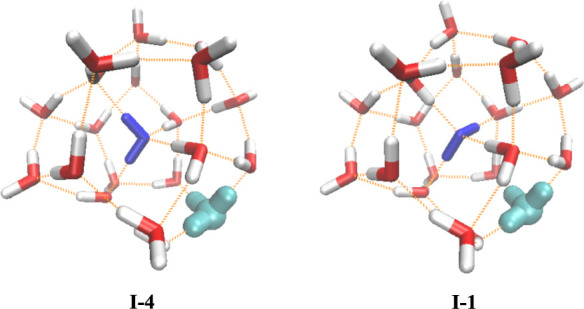 Figure 1
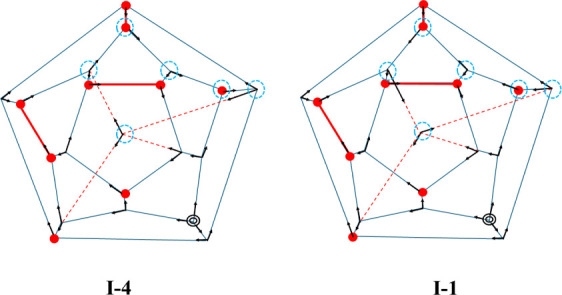 Figure 2
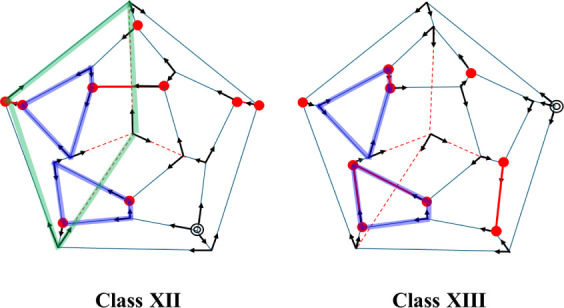 Figure 3
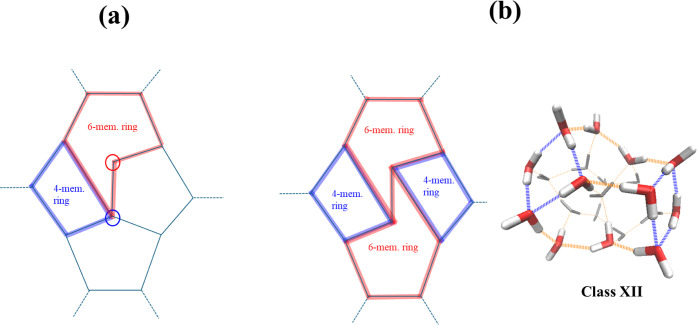 Figure 4
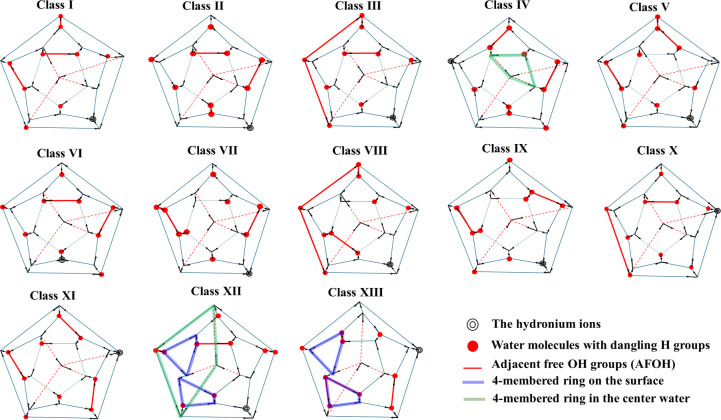 Figure 5
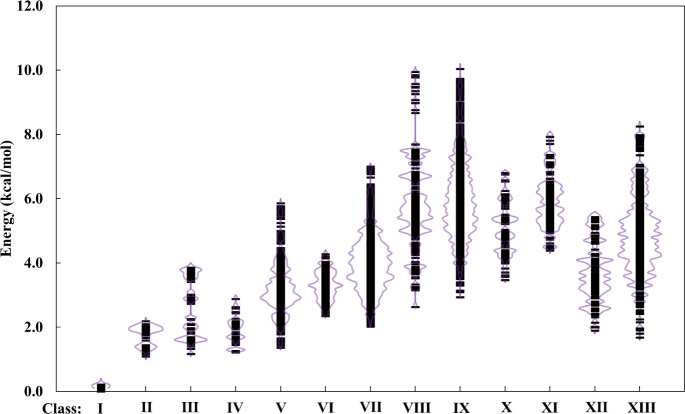 Figure 6
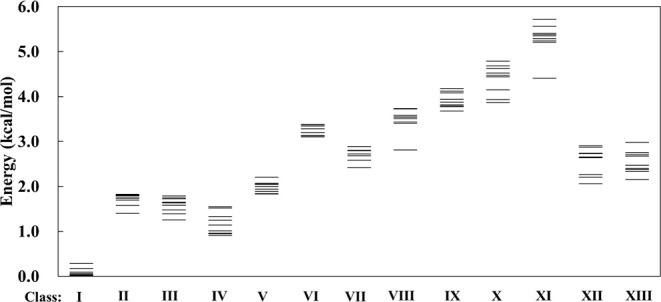 Figure 7
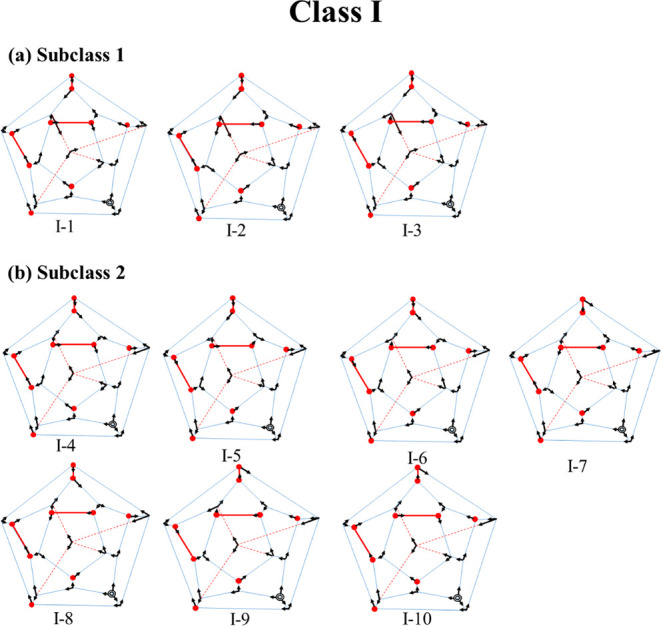 Figure 8
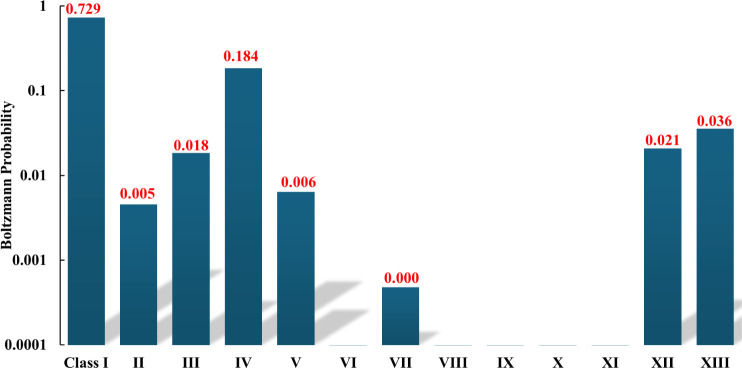 Figure 9
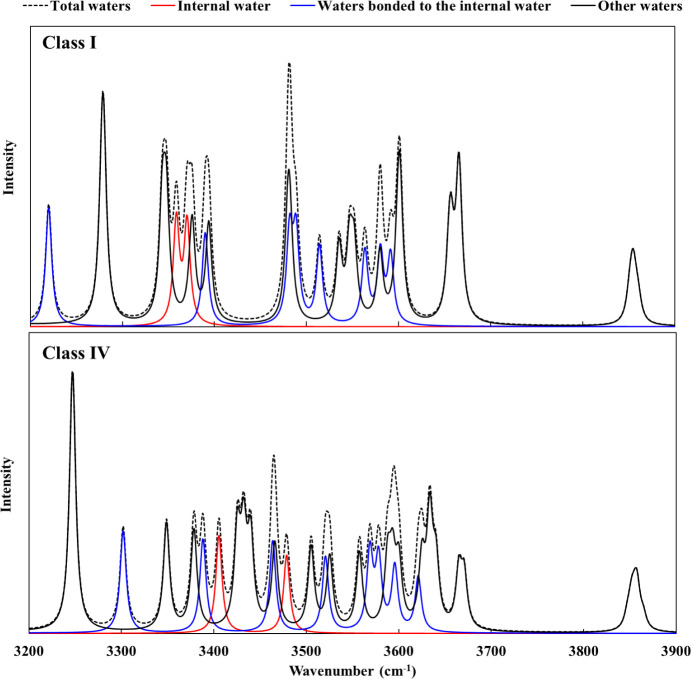 Figure 10
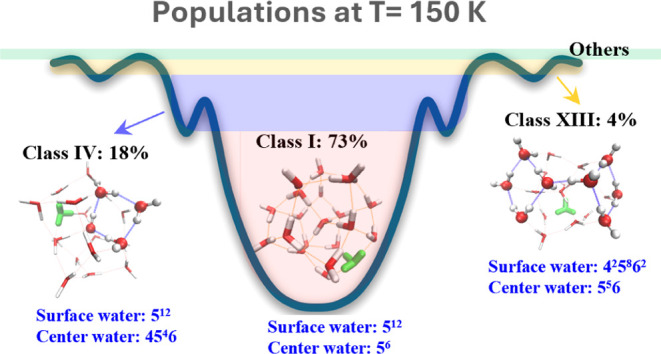 Figure 11
 Figure 12
Peer Reviews
No public reviews on file for this paper yet. If you reviewed it on a platform where reviews are public (OpenReview, ICLR, NeurIPS, ICML), you can paste yours below so the community can read it here.
Videos
No videos yet. Explain this paper in a talk, walkthrough, or lecture? Add one.
Taxonomy
TopicsAdvanced Chemical Physics Studies · Mass Spectrometry Techniques and Applications · Molecular Spectroscopy and Structure