Enhancing Photostability by Thermodynamic and Kinetic Factors: Free-Base and Palladium meso-Aryl-octaethylporphyrins
Maciej Banaszek, Barbara Golec, Renata Rybakiewicz-Sekita, Jarosław Kowalski, Piotr Szczodry, Natalia Dutkiewicz, Jacek Waluk, Aleksander Gorski

TL;DR
This paper shows how altering the structure of porphyrin compounds can dramatically improve their resistance to light-induced degradation.
Contribution
The study reveals that nonplanar palladium porphyrins exhibit exceptionally low photobleaching due to shortened triplet lifetimes and reduced oxidation.
Findings
Nonplanar palladium porphyrins show photobleaching quantum yields below 10–9 in degassed toluene.
Triplet lifetimes in nonplanar palladium porphyrins are reduced by 3 orders of magnitude compared to planar ones.
Free-base nonplanar porphyrins are less stable than planar ones in nondegassed toluene.
Abstract
Photostability is a crucial parameter in applications based on light–matter interactions. In this work, we demonstrate that photodegradation efficiency can be strongly decreased by altering the thermodynamic and kinetic characteristics of a chromophore. Photobleaching quantum yields have been determined for a series of free-base octaethylporphyrins and their palladium metallocomplexes gradually substituted by phenyl groups at the meso positions. Due to increased oxidation potential of palladium porphyrins, photostability is improved in comparison with zinc or magnesium derivatives. A spectacular effect is observed for nonplanar palladium derivatives in which the triplet lifetime in deoxygenated solution is shortened by 3 orders of magnitude with respect to planar porphyrins. Comparison of photodestruction efficiencies in oxygen-containing and degassed toluene samples shows a…
Genes, proteins, chemicals, diseases, species, mutations and cell lines named across the full text — each resolved to its canonical identifier and authoritative record.
Click any figure to enlarge with its caption.
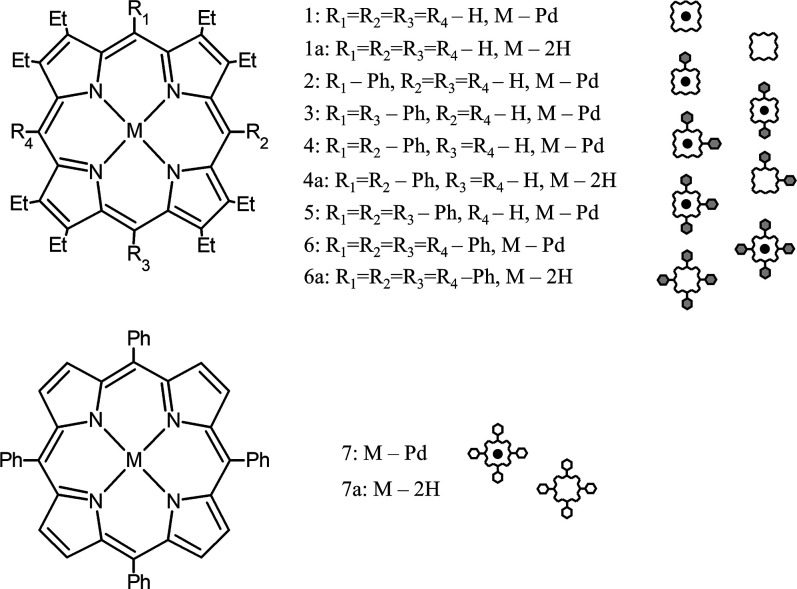 Figure 1
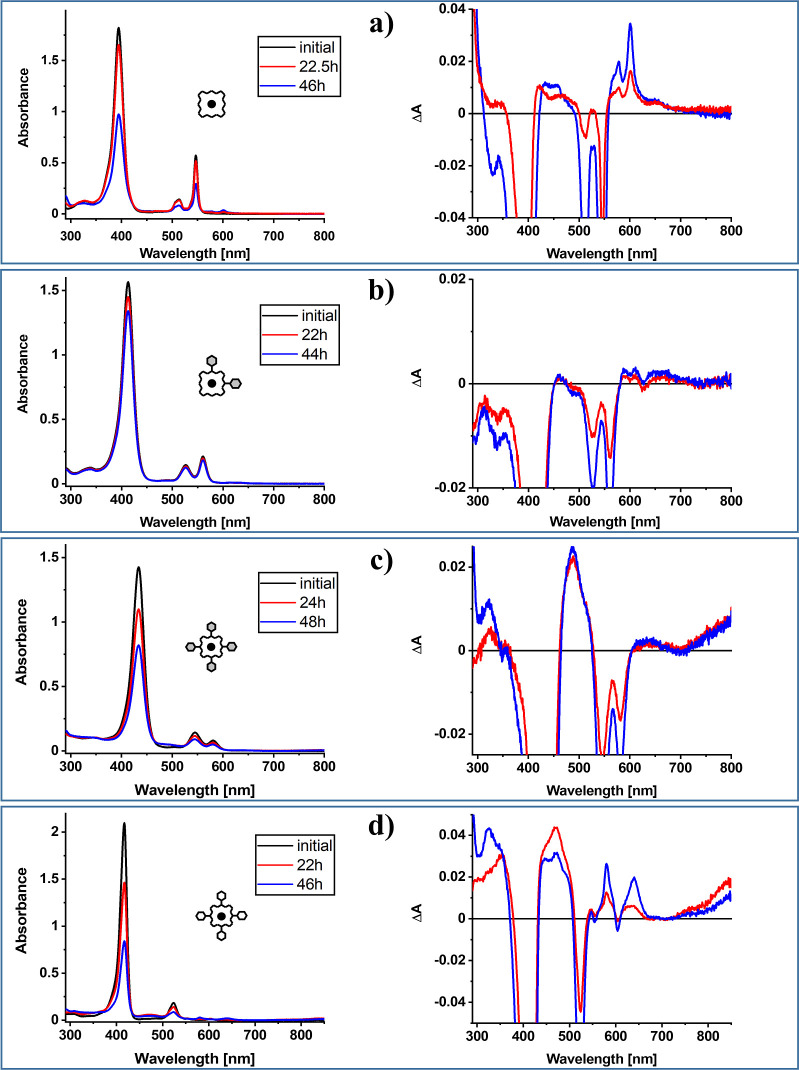 Figure 2
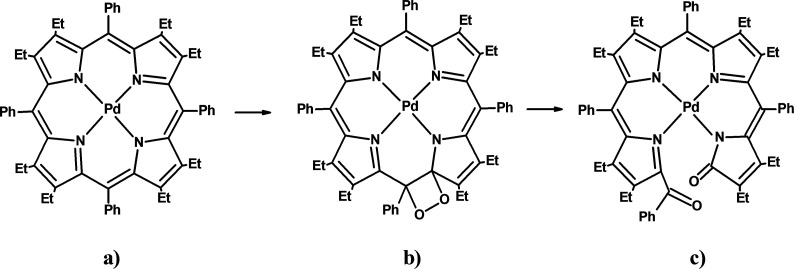 Figure 3
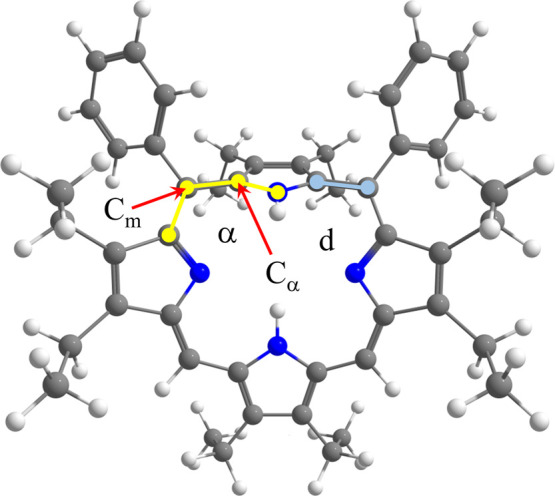 Figure 4
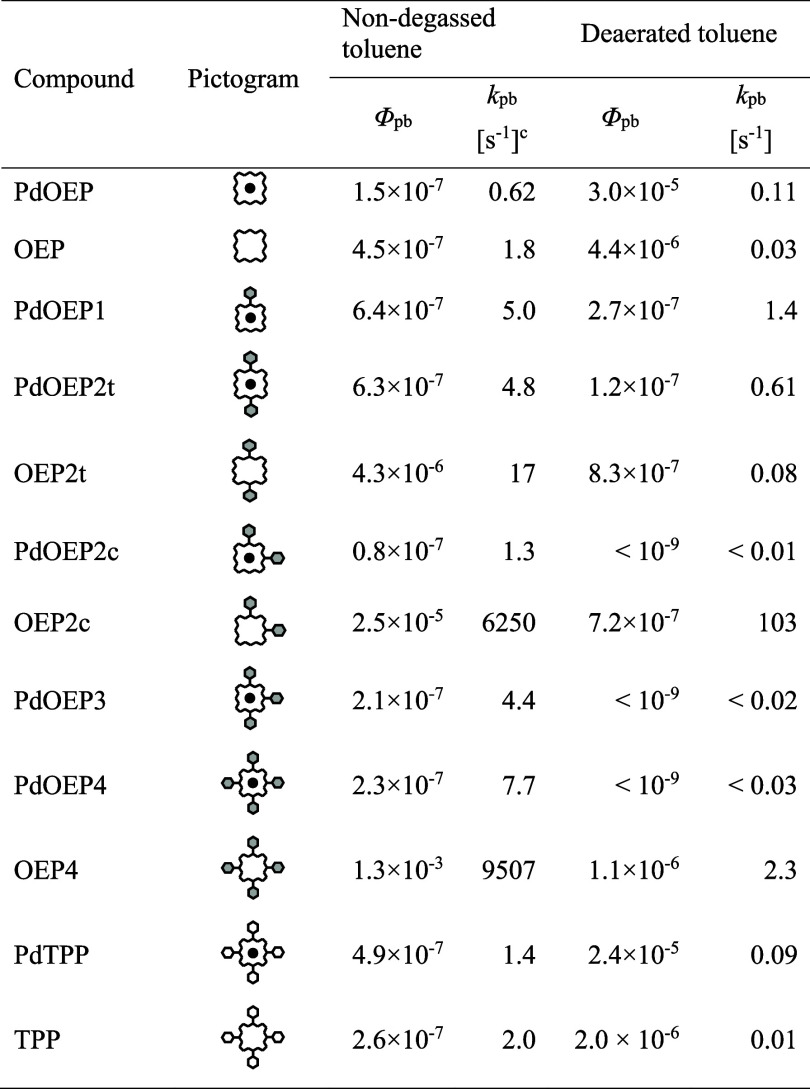 Figure 5
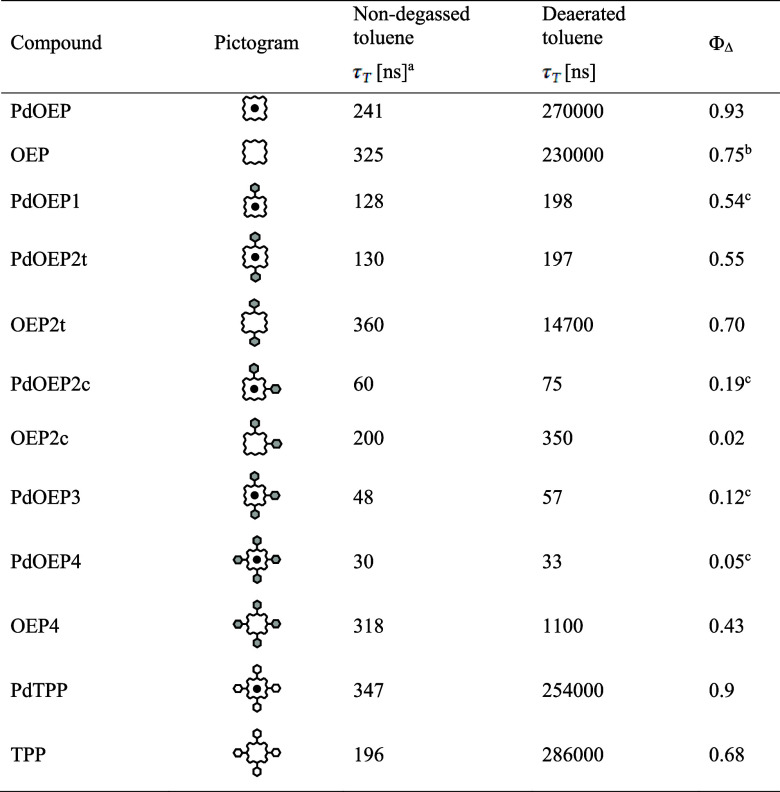 Figure 6
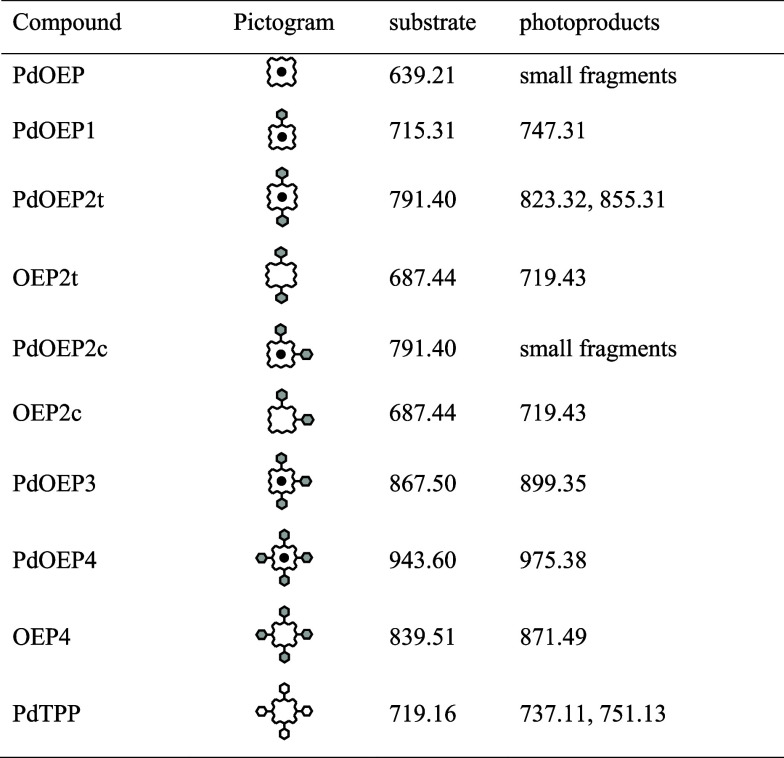 Figure 7
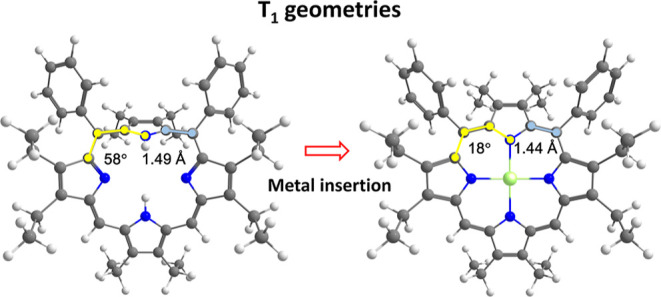 Figure 8
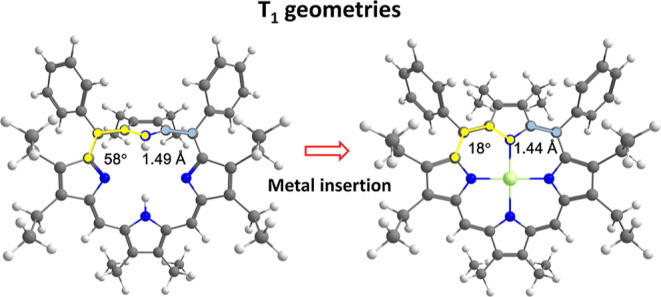 Figure 9
 Figure 10
Peer Reviews
No public reviews on file for this paper yet. If you reviewed it on a platform where reviews are public (OpenReview, ICLR, NeurIPS, ICML), you can paste yours below so the community can read it here.
Videos
No videos yet. Explain this paper in a talk, walkthrough, or lecture? Add one.
Taxonomy
TopicsPorphyrin and Phthalocyanine Chemistry · Photodynamic Therapy Research Studies · Photochemistry and Electron Transfer Studies