Anopheles hyrcanus (Diptera: Culicidae): yet another invasive mosquito species in Germany
Doreen Werner, Henrike Nehls, Christiane Eska, Helge Kampen

TL;DR
A new invasive mosquito species, Anopheles hyrcanus, was found in Germany, raising concerns about its potential to spread diseases.
Contribution
The study reports the northernmost records of Anopheles hyrcanus in Germany and Europe.
Findings
Anopheles hyrcanus was collected in Brandenburg, Germany, marking its northernmost occurrence worldwide.
The species was found in floodplain areas approximately 25 km apart.
The spread of the species may be linked to climate change.
Abstract
From August to October 2024, 62 specimens of the non-native mosquito species Anopheles hyrcanus were trapped in the federal state of Brandenburg, northeastern Germany. At one site, 59 specimens, and at a second site, 3 specimens were collected, with both sites located in floodplain areas, approximately 25 km apart. The records represent the northernmost collection sites of this species worldwide. Anopheles hyrcanus is considered a potential vector of malaria parasites, dirofilarial worms, and various viruses, although vector capacity appears to be generally low. The findings in Germany follow the recent detections of the species in Hungary, Slovakia, Czechia, Austria, and Poland, suggesting possible establishment in more northern areas as a consequence of climate change.
Genes, proteins, chemicals, diseases, species, mutations and cell lines named across the full text — each resolved to its canonical identifier and authoritative record.
Click any figure to enlarge with its caption.
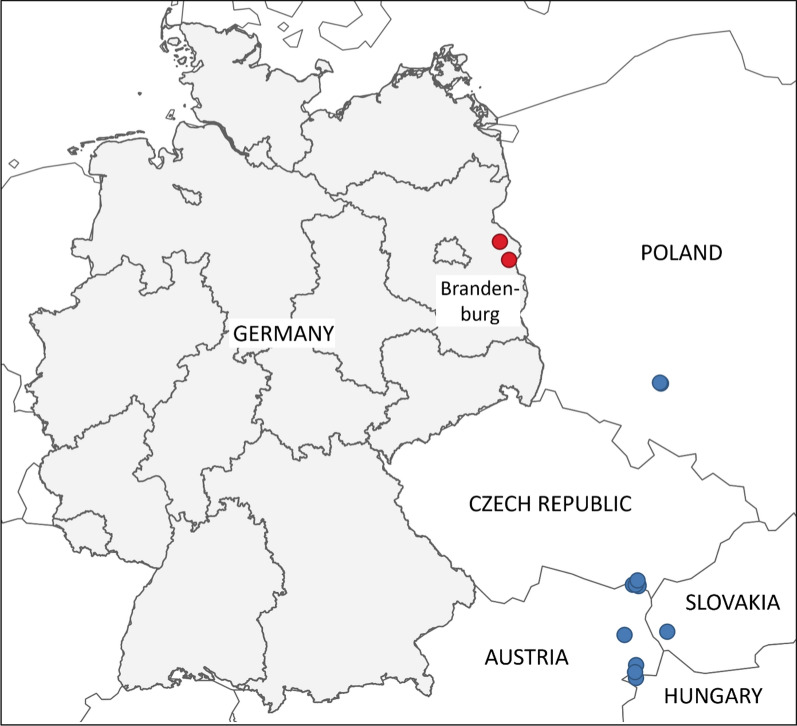 Figure 1
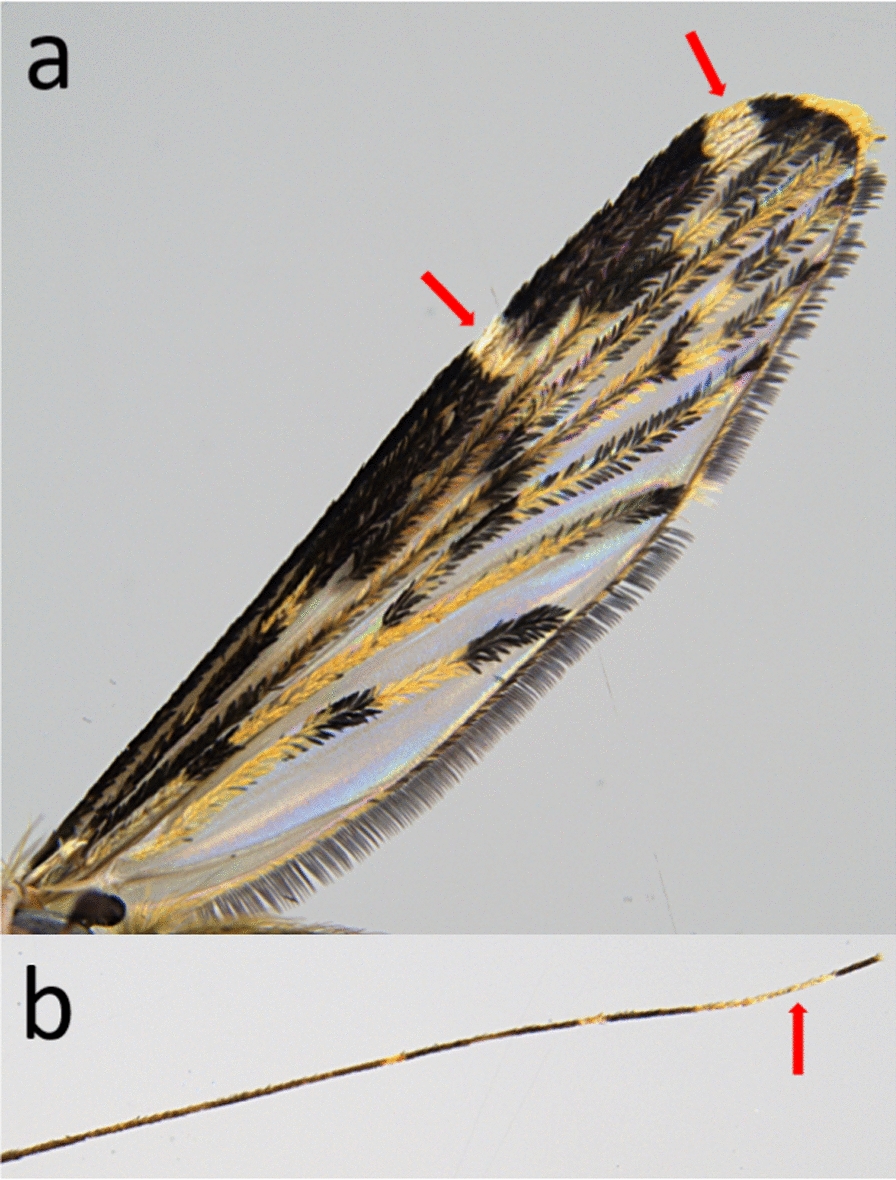 Figure 2
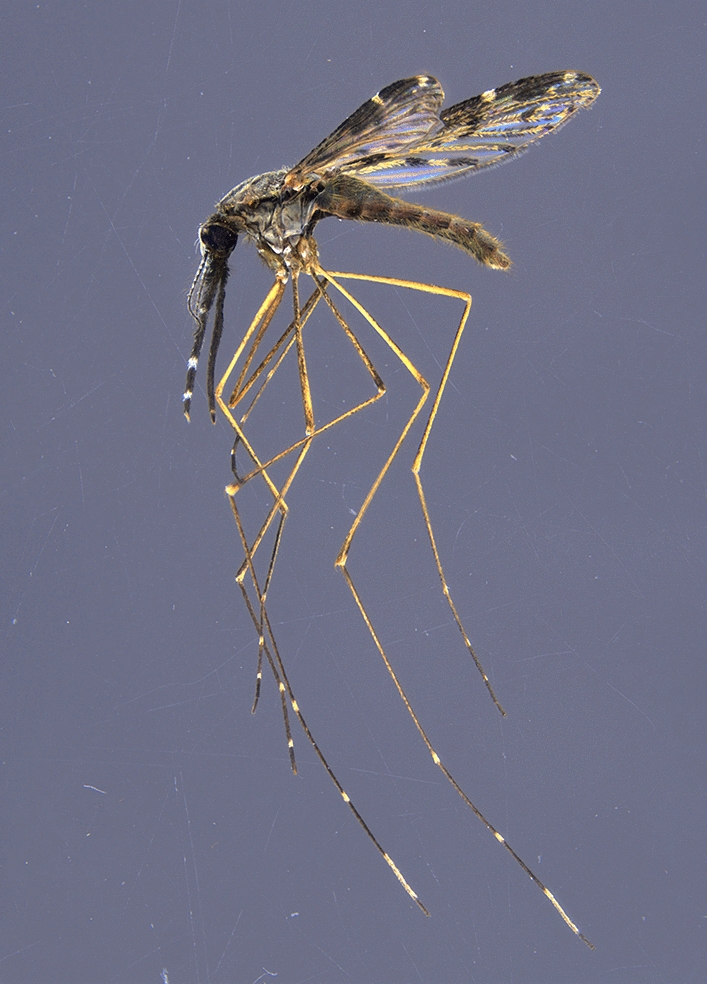 Figure 3
- —Federal Office for Agriculture and Food (BLE)
- —Leibniz-Zentrum für Agrarlandschaftsforschung (ZALF) e.V. (3493)
Peer Reviews
No public reviews on file for this paper yet. If you reviewed it on a platform where reviews are public (OpenReview, ICLR, NeurIPS, ICML), you can paste yours below so the community can read it here.
Videos
No videos yet. Explain this paper in a talk, walkthrough, or lecture? Add one.
Taxonomy
TopicsMosquito-borne diseases and control · Malaria Research and Control · Insect Pest Control Strategies
Due to globalization, and probably climate change, Germany has recently faced the invasion and establishment of several non-native mosquito species: Aedes albopictus, Anopheles petragnani, Culiseta longiareolata, Aedes japonicus, and Aedes koreicus [1]. The first three species are considered thermophilic and benefit from climatic change, while the Aedes species are of interest as potential vectors of disease agents [2]. Another non-indigenous thermophilic species, Uranotaenia unguiculata, which had first been detected in Germany in 1994 [3] but never been documented elsewhere in Germany, was recently found at several locations and in different years far north from its previously known single detection site in southwest Germany ([4], Werner & Kampen, unpublished data).
Except for the first report of Ur. unguiculata, all detections mentioned were made in the framework of a national mosquito monitoring programme launched in 2011, meant to update the occurrence, distribution, and spread of mosquitoes in Germany, with particular emphasis on vector species. The programme includes adult collections by trapping, aspirating, netting, and the citizen science project Mueckenatlas (mosquito atlas) [5], as well as larval collections [6]. In addition to the above invasive species, it looks back to the detection of several extremely rare mosquito species native to Germany but not documented for decades, such as Ae. refiki, Cx. martinii, and An. algeriensis [1].
In the present study, BG-Pro traps (Biogents, Regensburg, Germany) baited with CO_2_ from gas tanks (1 kg/d) were operated at several places in the Oder river region in the federal state of Brandenburg, northeastern Germany, from late May to early October 2024, but only for 10 consecutive days toward the end of the month followed by 20 or 21 days of inactivity. Traps were emptied on a daily basis, and collections were brought to the laboratory to be identified morphologically to species or complex/group level using the determination key by Becker et al. [7]. Specimens of rare species or damaged specimens were subjected to COI barcoding as described by Kampen et al. [8].
In a riparian forest along the Alte Oder river close to Quappendorf (N52.619, E14.266) and in a garden in Zeschdorf (N52.424, E14.428), Anopheles hyrcanus (Pallas 1771) specimens were trapped (Fig. 1). The collections also included specimens of the following culicid species/groups: Ae. annulipes group*, Ae. cinereus/geminus, Ae. hortensis/territans, Ae. vexans, An. claviger, An. maculipennis* complex, An. plumbeus, Coquillettidia richiardii, Cs. annulata, and Cx. pipiens complex. The bee line distance between the two sites is about 25 km. Both collection sites are located in the vast floodplain areas of the Oderbruch (River Oder lowlands), a huge natural wetland landscape of hundreds of square kilometers, and are about 12 and 10 km, respectively, away from the German–Polish border. In Quappendorf, An. hyrcanus specimens were captured almost daily from 23 August to 1 September 2024 to give a total of 59, whereas in Zeschdorf, 2 individuals were collected on 29 August and 1 individual was caught on 23 September 2024 (Table 1).Figure 1. Map of Central Europe showing the most recent new country records of Anopheles hyrcanus in Hungary, Slovakia, Czechia, Poland (blue dots), and Germany (red dots). Collection sites according to Tóth [25], Halgoš and Benková [26], Votýpka et al. [27], Šebesta et al. [28], Lebl et al. [29], Seidel et al. [30], Lühken et al. [31], and the present study.Copyright: BKG 2023 dl-de/by-2–0: https://sgx.geodatenzentrum.de/web_public/gdz/datenquellen/Datenquellen_vg_nuts.pdf; EuroGeographics: administrative boundariesTable 1Collection of An. hyrcanus in the Oder river region in August and September 2024Collection siteCollection dateNumber of specimens collected per dayTotal of specimens collectedQuappendorf23 August 202445924 August 2024427 August 2024228 August 2024229 August 20243730 August 2024831 August 202411 September 20241Zeschdorf29 August 20242323 September 20241
Morphological identification was done on the basis of the dichotomous key for adult Anopheles mosquitoes in Becker et al. [7], which leads to An. hyrcanus if the specimen is characterized by (i) wings possessing dark and pale scales, forming contrasting spots at least on the costa, the radius, and vein R1; (ii) two pale spots situated in the apical half of the costal margin of the wing; and (iii) the base of the fore femur being distinctly swollen. Morphological characters of the collected specimens were unambiguous for An. hyrcanus (Fig. 2a), with no variation between specimens being noticed. However, the tarsomeres IV of the hind legs were entirely pale scaled (Fig. 2b), suggesting An. hyrcanus var*. pseudopictus* on the basis of the determination key used.Figure 2. Wing and hind leg of specimens collected in the present study. According to Becker et al. [10], the two pale spots in the apical half of the costal margin of the wing (a) is indicative for An. hyrcanus, while the entirely pale-scaled tarsomere IV of the hind leg (b) suggests An. hyrcanus var. pseudopictus
For confirmation, one specimen of each of the two collection sites was processed by COI barcoding. The COI DNA sequences were 99.86% identical to each other (with one single bp difference out of 710 nucleotides), and 100% and 99.85%, respectively, identical to the best matching sequence entries in the Barcode of Life database (BOLD: https://boldsystems.org), which represented An. hyrcanus and An. pseudopictus. The COI regions of these two taxa are highly similar, causing both Ponçon et al. [9] and Djadid et al. [10] to suggest that they are one and the same species. Even previously, a great variability in the extent of the pale ringing of the hind legs of An. hyrcanus was reported [11], and some authors had speculated An. pseudopictus to be just a different-colored variant of An. hyrcanus [12–15]. Accordingly, Becker et al. [7] do not treat An. pseudopictus as a distinct species but as a variety of An. hyrcanus, although officially, An. pseudopictus is still considered a true species [16]. The COI sequences produced in this study have been deposited in GenBank under accession numbers PV039093 and PV039678.
Anopheles hyrcanus belongs to a group of about 30 closely related species (Hyrcanus Group), three of which (according to valid systematics [16], although by some authors considered synonymous (e.g., [17, 18])) occur in the western Palaearctic: An. hyrcanus (Pallas 1771), An. pseudopictus Grassi 1899, and An. chodukini Martini 1929 [19, 20]. According to Becker et al. [7], species of the Hyrcanus Group develop in open water bodies in floodplain areas, marshes, and irrigated rice fields where they can reach particularly high abundances (e.g., [21, 22]). Until recently, they were known to occur from the Iberian Peninsula, through Europe south of the Alps, and Asia south of about 50 °N to the Pacific [19, 23], indicating adaptation to warm climates. However, first reports from more northern countries such as Hungary (1995–2003; exact year of detection not provided), Slovakia (2002 and 2003), Czechia (2005–2007), Austria (2012), and Poland (2019) have recently been published [24–30] (Fig. 1). On the basis of these, the findings in Germany suggest a northward spread which is probably facilitated by climate change [25]. For Serbia, temperature increase as a prerequisite condition for the spread of An. hyrcanus has impressively been illustrated by Mihailović et al. [31].
A total of 17 specimens of the collected An. hyrcanus were blood-fed, although poorly engorged. To determine vertebrate host species, blood meal analysis was carried out following Köchling et al. [32]. Identification of the blood origin was successful in 11 cases: 6 females had fed on humans, 2 females each on boar and wolf, and 1 female on sheep. Anopheles hyrcanus is believed to feed preferentially on mammals, and feeding on humans and sheep as in this study has been described repeatedly [19, 33]. Occasionally, it has also been found having fed on birds [34], in agreement with the detection of specimens infected with avian plasmodia in Austria [29]. The uncommon and previously not described finding of wolf as a blood host of specimens collected in the present study might be explainable by the recent spread of wolves in Germany, which have become particularly abundant in the federal state of Brandenburg [35]. It may indicate a generalist biting behavior of An. hyrcanus.
Seasonal activity of adult An. hyrcanus has been reported to occur from May to September, with a peak from mid-June to mid-September [7, 22]. The observations by Votypka et al. [26] (late June to August), Lebl et al. [28] (May to September), and Lühken et al. [30] (July to September) are in line with the collection period of this study.
The fact that 62 specimens were collected at two places 25 km apart strongly argues against isolated random findings caused by the collection strategy that was not targeted at An. hyrcanus. Rather, it can be assumed that An. hyrcanus has become established in Germany. Establishment provided, the detection increases the German mosquito fauna to 53 species, including 9 of the genus Anopheles [1, 36]. It also adds another potential vector species. In contrast to numerous articles in which An. hyrcanus is presented as a demonstrated vector, no immediate evidence of pathogen transmission by this species exists, and pertinent laboratory infection studies are missing. Most of these uncertainties must be attributed to systematic revision and changing taxonomy since most species of the present Hyrcanus Group were once considered “races” of An. hyrcanus before elevating them to species level [16, 19, 37, 38]. If races are not mentioned in the historic literature, the present species status might be deduced, but with some uncertainty, only from the geographic origin of the formerly investigated specimens. Thus, decade-old studies on pathogen infection and vector competence of An. hyrcanus carried out in the eastern Palaearctic and the Oriental regions (e.g., [13, 39]) probably refer to present-day An. sinensis, An. nigerrimus, An. lesteri, and other species of the Hyrcanus Group distributed there. Notwithstanding, there are strong indications for An. hyrcanus to be a vector of malaria parasites: field-collected specimens have been shown to be infected with malarial parasites in the salivary glands [38, 40]. Together with regionally high abundances and high anthropophily, this makes it a likely vector of plasmodia [22, 33, 41–43], although probably a secondary one only due to high degrees of exophagy and exophily [33]. Furthermore, Plasmodium falciparum, Dirofolaria immitis, and D. repens, as well as Japanese encephalitis, West Nile, Sindbis, and Ťahyňa viruses have been isolated from, or genetically detected in, total homogenized An. hyrcanus specimens [10, 44–50].
The finding of still another invasive mosquito species in Germany demonstrates the importance of mosquito surveillance. Considering continuing globalization and global warming, it must be expected that An. hyrcanus will not be the last thermophilic potential mosquito vector species emerging and establishing in Central Europe.
The reference list from the paper itself. Each links out to its DOI / PubMed record.
- 1Harbach R. Mosquito taxonomic inventory. 2024. https://mosquito-taxonomic-inventory.myspecies.info/valid-species-list. Accessed 29 Jan 2025.
- 2DBBW (Federal documentation and counselling centre on wolf issues): Wolves in Germany–Status report 2023/2024. https://www.dbb-wolf.de/mehr/literatur-download/statusberichte. Accessed 28 Jan 2025.