Dataset of NIR, MIR, FIR and NMR spectroscopy and GC-MS of real samples of e-liquids from Malaysia
Noor Hazfalinda Hamzah, Farah Natasha Mohd Aris, Nur Hayatna Mukhni, Stéphane Balayssac, Saïda Danoun, Véronique Gilard, Mohd Rashidi Abdull Manap

TL;DR
This paper provides a detailed dataset of e-liquid samples from Malaysia using multiple analytical techniques to identify their chemical composition.
Contribution
The study introduces a comprehensive dataset combining FTIR, GC-MS, and NMR analyses of real e-liquid samples for regulatory and compositional purposes.
Findings
FTIR spectra identified nicotine, propylene glycol, vegetable glycerine, and additives in e-liquids.
GC-MS detected over 30 volatile compounds, including nicotine derivatives and potentially harmful substances.
NMR spectroscopy resolved molecular-level details of nicotine forms and flavoring compounds.
Abstract
This dataset presents comprehensive spectroscopic and chromatographic profiling of 27 e-liquid samples including commercial formulations, a booster, and a nicotine solution (the e-liquids were collected in Ampang Jaya, Malaysia before April 2023). Fourier-transform infrared (FTIR) spectroscopy was performed across the near-, mid-, and far-infrared ranges (6000–80 cm−1), generating unique transmittance spectra for each sample. These spectra revealed vibrational bands characteristic of nicotine, propylene glycol, vegetable glycerine, and various additives, supporting rapid qualitative fingerprinting and comparison through OPUS software. 1H nuclear magnetic resonance (NMR) spectroscopy, conducted using a 600 MHz Bruker spectrometer with cryoprobe, enabled molecular-level identification of sample matrices. Signals from nicotine, propylene glycol, vegetable glycerine, and flavourings were…
Genes, proteins, chemicals, diseases, species, mutations and cell lines named across the full text — each resolved to its canonical identifier and authoritative record.
Click any figure to enlarge with its caption.
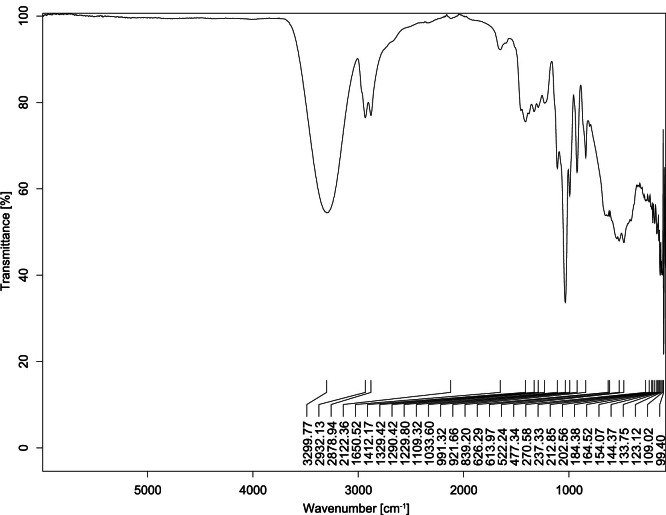 Figure 1
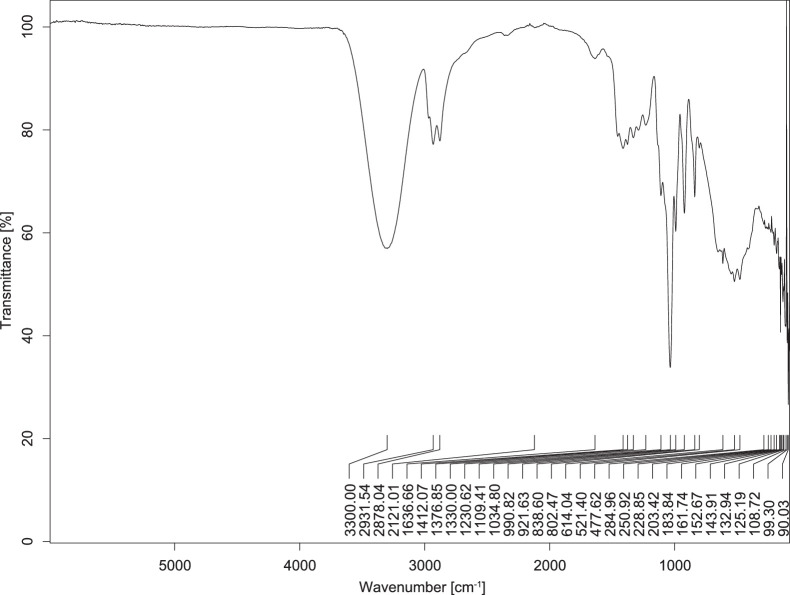 Figure 2
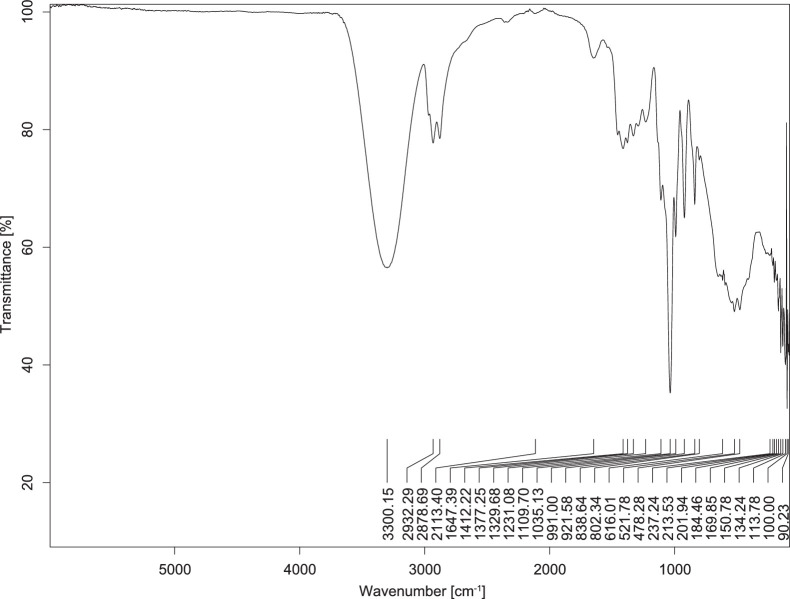 Figure 3
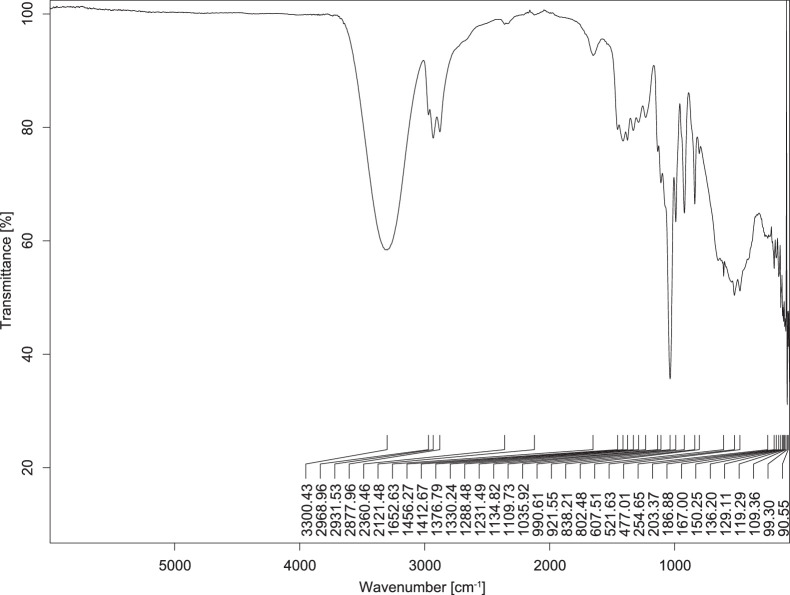 Figure 4
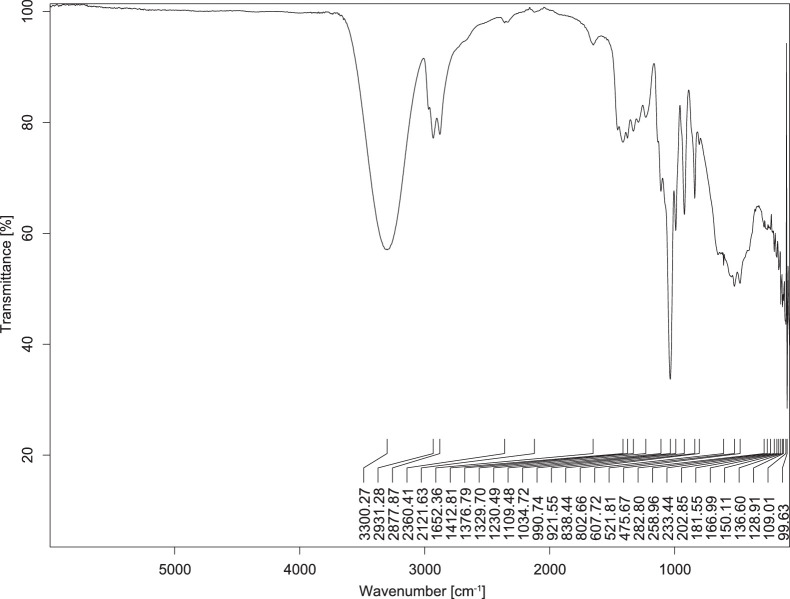 Figure 5
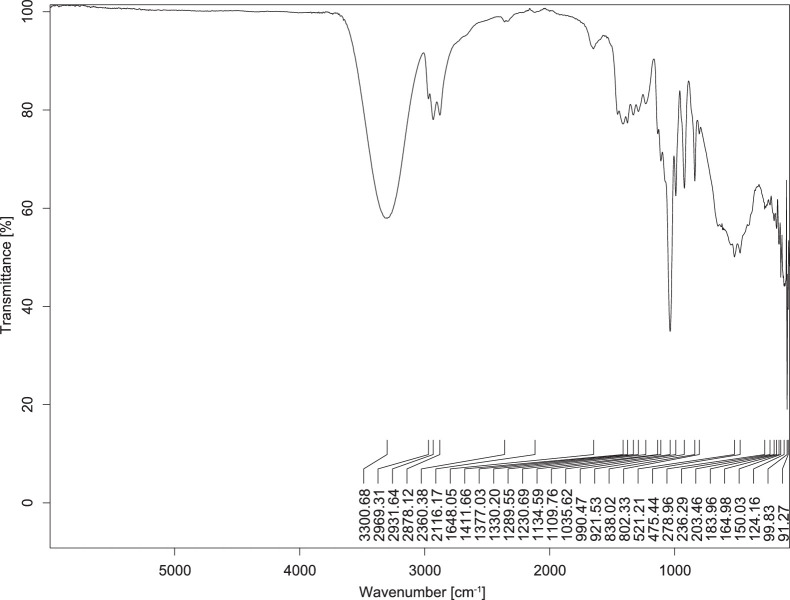 Figure 6
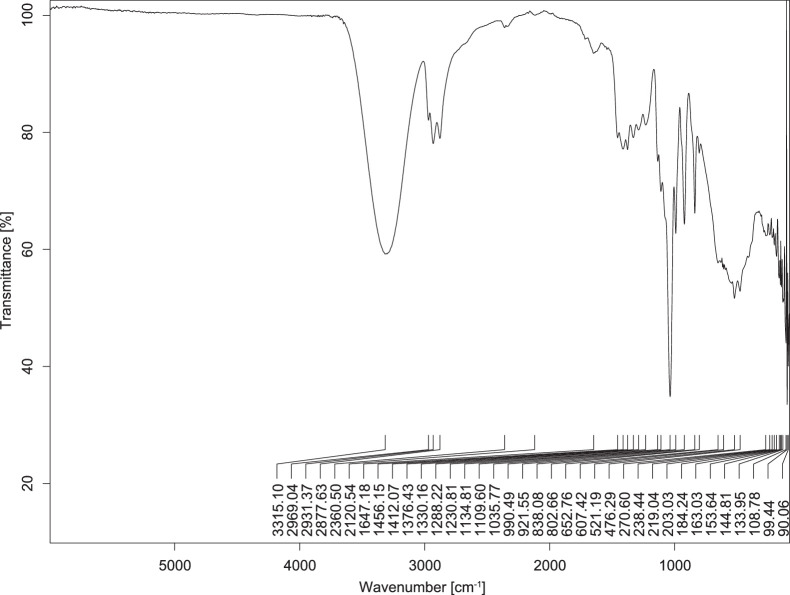 Figure 7
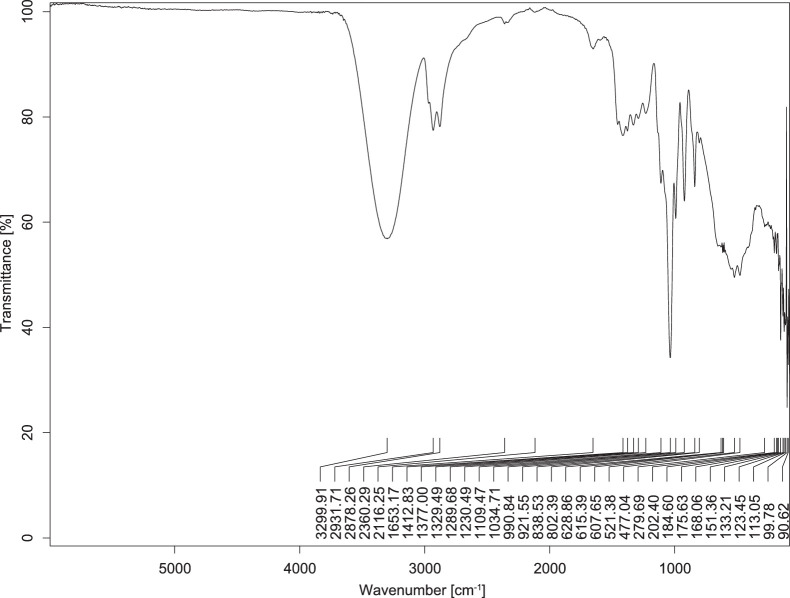 Figure 8
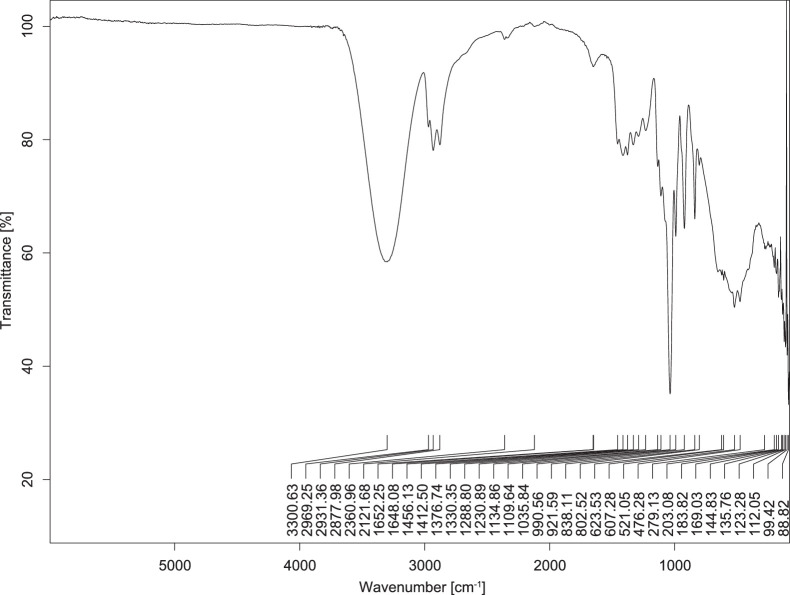 Figure 9
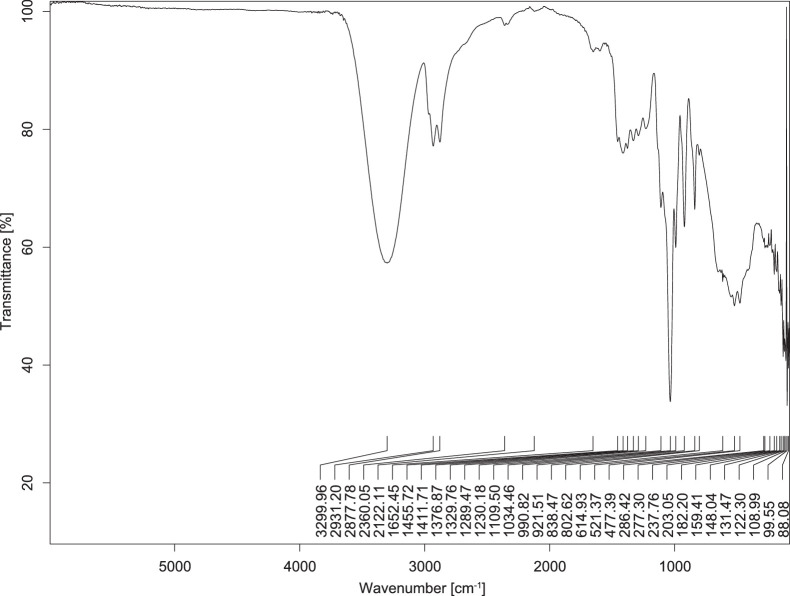 Figure 10
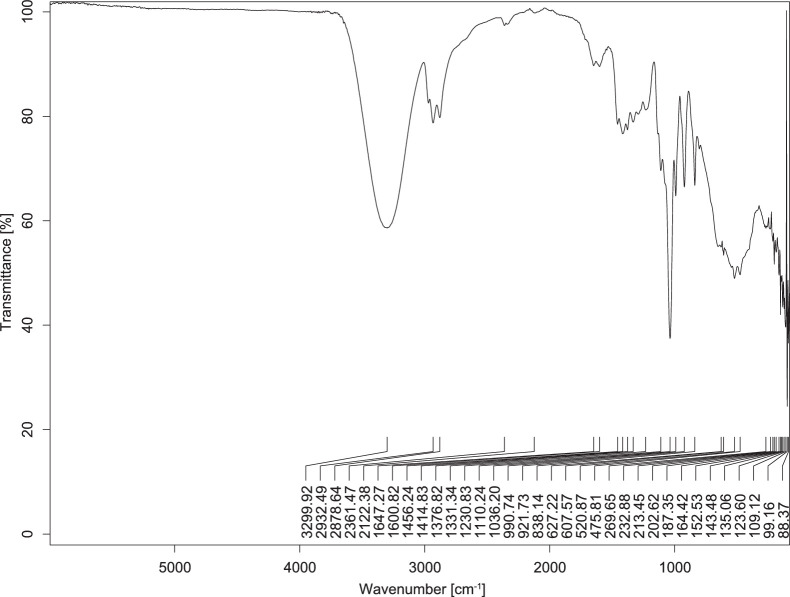 Figure 11
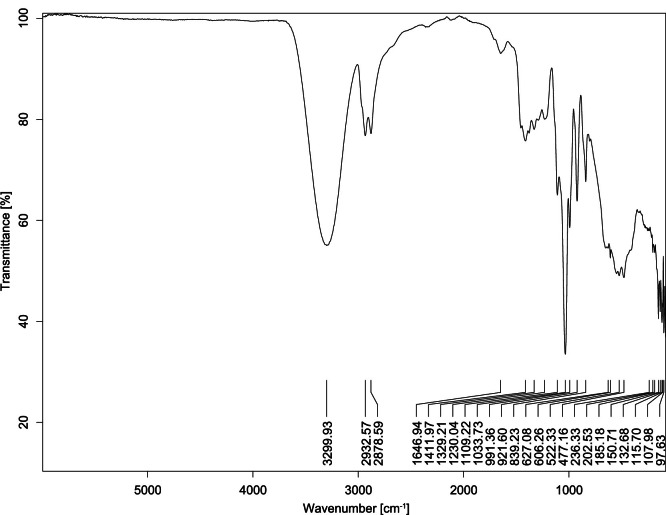 Figure 12
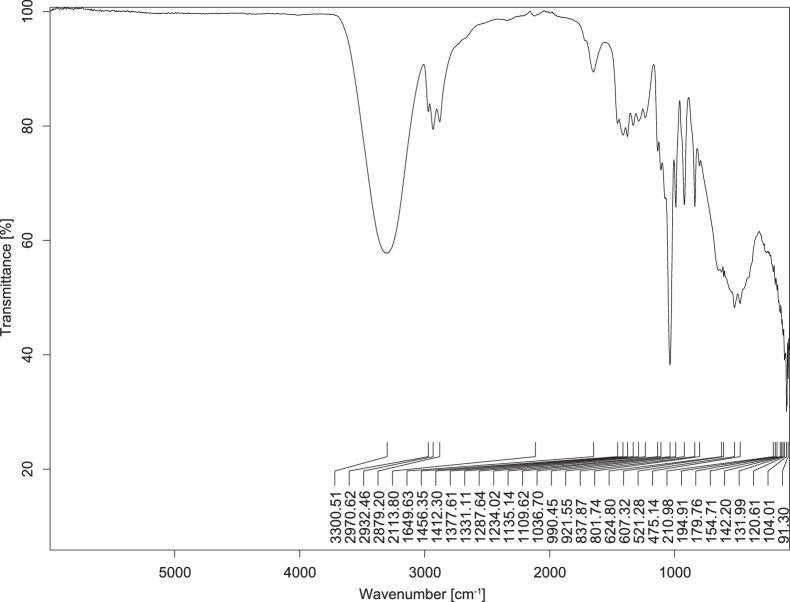 Figure 13
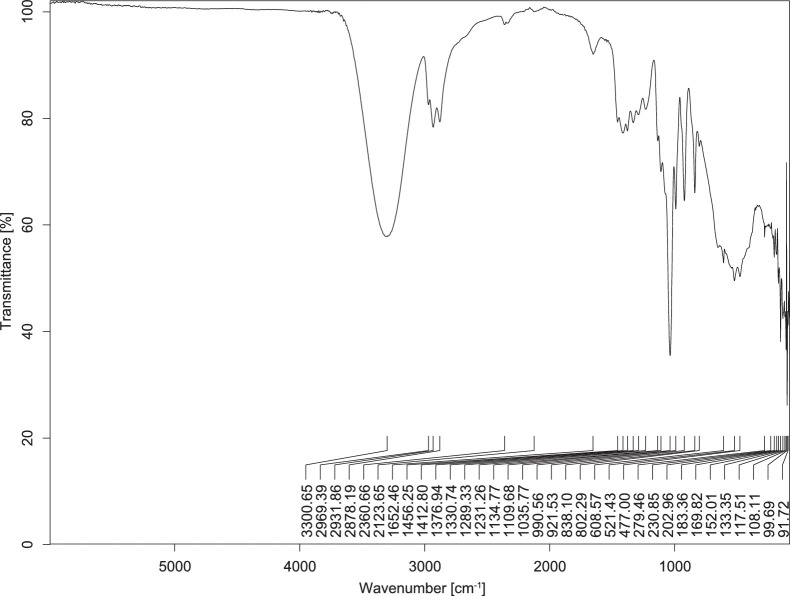 Figure 14
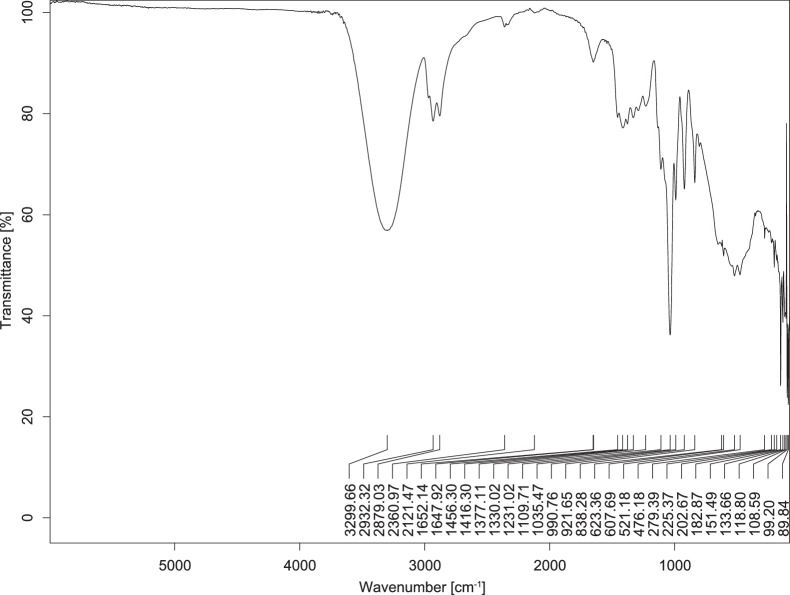 Figure 15
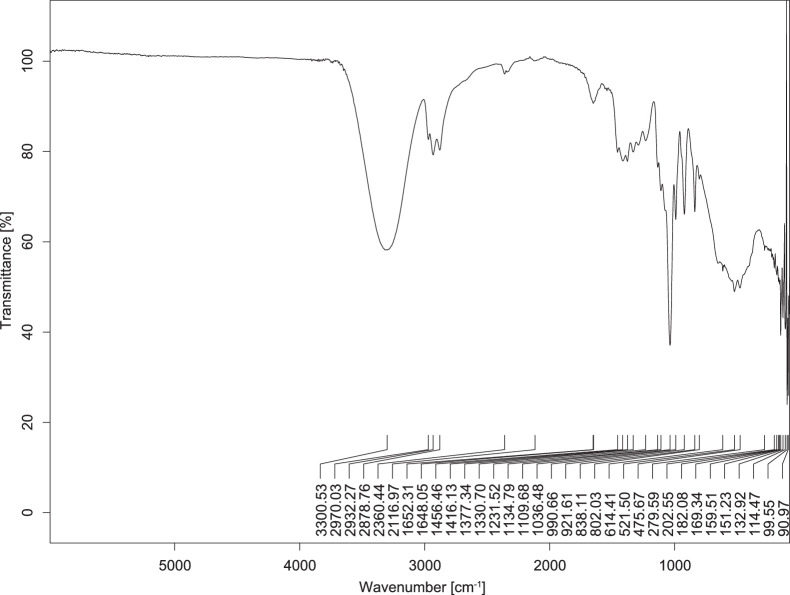 Figure 16
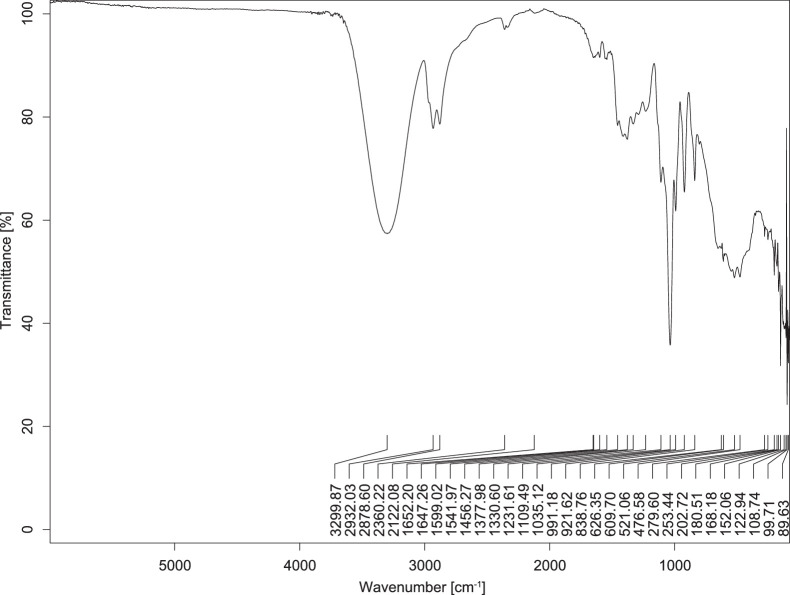 Figure 17
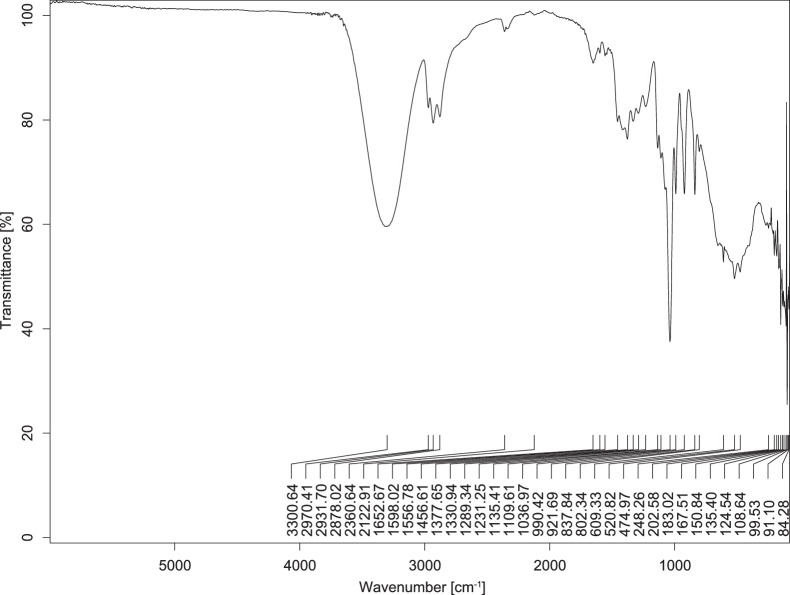 Figure 18
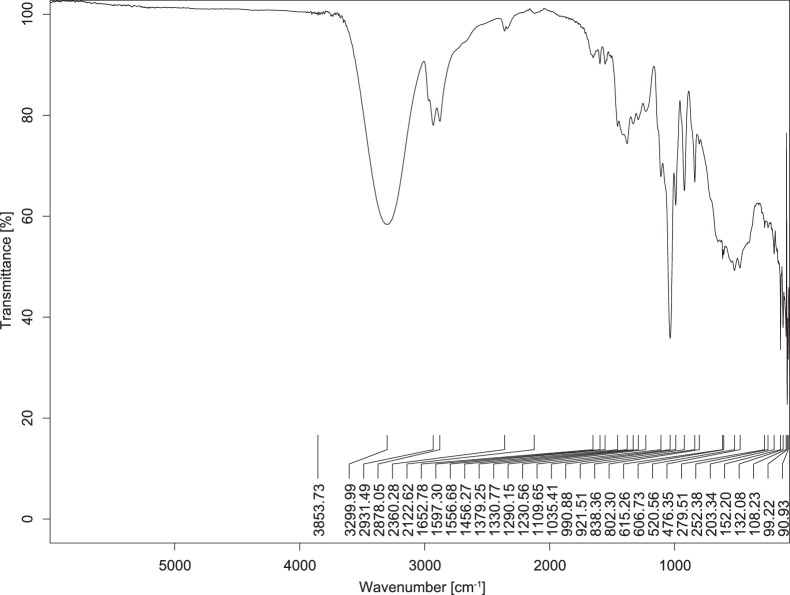 Figure 19
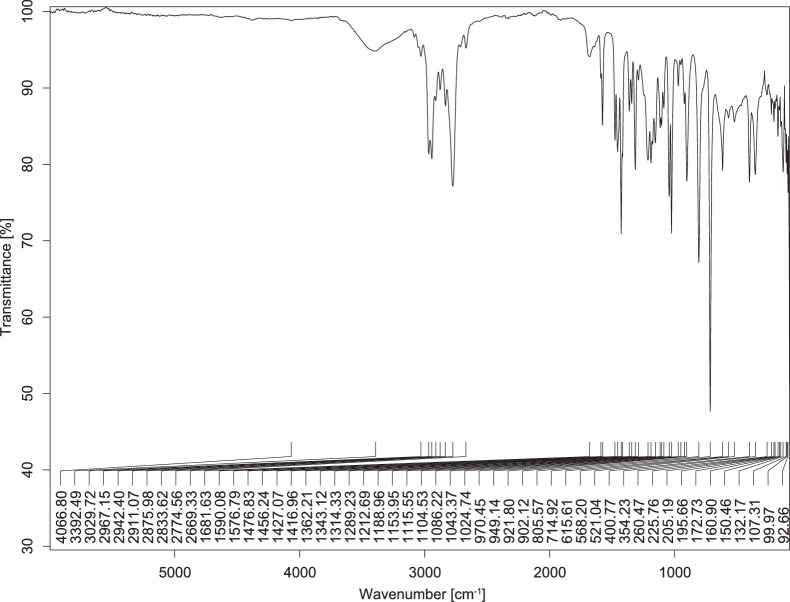 Figure 20
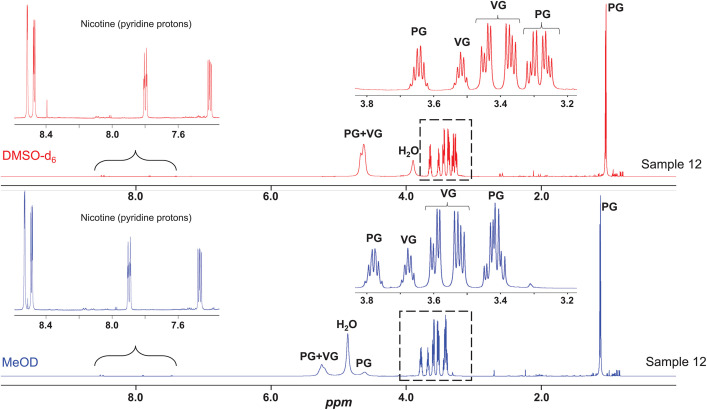 Figure 21
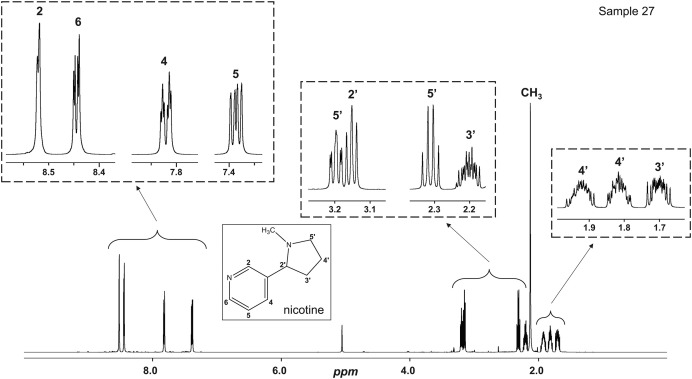 Figure 22
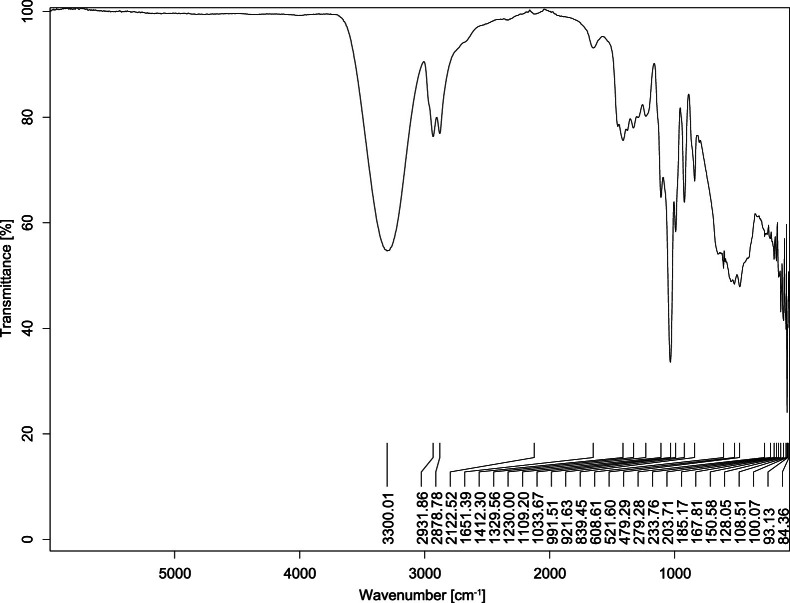 Figure 23
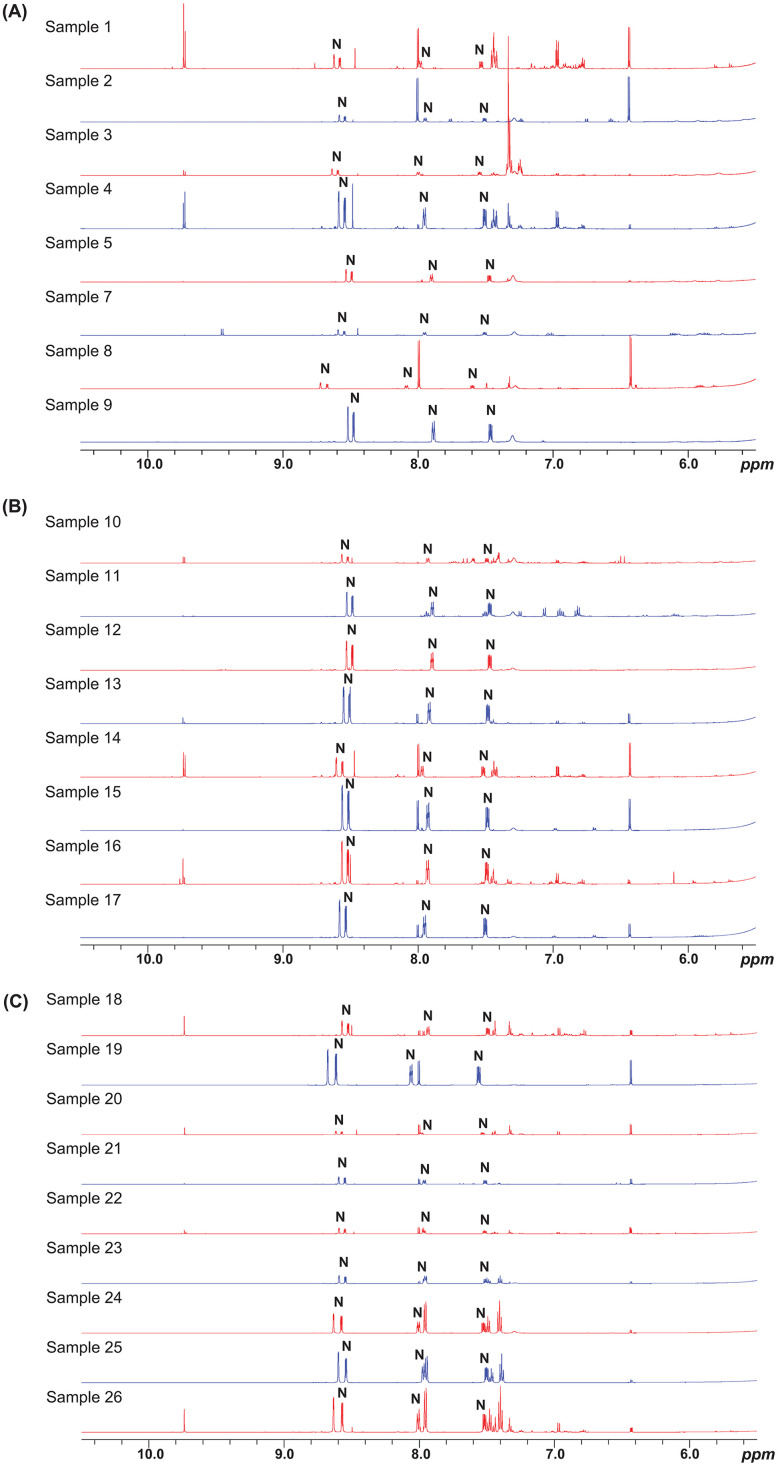 Figure 24
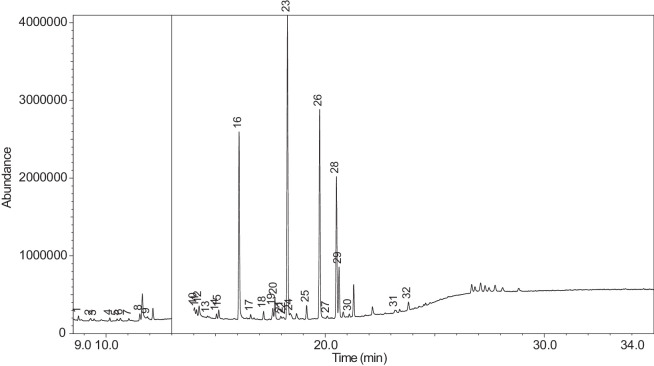 Figure 25
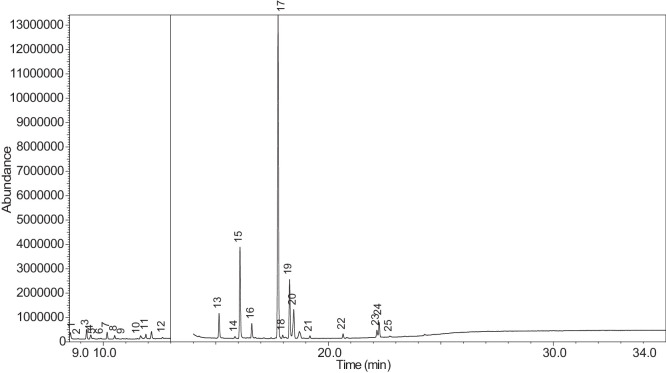 Figure 26
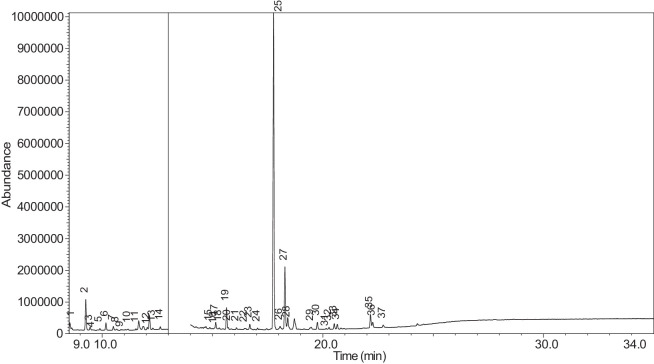 Figure 27
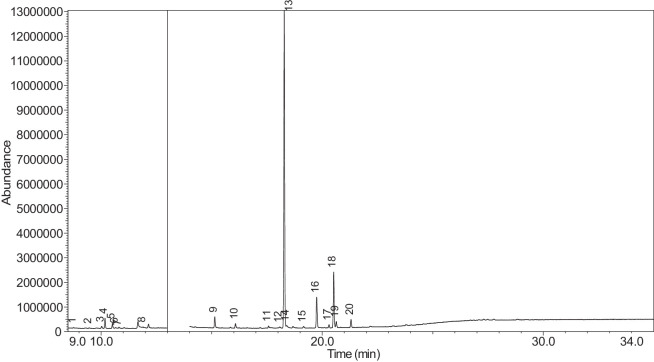 Figure 28
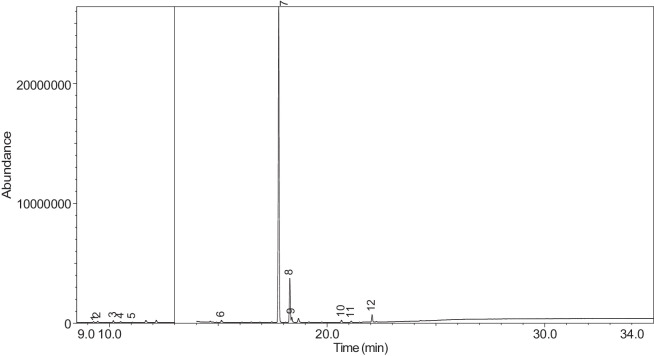 Figure 29
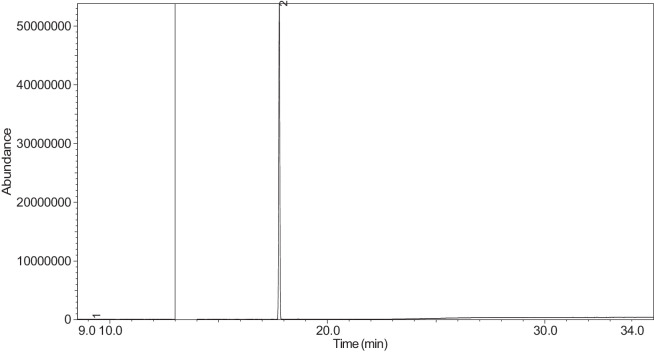 Figure 30
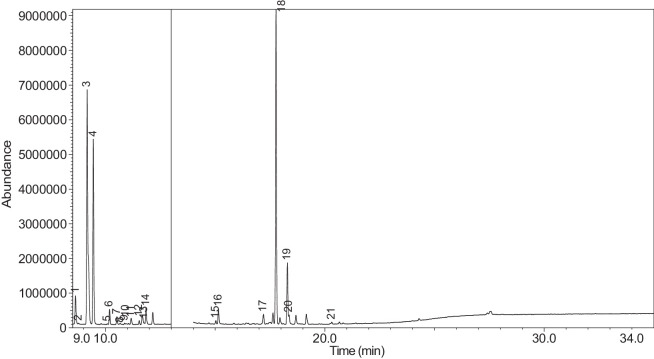 Figure 31
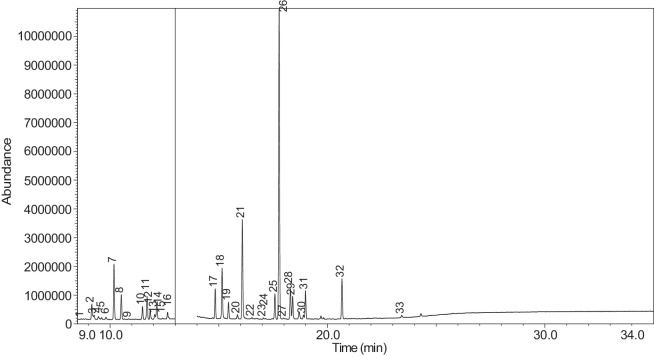 Figure 32
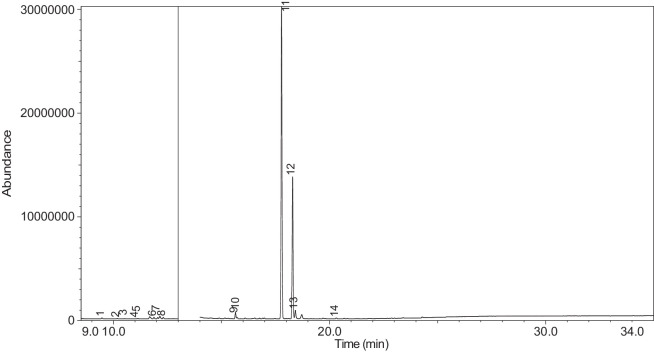 Figure 33
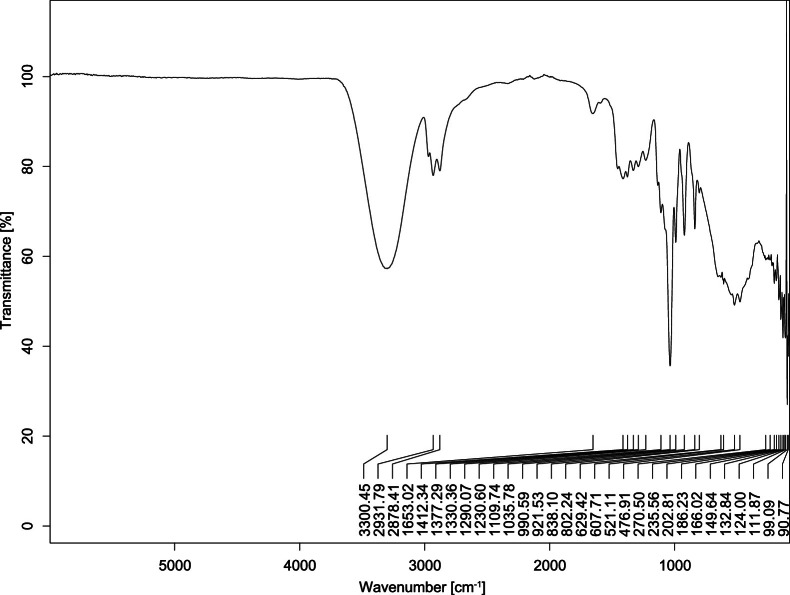 Figure 34
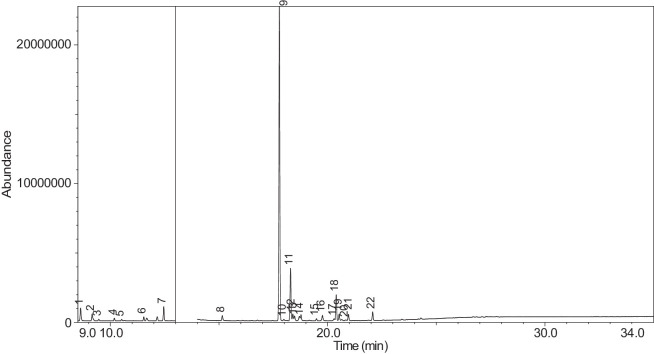 Figure 35
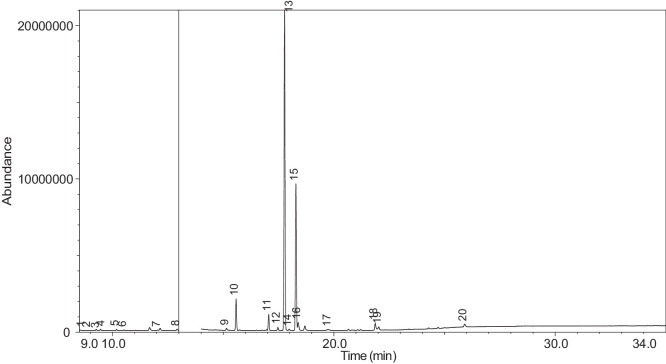 Figure 36
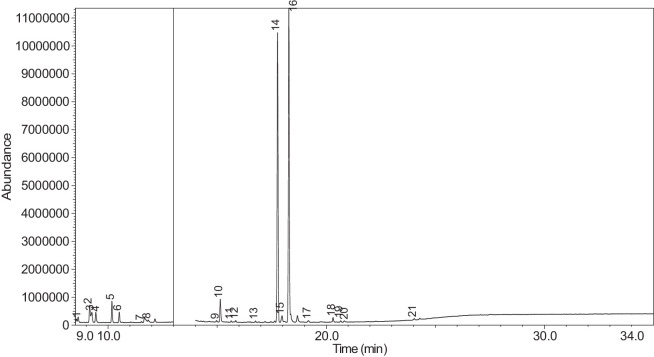 Figure 37
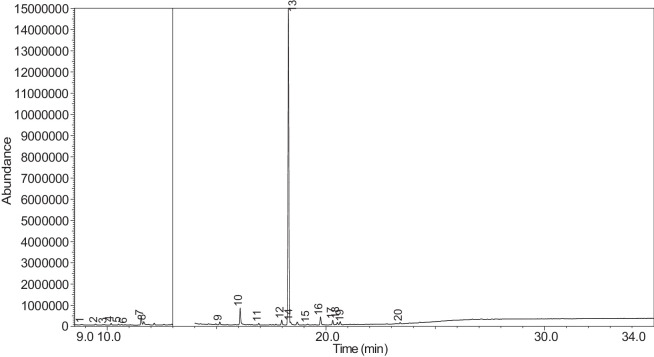 Figure 38
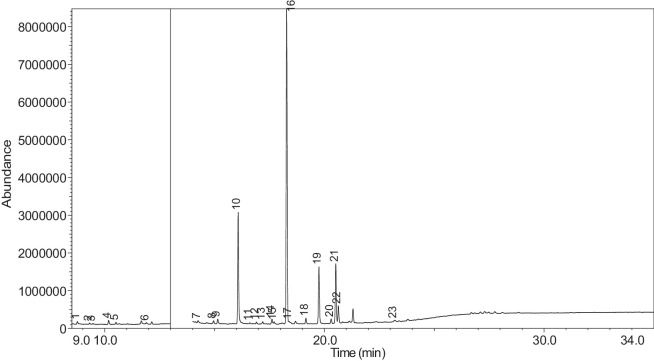 Figure 39
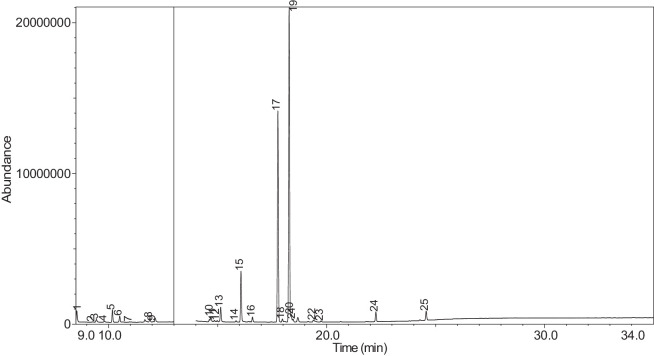 Figure 40
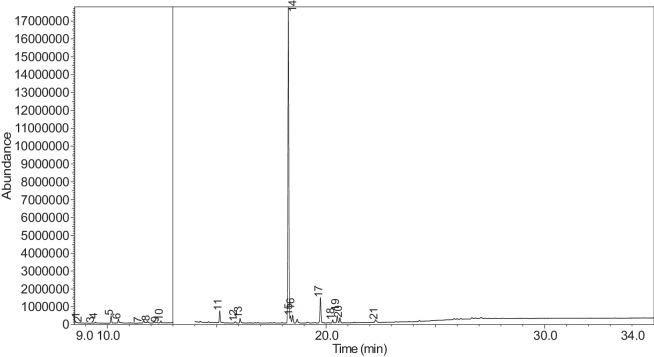 Figure 41
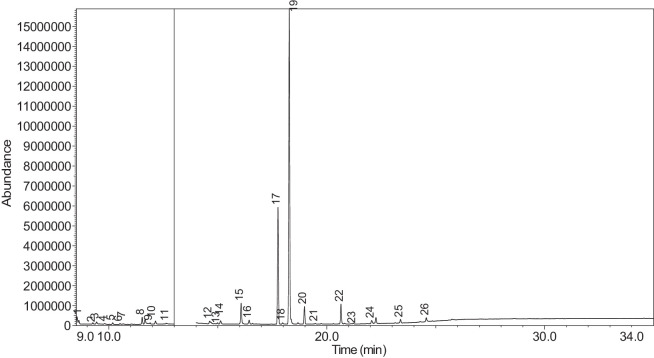 Figure 42
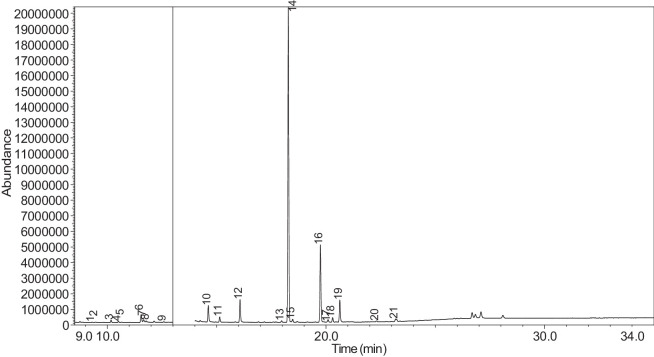 Figure 43
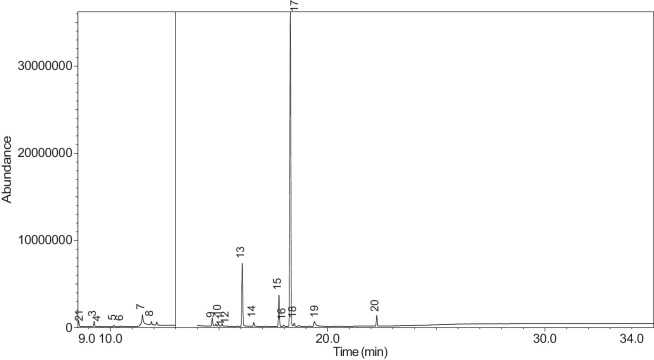 Figure 44
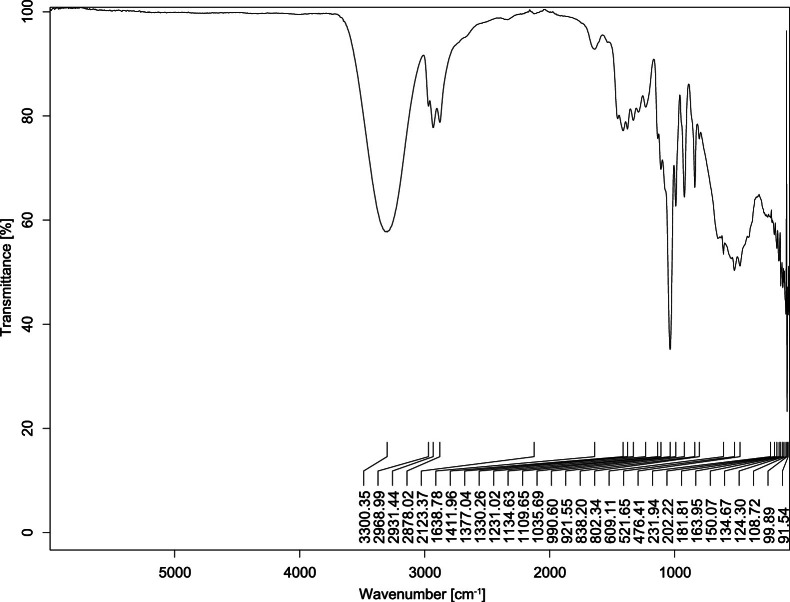 Figure 45
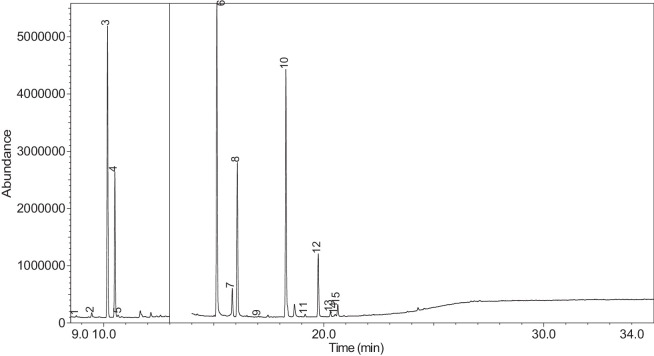 Figure 46
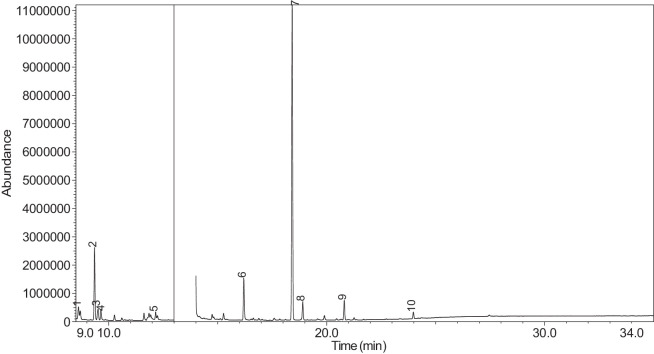 Figure 47
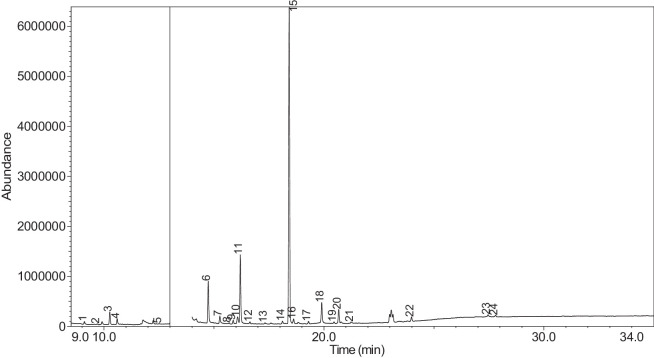 Figure 48
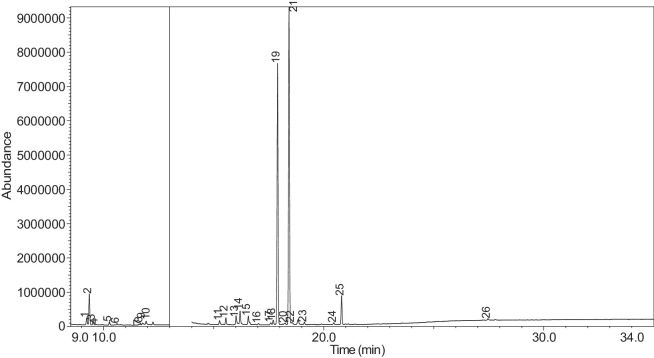 Figure 49
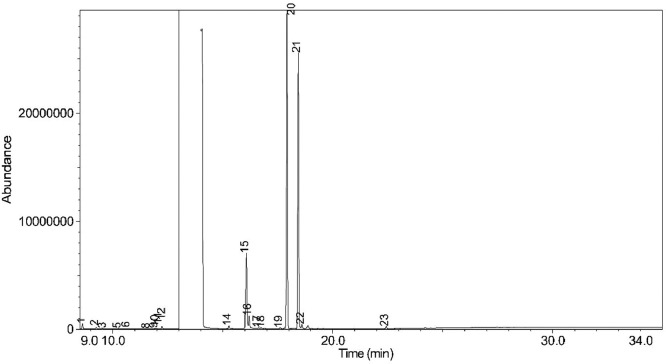 Figure 50
Peer Reviews
No public reviews on file for this paper yet. If you reviewed it on a platform where reviews are public (OpenReview, ICLR, NeurIPS, ICML), you can paste yours below so the community can read it here.
Videos
No videos yet. Explain this paper in a talk, walkthrough, or lecture? Add one.
Taxonomy
TopicsAdvanced Chemical Sensor Technologies · Nicotinic Acetylcholine Receptors Study · GABA and Rice Research
Specifications TableSubjectAnalytical Chemistry, Spectroscopy, ChromatographySpecific subject areaChemical characterisation of e-liquidsType of dataRaw and analysed data includes FTIR, NMR spectra, FID and GC-MS filesData collectionFTIR spectra between 80 and 6000 cm^−1^ were acquired by a Bruker INVENIO-R (Universiti Putra Malaysia) spectrometer equipped with attenuated total reflection (ATR) (2mm) diamond with an accumulation of 64 scans at a spectral resolution of 4 cm^−1^ and processed by OPUS 8.7.Mid-infrared measurements were also carried out using an Bruker Alpha II spectrometer equipped with a platinum diamond ATR module, ZnSe beam splitter, RT-DLaTGS detector. The transmission spectra were recorded between 600 and 4000 cm^−1^ with a spectral resolution of 4 cm^−1^ and an accumulation of 32 scans.1D NMR spectra were acquired on a Bruker Avance NEO spectrometer 600 MHz equipped with a 5 mm HPCN QCI cryoprobe. All NMR spectra were processed using TOPSPIN 4.0.8 software.GC-MS data were acquired by using Shimadzu Nexis GC-2030 gas chromatograph coupled with a GC-MS-QP2020 NX single quadrupole mass spectrometer, equipped with an AOC-20s auto-sampler and AOC-20i auto-injector. The obtained data were processed by LabSolutions GC-MS software.Data source locationInstitution: Department of Chemistry, Faculty of Science, Universiti Putra MalaysiaCountry: Malaysia. Latitude and longitude and GPS coordinates, for collected samples/data: 2°59′28.7"N 101°42′29.5"EInstitution: SOFMAT Laboratory (BIBAC Team), Toulouse UniversityCountry: FranceInstitution: Forensic Science Program, Faculty of Health Sciences,Universiti Kebangsaan MalaysiaCountry: Malaysia. 3°10′08.7"N 101°42′03.6"EData accessibilityFTIR dataRepository name: Mendeley data Direct URL to data: Manap, Mohd Rashidi Abdull; Mukhni, Nur Hayatna; Hamzah, Noor Hazfalinda (2024), “The FIR MID NIR spectra of e liquids were acquired using a Bruker Invenio-R (Universiti Putra Malaysia) instrument equipped with an attenuated total internal reflection (ATR)”, Mendeley Data, V1Data identification number: 10.17632/2cwtxdtstn.1Direct URL to data: https://data.mendeley.com/datasets/2cwtxdtstn/1Repository name: Manap, Mohd Rashidi Abdull; Mukhni, Nur Hayatna; Hamzah, Noor Hazfalinda (2025), “The MID spectra of e liquids were acquired using a Bruker Alpha II (Universiti Putra Malaysia) instrument equipped with an attenuated total internal reflection (ATR)”, Mendeley Data, V1Data identification number: 10.17632/ddrzk7t5nt.1Direct URL to data: https://data.mendeley.com/datasets/ddrzk7t5nt/1NMR dataRepository name: Balayssac, Stéphane; Gilard, Véronique; Danoun, Saïda (2025), “The 1D 1H NMR spectra of e liquids”, Mendeley Data, V1,Data identification number: 10.17632/fc7xvdymgr.1Direct URL to data: https://data.mendeley.com/datasets/fc7xvdymgr/1GC-MS dataRepository name: Aris, Farah Natasha; Hamzah, Noor Hazfalinda (2025), “The GC-MS Chromatogram of E-liquids”, Mendeley Data, V3.Data identification number: 10.17632/x9kh58w868.3Direct URL to data: https://data.mendeley.com/datasets/x9kh58w868/3Instructions for accessing these data: Click on the direct URL to obtain raw data.
Value of the Data
1
- •The dataset integrates NIR, MIR, FIR, and ^1^H NMR spectroscopy with GC-MS analysis, providing a detailed chemical overview of real e-liquid samples. It enables qualitative and semi-quantitative detection of nicotine and additives, supporting comparative evaluation of analytical techniques for substance identification and profiling.
- •This dataset can assist regulatory agencies and policymakers in assessing the reliability of different analytical methods for nicotine detection, facilitating more consistent labelling oversight, and supporting the development of regulatory standards for e-liquid products.
- •Manufacturers and testing laboratories may use the data as a reference for selecting appropriate analytical tools in routine quality control, product authentication, and formulation consistency checks.
Background
2
This study involves examining the chemical composition of 27 samples, comprising 25 Malaysian commercial e-liquids, an e-liquid booster, and a nicotine solution reportedly used in the local e-liquid industry. These samples were collected before the exemption of nicotine-containing e-liquids from control under the Poisons Act 1952 by the Malaysian Ministry of Health on April 1, 2023. The authors specifically focus on assessing the presence of nicotine (both freebase and salt forms) in the e-liquid samples based on the New Zealand regulations [1]. The authors also diluted the samples during NMR analysis. However, under this condition, formal salt determination could not be performed using the NMR experimental setup. Nonetheless, this approach enabled the authors to explore the overall chemical composition of actual e-liquid samples. Full spectral and chromatogram data for each sample are accessible through Mendeley Data.
Data Description
3
The presented data includes both raw and analysed results from FTIR, NMR, and GC-MS experiments. Tables 1 and 2 provide the details of 25 e-liquid samples purchased from various vape shops in Ampang Jaya, Malaysia, along with an e-liquid booster and a nicotine solution (lot number: NIC_IPIN_MAY). All samples were labelled with a specific lot number: LV_542_MONTH OF PURCHASE_SAMPLE NUMBER. Information such as flavour, e-liquid category, labelling requirements, nicotine strength, liquid colour, smell, the presence of prohibited substances, and packaging details (in line with New Zealand requirements) is stated in the tables.Table 1. Information on 27 samples analysed in this study.Table 1. No.Lot numberBrandFlavourCategoryLabellingNicotine StrengthChild warning signLiquid colourSmellSafety of use instructionsName and quantity of the substancesVolume or weight of the substance in the containerManufacturing batch numberManufacturer’s name and contact detailsExpiry DatePG %VG %Volume of samples (ml)Nicotine strength as shown on the label (mg)Nicotine formFreebase nicotine not exceeding 20 mg/mLNicotine salt not exceeding 50 mg/mL1LV_542_OKT_1CremanoVanilla2YNYNYNA356570NANAYBrownVanilla2LV_542_OKT_2Tickets Brew.coGrape1YNYNYNA3070603NAYBright yellowGrape3LV_542_OKT_3Tickets Brew.coMoji+bery1YNYNYNA3070603NAYYellowStrawberry lime4LV_542_OKT_4Peah MilfMilky banabarb2YNYNNNA6040303NAYAmberBanana milk5LV_542_OKT_5AIce KingRed ice1YYYNYY5050503NAYRed6LV_542_OKT_5B1NANANANANANANANANANANANANANANAColourlessWatermelon7LV_542_OKT_6BinjaiFuji apple1YNYNYNA4060603NAYYellowFuji apple8LV_542_OKT_7The LunaticsMempelam (Mango)1YNYNYNA5050603FBYYColourlessMango9LV_542_OKT_8EqualSpritte1YNYNNNA505060NAFBNANPale yellowLime10LV_542_OKT_9EqualReedbull1YNYNNNA5050603FBYNBrownRed Bull beverage11LV_542_OKT_10EqualKoka kola1YNYNNNA5050603FBYNPale brownCoca Cola12LV_542_OKT_11Mary JaneApple pear1YNYNYY5050303FB (HTPC)YNYellowApple pear13LV_542_OKT_12Mary JaneButterscotch hazelnut coffee2YNYNYY505030NAFB (HTPC)NANAmberButterscotch hazelnut coffee14LV_542_OKT_13Premium Street Brew TembakkauVanilla2YNYNYNAHIGHNA30NAFB (HTPC)NAYBrownVanilla15LV_542_OKT_14Mary JaneJuicy grape1YNYNYY505030NAFB (HTPC)NANPale brownGrape16LV_542_OKT_15TokyoBlueberry1YNYNNNA604030NAFBNAYBrownBlueberry17LV_542_OKT_16Challo JuicePineapple lychee1YNYNNNA50503018FB (HTPC)YYYellowPineapple lychee18LV_542_OKT_17Bangsawan MajapahitCaramel coffee with butterscotch2YNYNYNA50503022FB (HTPC)YYBrownCaramel coffee butterscotch19LV_542_OKT_18MeoMeoPeoGrape1YNYYYY60401035NAYYellowGrape20LV_542_OKT_19Smart-D BrewBlueberry crumble2YNYNYNA50501035NAYAmberBlueberry crumble21LV_542_OKT_2057K DistrictStrawberry trifle2YNYNNNA60401035NSYYYellowStrawberry22LV_542_OKT_21Sixty Symbols HybridCaramel popcorn2YNNNNNANANA1035NAYBright yellowCaramel popcorn23LV_542_OKT_22Dr-BMango crush1YNYNYNA50501050NAYPale yellowMango24LV_542_OKT_23EqualGeto rade1YNYNNNA50501050NANPale yellowGrape25LV_542_OKT_24Geng AsapStrawberry bacco4YNYNYNA60401050NAYBright yellowStrawberry tobacco26LV_542_OKT_25Hybrid BangsawanHazelnut strawberry2NNYNYNA50501050NSYYBright yellowHazelnut strawberry27NIC_IPIN_MAYNANo flavourNANANANANANANANANANANANSNAPale yellowNANote: Category 1 relates to fruit, candy, alcohol, and beverage flavour; Category 2 relates to dessert, coffee, tea, and nuts flavour; Category 3 relates to menthol or mint flavour; Category 4 relates to spices, tobacco, and others. PG% is the percentage of propylene glycol present in the formulation. VG% is the percentage of vegetable glycerine present in the formulation. Nicotine strength is the number of milligrams (mg) of nicotine present in a formulation per bottle. 'NA' or empty cell refers to information unavailable; 'Y' refers to applicable; 'N' refers to not applicable. 'FB' or 'FB (HTPC – high throat hit pod compatible)' relates to freebase nicotine; 'NS' refers to nicotine salt.1LV_542_OKT_5B is an e-liquid booster with unknown compositions, packed together its e-liquid product LV_542_OKT_5A.Table 2. Further details on 27 samples analysed in this study, as an extension of Table 1.Table 2. No.Lot numberProhibited substancesContainerLong-chain parabensIsothiazolinonePhenoxyethanolTriclosanSugars and sweetenersFormaldehyde releasersProbioticsPolyethylene glycolDiethylene glycolEthylene glycolGlucuronolactoneTaurineColouringPharmacologically active substanceVegetable oils other than glycerineCaffeineMineral oilsFood grade plasticsProtected against breakage and leakageMust have child-resistant closuresAnti-spill flow inserts1LV_542_OKT_1YYNYY2LV_542_OKT_2YYNYY3LV_542_OKT_3YYNYY4LV_542_OKT_4NGlass (Y)NYY5LV_542_OKT_5AGlass (Y)NYY6LV_542_OKT_5BGlass (Y)NYY7LV_542_OKT_6YNYY8LV_542_OKT_7YNYY9LV_542_OKT_8YNYNYY10LV_542_OKT_9YNYNYY11LV_542_OKT_10YNYNYY12LV_542_OKT_11YNYY13LV_542_OKT_12YNYY14LV_542_OKT_13YYNYY15LV_542_OKT_14YNYY16LV_542_OKT_15YNYY17LV_542_OKT_16YNYY18LV_542_OKT_17YNYY19LV_542_OKT_18YNANYY20LV_542_OKT_19YYNYY21LV_542_OKT_20YNYY22LV_542_OKT_21YNYY23LV_542_OKT_22YYNYY24LV_542_OKT_23YYNYY25LV_542_OKT_24YNYY26LV_542_OKT_25YNYY27NIC_IPIN_MAYNANANANANote: Information on the inclusion of prohibited substances was recorded based on the ingredient list of each sample. 'NA' or empty cells indicate unavailable information. 'Y' denotes that the substance or feature is present in the formulation or packaging, while 'N' denotes that the substance or feature is absent from the formulation or packaging.
The transmittance spectra (in percentage transmittance, %T) were acquired for each sample between 80 and 6000 cm^−1^ covering near-infrared (NIR), mid-infrared (MIR), and far-infrared (FIR) spectra region. The e-liquid sample spectra are shown between Fig. 1, Fig. 2, Fig. 3, Fig. 4, Fig. 5, Fig. 6, Fig. 7, Fig. 8, Fig. 9, Fig. 10, Fig. 11, Fig. 12, Fig. 13, Fig. 14, Fig. 15, Fig. 16, Fig. 17, Fig. 18, Fig. 19, Fig. 20, Fig. 21, Fig. 22, Fig. 23, Fig. 24, Fig. 25, Fig. 26-26. Meanwhile, the nicotine solution spectrum is shown in Fig. 27.Fig. 1FTIR for LV_542_OKT_1.Fig. 1. Fig. 2FTIR for LV_542_OKT_2.Fig. 2. Fig. 3FTIR for LV_542_OKT_3.Fig. 3. Fig. 4FTIR for LV_542_OKT_4.Fig. 4. Fig. 5FTIR for LV_542_OKT_5A.Fig. 5. Fig. 6FTIR for LV_542_OKT_5B.Fig. 6. Fig. 7FTIR for LV_542_OKT_6.Fig. 7. Fig. 8FTIR for LV_542_OKT_7.Fig. 8. Fig. 9FTIR for LV_542_OKT_8.Fig. 9. Fig. 10FTIR for LV_542_OKT_9.Fig. 10. Fig. 11FTIR for LV_542_OKT_10.Fig. 11. Fig. 12FTIR for LV_542_OKT_11.Fig. 12. Fig. 13FTIR for LV_542_OKT_12.Fig. 13. Fig. 14FTIR for LV_542_OKT_13.Fig. 14. Fig. 15FTIR for LV_542_OKT_14.Fig. 15. Fig. 16FTIR for LV_542_OKT_15.Fig. 16. Fig. 17FTIR for LV_542_OKT_16.Fig. 17. Fig. 18FTIR for LV_542_OKT_17.Fig. 18. Fig. 19FTIR for LV_542_OKT_18.Fig. 19. Fig. 20FTIR for LV_542_OKT_19.Fig. 20. Fig. 21FTIR for LV_542_OKT_20.Fig. 21. Fig. 22FTIR for LV_542_OKT_21.Fig. 22. Fig. 23FTIR for LV_542_OKT_22.Fig. 23. Fig. 24FTIR for LV_542_OKT_23.Fig. 24. Fig. 25FTIR for LV_542_OKT_24.Fig. 25. Fig. 26FTIR for LV_542_OKT_25.Fig. 26. Fig. 27FTIR for NIC_IPIN_MAY.Fig. 27
None of the samples exhibited a signal at 714 cm^−1^. This region is hindered by a broad absorption band containing several distinct peaks centred around 600 cm^−1^. Due to the complexity of the matrix, significant peak overlapping is expected. The vibrational modes typically associated with this region include C-H bending of aromatic and alkene groups, as well as C-Cl stretching. This region is not unique to nicotine but is also relevant to other e-liquid components.
Table 3 presents the potential peak interferences of nicotine by propylene glycol (PG) and vegetable glycerine (VG). At approximately 3300 cm^−1^, the N-H stretching band of nicotine is predominantly overlapped by the strong and broad O-H stretching bands of PG and VG [2]. Similarly, the C-H stretching bands observed between 2800 and 3000 cm^−1^ are also expected to be overlapped by PG and VG [2]. The C-O stretching vibrations occurring between ∼1000 cm^−1^ and 1300 cm^−1^ may interfere with the C–N stretching band of nicotine at ∼1316 cm^−1^ [3]. In addition, the aromatic C=C stretching vibration of nicotine, typically observed at ∼1653 cm^−1^ [4], could potentially be obscured by signals related to organic acids, flavourings, and colourings, particularly C=O stretching and aromatic C=C stretching [[5], [6], [7], [8], [9], [10], [11]]. The peak corresponding to the C=N stretching of nicotine’s pyridine ring, expected at 1585 cm^−1^ [4], was not detected in any of the samples in the current study.Table 3. Potential peak interferences of nicotine signals by PG and VG.Table 3. ComponentWavenumber (cm^−1^)ReferencesNicotine∼3500-3300 (N-H stretch)-∼3000-2800 (C-H stretch)--∼1653 (C=C stretch, aromatic)∼1585 (C=N stretch, aromatic)-∼1316 (C-N stretch,aromatic)-∼904 (C-H bend, out-of-plane)∼712 (C-H bend, out-of-plane)[3,4,12]PG3302 (O-H stretch)-2877 (C-H stretch)------1036 (C-O stretch)--[2]VG3268 (O-H stretch)-2877 (C-H stretch)------1028 (C-O stretch)--[2]"-" indicates the absence of signal(s) representing the said compound, as reported by previous studies.
However, a peak at approximately 805 cm^−1^ – close to the 714 cm^−1^ region – was consistently observed across all 25 e-liquid samples and the e-liquid booster. This signal, which is also present in the NIC_IPIN_MAY spectrum, may be attributed to nicotine [12].
The NMR Data repository includes raw free induction decay (FID) files and processed spectra (1r) in Bruker format, these data can be opened with any NMR software (e.g. Topspin, Mnova etc.). The ^1^H NMR spectra provided a global fingerprint of the sample composition including the matrix, nicotine and additives.
In Fig. 28 below are the typical profiles obtained in both solvents (dimethyl sulfoxide-d_6_ and methanol-d_4_) for sample 12 (LV_542_OKT_11). The dominant signals were from the matrix components, i.e. PG and VG. In methanol-d_4_ (MeOD), for PG, a doublet (CH_3_) was detected at 1.12 ppm (J = 6.7 Hz), a multiplet (CH) at 3.77 ppm, an ABd system (CH_2_) centered at 3.41 ppm (J = 11.1, 6.5, 4.6 Hz), and broad signals for hydroxyl protons at 4.61 and 5.24 ppm. The methine and methylene groups of VG give rise to a multiplet at 3.67 ppm and an ABd system at 3.59 and 3.52 ppm (J = 11.3, 6.1, 4.8 Hz), respectively, while the hydroxyl groups resonate as a broad signal at 5.24 ppm, overlapping with one hydroxyl signal of PG. The nicotine signals are minor signals compared to those of the matrix. However, a zoomed-in region (7.4–8.2 ppm) highlights the presence of pyridine proton signals. Apart from small variations in chemical shifts, no significant differences are observed between the two solvents. Both solvents can be effectively used for sample profiling.Fig. 28^1^H NMR spectra of sample 12 (LV_542_OKT_11). DMSO-d_6_ = dimethyl sulfoxide-d_6_ and MeOD = methanol-d_4_.Fig. 28
Sample 27 (NIC_IPIN_MAY), a nicotine solution, allows clear visualisation of the signals without matrix interference. Signal assignments are reported on the spectrum (Fig. 29).Fig. 29^1^H NMR spectrum of sample 27 (NIC_IPIN_MAY) in MeOD.Fig. 29
Fig. 30 below compares the ^1^H NMR of the 25 e-liquid samples, focusing on the spectral window between 5.5 and 10.5 ppm. This zoomed-in region highlights spectral differences between the samples, allowing for the detection of nicotine signals (N) as well as signals from flavouring compounds or other additives. Variations in the signal intensity of nicotine reflect differences in nicotine concentration, while slight chemical shift variations can be attributed to the differences in nicotine form (salt or freebase). These ¹H NMR spectral differences, observed in both nicotine and other compounds, highlight variations in sample compositions and emphasise the ability of NMR to differentiate them [13].Fig. 30^1^H NMR profiling in MeOD of the 25 e-liquid samples (Zoom 5.5-10.5 ppm).Fig. 30
The generated chromatograms of e-liquid samples are shown between Fig. 31, Fig. 32, Fig. 33, Fig. 34, Fig. 35, Fig. 36, Fig. 37, Fig. 38, Fig. 39, Fig. 40, Fig. 41, Fig. 42, Fig. 43, Fig. 44, Fig. 45, Fig. 46, Fig. 47, Fig. 48, Fig. 49, Fig. 50, Fig. 51, Fig. 52, Fig. 53, Fig. 54, Fig. 55, Fig. 56-56. Meanwhile, the nicotine solution chromatogram is shown in Fig. 57. The x-axis represents the retention time in minutes, indicating the time each compound takes to pass through the chromatographic column, while the y-axis displays the abundance, corresponding to the intensity of the detected ion signals.Fig. 31. Chromatogram for LV_542_OKT_1. The peak numbers are referred to as follows:1 = Propylene Glycol; 2 = Methyl propyl ether; 3 = 2-Propanol, 1,3-dichloro-; 4 = 1,2-Propanediol, 1-acetate; 5 = 1,2-Propanediol, 2-acetate; 6 = Cyclotetrasiloxane, octamethyl-; 7 = Oxime-, methoxy-phenyl-; 8 = 1,3-Dioxolane, 2,2,4-trimethyl-, 9 = Methyl propionate; 10 = Phenol, 2-methoxy-; 11 = 2(3H)-Furanone, 5-ethyldihydro-; 12 = Glycerin; 13 = Maltol; 14 = Benzene, 1,4-dimethoxy-; 15 = 1,2,3-Propanetriol, 1-acetate; 16 = Ethyl maltol; 17 = Alpha-monopropionin; 18 = Benzaldehyde, 4-methoxy-; 19 = Benzenemethanol, 4-methoxy-; 20 = 5-Thiazoleethanol, 4-methyl-; 21 = 2,3-dihydroxypropyl isobutyrate; 22 = 1,4-Dioxane-2,6-dimethanol; 23 = Pyridine, 3-(1-methyl-2-pyrrolidinyl)-, (S)-; 24 = p-Dioxane-2,5-dimethanol; 25 = 2(3H)-Furanone, dihydro-5-pentyl-; 26 = Benzaldehyde, 3-hydroxy-4-methoxy-; 27 = 1,4-Benzenediol, 2-methoxy-; 28 = Ethyl Vanillin; 29 = Mandelic acid, 3,4-dimethoxy-, methyl ester; 30 = 2H-Pyran-2-one, tetrahydro-6-pentyl-; 31 = Vanillin propylene glycol acetal; 32 = .delta.-Dodecalactone.Fig. 31. Fig. 32Chromatogram for LV_542_OKT_2. The peak numbers are referred to as follows:1 = Butanoic acid, 2-methyl-, ethyl ester; 2 = Ethanedioic acid, dimethyl ester; 3 = 3-Hexen-1-ol, (Z)-; 4 = 1-Hexanol; 5 = Butanoic acid, 2-methyl-; 6 = Acetic acid, pentyl ester; 7 = 1,2-Propanediol, 1-acetate; 8 = 1,2-Propanediol, 2-acetate; 9 = 1,3-Dioxolane-2-methanol, 2,4-dimethyl-; 10 = Hexanoic acid, ethyl ester; 11 = Methyl propionate; 12 = Butanoic acid, 3-methylbutyl ester; 13 = 1,2,3-Propanetriol, 1-acetate; 14 = 1,2-Ethanediol, diacetate; 15 = Ethyl maltol; 16 = Alpha-monopropionin; 17 = .alpha.-d-Erythro-hex-2-enopyranoside, ethyl 2,3-dideoxy-; 18 = 2,3-dihydroxypropyl isobutyrate; 19 = Pyridine, 3-(1-methyl-2-pyrrolidinyl)-, (S)-; 20 = Methyl anthranilate; 21 = 2-Buten-1-one, 1-(2,6,6-trimethyl-1-cyclohexen-1-yl)-; 22 = 2(3H)-Furanone, 5-hexyldihydro-; 23 = p-Dioxane-2,5-dimethanol; 24 = Cyclohexanecarboxamide, N-ethyl-5-methyl-2-(1-methylethyl)-; 25 = 1,4-Dioxane-2,6-dimethanol.Fig. 32. Fig. 33Chromatogram for LV_542_OKT_3. The peak numbers are referred to as follows: 1 = Butanoic acid, 2-methyl-, ethyl ester; 2 = 3-Hexen-1-ol, (Z)-; 3 = 2-Propanol, 1,3-dichloro-; 4 = Butanoic acid, 2-methyl-; 5 = Acetic acid, pentyl ester; 6 = 1,2-Propanediol, 1-acetate; 7 = 1,2-Propanediol, 2-acetate; 8 = Cyclotetrasiloxane, octamethyl-; 9 = 1,3-Dioxolane-2-methanol, 2,4-dimethyl-; 10 = (R)-(-)-2,2-Dimethyl-1,3-dioxolane-4-methanol; 11 = Hexanoic acid, ethyl ester; 12 = D-Limonene; 13 = Eucalyptol; 14 = Butanoic acid, 3-methylbutyl ester; 15 = Cyclohexanol, 1-methyl-4-(1-methylethenyl)-; 16 = Octanoic acid, ethyl ester; 17 = 1,2,3-Propanetriol, 1-acetate; 18 = 3-Cyclohexen-1-ol, 4-methyl-1-(1-methylethyl)-, (R)-; 19 = L-.alpha.-Terpineol; 20 = Cyclohexanol, 1-methyl-4-(1-methylethylidene)-; 21 = 2,6-Octadien-1-ol, 3,7-dimethyl-, (Z)-; 22 = 1,3-Dioxolane, 2-heptyl-4-methyl-; 23 = (-)-Carvone; 24 = 1,2,3-Propanetriol, 1-acetate; 25 = .alpha.-d-Erythro-hex-2-enopyranoside, ethyl 2,3-dideoxy-; 26 = Triacetin; 27 = Pyridine, 3-(1-methyl-2-pyrrolidinyl)-, (S)-; 28 = Pyridine, 3-(1-methyl-2-pyrrolidinyl)-, (S)-; 29 = .alpha.-Ionone; 30 = Benzaldehyde, 3-hydroxy-4-methoxy-; 31 = Butylated Hydroxytoluene; 32 = trans-.beta.-Ionone; 33 = Ethyl Vanillin; 34 = 2(3H)-Furanone, 5-hexyldihydro-; 35 = p-Dioxane-2,5-dimethanol; 36 = Cyclohexanecarboxamide, N-ethyl-5-methyl-2-(1-methylethyl)-; 37 = p-Dioxane-2,5-dimethanol.Fig. 33. Fig. 34Chromatogram for LV_542_OKT_4. The peak numbers are referred to as follows: 1 = Propylene Glycol; 2 = 2-Propanol, 1,3-dichloro-; 3 = 2-Furanmethanol, tetrahydro-; 4 = 1,2-Propanediol, 1-acetate; 5 = 1,2-Propanediol, 2-acetate; 6 = Cyclotetrasiloxane, octamethyl-; 7 = 1,2-Propanediol, 3-methoxy-; 8 = Methyl propionate; 9 = 1,2,3-Propanetriol, 1-acetate; 10 = Ethyl maltol; 11 = 2(3H)-Furanone, 5-butyldihydro-; 12 = 1,4-Dioxane-2,6-dimethanol; 13 = Pyridine, 3-(1-methyl-2-pyrrolidinyl)-, (S)-; 14 = p-Dioxane-2,5-dimethanol; 15 = 2(3H)-Furanone, dihydro-5-pentyl-; 16 = Benzaldehyde, 3-hydroxy-4-methoxy-; 17 = (1′s,2′s)-Nicotine-N'-oxide; 18 = Ethyl Vanillin; 19 = Mandelic acid, 3,4-dimethoxy-, methyl ester; 20 = Danielone.Fig. 34. Fig. 35Chromatogram for LV_542_OKT_5A. The peak numbers are referred to as follows: 1 = 3-Hexen-1-ol, (Z)-; 2 = 2-Propanol, 1,3-dichloro-; 3 = 1,2-Propanediol, 1-acetate; 4 = 1,2-Propanediol, 2-acetate; 5 = Oxime-, methoxy-phenyl-; 6 = 1,2,3-Propanetriol, 1-acetate; 7 = .alpha.-d-Erythro-hex-2-enopyranoside, ethyl 2,3-dideoxy-; 8 = Pyridine, 3-(1-methyl-2-pyrrolidinyl)-, (S)-; 9 = Pyridine, 3-(1-methyl-2-pyrrolidinyl)-, (S)-; 10 = 2(3H)-Furanone, 5-hexyldihydro-; 11 = 2H-Pyran-2-one, tetrahydro-6-pentyl-; 12 = 2(3H)-Furanone, 5-heptyldihydro-.Fig. 35. Fig. 36Chromatogram for LV_542_OKT_5B. The peak numbers are referred to as follows: 1 = 2-Propanol, 1,3-dichloro-; 2 = Hexanamide, 3,5,5-trimethyl-N-pentyl-.Fig. 36. Fig. 37Chromatogram for LV_542_OKT_6. The peak numbers are referred to as follows: 1 = Butanoic acid, 3-methyl-, ethyl ester; 2 = Propylene Glycol; 3 = 1-Butanol, 3-methyl-, acetate; 4 = 1-Hexanol; 5 = 3-Methoxyhex-1-ene; 6 = 1,2-Propanediol, 1-acetate; 7 = 1,2-Propanediol, 2-acetate; 8 = Cyclotetrasiloxane, octamethyl-; 9 = 1,3-Dioxolane-2-methanol, 2,4-dimethyl-; 10 = 1,3-Dioxolane-2-methanol, 2,4-dimethyl-; 11 = trans-2-Hexenal dimethyl acetal; 12 = Hexanoic acid, ethyl ester; 13 = 3-Hexen-1-ol, acetate, (E)-; 14 = Acetic acid, hexyl ester; 15 = Butanoic acid, hexyl ester; 16 = 1,2,3-Propanetriol, 1-acetate; 17 = 3-Pentanol, 2,3,4-trimethyl-; 18 = .alpha.-d-Erythro-hex-2-enopyranoside, ethyl 2,3-dideoxy-; 19 = Pyridine, 3-(1-methyl-2-pyrrolidinyl)-, (S)-; 20 = Pyridine, 3-(1-methyl-2-pyrrolidinyl)-, (S)-; 21 = (1′s,2′s)-Nicotine-N'-oxide.Fig. 37. Fig. 38Chromatogram for LV_542_OKT_7. The peak numbers are referred to as follows: 1 = 1,3-Dioxolane-2-methanol, 2,4-dimethyl-; 2 = 1-Butanol, 3-methyl-, acetate; 3 = 3-Hexen-1-ol, (E)-; 4 = 2-Propanol, 1,3-dichloro-; 5 = 2-Furanmethanol; 6 = Dimethyl Sulfoxide; 7 = 1,2-Propanediol, 1-acetate; 8 = 1,2-Propanediol, 2-acetate; 9 = 1,3-Dioxolane-2-methanol, 2,4-dimethyl-; 10 = Butanoic acid, butyl ester; 11 = 2-Furanmethanol, acetate; 12 = Acetic acid, hexyl ester; 13 = D-Limonene; 14 = 1,3,6-Octatriene, 3,7-dimethyl-, (Z)-; 15 = 1,2-Propanediol, diacetate; 16 = Butanoic acid, 3-methylbutyl ester; 17 = Allyl heptanoate; 18 = 1,2,3-Propanetriol, 1-acetate; 19 = Benzenemethanol, .alpha.-methyl-, acetate; 20 = 1,2,3-Propanetriol, 1-acetate; 21 = Ethyl maltol; 22 = 2,3-Butanedione, monoxime; 23 = 1,2,3-Propanetriol, 1-acetate; 24 = Glycerol 1,2-diacetate; 25 = 2(3H)-Furanone, 5-butyldihydro-; 26 = .alpha.-d-Erythro-hex-2-enopyranoside, ethyl 2,3-dideoxy-; 27 = 2,3-dihydroxypropyl isobutyrate; 28 = Pyridine, 3-(1-methyl-2-pyrrolidinyl)-, (S)-; 29 = Pyridine, 3-(1-methyl-2-pyrrolidinyl)-, (S)-; 30 = Diphenyl ether; 31 = Cyclohexanepropanoic acid, 2-propenyl ester; 32 = 2(3H)-Furanone, 5-hexyldihydro-; 33 = Glycerin, 1,2-dicaprylate.Fig. 38. Fig. 39Chromatogram for LV_542_OKT_8. The peak numbers are referred to as follows: 1 = 2-Propanol, 1,3-dichloro-; 2 = 1,2-Propanediol, 1-acetate; 3 = 1,2-Propanediol, 2-acetate; 4 = Oxime-, methoxy-phenyl-; 5 = Bicyclo[3.1.1]heptane, 6,6-dimethyl-2-methylene-, (1S)-; 6 = 7-Oxabicyclo[2.2.1]heptane, 1-methyl-4-(1-methylethyl)-; 7 = D-Limonene; 8 = Eucalyptol; 9 = L-.alpha.-Terpineol; 10 = Cyclohexanol, 1-methyl-4-(1-methylethylidene)-; 11 = .alpha.-d-Erythro-hex-2-enopyranoside, ethyl 2,3-dideoxy-; 12 = Pyridine, 3-(1-methyl-2-pyrrolidinyl)-, (S)-; 13 = Pyridine, 3-(1-methyl-2-pyrrolidinyl)-, (S)-; 14 = (1′s,2′s)-Nicotine-N'-oxide.Fig. 39. Fig. 40Chromatogram for LV_542_OKT_9. The peak numbers are referred to as follows: 1 = Butanoic acid, 3-methyl-, ethyl ester; 2 = 1-Butanol, 3-methyl-, acetate; 3 = 2-Propanol, 1,3-dichloro-; 4 = 1,2-Propanediol, 1-acetate; 5 = 1,2-Propanediol, 2-acetate; 6 = Hexanoic acid, ethyl ester; 7 = Butanoic acid, 3-methyl-, butyl ester; 8 = 1,2,3-Propanetriol, 1-acetate; 9 = .alpha.-d-Erythro-hex-2-enopyranoside, ethyl 2,3-dideoxy-; 10 = 2,3-dihydroxypropyl isobutyrate; 11 = Pyridine, 3-(1-methyl-2-pyrrolidinyl)-, (S)-; 12 = Pyridine, 3-(1-methyl-2-pyrrolidinyl)-, (S)-; 13 = Methyl anthranilate; 14 = 2-Propenoic acid, 3-phenyl-, methyl ester; 15 = .alpha.-Ionone; 16 = Benzaldehyde, 3-hydroxy-4-methoxy-; 17 = 3-Buten-2-one, 4-(2,6,6-trimethyl-1-cyclohexen-1-yl)-; 18 = 2-Propenoic acid, 3-phenyl-, 1-methylethyl ester; 19 = Ethyl Vanillin; 20 = Pentanoic acid, 4-oxo-, butyl ester; 21 = Naphthalene, 2-ethoxy-; 22 = 2(3H)-Furanone, 5-heptyldihydro-.Fig. 40. Fig. 41Chromatogram for LV_542_OKT_10. The peak numbers are referred to as follows: 1 = Butanoic acid, 2-methyl-, ethyl ester; 2 = Ethanedioic acid, dimethyl ester; 3 = 3-Hexen-1-ol, (Z)-; 4 = 2-Propanol, 1,3-dichloro-; 5 = 1,2-Propanediol, 1-acetate; 6 = 1,2-Propanediol, 2-acetate; 7 = D-Limonene; 8 = Phenol; 9 = 1,2,3-Propanetriol, 1-acetate; 10 = Benzene, 1-methoxy-4-propyl-; 11 = Anethole; 12 = (Z)-3-Phenylacrylaldehyde; 13 = .alpha.-d-Erythro-hex-2-enopyranoside, ethyl 2,3-dideoxy-; 14 = 2,3-dihydroxypropyl isobutyrate; 15 = Pyridine, 3-(1-methyl-2-pyrrolidinyl)-, (S)-; 16 = Pyridine, 3-(1-methyl-2-pyrrolidinyl)-, (S)-; 17 = Benzaldehyde, 3-hydroxy-4-methoxy-; 18 = Benzoic acid, 2-hydroxy-, 2-propenyl ester; 19 = Benzoic acid, 2-hydroxy-, 1-methylethyl ester; 20 = Benzoic acid, 2-hydroxy-, 2-methylpropyl ester.Fig. 41. Fig. 42Chromatogram for LV_542_OKT_11. The peak numbers are referred to as follows: 1 = Butanoic acid, 2-methyl-, ethyl ester; 2 = 1-Butanol, 3-methyl-, acetate; 3 = 3-Hexen-1-ol; 4 = 1-Hexanol; 5 = 1,2-Propanediol, 1-acetate; 6 = 1,2-Propanediol, 2-acetate; 7 = Hexanoic acid, ethyl ester; 8 = Acetic acid, hexyl ester; 9 = Butanoic acid, 3-hexenyl ester, (Z)-; 10 = 1,2,3-Propanetriol, 1-acetate; 11 = L-.alpha.-Terpineol; 12 = 1,2,3-Propanetriol, 1-acetate; 13 = Propyl 2-ethylbutanoate; 14 = .alpha.-d-Erythro-hex-2-enopyranoside, ethyl 2,3-dideoxy-; 15 = 2,3-dihydroxypropyl isobutyrate; 16 = Pyridine, 3-(1-methyl-2-pyrrolidinyl)-, (S)-; 17 = 2-Buten-1-one, 1-(2,6,6-trimethyl-1-cyclohexen-1-yl)-; 18 = (1′s,2′s)-Nicotine-N'-oxide; 19 = 2(3H)-Furanone, dihydro-5-pentyl-; 20 = Propyl 2-methylvalerate; 21 = Benzyl Benzoate.Fig. 42. Fig. 43Chromatogram for LV_542_OKT_12. The peak numbers are referred to as follows: 1 = 3-Hexanol, 2-methyl-; 2 = 2-Propanol, 1,3-dichloro-; 3 = 2-Propenoic acid, 3-phenyl-, 2-methyl-2-propenyl ester; 4 = 1,2-Propanediol, 1-acetate; 5 = 1,2-Propanediol, 2-acetate; 6 = 1,2-Propanediol, 3-methoxy-; 7 = 1,3-Dioxolane, 2,2,4-trimethyl-; 8 = Silane, triethylmethoxy-; 9 = 1,2,3-Propanetriol, 1-acetate; 10 = Ethyl maltol; 11 = Cyclohexanol, 5-methyl-2-(1-methylethyl)-, acetate; 12 = 2,3-dihydroxypropyl isobutyrate; 13 = Pyridine, 3-(1-methyl-2-pyrrolidinyl)-, (S)-; 14 = Pyridine, 3-(1-methyl-2-pyrrolidinyl)-, (S)-; 15 = 2(3H)-Furanone, dihydro-5-pentyl-; 16 = Benzaldehyde, 3-hydroxy-4-methoxy-; 17 = (1′s,2′s)-Nicotine-N'-oxide; 18 = Ethyl Vanillin; 19 = 2(3H)-Furanone, 5-heptyldihydro-; 20 = .gamma.-Dodecalactone.Fig. 43. Fig. 44Chromatogram for LV_542_OKT_13. The peak numbers are referred to as follows: 1 = Propylene Glycol; 2 = Methyl propyl ether; 3 = 2-Propanol, 1,3-dichloro-; 4 = 1,2-Propanediol, 1-acetate; 5 = 1,2-Propanediol, 2-acetate; 6 = Methyl propionate; 7 = Glycerin; 8 = Isophorone; 9 = 1,2,3-Propanetriol, 1-acetate; 10 = Ethyl maltol; 11 = Alpha-monopropionin; 12 = 1,3-Dioxolane, 4-methyl-2-phenyl-; 13 = Benzaldehyde, 4-methoxy-; 14 = Benzenemethanol, 4-methoxy-; 15 = 5-Thiazoleethanol, 4-methyl-; 16 = Pyridine, 3-(1-methyl-2-pyrrolidinyl)-, (S)-; 17 = p-Dioxane-2,5-dimethanol; 18 = 2(3H)-Furanone, dihydro-5-pentyl-; 19 = Benzaldehyde, 3-hydroxy-4-methoxy-; 20 = (1′s,2′s)-Nicotine-N'-oxide; 21 = Ethyl Vanillin; 22 = Mandelic acid, 3,4-dimethoxy-, methyl ester; 23 = Vanillin propylene glycol acetal.Fig. 44. Fig. 45Chromatogram for LV_542_OKT_14. The peak numbers are referred to as follows: 1 = Butanoic acid, 2-methyl-, ethyl ester; 2 = 3-Hexen-1-ol, (Z)-; 3 = 1-Hexanol; 4 = Dimethyl Sulfoxide; 5 = 1,2-Propanediol, 1-acetate; 6 = 1,2-Propanediol, 2-acetate; 7 = 2-(2-Methoxyethoxy)ethyl acetate; 8 = Methyl propionate; 9 = D-Limonene; 10 = 1-Propanol, 2-ethoxy-; 11 = Propanoic acid, 2-hydroxy-, methyl ester, (.±.)-; 12 = 2-Butanol, (R)-; 13 = 1,2,3-Propanetriol, 1-acetate; 14 = 1,2-Ethanediol, diacetate; 15 = Ethyl maltol; 16 = Alpha-monopropionin; 17 = .alpha.-d-Erythro-hex-2-enopyranoside, ethyl 2,3-dideoxy-; 18 = 2,3-dihydroxypropyl isobutyrate; 19 = Pyridine, 3-(1-methyl-2-pyrrolidinyl)-, (S)-; 20 = Pyridine, 3-(1-methyl-2-pyrrolidinyl)-, (S)-; 21 = Methyl anthranilate; 22 = Acetic acid, (2-methoxyethoxy)-; 23 = Benzaldehyde, 3-hydroxy-4-methoxy-; 24 = Cyclohexanecarboxamide, N-ethyl-5-methyl-2-(1-methylethyl)-; 25 = 4-(4-Hydroxyphenyl)-2-butanone propyleneglycol.Fig. 45. Fig. 46Chromatogram for LV_542_OKT_15. The peak numbers are referred to as follows: 1 = Butanoic acid, 2-methyl-, ethyl ester; 2 = Propylene Glycol; 3 = Methyl propyl ether; 4 = 2-Propanol, 1,3-dichloro-; 5 = 1,2-Propanediol, 1-acetate; 6 = 1,2-Propanediol, 2-acetate; 7 = Butanoic acid, butyl ester; 8 = Dihydroxyacetone; 9 = 2(3H)-Furanone, dihydro-5-methyl-; 10 = Butanoic acid, 3-methyl-, butyl ester; 11 = 1,2,3-Propanetriol, 1-acetate; 12 = 1,2-Epoxy-3-propyl acetate; 13 = Ethyl maltol; 14 = Pyridine, 3-(1-methyl-2-pyrrolidinyl)-, (S)-; 15 = Pyridine, 3-(1-methyl-2-pyrrolidinyl)-, (S)-; 16 = Piperonal; 17 = Benzaldehyde, 3-hydroxy-4-methoxy-; 18 = (1′s,2′s)-Nicotine-N'-oxide; 19 = Ethyl Vanillin; 20 = Benzaldehyde, 3,4-dimethoxy-, methylmonoacetal; 21 = 2H-1-Benzopyran-2-one, 6-methyl-.Fig. 46. Fig. 47Chromatogram for LV_542_OKT_16. The peak numbers are referred to as follows: 1 = Butanoic acid, 2-methyl-, ethyl ester; 2 = 3-Hexen-1-ol, (Z)-; 3 = 1-Hexanol; 4 = Dimethylsulfoxonium formylmethylide; 5 = 1,2-Propanediol, 1-acetate; 6 = 1,2-Propanediol, 2-acetate; 7 = Cyclotetrasiloxane, octamethyl-; 8 = Hexanoic acid, ethyl ester; 9 = Methyl propionate; 10 = D-Limonene; 11 = Butanoic acid, 3-methylbutyl ester; 12 = Maltol; 13 = 1,3-Dioxolane-2-acetic acid, 2,4-dimethyl-, ethyl ester; 14 = 1,3-Dioxolane-2-acetic acid, 2,4-dimethyl-, ethyl ester; 15 = Ethyl maltol; 16 = Geraniol; 17 = .alpha.-d-Erythro-hex-2-enopyranoside, ethyl 2,3-dideoxy-; 18 = 2,3-dihydroxypropyl isobutyrate; 19 = Pyridine, 3-(1-methyl-2-pyrrolidinyl)-, (S)-; 20 = Cyclohexanepropanoic acid, 2-propenyl ester; 21 = Benzoic acid, 2-amino-, ethyl ester; 22 = 2(3H)-Furanone, 5-hexyldihydro-; 23 = Cyclooctasiloxane, hexadecamethyl-; 24 = 2(3H)-Furanone, 5-heptyldihydro-; 25 = .gamma.-Dodecalactone; 26 = 4-(4-Hydroxyphenyl)-2-butanone propyleneglycol.Fig. 47. Fig. 48Chromatogram for LV_542_OKT_17. The peak numbers are referred to as follows: 1 = Methyl propyl ether; 2 = 2-Propanol, 1,3-dichloro-; 3 = 1,2-Propanediol, 1-acetate; 4 = 1,2-Propanediol, 2-acetate; 5 = Cyclotetrasiloxane, octamethyl-; 6 = 1,3-Dioxolane, 2,2,4-trimethyl-; 7 = Silane, triethylmethoxy-; 8 = Pyrazine, trimethyl-; 9 = Acetylpyrazine; 10 = Maltol; 11 = 1,2,3-Propanetriol, 1-acetate; 12 = Ethyl maltol; 13 = 2,3-dihydroxypropyl isobutyrate; 14 = Pyridine, 3-(1-methyl-2-pyrrolidinyl)-, (S)-; 15 = Piperonal; 16 = Benzaldehyde, 3-hydroxy-4-methoxy-; 17 = 1,4-Benzenediol, 2-methoxy-; 18 = (1′s,2′s)-Nicotine-N'-oxide; 19 = Mandelic acid, 3,4-dimethoxy-, methyl ester; 20 = 1,3-Benzodioxole, 5-(4-methyl-1,3-dioxolan-2-yl)-; 21 = Vanillin propylene glycol acetal.Fig. 48. Fig. 49Chromatogram for LV_542_OKT_18. The peak numbers are referred to as follows:1 = Butanoic acid, 2-methyl-, ethyl ester; 2 = 2,3-Butanediol, [R-(R*,R*)]-; 3 = 3-Hexen-1-ol, (Z)-; 4 = 2-Propanol, 1,3-dichloro-; 5 = 1,2-Propanediol, 1-acetate; 6 = 1,2-Propanediol, 2-acetate; 7 = Tetraethylene glycol; 8 = Methyl propionate; 9 = 1-Propanol, 2-ethoxy-; 10 = 2-Butanol, (R)-; 11 = 2-Butanol, (R)-; 12 = 1,2,3-Propanetriol, 1-acetate; 13 = Ethyl maltol; 14 = Alpha-monopropionin; 15 = .alpha.-d-Erythro-hex-2-enopyranoside, ethyl 2,3-dideoxy-; 16 = 2,3-dihydroxypropyl isobutyrate; 17 = Pyridine, 3-(1-methyl-2-pyrrolidinyl)-, (S)-; 18 = Methyl anthranilate; 19 = Acetic acid, (2-methoxyethoxy)-; 20 = Cyclohexanecarboxamide, N-ethyl-5-methyl-2-(1-methylethyl)-.Fig. 49. Fig. 50Chromatogram for LV_542_OKT_19. The peak numbers are referred to as follows: 1 = Propylene Glycol; 2 = 2-Propanol, 1,3-dichloro-; 3 = 1,2-Propanediol, 1-acetate; 4 = 1,2-Propanediol, 2-acetate; 5 = Cyclotetrasiloxane, octamethyl-; 6 = 1,2,3-Propanetriol, 1-acetate; 7 = 1,2,3-Propanetriol, 1-acetate; 8 = Ethyl maltol; 9 = 1,2,3-Propanetriol, 1-acetate; 10 = Pyridine, 3-(1-methyl-2-pyrrolidinyl)-, (S)-; 11 = 2(3H)-Furanone, dihydro-5-pentyl-; 12 = Benzaldehyde, 3-hydroxy-4-methoxy-; 13 = (1′s,2′s)-Nicotine-N'-oxide; 14 = Ethyl Vanillin; 15 = Mandelic acid, 3,4-dimethoxy-, methyl ester.Fig. 50. Fig. 51Chromatogram for LV_542_OKT_20. The peak numbers are referred to as follows:1 = Butanoic acid, 2-methyl-, ethyl ester; 2 = 3-Hexen-1-ol, (Z)-; 3 = 1-Hexanol; 4 = Butanoic acid, 2-methyl-; 5 = Hexanoic acid; 6 = Ethyl maltol; 7 = Pyridine, 3-(1-methyl-2-pyrrolidinyl)-, (S)-; 8 = 2-Propenoic acid, 3-phenyl-, methyl ester; 9 = 2(3H)-Furanone, 5-hexyldihydro-; 10 = .delta.-Dodecalactone.Fig. 51. Fig. 52Chromatogram for LV_542_OKT_21. The peak numbers are referred to as follows:1 = Furfural; 2 = 2-Furanmethanol; 3 = 1,2-Propanediol, 1-acetate; 4 = 1,2-Propanediol, 2-acetate; 5 = 1,2-Propanediol, diacetate; 6 = Maltol; 7 = 1,2,3-Propanetriol, 1-acetate; 8 = 2-Acetoxyisobutyryl chloride; 9 = 2-Acetoxyisobutyryl chloride; 10 = 2-Acetoxyisobutyryl chloride; 11 = Ethyl maltol; 12 = 4-Methyl-2-oxopentanenitrile; 13 = Benzaldehyde, 4-methoxy-; 14 = 2,3-dihydroxypropyl isobutyrate; 15 = Pyridine, 3-(1-methyl-2-pyrrolidinyl)-, (S)-; 16 = Piperonal; 17 = 2(3H)-Furanone, dihydro-5-pentyl-; 18 = Vanillin; 19 = (1′s,2′s)-Nicotine-N'-oxide; 20 = Ethyl Vanillin; 21 = 1,2,3,6-Tetrahydro-2,3′-bipyridine; 22 = .delta.-Dodecalactone; 23 = n-Nonadecanol-1; 24 = Methyl stearate.Fig. 52. Fig. 53Chromatogram for LV_542_OKT_22. The peak numbers are referred to as follows:1 = 1-Butanol, 3-methyl-, acetate; 2 = 3-Hexen-1-ol, (Z)-; 3 = 1-Hexanol; 4 = Butanoic acid, 2-methyl-; 5 = 1,2-Propanediol, 1-acetate; 6 = 1,2-Propanediol, 2-acetate; 7 = Hexanoic acid, ethyl ester; 8 = Benzaldehyde; 9 = 1-Dimethyl(octyl)silyloxypropane; 10 = Acetic acid, hexyl ester; 11 = 1,2,3-Propanetriol, 1-acetate; 12 = Benzenemethanol, .alpha.-methyl-, acetate; 13 = Benzoic acid; 14 = Ethyl maltol; 15 = Geraniol; 16 = 1,3-Dioxolane, 4-methyl-2-phenyl-; 17 = Dianhydromannitol; 18 = 2(3H)-Furanone, 5-butyldihydro-; 19 = .alpha.-d-Erythro-hex-2-enopyranoside, ethyl 2,3-dideoxy-; 20 = 1,4-Dioxane-2,6-dimethanol; 21 = Pyridine,3-(1-methyl-2-pyrrolidinyl)-,(S)-; 22 = p-Dioxane-2,5-dimethanol; 3 = Cyclohexanepropanoic acid, 2-propenyl ester; 24 = (1′s,2′s)-Nicotine-N'-oxide; 25 = 2(3H)-Furanone, 5-hexyldihydro-; 26 = 1-Octadecanol.Fig. 53. Fig. 54Chromatogram for LV_542_OKT_23. The peak numbers are referred to as follows:1 = Butanoic acid, 2-methyl-, ethyl ester; 2 = 1-Butanol, 3-methyl-, acetate; 3 = 1-Hexanol; 4 = 2-Propanol, 1,3-dichloro-; 5 = 1,2-Propanediol, 1-acetate; 6 = 1,2-Propanediol, 2-acetate; 7 = 1,3-Dioxolane-2-methanol, 2,4-dimethyl-; 8 = utanoic acid, butyl ester; 9 = Acetic acid, hexyl ester; 10 = Methyl propionate; 11 = Glycolaldehyde dimethyl acetal; 12 = D-Limonene; 13 = Glycerin; 14 = 1,2,3-Propanetriol, 1-acetate; 15 = Benzoic acid; 16 = Ethyl maltol; 17 = 4-Methyl-2-oxopentanenitrile; 18 = Alpha-monopropionin; 19 = Isosorbide; 20 = .alpha.-d-Erythro-hex-2-enopyranoside, ethyl 2,3-dideoxy-; 21 = Pyridine, 3-(1-methyl-2-pyrrolidinyl)-, (S)-; 22 = Methyl anthranilate; 23 = Cyclohexanecarboxamide,N-ethyl-5-methyl-2-(1-methylethyl)-.Fig. 54. Fig. 55Chromatogram for LV_542_OKT_24. The peak numbers are referred to as follows:1 = Butanoic acid, 2-methyl-, ethyl ester; 2 = 3-Hexen-1-ol, (Z)-; 3 = 2-Propanol, 1,3-dichloro-; 4 = Butanoic acid, 2-methyl-; 5 = 1,2-Propanediol, 1-acetate; 6 = 1,2-Propanediol, 2-acetate; 7 = Decane; 8 = Butanoic acid, butyl ester; 9 = 3-Hexen-1-ol, acetate, (Z)-; 10 = Maltol; 11 = Benzoic acid; 12 = Pyridine, 3-(1-methyl-2-pyrrolidinyl)-, (S)-; 13 = (1′s,2′s)-Nicotine-N'-oxide; 14 = 2(3H)-Furanone, 5-hexyldihydro-; 15 = 2(3H)-Furanone, 5-heptyldihydro-.Fig. 55. Fig. 56Chromatogram for LV_542_OKT_25. The peak numbers are referred to as follows:1 = Butanoic acid, 2-methyl-, ethyl ester; 2 = Propylene Glycol; 3 = 3-Hexen-1-ol, (Z)-; 4 = Propanoic acid, chloro-2-hydroxy-; 5 = 1,2-Propanediol, 1-acetate; 6 = 1,2-Propanediol, 2-acetate; 7 = 1,3-Dioxolane, 2,2,4-trimethyl-; 8 = Pyrazine, trimethyl-; 9 = Acetylpyrazine; 10 = Maltol; 11 = 1,2,3-Propanetriol, 1-acetate; 12 = Benzoic acid; 13 = Ethyl maltol; 14 = Pyridine, 3-(1-methyl-2-pyrrolidinyl)-, (S)-; 15 = Vanillin; 16 = (1′s,2′s)-Nicotine-N'-oxide; 17 = Vanillin propylene glycol acetal.Fig. 56. Fig. 57Chromatogram for NIC_IPIN_MAY. The peak numbers are referred to as follows:1 = Formamide, N-methyl-; 2 = Ethylbenzene; 3 = Octane, 3,3-dimethyl-; 4 = Pyridine, 3-(3,4-dihydro-2H-pyrrol-5-yl)-; 5 = Anabasine; 6 = 1,2,3,6-Tetrahydro-2,3′-bipyridine; 7 = Cotinine.Fig. 57
Table 4 presents the results of GC-MS analysis performed on the 27 samples including peak number, retention time, identified components, mass-to-charge ratio (m/z) value, chemical abstracts service (CAS) registry number, and the percentage area of the compound detected.Table 4. Chemical compounds detected in the GC-MS analysis of all samples.Table 4. No.Lot numberPeakRT1(min)Componentm/z valueCAS numberArea (%)1LV_542_OKT_118.744Propylene Glycol45.0057-55-60.7329.3Methyl propyl ether45.00557-17-50.339.4532-Propanol, 1,3-dichloro-79.0096-23-10.17410.1711,2-Propanediol, 1-acetate43.00627-69-00.34510.5061,2-Propanediol, 2-acetate43.0003/01/62140.21610.657Cyclotetrasiloxane, octamethyl-281.00556-67-20.31711.041Oxime-, methoxy-phenyl-133.0067160-14-90.17811.5451,3-Dioxolane, 2,2,4-trimethyl-43.001193-11-90.86911.894Methyl propionate57.00554-12-10.181014.036Phenol, 2-methoxy-109.0090-05-10.191114.1352(3H)-Furanone, 5-ethyldihydro-85.00695-06-70.521214.246Glycerin61.0056-81-50.821314.631Maltol126.00118-71-80.131415.042Benzene, 1,4-dimethoxy-123.00150-78-70.291515.1441,2,3-Propanetriol, 1-acetate43.00106-61-61.271616.071Ethyl maltol140.0008/11/494010.231716.6Alpha-monopropionin57.00624-47-50.641817.188Benzaldehyde, 4-methoxy-135.00123-11-50.541917.61Benzenemethanol, 4-methoxy-109.00105-13-50.312017.7075-Thiazoleethanol, 4-methyl-112.00137-00-81.372117.9732,3-dihydroxypropyl isobutyrate71.00557-25-50.172218.0921,4-Dioxane-2,6-dimethanol57.0054120-69-30.292318.278Pyridine, 3-(1-methyl-2-pyrrolidinyl)-, (S)-84.0054-11-524.522418.424p-Dioxane-2,5-dimethanol57.0014236-12-50.462519.1542(3H)-Furanone, dihydro-5-pentyl-85.00104-61-01.342619.747Benzaldehyde, 3-hydroxy-4-methoxy-151.00621-59-012.122720.0981,4-Benzenediol, 2-methoxy-140.00824-46-40.122820.515Ethyl Vanillin137.00121-32-411.612920.634Mandelic acid, 3,4-dimethoxy-, methyl ester167.002911-73-14.643021.1012H-Pyran-2-one, tetrahydro-6-pentyl-99.00705-86-20.193123.183Vanillin propylene glycol acetal151.0068527-74-20.093223.802.delta.-Dodecalactone99.00713-95-10.292LV_542_OKT_218.539Butanoic acid, 2-methyl-, ethyl ester57.007452-79-10.7428.889Ethanedioic acid, dimethyl ester59.00553-90-20.1739.2573-Hexen-1-ol, (Z)-41.00928-96-11.2849.4451-Hexanol43.00111-27-30.5159.554Butanoic acid, 2-methyl-74.00116-53-00.1469.895Acetic acid, pentyl ester43.00628-63-70.13710.1711,2-Propanediol, 1-acetate43.00627-69-01.94810.5071,2-Propanediol, 2-acetate43.0003/01/62141.21910.8571,3-Dioxolane-2-methanol, 2,4-dimethyl-43.0053951-43-20.091011.528Hexanoic acid, ethyl ester88.00123-66-00.051111.893Methyl propionate57.00554-12-10.971212.634Butanoic acid, 3-methylbutyl ester71.00106-27-40.121315.1461,2,3-Propanetriol, 1-acetate43.00106-61-69.041415.8511,2-Ethanediol, diacetate43.00111-55-70.671516.074Ethyl maltol140.0008/11/494013.671616.6Alpha-monopropionin57.00624-47-55.041717.767.alpha.-d-Erythro-hex-2-enopyranoside, ethyl 2,3-dideoxy-114.0023339-15-341.911817.9742,3-dihydroxypropyl isobutyrate71.00557-25-50.631918.28Pyridine, 3-(1-methyl-2-pyrrolidinyl)-, (S)-84.0054-11-5132018.466Methyl anthranilate119.00134-20-34.812119.1832-Buten-1-one, 1-(2,6,6-trimethyl-1-cyclohexen-1-yl)-177.0023726-92-30.232220.6552(3H)-Furanone, 5-hexyldihydro-85.00706-14-91.072322.16p-Dioxane-2,5-dimethanol57.0014236-12-50.892422.261Cyclohexanecarboxamide, N-ethyl-5-methyl-2-(1-methylethyl)-87.0068489-00-91.552522.7341,4-Dioxane-2,6-dimethanol57.0054120-69-30.143LV_542_OKT_318.538Butanoic acid, 2-methyl-, ethyl ester57.007452-79-10.9329.2553-Hexen-1-ol, (Z)-41.00928-96-15.0639.4542-Propanol, 1,3-dichloro-79.0096-23-11.0449.551Butanoic acid, 2-methyl-74.00116-53-00.1559.895Acetic acid, pentyl ester43.00628-63-70.32610.1711,2-Propanediol, 1-acetate43.00627-69-02.51710.5071,2-Propanediol, 2-acetate43.0003/01/62141.57810.656Cyclotetrasiloxane, octamethyl-281.00556-67-20.43910.8561,3-Dioxolane-2-methanol, 2,4-dimethyl-43.0053951-43-20.241011.177(R)-(-)-2,2-Dimethyl-1,3-dioxolane-4-methanol43.0014347-78-50.241111.529Hexanoic acid, ethyl ester88.00123-66-00.161212.044D-Limonene68.005989-27-50.281312.297Eucalyptol43.00470-82-60.121412.635Butanoic acid, 3-methylbutyl ester71.00106-27-40.471514.88Cyclohexanol, 1-methyl-4-(1-methylethenyl)-43.00138-87-40.091615.081Octanoic acid, ethyl ester88.00106-32-10.141715.1441,2,3-Propanetriol, 1-acetate43.00106-61-63.111815.313-Cyclohexen-1-ol, 4-methyl-1-(1-methylethyl)-, (R)-71.0020126-76-50.121915.639L-.alpha.-Terpineol59.0010482-56-12.592015.715Cyclohexanol, 1-methyl-4-(1-methylethylidene)-121.00586-81-20.222116.0872,6-Octadien-1-ol, 3,7-dimethyl-, (Z)-69.00106-25-20.242216.4641,3-Dioxolane, 2-heptyl-4-methyl-87.0074094-61-40.372316.689(-)-Carvone82.006485-40-10.792417.0421,2,3-Propanetriol, 1-acetate43.00106-61-60.762517.765.alpha.-d-Erythro-hex-2-enopyranoside, ethyl 2,3-dideoxy-114.0023339-15-349.892618.059Triacetin43.00102-76-11.062718.28Pyridine, 3-(1-methyl-2-pyrrolidinyl)-, (S)-84.0054-11-516.762818.407Pyridine, 3-(1-methyl-2-pyrrolidinyl)-, (S)-84.0054-11-52.862919.475.alpha.-Ionone121.00127-41-30.213019.751Benzaldehyde, 3-hydroxy-4-methoxy-151.00621-59-01.493120.146Butylated Hydroxytoluene205.00128-37-00.153220.278trans-.beta.-Ionone177.0079-77-60.373320.518Ethyl Vanillin137.00121-32-41.563420.6552(3H)-Furanone, 5-hexyldihydro-85.00706-14-91.243522.159p-Dioxane-2,5-dimethanol57.0014236-12-51.613622.262Cyclohexanecarboxamide, N-ethyl-5-methyl-2-(1-methylethyl)-100.0068489-00-90.513722.732p-Dioxane-2,5-dimethanol57.0014236-12-50.334LV_542_OKT_418.756Propylene Glycol45.0057-55-60.2129.4632-Propanol, 1,3-dichloro-79.0096-23-10.14310.0232-Furanmethanol, tetrahydro-71.0097-99-40.52410.1761,2-Propanediol, 1-acetate43.00627-69-02.76510.5111,2-Propanediol, 2-acetate43.0003/01/62141.69610.66Cyclotetrasiloxane, octamethyl-281.00556-67-20.26710.8071,2-Propanediol, 3-methoxy-45.00623-39-20.39811.898Methyl propionate57.00554-12-10.16915.1411,2,3-Propanetriol, 1-acetate43.00106-61-63.91016.076Ethyl maltol140.0008/11/49400.781117.5742(3H)-Furanone, 5-butyldihydro-85.00104-50-70.591218.0781,4-Dioxane-2,6-dimethanol57.0054120-69-30.341318.282Pyridine, 3-(1-methyl-2-pyrrolidinyl)-, (S)-84.0054-11-567.61418.402p-Dioxane-2,5-dimethanol57.0014236-12-50.471519.1582(3H)-Furanone, dihydro-5-pentyl-85.00104-61-00.281619.751Benzaldehyde, 3-hydroxy-4-methoxy-151.00621-59-04.691720.309(1′s,2′s)-Nicotine-N'-oxide119.0051095-86-40.471820.52Ethyl Vanillin137.00121-32-411.721920.637Mandelic acid, 3,4-dimethoxy-, methyl ester167.002911-73-11.452021.304Danielone181.0090426-22-51.575LV_542_OKT_5A19.2683-Hexen-1-ol, (Z)-41.00928-96-10.1829.4662-Propanol, 1,3-dichloro-79.0096-23-10.47310.1811,2-Propanediol, 1-acetate43.00627-69-00.85410.5161,2-Propanediol, 2-acetate43.0003/01/62140.42511.051Oxime-, methoxy-phenyl-133.0067160-14-90.09615.151,2,3-Propanetriol, 1-acetate43.00106-61-61.16717.776.alpha.-d-Erythro-hex-2-enopyranoside, ethyl 2,3-dideoxy-114.0023339-15-373.2818.288Pyridine, 3-(1-methyl-2-pyrrolidinyl)-, (S)-84.0054-11-517.68918.38Pyridine, 3-(1-methyl-2-pyrrolidinyl)-, (S)-84.0054-11-51.921020.6622(3H)-Furanone, 5-hexyldihydro-85.00706-14-90.81121.112H-Pyran-2-one, tetrahydro-6-pentyl-99.00705-86-20.321222.0692(3H)-Furanone, 5-heptyldihydro-85.00104-67-62.896LV_542_OKT_5B19.4712-Propanol, 1,3-dichloro-79.0096-23-10.15217.787Hexanamide, 3,5,5-trimethyl-N-pentyl-114.001700656-13-899.857LV_542_OKT_618.632Butanoic acid, 3-methyl-, ethyl ester88.00108-64-51.8828.772Propylene Glycol45.0057-55-60.2639.1641-Butanol, 3-methyl-, acetate43.00123-92-236.2849.4441-Hexanol56.00111-27-317.53510.0833-Methoxyhex-1-ene71.003404-61-30.15610.1841,2-Propanediol, 1-acetate43.00627-69-02.46710.5191,2-Propanediol, 2-acetate43.0003/01/62141.64810.665Cyclotetrasiloxane, octamethyl-281.00556-67-20.2910.871,3-Dioxolane-2-methanol, 2,4-dimethyl-43.0053951-43-20.161010.9341,3-Dioxolane-2-methanol, 2,4-dimethyl-43.0053951-43-20.091111.163trans-2-Hexenal dimethyl acetal71.0018318-83-70.391211.538Hexanoic acid, ethyl ester88.00123-66-00.221311.773-Hexen-1-ol, acetate, (E)-43.003681-82-10.091411.846Acetic acid, hexyl ester43.00142-92-71.671515.029Butanoic acid, hexyl ester43.002639-63-60.161615.1481,2,3-Propanetriol, 1-acetate43.00106-61-63.181717.23-Pentanol, 2,3,4-trimethyl-87.003054-92-00.811817.773.alpha.-d-Erythro-hex-2-enopyranoside, ethyl 2,3-dideoxy-114.0023339-15-323.751918.29Pyridine, 3-(1-methyl-2-pyrrolidinyl)-, (S)-84.0054-11-57.82018.367Pyridine, 3-(1-methyl-2-pyrrolidinyl)-, (S)-84.0054-11-51.092120.317(1′s,2′s)-Nicotine-N'-oxide119.0051095-86-40.178LV_542_OKT_718.6761,3-Dioxolane-2-methanol, 2,4-dimethyl-43.0053951-43-20.129.1621-Butanol, 3-methyl-, acetate43.00123-92-22.5639.2673-Hexen-1-ol, (E)-67.00928-97-20.3449.4682-Propanol, 1,3-dichloro-79.0096-23-10.4859.6092-Furanmethanol98.0098-00-00.1269.813Dimethyl Sulfoxide63.0067-68-50.27710.1811,2-Propanediol, 1-acetate43.00627-69-010.43810.5161,2-Propanediol, 2-acetate43.0003/01/62145.98910.8671,3-Dioxolane-2-methanol, 2,4-dimethyl-43.0053951-43-20.121011.493Butanoic acid, butyl ester71.00109-21-71.161111.7042-Furanmethanol, acetate81.00623-17-61.521211.846Acetic acid, hexyl ester43.00142-92-71.081312.054D-Limonene67.005989-27-50.261412.2841,3,6-Octatriene, 3,7-dimethyl-, (Z)-93.003338-55-40.031512.4221,2-Propanediol, diacetate43.00623-84-70.211612.643Butanoic acid, 3-methylbutyl ester71.00106-27-40.581714.837Allyl heptanoate43.00142-19-82.121815.1521,2,3-Propanetriol, 1-acetate43.00106-61-611.951915.447Benzenemethanol, .alpha.-methyl-, acetate122.0093-92-51.032015.8581,2,3-Propanetriol, 1-acetate43.00106-61-61.272116.083Ethyl maltol140.0008/11/49409.792216.5212,3-Butanedione, monooxime43.0057-71-60.182317.0521,2,3-Propanetriol, 1-acetate43.00106-61-60.342417.143Glycerol 1,2-diacetate43.00102-62-50.182517.5822(3H)-Furanone, 5-butyldihydro-85.00104-50-75.212617.776.alpha.-d-Erythro-hex-2-enopyranoside, ethyl 2,3-dideoxy-114.0023339-15-326.322717.9862,3-dihydroxypropyl isobutyrate71.00557-25-50.112818.295Pyridine, 3-(1-methyl-2-pyrrolidinyl)-, (S)-84.0054-11-54.732918.397Pyridine, 3-(1-methyl-2-pyrrolidinyl)-, (S)-84.0054-11-53.433018.901Diphenyl ether170.00101-84-80.363118.99Cyclohexanepropanoic acid, 2-propenyl ester55.002705-87-51.063220.6672(3H)-Furanone, 5-hexyldihydro-85.00706-14-96.583323.41Glycerin, 1,2-dicaprylate57.001069-87-00.119LV_542_OKT_819.472-Propanol, 1,3-dichloro-79.0096-23-10.37210.1861,2-Propanediol, 1-acetate43.00627-69-00.16310.521,2-Propanediol, 2-acetate43.0003/01/62140.09411.053Oxime-, methoxy-phenyl-133.0067160-14-90.05511.133Bicyclo[3.1.1]heptane, 6,6-dimethyl-2-methylene-, (1S)-93.0018172-67-30.09611.8767-Oxabicyclo[2.2.1]heptane, 1-methyl-4-(1-methylethyl)-43.00470-67-70.16712.051D-Limonene67.005989-27-50.13812.305Eucalyptol43.00470-82-60.11915.648L-.alpha.-Terpineol59.0010482-56-10.791015.724Cyclohexanol, 1-methyl-4-(1-methylethylidene)-121.00586-81-20.191117.781.alpha.-d-Erythro-hex-2-enopyranoside, ethyl 2,3-dideoxy-114.0023339-15-353.441218.291Pyridine, 3-(1-methyl-2-pyrrolidinyl)-, (S)-84.0054-11-541.911318.42Pyridine, 3-(1-methyl-2-pyrrolidinyl)-, (S)-84.0054-11-52.331420.316(1′s,2′s)-Nicotine-N'-oxide119.0051095-86-40.1710LV_542_OKT_918.628Butanoic acid, 3-methyl-, ethyl ester88.00108-64-51.9529.1611-Butanol, 3-methyl-, acetate43.00123-92-22.4339.4652-Propanol, 1,3-dichloro-79.0096-23-10.53410.1811,2-Propanediol, 1-acetate43.00627-69-00.98510.5161,2-Propanediol, 2-acetate43.0003/01/62140.51611.537Hexanoic acid, ethyl ester88.00123-66-00.53712.454Butanoic acid, 3-methyl-, butyl ester85.00106-27-41.89815.1511,2,3-Propanetriol, 1-acetate43.00106-61-62.28917.777.alpha.-d-Erythro-hex-2-enopyranoside, ethyl 2,3-dideoxy-114.0023339-15-356.511017.9822,3-dihydroxypropyl isobutyrate71.00557-25-50.261118.289Pyridine, 3-(1-methyl-2-pyrrolidinyl)-, (S)-84.0054-11-516.261218.395Pyridine, 3-(1-methyl-2-pyrrolidinyl)-, (S)-84.0054-11-51.891318.476Methyl anthranilate119.00134-20-31.071418.7732-Propenoic acid, 3-phenyl-, methyl ester131.001754-62-70.991519.483.alpha.-Ionone121.00127-41-30.291619.758Benzaldehyde, 3-hydroxy-4-methoxy-152.00621-59-01.191720.2883-Buten-2-one, 4-(2,6,6-trimethyl-1-cyclohexen-1-yl)-177.0035031-06-20.271820.3922-Propenoic acid, 3-phenyl-, 1-methylethyl ester131.001349907563.741920.526Ethyl Vanillin137.00121-32-41.952020.828Pentanoic acid, 4-oxo-, butyl ester99.002052-15-50.142120.955Naphthalene, 2-ethoxy-144.0093-18-51.742222.0712(3H)-Furanone, 5-heptyldihydro-85.00104-67-62.611LV_542_OKT_1018.544Butanoic acid, 2-methyl-, ethyl ester57.007452-79-10.0628.895Ethanedioic acid, dimethyl ester59.00553-90-20.139.2643-Hexen-1-ol, (Z)-41.00928-96-10.1549.4632-Propanol, 1,3-dichloro-79.0096-23-10.39510.1791,2-Propanediol, 1-acetate43.00627-69-00.32610.5141,2-Propanediol, 2-acetate43.0003/01/62140.17712.05D-Limonene67.005989-27-50.03812.915Phenol94.00108-95-20.27915.1491,2,3-Propanetriol, 1-acetate43.00106-61-60.611015.584Benzene, 1-methoxy-4-propyl-121.00104-45-010.091117.055Anethole148.00104-46-12.11217.474(Z)-3-Phenylacrylaldehyde131.0057194-69-10.471317.773.alpha.-d-Erythro-hex-2-enopyranoside, ethyl 2,3-dideoxy-114.0023339-15-344.171417.9792,3-dihydroxypropyl isobutyrate71.00557-25-50.221518.286Pyridine, 3-(1-methyl-2-pyrrolidinyl)-, (S)-84.0054-11-535.411618.385Pyridine, 3-(1-methyl-2-pyrrolidinyl)-, (S)-84.0054-11-51.711719.756Benzaldehyde, 3-hydroxy-4-methoxy-151.00621-59-00.141821.87Benzoic acid, 2-hydroxy-, 2-propenyl ester120.0010484-09-01.741922.031Benzoic acid, 2-hydroxy-, 1-methylethyl ester120.00607-85-20.992025.909Benzoic acid, 2-hydroxy-, 2-methylpropyl ester120.0087-19-40.8412LV_542_OKT_1118.545Butanoic acid, 2-methyl-, ethyl ester57.007452-79-10.3429.1581-Butanol, 3-methyl-, acetate43.00123-92-22.7839.263-Hexen-1-ol41.00928-96-11.0749.4371-Hexanol56.00111-27-31.19510.1771,2-Propanediol, 1-acetate43.00627-69-04.41610.5131,2-Propanediol, 2-acetate43.0003/01/62142.77711.533Hexanoic acid, ethyl ester88.00123-66-00.08811.842Acetic acid, hexyl ester43.00142-92-70.26914.971Butanoic acid, 3-hexenyl ester, (Z)-67.0016491-36-40.171015.1441,2,3-Propanetriol, 1-acetate43.00106-61-66.21115.643L-.alpha.-Terpineol59.0010482-56-10.111215.8511,2,3-Propanetriol, 1-acetate43.00106-61-60.561316.759Propyl 2-ethylbutanoate43.005129-46-40.091417.769.alpha.-d-Erythro-hex-2-enopyranoside, ethyl 2,3-dideoxy-114.0023339-15-326.941517.9772,3-dihydroxypropyl isobutyrate71.00557-25-50.81618.285Pyridine, 3-(1-methyl-2-pyrrolidinyl)-, (S)-84.0054-11-551.121719.192-Buten-1-one, 1-(2,6,6-trimethyl-1-cyclohexen-1-yl)-177.0023726-92-30.071820.311(1′s,2′s)-Nicotine-N'-oxide119.0051095-86-40.491920.6592(3H)-Furanone, dihydro-5-pentyl-85.00104-61-00.142020.826Propyl 2-methylvalerate99.006639-14-10.162124.033Benzyl Benzoate105.00120-51-40.2413LV_542_OKT_1218.833-Hexanol, 2-methyl-55.00617-29-80.0829.4632-Propanol, 1,3-dichloro-79.0096-23-10.3139.882-Propenoic acid, 3-phenyl-, 2-methyl-2-propenyl ester43.0054889-46-20.15410.1781,2-Propanediol, 1-acetate43.00627-69-00.62510.5131,2-Propanediol, 2-acetate43.0003/01/62140.39610.8121,2-Propanediol, 3-methoxy-45.00623-39-20.23711.5521,3-Dioxolane, 2,2,4-trimethyl-43.001193-11-93.19811.666Silane, triethylmethoxy-117.002117-34-21.04915.1471,2,3-Propanetriol, 1-acetate43.00106-61-61.291016.077Ethyl maltol140.0008/11/49403.21116.929Cyclohexanol, 5-methyl-2-(1-methylethyl)-, acetate95.0016409-45-30.191217.9772,3-dihydroxypropyl isobutyrate71.00557-25-51.151318.285Pyridine, 3-(1-methyl-2-pyrrolidinyl)-, (S)-84.0054-11-583.771418.387Pyridine, 3-(1-methyl-2-pyrrolidinyl)-, (S)-84.0054-11-50.571519.162(3H)-Furanone, dihydro-5-pentyl-85.00104-61-00.161619.753Benzaldehyde, 3-hydroxy-4-methoxy-152.00621-59-01.541720.31(1′s,2′s)-Nicotine-N'-oxide119.0051095-86-40.781820.523Ethyl Vanillin137.00121-32-40.61920.6592(3H)-Furanone, 5-heptyldihydro-85.00104-67-60.512023.392.gamma.-Dodecalactone85.0007/05/23050.2314LV_542_OKT_1318.756Propylene Glycol45.0057-55-60.9329.31Methyl propyl ether45.00557-17-50.3739.4632-Propanol, 1,3-dichloro-79.0096-23-10.22410.1761,2-Propanediol, 1-acetate43.00627-69-00.98510.5131,2-Propanediol, 2-acetate43.0003/01/62140.61611.899Methyl propionate57.00554-12-10.28714.247Glycerin61.0056-81-50.38814.956Isophorone82.0078-59-10.65915.1451,2,3-Propanetriol, 1-acetate43.00106-61-61.471016.074Ethyl maltol140.0008/11/494013.661116.604Alpha-monopropionin57.00624-47-50.341216.9071,3-Dioxolane, 4-methyl-2-phenyl-163.002568-25-40.191317.193Benzaldehyde, 4-methoxy-135.00123-11-50.31417.614Benzenemethanol, 4-methoxy-138.00105-13-50.31517.7125-Thiazoleethanol, 4-methyl-112.00137-00-80.31618.283Pyridine, 3-(1-methyl-2-pyrrolidinyl)-, (S)-84.0054-11-555.851718.405p-Dioxane-2,5-dimethanol57.0014236-12-50.291819.1592(3H)-Furanone, dihydro-5-pentyl-85.00104-61-01.151919.752Benzaldehyde, 3-hydroxy-4-methoxy-151.00621-59-07.092020.308(1′s,2′s)-Nicotine-N'-oxide119.0051095-86-40.552120.519Ethyl Vanillin137.00121-32-410.512220.637Mandelic acid, 3,4-dimethoxy-, methyl ester167.002911-73-13.362323.189Vanillin propylene glycol acetal87.0068527-74-20.1915LV_542_OKT_1418.542Butanoic acid, 2-methyl-, ethyl ester57.007452-79-11.1429.2633-Hexen-1-ol, (Z)-41.00928-96-10.0439.4351-Hexanol56.00111-27-30.3249.813Dimethyl Sulfoxide63.0067-68-50.17510.1751,2-Propanediol, 1-acetate43.00627-69-02.69610.511,2-Propanediol, 2-acetate43.0003/01/62141.77710.9692-(2-Methoxyethoxy)ethyl acetate43.00629-38-90.05811.896Methyl propionate57.00554-12-10.77912.046D-Limonene67.005989-27-50.031014.6941-Propanol, 2-ethoxy-45.0019089-47-51.181114.858Propanoic acid, 2-hydroxy-, methyl ester, (.±.)-45.002155-30-80.391214.9812-Butanol, (R)-45.0014898-79-40.351315.1411,2,3-Propanetriol, 1-acetate43.00106-61-64.091415.8471,2-Ethanediol, diacetate43.00111-55-70.341516.072Ethyl maltol140.0008/11/49405.831616.6Alpha-monopropionin57.00624-47-51.11717.766.alpha.-d-Erythro-hex-2-enopyranoside, ethyl 2,3-dideoxy-114.0023339-15-320.921817.9742,3-dihydroxypropyl isobutyrate71.00557-25-50.461918.283Pyridine, 3-(1-methyl-2-pyrrolidinyl)-, (S)-84.0054-11-553.992018.374Pyridine, 3-(1-methyl-2-pyrrolidinyl)-, (S)-84.0054-11-51.052118.467Methyl anthranilate119.00134-20-30.332219.397Acetic acid, (2-methoxyethoxy)-45.0016024-56-90.682319.751Benzaldehyde, 3-hydroxy-4-methoxy-152.00621-59-00.132422.261Cyclohexanecarboxamide, N-ethyl-5-methyl-2-(1-methylethyl)-87.0068489-00-90.722524.5684-(4-Hydroxyphenyl)-2-butanone propyleneglycol101.00-1.4716LV_542_OKT_1518.536Butanoic acid, 2-methyl-, ethyl ester57.007452-79-10.1728.747Propylene Glycol45.0057-55-60.2739.303Methyl propyl ether45.00557-17-50.1149.4562-Propanol, 1,3-dichloro-79.0096-23-10.32510.1691,2-Propanediol, 1-acetate43.00627-69-02.33610.5041,2-Propanediol, 2-acetate43.0003/01/62141.74711.483Butanoic acid, butyl ester71.00109-21-70.05811.841Dihydroxyacetone42.0096-26-40.19912.262(3H)-Furanone, dihydro-5-methyl-56.00108-29-20.11012.444Butanoic acid, 3-methyl-, butyl ester85.00106-27-40.221115.1381,2,3-Propanetriol, 1-acetate43.00106-61-64.761215.8471,2-Epoxy-3-propyl acetate43.00-0.541316.071Ethyl maltol140.0008/11/49400.891418.278Pyridine, 3-(1-methyl-2-pyrrolidinyl)-, (S)-84.0054-11-577.151518.373Pyridine, 3-(1-methyl-2-pyrrolidinyl)-, (S)-84.0054-11-51.51618.475Piperonal149.00120-57-01.461719.745Benzaldehyde, 3-hydroxy-4-methoxy-151.00621-59-04.461820.304(1′s,2′s)-Nicotine-N'-oxide119.0051095-86-40.481920.514Ethyl Vanillin137.00121-32-41.742020.631Benzaldehyde, 3,4-dimethoxy-, methylmonoacetal167.00-1.122122.262H-1-Benzopyran-2-one, 6-methyl-160.0092-48-80.4117LV_542_OKT_1618.538Butanoic acid, 2-methyl-, ethyl ester57.007452-79-10.7629.2593-Hexen-1-ol, (Z)-41.00928-96-10.1939.431-Hexanol56.00111-27-30.3349.814Dimethylsulfoxonium formylmethylide63.00-0.11510.1721,2-Propanediol, 1-acetate43.00627-69-00.48610.5081,2-Propanediol, 2-acetate43.0003/01/62140.31710.653Cyclotetrasiloxane, octamethyl-281.00556-67-20.19811.526Hexanoic acid, ethyl ester88.00123-66-00.65911.893Methyl propionate57.00554-12-10.261012.04D-Limonene68.005989-27-50.031112.631Butanoic acid, 3-methylbutyl ester71.00106-27-40.081214.62Maltol126.00118-71-80.541314.9871,3-Dioxolane-2-acetic acid, 2,4-dimethyl-, ethyl ester43.006290-17-10.171415.1311,3-Dioxolane-2-acetic acid, 2,4-dimethyl-, ethyl ester43.006290-17-11.071516.068Ethyl maltol140.0008/11/49403.181616.442Geraniol69.00106-24-10.511717.76.alpha.-d-Erythro-hex-2-enopyranoside, ethyl 2,3-dideoxy-114.0023339-15-314.561817.972,3-dihydroxypropyl isobutyrate71.00557-25-50.251918.277Pyridine, 3-(1-methyl-2-pyrrolidinyl)-, (S)-84.0054-11-568.532018.974Cyclohexanepropanoic acid, 2-propenyl ester55.002705-87-50.932119.474Benzoic acid, 2-amino-, ethyl ester119.0087-25-20.092220.652(3H)-Furanone, 5-hexyldihydro-85.00706-14-94.832321.219Cyclooctasiloxane, hexadecamethyl-73.00556-68-30.072422.0562(3H)-Furanone, 5-heptyldihydro-85.00104-67-60.612523.384.gamma.-Dodecalactone85.0007/05/23050.522624.5684-(4-Hydroxyphenyl)-2-butanone propyleneglycol101.00-0.7818LV_542_OKT_1719.302Methyl propyl ether45.00557-17-50.1629.4562-Propanol, 1,3-dichloro-79.0096-23-10.09310.1691,2-Propanediol, 1-acetate43.00627-69-00.71410.5041,2-Propanediol, 2-acetate43.0003/01/62140.44510.652Cyclotetrasiloxane, octamethyl-281.00556-67-20.14611.5441,3-Dioxolane, 2,2,4-trimethyl-43.001193-11-92.56711.659Silane, triethylmethoxy-117.002117-34-20.71811.775Pyrazine, trimethyl-42.0014667-55-10.25912.582Acetylpyrazine43.0022047-25-20.091014.617Maltol126.00118-71-83.141115.1381,2,3-Propanetriol, 1-acetate43.00106-61-61.841216.068Ethyl maltol140.0008/11/49403.311317.9692,3-dihydroxypropyl isobutyrate71.00557-25-50.341418.277Pyridine, 3-(1-methyl-2-pyrrolidinyl)-, (S)-84.0054-11-567.541518.474Piperonal149.00120-57-00.511619.745Benzaldehyde, 3-hydroxy-4-methoxy-151.00621-59-011.671720.0941,4-Benzenediol, 2-methoxy-140.00824-46-40.331820.303(1′s,2′s)-Nicotine-N'-oxide119.0051095-86-40.591920.631Mandelic acid, 3,4-dimethoxy-, methyl ester167.002911-73-15.262022.3051,3-Benzodioxole, 5-(4-methyl-1,3-dioxolan-2-yl)-149.00-0.092123.182Vanillin propylene glycol acetal151.0068527-74-20.2319LV_542_OKT_1818.535Butanoic acid, 2-methyl-, ethyl ester57.007452-79-10.6928.6492,3-Butanediol, [R-(R*,R*)]-45.0024347-58-80.0839.2543-Hexen-1-ol, (Z)-41.00928-96-10.7849.4632-Propanol, 1,3-dichloro-79.0096-23-10.06510.1691,2-Propanediol, 1-acetate43.00627-69-00.43610.5051,2-Propanediol, 2-acetate43.0003/01/62140.28711.479Tetraethylene glycol45.00112-60-75.15811.891Methyl propionate57.00554-12-10.95914.691-Propanol, 2-ethoxy-45.0019089-47-52.681014.8532-Butanol, (R)-45.0014898-79-40.881114.9762-Butanol, (R)-45.0014898-79-40.851215.1411,2,3-Propanetriol, 1-acetate43.00106-61-61.111316.07Ethyl maltol140.0008/11/494010.721416.598Alpha-monopropionin57.00624-47-51.291517.761.alpha.-d-Erythro-hex-2-enopyranoside, ethyl 2,3-dideoxy-114.0023339-15-34.541617.9712,3-dihydroxypropyl isobutyrate71.00557-25-50.281718.282Pyridine, 3-(1-methyl-2-pyrrolidinyl)-, (S)-84.0054-11-565.271818.463Methyl anthranilate119.00134-20-30.581919.389Acetic acid, (2-methoxyethoxy)-45.0016024-56-92.132022.258Cyclohexanecarboxamide, N-ethyl-5-methyl-2-(1-methylethyl)-87.0068489-00-91.2520LV_542_OKT_1918.754Propylene Glycol45.0057-55-60.1129.4572-Propanol, 1,3-dichloro-79.0096-23-10.33310.1721,2-Propanediol, 1-acetate43.00627-69-023.43410.5061,2-Propanediol, 2-acetate43.0003/01/621414.68510.653Cyclotetrasiloxane, octamethyl-281.00556-67-20.19615.1411,2,3-Propanetriol, 1-acetate43.00106-61-630.26715.8431,2,3-Propanetriol, 1-acetate43.00106-61-62.99816.071Ethyl maltol140.0008/11/49406.95917.0411,2,3-Propanetriol, 1-acetate43.00106-61-60.121018.278Pyridine, 3-(1-methyl-2-pyrrolidinyl)-, (S)-84.0054-11-516.611119.1562(3H)-Furanone, dihydro-5-pentyl-85.00104-61-00.211219.748Benzaldehyde, 3-hydroxy-4-methoxy-151.00621-59-02.961320.306(1′s,2′s)-Nicotine-N'-oxide119.0051095-86-40.211420.518Ethyl Vanillin137.00121-32-40.141520.634Mandelic acid, 3,4-dimethoxy-, methyl ester167.002911-73-10.821LV_542_OKT_2018.613Butanoic acid, 2-methyl-, ethyl ester57.007452-79-12.2629.3523-Hexen-1-ol, (Z)-41.00928-96-18.9139.5211-Hexanol56.00111-27-31.4949.643Butanoic acid, 2-methyl-74.00116-53-01.96512.152Hexanoic acid60.00142-62-11.72616.199Ethyl maltol140.0008/11/49404.43718.419Pyridine, 3-(1-methyl-2-pyrrolidinyl)-, (S)-84.0054-11-571.86818.9052-Propenoic acid, 3-phenyl-, methyl ester131.001754-62-72.05920.8092(3H)-Furanone, 5-hexyldihydro-85.00706-14-94.581023.98.delta.-Dodecalactone99.00713-95-10.7322LV_542_OKT_2119.11Furfural96.0098-01-10.5729.692-Furanmethanol98.0098-00-00.06310.2621,2-Propanediol, 1-acetate43.00627-69-03.21410.5991,2-Propanediol, 2-acetate43.0003/01/62141.84512.5071,2-Propanediol, diacetate43.00623-84-70.15614.738Maltol126.00118-71-85.68715.2671,2,3-Propanetriol, 1-acetate43.00106-61-62.75815.6892-Acetoxyisobutyryl chloride43.0040635-66-30.37915.8742-Acetoxyisobutyryl chloride43.0040635-66-31.031016.0742-Acetoxyisobutyryl chloride43.0040635-66-32.761116.197Ethyl maltol140.0008/11/49406.861216.6354-Methyl-2-oxopentanenitrile43.0066582-16-90.171317.319Benzaldehyde, 4-methoxy-135.00123-11-50.161418.1152,3-dihydroxypropyl isobutyrate71.00557-25-50.551518.419Pyridine, 3-(1-methyl-2-pyrrolidinyl)-, (S)-84.0054-11-567.331618.618Piperonal149.00120-57-00.531719.32(3H)-Furanone, dihydro-5-pentyl-85.00104-61-00.481819.897Vanillin152.00121-33-52.161920.458(1′s,2′s)-Nicotine-N'-oxide60.0051095-86-40.22020.671Ethyl Vanillin137.00121-32-42.312121.2381,2,3,6-Tetrahydro-2,3′-bipyridine54.002743-90-00.112223.981.delta.-Dodecalactone99.00713-95-10.392327.464n-Nonadecanol-155.001454-84-80.142427.803Methyl stearate74.00112-61-80.1923LV_542_OKT_2219.2321-Butanol, 3-methyl-, acetate43.00123-92-21.0529.3483-Hexen-1-ol, (Z)-41.00928-96-13.0139.521-Hexanol56.00111-27-30.5349.654Butanoic acid, 2-methyl-74.00116-53-00.09510.2641,2-Propanediol, 1-acetate43.00627-69-00.71610.61,2-Propanediol, 2-acetate43.0003/01/62140.44711.621Hexanoic acid, ethyl ester88.00123-66-00.04811.684Benzaldehyde77.00100-52-70.08911.7681-Dimethyl(octyl)silyloxypropane117.00-0.411011.931Acetic acid, hexyl ester43.00142-92-70.421115.2661,2,3-Propanetriol, 1-acetate43.00106-61-61.111215.553Benzenemethanol, .alpha.-methyl-, acetate122.0093-92-50.451316.016Benzoic acid105.0065-85-01.341416.198Ethyl maltol140.0008/11/49401.191516.573Geraniol69.00106-24-11.061617.0331,3-Dioxolane, 4-methyl-2-phenyl-105.002568-25-40.071717.594Dianhydromannitol86.0019895-66-00.241817.7042(3H)-Furanone, 5-butyldihydro-85.00104-50-70.991917.902.alpha.-d-Erythro-hex-2-enopyranoside, ethyl 2,3-dideoxy-114.0023339-15-323.152018.2321,4-Dioxane-2,6-dimethanol57.0054120-69-30.292118.422Pyridine, 3-(1-methyl-2-pyrrolidinyl)-, (S)-84.0054-11-557.262218.556p-Dioxane-2,5-dimethanol57.0014236-12-50.362319.122Cyclohexanepropanoic acid, 2-propenyl ester55.002705-87-50.112420.459(1′s,2′s)-Nicotine-N'-oxide60.0051095-86-40.192520.812(3H)-Furanone, 5-hexyldihydro-85.00706-14-95.322627.4621-Octadecanol57.00112-92-50.0524LV_542_OKT_2318.626Butanoic acid, 2-methyl-, ethyl ester57.007452-79-10.4929.2391-Butanol, 3-methyl-, acetate43.00123-92-20.1739.5181-Hexanol56.00111-27-30.11410.2621,2-Propanediol, 1-acetate43.00627-69-00.15510.5991,2-Propanediol, 2-acetate43.0003/01/62140.08611.574Butanoic acid, butyl ester71.00109-21-70.02711.933Acetic acid, hexyl ester43.00142-92-70.12811.99Methyl propionate57.00554-12-10.08912.07Glycolaldehyde dimethyl acetal75.0030934-97-50.031012.134D-Limonene68.005989-27-50.021115.2791,2,3-Propanetriol, 1-acetate43.00106-61-60.711216.073Benzoic acid105.0065-85-011.351316.199Ethyl maltol140.0008/11/49401.051416.6374-Methyl-2-oxopentanenitrile43.0066582-16-90.051516.74Alpha-monopropionin57.00624-47-50.291617.609Isosorbide86.00652-67-50.141717.916.alpha.-d-Erythro-hex-2-enopyranoside, ethyl 2,3-dideoxy-114.0023339-15-333.421818.431Pyridine, 3-(1-methyl-2-pyrrolidinyl)-, (S)-84.0054-11-551.081918.606Methyl anthranilate119.00134-20-30.452022.426Cyclohexanecarboxamide, N-ethyl-5-methyl-2-(1-methylethyl)-87.0068489-00-90.1925LV_542_OKT_2418.61Butanoic acid, 2-methyl-, ethyl ester57.007452-79-11.4929.3463-Hexen-1-ol, (Z)-41.00928-96-10.6539.592-Propanol, 1,3-dichloro-79.0096-23-10.0849.651Butanoic acid, 2-methyl-74.00116-53-00.06510.2621,2-Propanediol, 1-acetate43.00627-69-00.35610.5981,2-Propanediol, 2-acetate43.0003/01/62140.23711.202Decane43.00124-18-50.01811.57Butanoic acid, butyl ester71.00109-21-70.03911.8493-Hexen-1-ol, acetate, (Z)-43.003681-71-80.091014.731Maltol126.00118-71-81.181116.04Benzoic acid105.0065-85-09.561218.42Pyridine, 3-(1-methyl-2-pyrrolidinyl)-, (S)-84.0054-11-585.831320.451(1′s,2′s)-Nicotine-N'-oxide119.0051095-86-40.131420.8022(3H)-Furanone, 5-hexyldihydro-85.00706-14-90.191522.2172(3H)-Furanone, 5-heptyldihydro-85.00104-67-60.1326LV_542_OKT_2518.617Butanoic acid, 2-methyl-, ethyl ester57.007452-79-10.3828.836Propylene Glycol45.0057-55-60.1639.3413-Hexen-1-ol, (Z)-41.00928-96-10.3949.573Propanoic acid, chloro-2-hydroxy-79.00-0.03510.2541,2-Propanediol, 1-acetate43.00627-69-00.48610.5911,2-Propanediol, 2-acetate43.0003/01/62140.3711.6321,3-Dioxolane, 2,2,4-trimethyl-43.001193-11-90.73811.865Pyrazine, trimethyl-42.0014667-55-10.19912.676Acetylpyrazine43.0022047-25-20.061014.729Maltol126.00118-71-81.661115.2631,2,3-Propanetriol, 1-acetate43.00106-61-61.541216.063Benzoic acid105.0065-85-016.191316.188Ethyl maltol140.0008/11/49401.431418.422Pyridine, 3-(1-methyl-2-pyrrolidinyl)-, (S)-84.0054-11-571.041519.891Vanillin151.00121-33-55.011620.451(1′s,2′s)-Nicotine-N'-oxide119.0051095-86-40.311723.349Vanillin propylene glycol acetal87.0068527-74-20.1527NIC_IPIN_MAY18.677Formamide, N-methyl-59.00123-39-70.628.89Ethylbenzene91.00100-41-40.09311.645Octane, 3,3-dimethyl-71.004110-44-50.04419.872Pyridine, 3-(3,4-dihydro-2H-pyrrol-5-yl)-118.00532-12-734.36520.752Anabasine84.0013078-04-14.96621.2111,2,3,6-Tetrahydro-2,3′-bipyridine54.002743-90-05.49724.447Cotinine98.00486-56-654.461Retention time
The GC-MS results for e-liquid samples, identifying various compounds and their relative abundance. Among the most frequently detected compounds are nicotine, glycerol and propylene glycol derivatives, and flavouring agents. The most common compound, Pyridine, 3-(1-methyl-2-pyrrolidinyl)-, (S)-, is a nicotine form appearing in all samples except LV_542_OKT_5B. Other notable compounds include 1,2,3-Propanetriol, 1-acetate (Triacetin), 1,2-Propanediol acetates (propylene glycol derivatives), Ethyl maltol, and 2-Propanol, 1,3-dichloro-. These substances serve as carriers, solvents, and flavouring agents in e-liquids. However, their safety upon inhalation remains a subject of ongoing research.
Glycerol and propylene glycol derivatives such as Triacetin and 1,2-Propanediol acetates are commonly used as solvents and carriers in e-liquids. While they are deemed safe for ingestion, their inhalation safety is less certain. Studies indicate that propylene glycol can cause respiratory irritation. When heated, propylene glycol can generate harmful byproducts like acrolein and formaldehyde [14], which are toxic and potentially carcinogenic.
Flavouring agents such as ethyl maltol are widely used in e-liquids to enhance sweetness and aroma. However, recent research suggests that when heated, ethyl maltol can contribute to increased free radical production in e-cigarette aerosols, potentially amplifying oxidative stress and toxicity. Additionally, certain buttery or creamy flavouring agents, such as diacetyl and acetylpropionyl, have been linked to bronchiolitis obliterans (“popcorn lung”), a severe and irreversible lung disease. The detection of 2-Propanol, 1,3-dichloro-, an industrial solvent, raises potential concerns regarding respiratory tract irritation and long-term health effects. Although data on its inhalation toxicity are limited, chemically similar compounds have been linked to adverse respiratory outcomes.
LV_542_OKT_5B, known as a booster on packaging, contain 99.85% Hexanamide, 3,5,5-trimethyl-N-pentyl-. Hexanamide, 3,5,5-trimethyl-N-pentyl- is an organic compound belonging to the amide family, which is characterised by the presence of a carbonyl group (C=O) attached to a nitrogen atom. This compound has a long-chain hydrocarbon structure, making it relatively non-polar and likely contributing to its low volatility and potential stability in various formulations. It is commonly served as a flavouring additive designed to enhance the sensory experience of the vapour such as creamy, nutty, or slightly savoury tastes. Amides are sometimes used to create a smooth, velvety mouthfeel, potentially reducing the harshness of nicotine or other intense flavour compounds. Additionally, it may serve as a binding agent, stabilizing other flavour molecules and prolonging the overall taste experience.
NIC_IPIN_MAY is obviously containing derivatives of nicotine which is dominate by Cotinine (54.455%), followed by Pyridine, 3-(3,4-dihydro-2H-pyrrol-5-yl)- (34.357%), Anabasine (4.959%) and 1,2,3,6-Tetrahydro-2,3′-bipyridine (5.494%) [15,16]. The common names for Pyridine, 3-(3,4-dihydro-2H-pyrrol-5-yl)- and 1,2,3,6-Tetrahydro-2,3′-bipyridine are myosmine and anatabine, respectively. Nicotine and its derivatives are well-known for their effects on the central nervous system, causing increased heart rate, elevated blood pressure, and strong addictive properties. Nicotine-N'-oxide, derived from nicotine, is present in 13 samples. Generally, it is considered less potent than nicotine and its presence suggests oxidation reactions in e-liquid formulations. Long-term exposure to nicotine has been linked to cardiovascular diseases and other health risks.
These data provide a foundation for further quantitative analyses and comparative studies. Further research is recommended to confirm the identities of key compounds through standard comparisons and to investigate the potential sources and implications of the identified substances.
Experimental Design, Materials and Methods
4
FTIR analysis
4.1
The samples were stored in a dry, room-temperature environment before analysis. The FTIR spectra were acquired using a Bruker INVENIO-R (Universiti Putra Malaysia) spectrometer equipped with an attenuated total reflection (ATR) (2mm) diamond. The spectra acquisition involved 64 scans with a spectral resolution of 4 cm^−1^ between 80 and 6000 cm^−1^. With a temperature control unit, the temperature is maintained at room temperature ∼26 °C during the spectra acquisition. Before the IR spectra of the sample were acquired, acetone was wiped on the ATR to remove contaminants from the previous sample which evaporated to dryness. The background spectrum is collected, which will subtract any unwanted residual peaks from the sample spectrum and avoid the contaminants reading. Then, the sample spectra were recorded immediately on the ATR and analysed using OPUS 8.7.
The IR spectra were processed using the standard peak-picking method with a sensitivity of 1.0%. The analysis focused on the nicotine characteristic peak at 714 cm^−1^, corresponding to the out of plane C-H bending of the monosubstituted pyridinic ring [12]. Upon visual inspection, other characteristic IR peaks of nicotine in the e-liquid samples were not observed very likely due to the signal overlapping with ingredients in the sample composition, including solvents (which are propylene glycol, vegetable glycerine), flavourings, sweeteners, and colourings.
NMR sample preparation & analysis
4.2
200 µl of each e-liquid withdrawn with a glass precision syringe were diluted with 400 µl of MeOD and mixed with 30 µl of a TSP solution (10 mM in MeOD) as reference for ^1^H NMR experiments. A similar protocol was used for sample preparation in DMSO-d_6_. All samples of e-liquids were analysed in the two solvents.
1D ^1^H NMR experiments were acquired at 298 K. Acquisition parameters were as follows: acquisition time of 4.58 s with 64 K data points, relaxation delay of 2 s, number of scans of 32 and spectral width of 12 ppm; the recording time was thus ca. 3.5 min. Data were processed with one level of zero-filling and Fourier transformation after multiplying FIDs by an exponential line-broadening function of 0.3 Hz. Phase adjustment and polynomial baseline correction were done manually on each spectrum. The signal of TSP set at 0 ppm was used as an internal reference for chemical shift measurement.
GC-MS sample preparation & analysis
4.3
Each e-liquid sample was homogenised using a shaker at 1800 rpm for 1 min to ensure uniformity. Subsequently, 10 µL of the e-liquid sample was transferred into a 2 mL glass GC vial and diluted with 1000 µL of methanol. The mixture was homogenised again for 1 minute before GC-MS analysis.
GC-MS analyses were conducted using a Shimadzu Nexis GC-2030 gas chromatograph coupled with a GC-MS-QP2020 NX single quadrupole mass spectrometer, equipped with an AOC-20s auto-sampler and AOC-20i auto-injector.
- •The injector temperature was set to 280°C.
- •A splitless injection mode was applied for 1 min, with an injection volume of 0.5 µL.
- •The analytes were separated using an SH-I-624Sil MS column (30 m × 0.32 mm, 1.8 µm film thickness) with medium polarity.
- •Helium was used as the carrier gas at a constant flow rate of 1.8 mL/min under constant-pressure mode.
The ion source and transfer line temperatures of the mass spectrometer were set at 230°C and 280°C, respectively. The total GC-MS run time was 35 min, with detection beginning at 8.5 min after the solvent cut time.
From 13-14 min, the detector was temporarily closed to prevent signal saturation caused by the high-intensity glycerine (e-liquid solvent) peak. This step was necessary as glycerine produces a large chromatographic peak, which can obscure low-intensity peaks of the target analytes.
The LabSolutions GC-MS software was utilized for instrument control, data acquisition, and processing. Compound identification was performed by comparing the retention times and mass spectra of detected peaks with reference standards. The NIST 17 Mass Spectral Library served as the primary reference for spectral matching.
Limitations
Not applicable.
Ethics Statement
The work does not involve human subjects, animal experiments, or data collected from social media platforms.
Credit Author Statement
Mohd Rashidi Abdull Manap: Conceptualisation, Funding, Methodology, Writing– original draft, Supervision; Nur Hayatna Mukhni: Methodology, Validation, Visualisation, Writing – original draft; Farah Natasha Mohd Aris: Writing – analysis; Noor Hazfalinda Hamzah: Editing, Funding, Review, Resources, Investigation; Saïda Danoun: Investigation; Stéphane Balayssac: Investigation, Visualization, Methodology, Writing - original draft; Véronique Gilard: Methodology, Visualization, Writing - original draft.
The reference list from the paper itself. Each links out to its DOI / PubMed record.
- 1New Zealand Ministry of Health, Smokefree Environments And Regulated Products Act 1990: proposals for regulations: Appendix A, (2020). https://consult.health.govt.nz/tobacco-control/vaping-regulations-consultation/supporting_documents/appendix Aproductsafetyrequirements 21Dec 2020.pdf.
- 2Rusli N.S.Embong Z.Hashim N.Z.N.Muhammad N.Wahab A.A.Jafery K.M.Kamaruddin K.Attenuated total reflectance - Fourier transform infrared (ATR-FTIR) spectroscopy analysis for O-H, C-H and C-O functional group in major carrier solvents of raw e-cigarette liquids (PG and VG)AIP. Conf. Proc.2022245410.1063/5.0078540/2824922 · doi ↗
- 3Lavorante A.F.Garrigues S.Reis B.F.Morales-RubioÁ.de la Guardia M.Monitoring of the smoking process by multicommutation Fourier Transform Infrared spectroscopy Anal. Chim. Acta 5932007394510.1016/J.ACA.2007.04.05117531822 · doi ↗ · pubmed ↗
- 4Al-Dahhan W.Kadhom M.Yousif E.Mohammed S.Alkaim A.Extraction and determination of nicotine in tobacco from selected local cigarettes brands in Iraq Lett. Appl. Nano Bio Science 1120223278329010.33263/LIANBS 111.32783290 · doi ↗
- 5Karabacak M.Cinar Z.Kurt M.Sudha S.Sundaraganesan N.FT-IRFT-Raman NMR and UV-vis spectra, vibrational assignments and DFT calculations of 4-butyl benzoic acid Spectrochim. Acta a Mol. Biomol. Spectrosc.85201217918910.1016/j.saa.2011.09.05822024454 · doi ↗ · pubmed ↗
- 6Promhuad K.Harnkarnsujarit N.Development and characterization of ethyl maltol incorporated starch-based films for active biodegradable food packaging Conference Proceedings - 23rd IAPRI World Conference on Packaging, IAPRI Bangkok 202220229199 https://www.scopus.com/inward/record.uri?eid=2-s 2.0-85192526858&partner ID=40&md 5=bb 5f 1ee 5d 7b 108d 89fc 2ef 233a 103c 29
- 7Zborowski K.Grybos R.Proniewicz L.M.Vibrational and computational study on maltol (3-hydroxy-2-methyl-4h-pyran-4-one) polymorphism Vib. Spectrosc.37200523323610.1016/j.vibspec.2004.10.002 · doi ↗
- 8Sharp M.D.Kocaoglu-Vurma N.A.Langford V.Rodriguez-Saona L.E.Harper W.J.Rapid discrimination and characterization of vanilla bean extracts by attenuated total reflection infrared spectroscopy and selected ion flow tube mass spectrometry J. Food Sci.20127710.1111/j.1750-3841.2011.02544.x 22384952 · doi ↗ · pubmed ↗