Food purchasing pattern is correlated to gender, educational level, and income: Results from the food purchasing habits survey
Hiba F. Al-Sayyed, Zeinah F. AbuZeinah, Narmeen J. Al-Awwad

TL;DR
This study explores how factors like gender, education, and income influence food purchasing habits in Jordan.
Contribution
The study identifies correlations between sociodemographic factors and specific food purchasing behaviors in Jordan.
Findings
Female gender significantly correlates with purchasing local milk, dairy products, and cereals.
Socioeconomic status affects the type of milk and cereals purchased.
Age significantly determines the purchase of local cereal products.
Abstract
Food purchasing pattern refers to the consumer behavior related to buying food. Rice and bread are the staple foods of Jordan. Legumes, cereals, milk, and dairy products constitute important part of the Jordanian diet. This cross-sectional study aimed to investigate food shopping patterns of people living in Jordan for milk, dairy products (e.g., yogurt, cheese), legumes and grains (rice, bulgur, freekeh, and couscous), and cereals (such as breakfast cereals, oatmeal, and granola). The study also aimed to understand the importance of certain consumer-related factors (like sociodemographic characteristics), product-specific factors (like taste, packaging, and origin (local vs. imported)), and external factors (like cost, brand name, freshness, and production/expiry dates) on the purchasing of these products. Most of the study participants were adult (18–30, n = 64.4%), educated (48.6%)…
Genes, proteins, chemicals, diseases, species, mutations and cell lines named across the full text — each resolved to its canonical identifier and authoritative record.
Click any figure to enlarge with its caption.
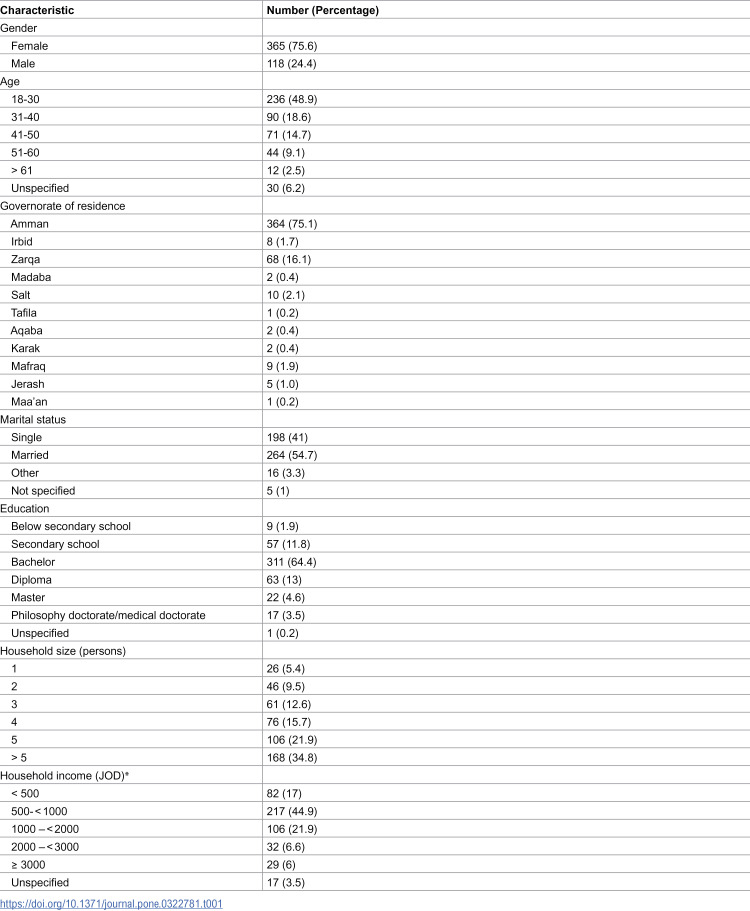 Figure 1
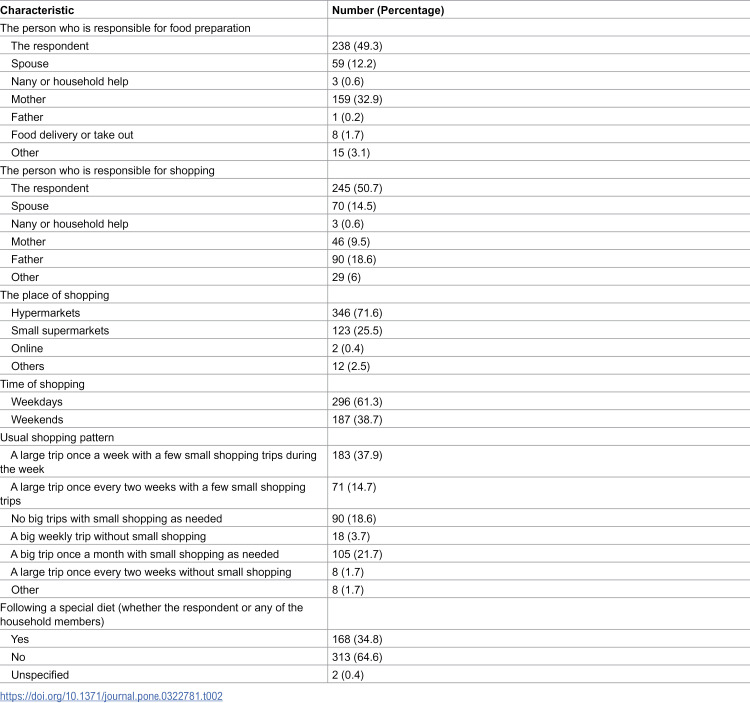 Figure 2
 Figure 3
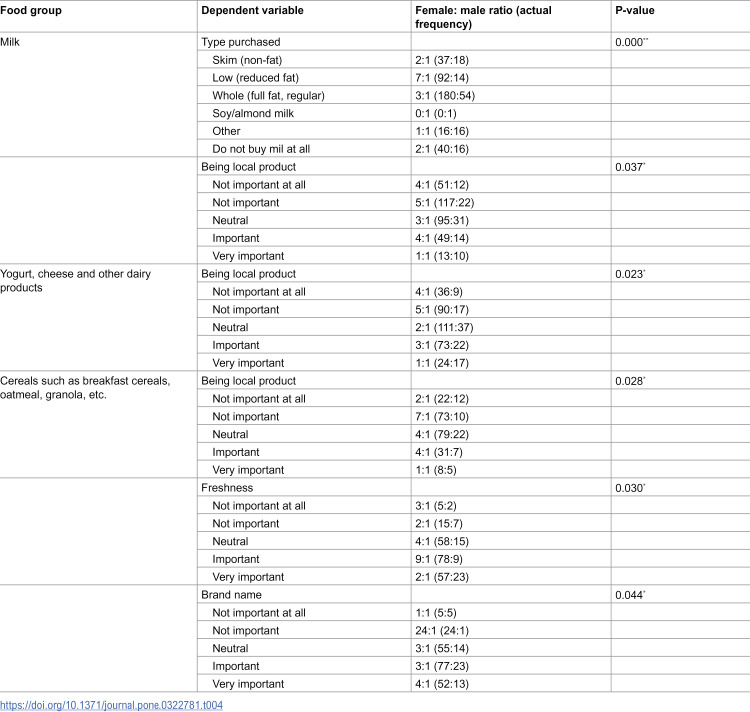 Figure 4
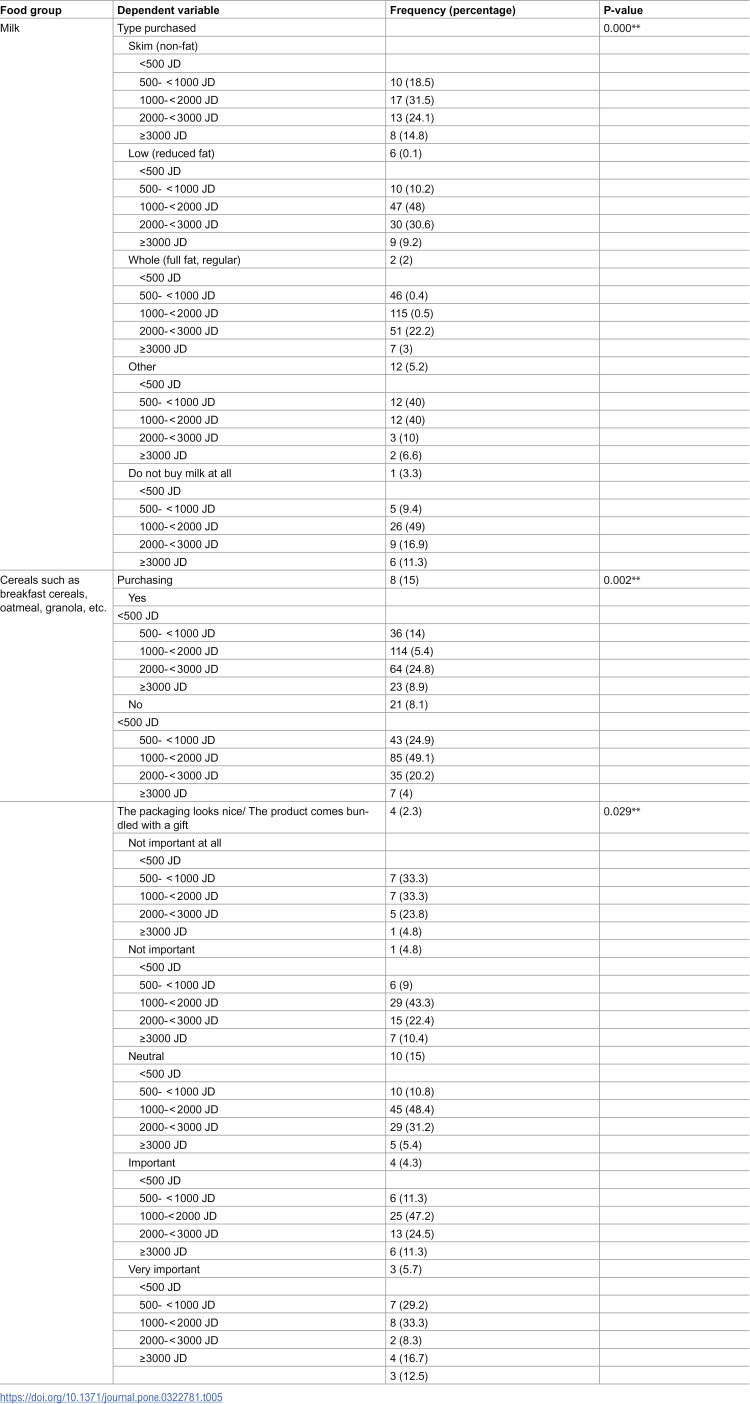 Figure 5
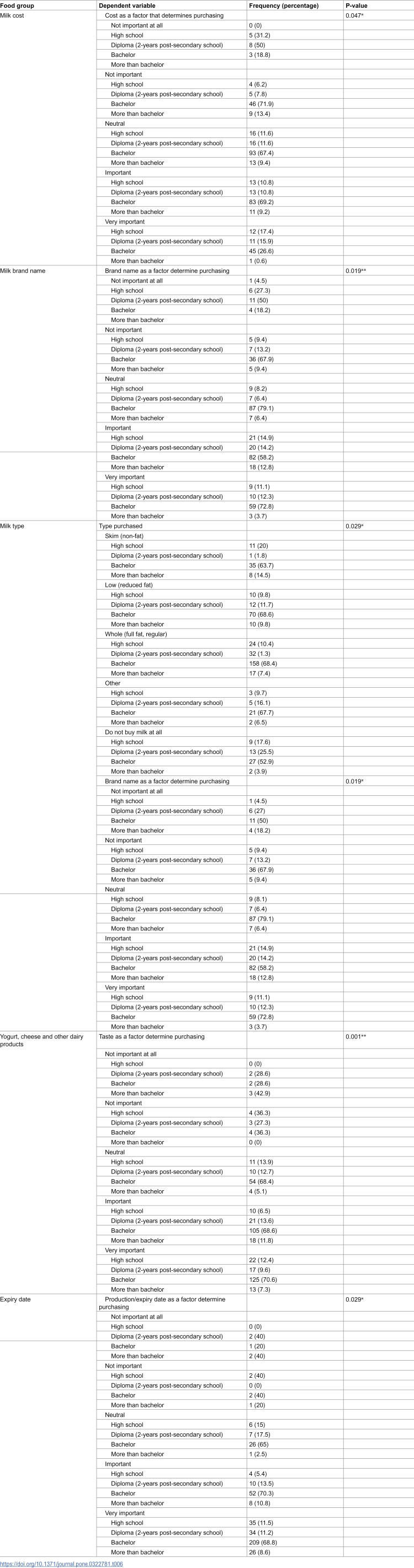 Figure 6
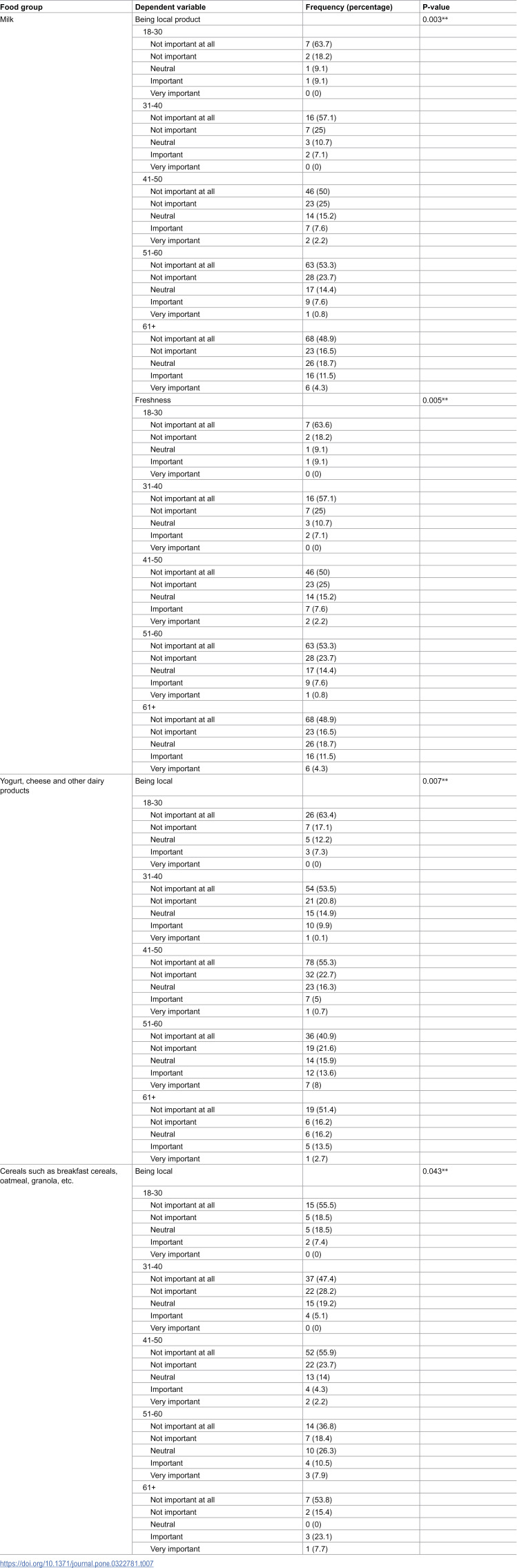 Figure 7
Peer Reviews
No public reviews on file for this paper yet. If you reviewed it on a platform where reviews are public (OpenReview, ICLR, NeurIPS, ICML), you can paste yours below so the community can read it here.
Videos
No videos yet. Explain this paper in a talk, walkthrough, or lecture? Add one.
Taxonomy
TopicsFood Waste Reduction and Sustainability · Consumer Attitudes and Food Labeling · Food Safety and Hygiene
1. Introduction
Jordan is one of the medium-low income, food-deficit [1] countries that have passed through several difficulties due to political conflicts in the surrounding areas. Jordan depends on imports [2] of 70% of staple foods [3]. In addition, the food processing sector including dairy and bakery manufacturing and packaging [4] contributes to Jordan’s food basket. Accordingly, the food supply in Jordan met consumer demands [5]. Nonetheless, food prices are increasing [6] necessitating the adoption of policies to stabilize and reduce food prices [7].
Food not only alleviates hunger but also, provides essential nutrition which determines humans health [8]. Food purchasing pattern is the major and sometimes the only driver for food acquisition in consumer-driven societies [9] and the key to extrapolating policies to improve human health, alleviate hunger, and improve the food system.
Consumer behavior refers to the practices related to buying in terms of the locations of purchasing, determinants of buying, and preferences [10,11]. Food purchasing pattern refers to the consumer behavior related to buying food. Consumer behavior is an integral part of human daily life [12]. Consumer purchasing behavior towards certain types of foods has been studied previously in Jordan [4,13–16] and worldwide [17,18].
Policies and practices that enhance the production, marketing, and advertising of affordable nutritious foods were always called from stakeholders and policymakers [19]. Consumer behavior and purchasing driver research are key to formulating such policies and practices [20].
Rice and bread are staple foods in Jordan. Legumes, other cereals, milk, and dairy products constitute an integral part of the Jordan food basket [21] coming in the second rank after animal-based products [4]. As a country that primarily relies on imports to meet its food demands [2], knowing the limitations of previously published reports in terms of modernity, method of data collection, and relevance to consumer’s dietary habits, nutritional and health status [11], and knowing the emphasized role of studying consumer behavior in shaping policies related to food systems, we sought to investigate the food shopping patterns of people living in Jordan for milk, dairy products (e.g., yogurt, cheese), legumes and grains (rice, bulgur, freekeh, and couscous), and cereals (such as breakfast cereals, oatmeal, and granola). The study also aimed to understand of the importance of certain consumer-related factors (like sociodemographic characteristics), product-specific factors (like taste, packaging, and origin (local vs. imported)), and external factors (like cost, brand name, freshness, and production/expiry dates) on the purchasing of these products in the year 2019.
1.1 Hypotheses
The null hypothesis of the research (H0).
There is no association between certain consumer-related factors (like sociodemographic characteristics), product-specific factors (like taste, packaging, and origin (local vs. imported)), and external factors (like cost, brand name, freshness, and production/expiry dates) on the purchasing of milk, dairy products (e.g., yogurt, cheese), legumes and grains (rice, bulgur, freekeh, and couscous), and cereals (such as breakfast cereals, oatmeal, and granola).
The alternative hypothesis (H1).
There is an association between certain consumer-related factors (like sociodemographic characteristics), product-specific factors (like taste, packaging, and origin (local vs. imported)), and external factors (like cost, brand name, freshness, and production/expiry dates) on the purchasing of milk, dairy products (e.g., yogurt, cheese), legumes and grains (rice, bulgur, freekeh, and couscous), and cereals (such as breakfast cereals, oatmeal, and granola).
2. Materials and methods
This study followed the Strengthening the reporting of observational studies in epidemiology (STROBE) guidelines [22] and Declaration of Helsinki of the World Medical Association [23].
2.1. Study design
This is an observational study of cross-sectional design.
2.2. Survey tool
Food purchasing pattern was assessed via a valid (with content coefficient of validity of 1.0), reproducible (Spearman-Brown factor correlation coefficient > 0.7) questionnaire developed previously by the authors. The questionnaire examines grocery shopping, meal preparation behaviors, and food label use affecting purchasing 13 food groups namely: bread, milk, other dairy products, rice, legumes, and other grains, cereals, snack foods, sweets, juices, and canned beverages, sugar, honey, and spreads, meat, poultry, eggs, and sea foods, fresh fruits and vegetables, canned and frozen fruits and vegetables. In addition, the questionnaire was developed in both Arabic and English language speakers [24].
2.3. Settings
This study was performed to include a representative sample of adult people living in Jordan who did grocery shopping for the household in the year 2019. The participants were asked for their demographic characteristics (sex, age, governorate of residence, marital status, household size, and income).
The exposure of interest was the purchasing pattern in the sense of the persons who are responsible for food preparation and shopping, location of shopping, time of shopping, usual shopping frequency and duration, and following a special diet. In addition, shopping characteristics of milk, dairy products (e.g., yogurt, cheese), legumes and grains (rice, bulgur, freekeh, and couscous), and cereals (such as breakfast cereals, oatmeal, and granola) were measured. Furthermore, the importance of consumer-related factors (like sociodemographic characteristics), product-specific factors (like taste, packaging, and origin (local vs. imported)), and external factors (like cost, brand name, freshness, and production/expiry dates) during purchasing of these products were also measured.
The survey tool was uploaded onto Google^®^ forms and a link was distributed online through email list serves and social media such as WhatsApp^®^ and Facebook^®^ between 18^th^ March 2019 and 30^th^ September 2019. Students at the Department of Nutrition/Faculty of Pharmacy and Medical Sciences/University of Petra/Amman/Jordan assisted with the distribution of the questionnaire.
2.4. Participants
The study population was selected conveniently from adults (older than 18 years) who live in Jordan and do grocery shopping for their households. Sample size calculation was performed online to be 384 [25] assuming a 95% confidence interval, alpha level of 0.05, and Jordanian population size of 10,832,645 [26].
2.5. Variables
The measured variables were: demographic characteristics (sex, age, governorate of residence, marital status, household size, and income), the purchasing pattern (the person who is responsible for food preparation, the person who is responsible for shopping, the place of shopping, time of shopping, usual shopping pattern (in terms of the shopping trip frequency and duration), and following a special diet. In addition, shopping characteristics of milk, dairy products (e.g., yogurt, cheese), legumes and grains (rice, bulgur, freekeh, and couscous), and cereals (such as breakfast cereals, oatmeal, and granola) were measured. Furthermore, the importance of consumer-related factors (like sociodemographic characteristics), product-specific factors (like taste, packaging, and origin (local vs. imported)), and external factors (like cost, brand name, freshness, and production/expiry dates) on the purchasing of milk, dairy products (e.g., yogurt, cheese), legumes and grains (rice, bulgur, freekeh, and couscous), and cereals (such as breakfast cereals, oatmeal, and granola). The measured variables were of qualitative type.
2.6. Data sources/measurement
To reduce respondent burden, questions were formulated to allow choosing the answer either dichotomous (sex, time of shopping,) or multiple-choice manner (age, governorate of residence, marital status, education, household size and income, shopping and meal pattern characteristics).
2.7. Bias
To limit bias, volunteers were asked to be accurate as much as possible. They were informed that participation in the study was voluntary, their withdrawal from answering the survey is free at any time. In addition, the data will be confidential, used in a blind manner (coded), and will be used only for scientific purposes.
2.8. Study size
Sample size calculation was performed online to be 384 [25] assuming 95% confidence interval, alpha level of 0.05, and Jordanian population size of 10,832,645 [26].
2.9. Statistical methods
Data were analyzed by the software: statistical package for social sciences (SPSS)^®^ 26^th^ version. Missing data were coded as (.). The variables were coded with Arabic figures. Rates and percentages for each variable were calculated as counts and ratios. In addition, the frequency and percentages of factors affecting shopping (i,e. consumer-related factors (like sociodemographic characteristics), product-specific factors (like taste, packaging, and origin (local vs. imported)), and external factors (like cost, brand name, freshness, and production/expiry dates)) within each food group (milk, dairy products (e.g., yogurt, cheese), legumes and grains (rice, bulgur, freekeh, and couscous), and cereals (such as breakfast cereals, oatmeal, and granola) were calculated. Chi-square tests were run and Pearson’s correlation coefficients were used to calculate the linear correlation between the variables. Significant (^*^) and highly significant (^**^) correlations were correlated when P-value < 0.05 and < 0.01 respectively.
2.10. Ethical approval
The survey tool was revised and approved by the Research Ethics Committee of the Faculty of Pharmacy and Medical Sciences, University of Petra, Amman, Jordan at the University of Petra (Decision number: (1H/1/2019). Participants were consented electronically by pressing the button (Yes) after reading a question in the survey (Do you agree to participate in this survey?). If they press (Yes), the survey begins. If they pressed (No), the potential participant goes out of the survey form.
3. Results
3.1. Demographic characteristics of the study participants
Table 1 shows the demographic characteristics of the study participants. The study consisted of 483 participants (~3:1 female: male ratio). The response rate for different questions ranged between 32.1% to 98.6% for males and females respectively. Most (75.1%) of the study participants were residents of Amman, married (54.1%), earned their bachelor’s degree (64.4%), aged between 18–30 (48.9%), with a household size larger than 5 individuals (34.8%), and 44.9% of the study participants had household income of less than 1000 JOD (1 JOD ~ 0.71 USD).
Table 1: Demographic characteristics of the study participants.
3.2. Shopping and meal preparation characteristics of the study participants
Table 2 shows some shopping and meal-preparation characteristics of the study participants. Most (49.3%) of the study respondents prepared meals and did (37.9%) grocery shopping for their households from hypermarkets (71.9%) during the weekdays (61.3%) as a large trip once a week with a few small shopping trips during the week. In addition, most of the study participants did not follow a special dietary regimen (64.3%).
Table 2: Shopping and meal-preparation characteristics of the study participants.
Table 3 shows the shopping characteristics for milk, dairy products, rice, legumes, and other grains, in addition to the cereals food group such as breakfast cereals, oatmeal, and granola groups. Results show that most of the study participants purchase whole (full cream) milk (48.4%) and dairy products (71.6%). Furthermore, the study participants look at the expiry date of milk, yogurt, cheese, and dairy products, rice, legumes, bulgur, freekeh, couscous and other grains groups.
Table 3: Shopping characteristics related to different food groups.
Results of this study show that the factors that affected the above-mentioned food group purchasing were: taste, cost, freshness, brand name, and production/expiry dates. [Tables 4–7](#pone.0322781.t004 pone.0322781.t005 pone.0322781.t006 pone.0322781.t007) show the significantly correlated dependent (related to food purchasing pattern) and independent variables (gender, household income, educational level, and age), their distribution (as frequency), and P-value for the correlation. Female gender was correlated significantly (P < 0.05^*^) to purchasing local milk, dairy products, cereals, and cereals due to freshness and brand name. Moreover, gender is highly (P < 0.01^**^) correlated to the type of purchased milk (Table 4).
Table 4: The significant correlation coefficients between gender and the studied dependent variables related to food purchasing pattern.
Table 5: The significant correlation coefficients between household income and the studied dependent variables related to food purchasing pattern.
Table 6: The significant correlation coefficients between educational level and the studied dependent variables related to food purchasing pattern.
Table 7: The significant correlation coefficients between age and the studied dependent variables related to food purchasing pattern.
Table 5 shows a highly significant (P < 0.01^**^) correlation between the household income level and the type of bought milk, buying cereals such as breakfast cereals, oatmeal, granola, and participants’ perception about packaging as a factor affecting their purchasing of cereals such as breakfast cereals, oatmeal, granola.
Table 6 shows that there is a significant (P < 0.05^^) correlation between educational level and the type of milk purchased and ingredient list as a factor affecting cereal purchasing. In addition, there is a highly significant (P < 0.01^**^) correlation between education level and dairy expiry date and taste as well as milk brand name and cost as factors affecting milk purchasing. Furthermore, education level affected the type of milk purchased significantly (P < 0.05^^).
Table 7 shows that there is a significant (P < 0.05^*^) correlation between age and buying local cereal products. In addition, there is a highly significant (P < 0.01^**^) correlation between age and purchasing local milk, yogurt, cheese, and other dairy products, as well as freshness as a factor contributing to buying milk.
4. Discussion
In this investigation, we used (Jordanian Food Purchasing Habits Survey); a previously developed, validated (with content coefficient of validity of 1.0) questionnaire that was tested for reproducibility (Spearman-Brown factor correlation coefficient > 0.7), published and distributed in both Arabic and English languages [27]. Data collection via questionnaires distributed in Arabic and English allows the accommodation of different language cultures of sample.
4.1. Demographic and meal preparation characteristics of the study participants
The male: female ratio in Jordan is approximately 1:1. The high female: male ratio observed in the response to the survey probably indicates that females are more likely to do household grocery shopping [28] and to respond to questionnaire surveys. Worldwide, women respond more than males to surveys [29–31]. Additionally, in Jordan, women usually head the household [32].
Youth of age 18–23 years comprise about 1/3^rd^ of Jordanian population [33]. In 2020, the average monthly salary of Jordanians was reported to be 408 JOD/person [34]. The average household size in Jordan is 4.7 [35]. Jordan population is well-educated [4,36] with literacy rate of Jordanian youth is 98.3% [37]. The range of response rate of different questions is expected since answering the questionnaire was voluntary and some people were uncomfortable answering questions about confidential information like household income. In addition, most of Jordan population resides in Amman [38].
Since most of the study participants were females, they prepared meals and did grocery shopping for their households. Worldwide, women cook [39–41] and do grocery shopping [28,42–44] more than men. The finding that our study participants did not follow a special diet is consistent with the fact that Jordanians have the best health status among all of the Middle Eastern nations [45]. Thus, even though our sample was convenient, it represented the Jordanian population in terms of age, the governorate of residence, household size, and income.
4.2. Shopping characteristics of the study participants
Unlike Americans who shop for groceries several times per week [46] from non-traditional formats [47], our results (Table 1) show that the study sample shopped for groceries once per week from hypermarkets and did other several small trips during the week if needed. Bawa et al. [48] showed a negative correlation between shopping frequency and the per trip expenses. Thus, it seems that Jordanians attempted to save costs by shopping from hypermarkets since Jordan was classified as middle-income country [49]. In addition, shopping pattern shown by our results shopping pattern was cited by [9] as a tag for well-educated consumers; a characteristic found in our study sample characteristics (Table 1).
Consumer behavior is a complicated relationship that is affected by consumer-related factors such as biological needs, genetic profiles [7], and social and cultural factors [50]. In addition, food purchasing is strongly affected by product-specific factors and external factors [7].
Gender is one of the sociodemographic characteristics cited in the literature as a major factor affecting purchasing power, awareness [51], and healthier food preferences [7]. Within this context, we noticed that whole milk and dairy products were purchased mostly by females (Table 3). In addition, the female gender was correlated significantly to purchasing local milk, dairy products, cereals, and cereals due to freshness and brand name. Moreover, female gender was highly (P < 0.01^**^) correlated to the type of purchased milk (Table 4). Our results are somewhat similar to those of Fenech [28] where female gender, price, being domestic products, and brand name were identified as the major drivers for purchasing by females. In addition, Krešić [52] found that the female gender was significantly correlated to buying low-fat dairy products. These investigators also found that taste, sensory aspects, and health aspects were very important determinants of buying dairy products and this is consistent with our findings where 47.6% of people found taste to be an important or very important factor in their decision to purchase dairy products. Within the same context, Arganini [50,52] and Krešić [52] found that females tend to purchase foods especially dairy products according to health aspects. Low-fat products might be chosen more by females probably due to the fact that females concern more about their weight. In terms of cereals, Binkley [53] showed that females (especially if they were not employed) buy healthier breakfast cereals. Furthermore, US, UK, as well as Canadian populations were found to buy locally made groceries. The authors attributed this to flexible delivery, better response time during customer services and lower impact on the environment [54]. Within the same line, knowing the several physiological, psychological, and economic factors that affect consumer behavior, the random utility model showed that the commodity benefit (in terms of healthfulness) is one of the major drivers for purchasing [11]. Similarly, Tseng [9] emphasized that consumers with higher socio-economic status (as indicated by higher educational level) usually tend to buy food of low-fat and higher-fiber foods regardless of the price.
Our results (Table 5) showed that the higher the socioeconomic status of the study participants, the higher the purchasing of healthier milk and dairy product choices, breakfast cereals, oatmeal, granola, and the participant’s perception of packaging. This could be attributed to higher educational level and awareness about the importance of food packaging pertaining food label [11,55] as well as better food choices [9,56]. Higher education was cited in the literature as an indicator for higher socioeconomic status [9]. In Jordan, Rabboh et[4] reported that the higher-income households consume more processed foods with about 30–40% of the household income spent on animal-origin foods including dairy products. This can be confirmed by the knowledge, attitudes, and practices (KAP) model where knowledge affects the practices of purchasing [11].
Consistent with our results, Kurajdova [57] found that Slovakians buy milk according to income. Consistent with this, income was found to be a significant determinant of milk purchasing [11,57,58] and a major factor affecting food accessibility [59]. Within the same line, income was found to affect purchasing of breakfast cereals [60]. It is not surprising that income affected purchasing pattern since the higher the income, the higher the proportion used for grocery shopping [61]. On the other hand, Turrell [62] showed that reduced household income was associated with purchasing healthier foods. Moreover, income was shown to be a very strong predictive factor for food purchasing pattern especially for cereals, bread, and milk [63]. Packaging is known to affect consumer behavior by capturing attention of the consumers, motivating impulse buying, and providing attraction. In addition, labelling affects consumer behavior [64,65]. Since local products are being purchased significantly, Jordanian government, policy makers, and manufacturers are called to adopt local food firm advertising and marketing policies. Among the most important physical resources identified by the food choice model is money, where the household income determines social frameworks, roles, and meanings for the whole household [11].
We found a significant correlation between level of education, purchased milk type, and ingredient list as an important factor that affected cereal purchasing (Table 6). Concomitant with this, education was found to shape grocery purchasing behavior [51] via affecting lifestyle, satisfaction, and buying intentions [66]. Educated people tend to be more aware about the importance of reading the food label and ingredient list as well as production and expiration dates [67]. In addition, educated consumers are probably more worried about their health [56] and more able to afford purchasing more expensive food choices [9,55]
Our results indicate that age was correlated significantly with purchasing local milk and dairy products. Also, freshness is correlated to purchasing cereal products (Table 7). In general, age is considered a personal determinant of shaping [51] food purchasing specially milk [58,68,69] and fermented milk product [52] purchasing. Within the same line, consumer age was found by Mortimer and Clarke [42] as a determinant for purchasing in terms of the importance of product characteristics upon purchasing. Fortunately, Jordan has self-efficacy in fresh products [4]. In addition, age was documented as a factor that is related to appreciating the consumption of more fresh products [7].
5. Conclusions
It can be concluded that gender, household income, educational level, and age affected the purchasing of milk, yogurt, cheese, and dairy products, rice, legumes, bulgur, freekeh, couscous and other grains, legumes, and cereals such as breakfast cereals, oatmeal, granola products of Jordanians. These results imply accepting the alternative hypothesis and rejecting the null hypothesis.
Though consumer behavior is a complex uneasily understood relationship, it is somehow predictable and could be utilized by manufacturers and policy makers in order to improve the nutritional quality of food products offered in the Jordanian market, advertise for better local food choices, and to adopt focused strategies in order to develop the food sector in Jordan.
5. Limitations
Even though this is the first investigation of its kind, it is not without limitations such as convenience sampling procedure where there is a chance for sampling and the inability for generalization beyond the study sample. In addition, the cross-sectional design limits the generalization of the investigation results to the study population only.
Supporting information
S1 DataXXX.(XLSX)
The reference list from the paper itself. Each links out to its DOI / PubMed record.
- 1WFP. WFP Jordan Country Brief [Internet]. 2024. Available from: chrome-extension://efaidnbmnnnibpcajpcglclefindmkaj/chrome-extension://efaidnbmnnnibpcajpcglclefindmkaj/https://docs.wfp.org/api/documents/WFP-0000163621/download/?_ga=2.20905080.1530995951.1737213400-614660390.1737213400
- 2Idris I. Economic Situation in Jordan. 2016. p. 1–15. Available from: chrome-extension://efaidnbmnnnibpcajpcglclefindmkaj/chrome-extension://efaidnbmnnnibpcajpcglclefindmkaj/https://gsdrc.org/wp-content/uploads/2017/07/K 4D_HDR_Economic Situationin Jordan.pdf
- 3Fathallah H, Robertson T. Carnegie: Jordan faces food insecurity. https://en.ammonnews.net/article/49027. 2021.
- 4Rabboh WA, Peters B, Dengerink J, de Steenhuijsen Piters B, Fakhry H, Barois ZO, et al. An overview of the Ugandan food system: outcomes, drivers & activities. Foresight 4Food; 2024. https://iris.who.int/bitstream/handle/10665/42665/WHO_TRS_916.pdf
- 5UNHCR and NRC. ASSESSMENT OF THE JORDANIAN Basic Needs and Shelter Working [Internet]. 2018. Available from: chrome-extension://efaidnbmnnnibpcajpcglclefindmkaj/chrome-extension://efaidnbmnnnibpcajpcglclefindmkaj/https://www.3rpsyriacrisis.org/wp-content/uploads/2022/10/Market Assessment 02.01.2018 FINAL.pdf
- 6The Economic Policy Council. Jordan Economic Growth Plan 2018-2022 [Internet]. 2018. Available from: chrome-extension://efaidnbmnnnibpcajpcglclefindmkaj/chrome-extension://efaidnbmnnnibpcajpcglclefindmkaj/https://www.ssif.gov.jo/Upload Files/JEG Program English.pdf
- 7Huo H, Ahmad F, Teoh B. Factors affecting consumers’ organic food purchase behavior: a systematic literature review and future research agenda. Environ Soc Psychol. 2024;9(2):1–12.
- 8Antal E, Kasza G. Food purchase behavior during the first wave of COVID-19: the case of Hungary. Int J Environ Res Public Health. 2022;19(872):1–16.10.3390/ijerph 19020872 PMC 877589535055687 · doi ↗ · pubmed ↗