Dataset of subjective human responses and objective metrics related to motion sickness collected and computed on a winter research voyage
Nicole Catherine Taylor, Anriëtte Bekker, Karel Kruger

TL;DR
This paper presents a dataset combining human responses to motion sickness and objective ship measurements collected during a research voyage.
Contribution
The dataset is the first collected via a shipboard human cyber-physical system, combining subjective and objective motion sickness data.
Findings
Subjective motion sickness responses were collected from 63 participants using questionnaires and 15 via a mobile app.
Motion sickness dose values were computed in real time from acceleration measurements during the voyage.
The dataset includes anonymized human responses, location data, and ship motion metrics for analysis and future research.
Abstract
The SA Agulhas II, a South African (SA) polar supply and research vessel, embarked on a Winter Research Cruise in July of 2022 with 83 passengers aboard. Subjective human responses related to motion sickness were collected from 63 participants through paperbound questionnaires and, in parallel, from 15 participants through a mobile application that is part of a novel human cyber-physical system. Additionally, the human cyber-physical system enabled participant location tracking using near-field communication technology. The motion sickness responses are answers to questions that describe a participant’s incidence of any motion sickness symptoms and vomiting, as well as the severity of associated symptoms experienced. Ship responses were captured through a full-scale measurement system and processed in real time on board, computing motion sickness dose values for each 5-minute…
Genes, proteins, chemicals, diseases, species, mutations and cell lines named across the full text — each resolved to its canonical identifier and authoritative record.
Click any figure to enlarge with its caption.
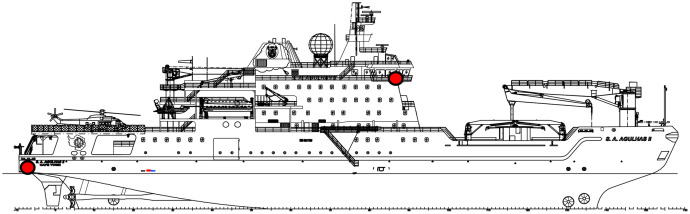 Figure 1
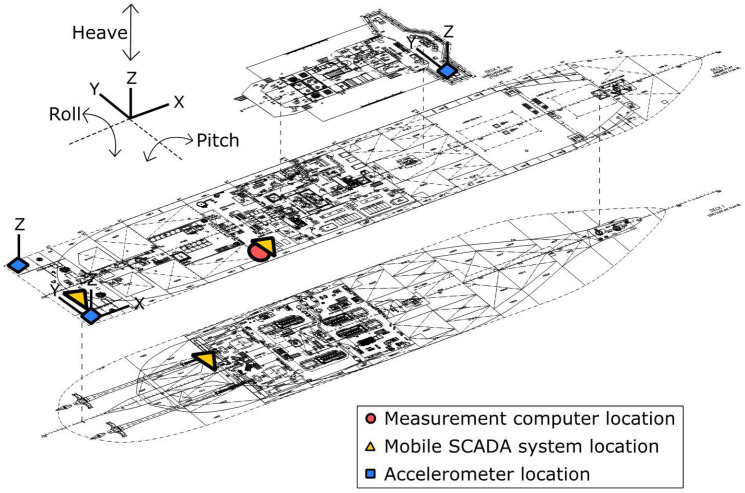 Figure 2
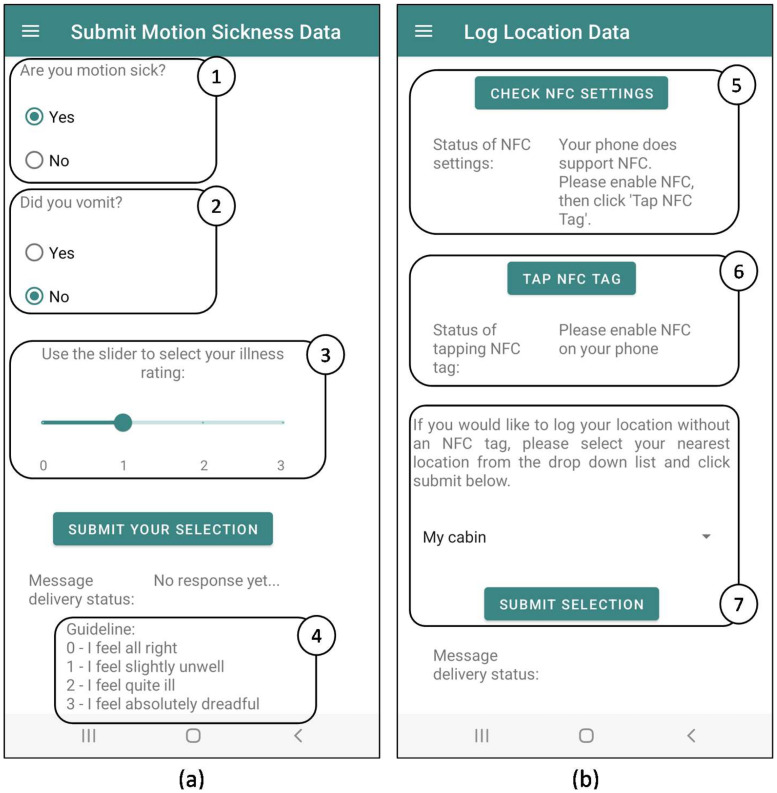 Figure 3
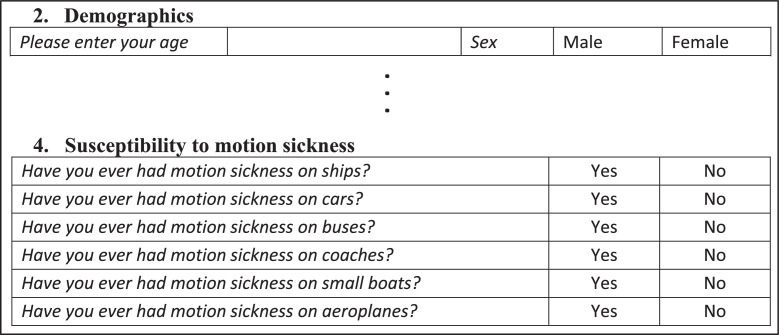 Figure 4
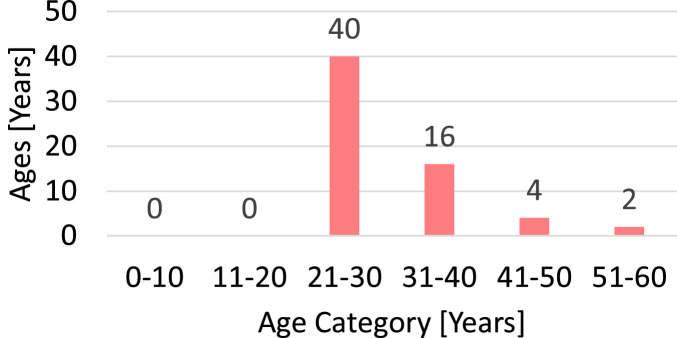 Figure 5
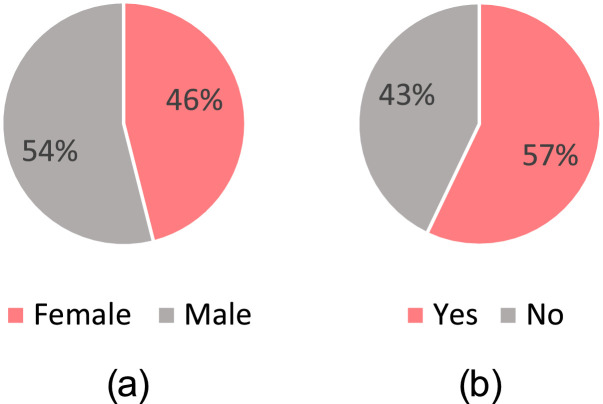 Figure 6
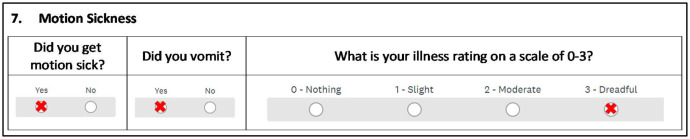 Figure 7
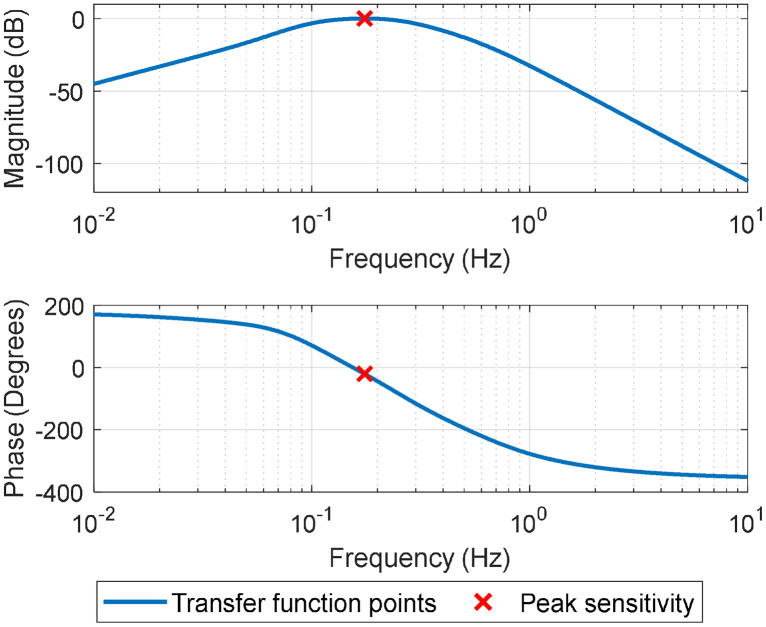 Figure 8
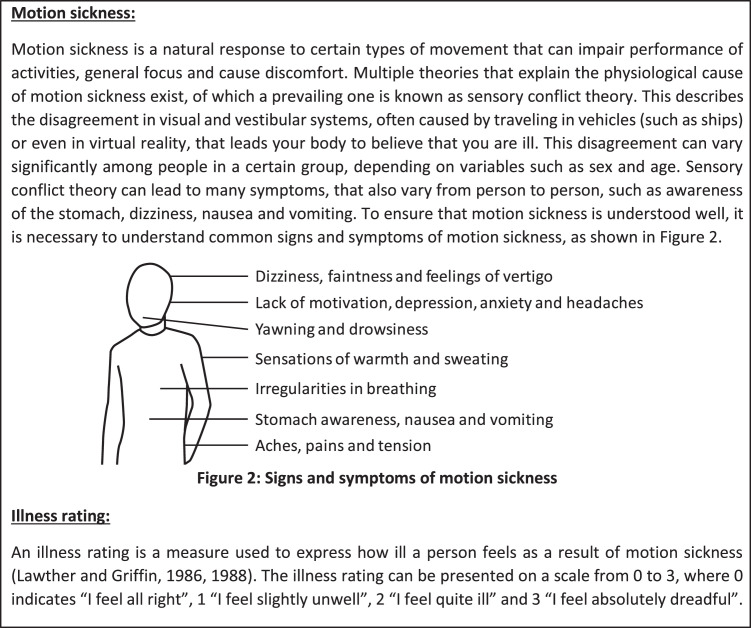 Figure 9
Peer Reviews
No public reviews on file for this paper yet. If you reviewed it on a platform where reviews are public (OpenReview, ICLR, NeurIPS, ICML), you can paste yours below so the community can read it here.
Videos
No videos yet. Explain this paper in a talk, walkthrough, or lecture? Add one.
Taxonomy
TopicsVirtual Reality Applications and Impacts · Winter Sports Injuries and Performance
Specifications TableSubjectEngineeringSpecific subject areaHuman factors in shipping – The dataset contains subjective human responses to motion sickness and objective measurements pertaining to motion exposure on board a ship.Data formatHuman responses: anonymised, raw and cleanedShip responses: filtered, analysedType of dataHuman responses: Comma separated values in text files and column separated Excel spreadsheetsShip responses: Column separated values in text filesPosition vectors (supporting document): Column separated Excel spreadsheetData collectionHuman responses are collected digitally via a custom-developed Android mobile application as an interface to a human cyber-physical system, in parallel to feedback recorded in paperbound booklets with daily questionnaires [1]Ship responses are measured by 5 Direct Current (DC) accelerometers installed shipboard as part of a full-scale measurement system that uses a network of mobile data acquisition systems controlled by LMS Turbine Testing software [2,3]Data source locationOn the SA Agulhas II during the Southern Ocean Seasonal Experiment Winter Research Cruise of 2022. The research cruise track goes from the Port of Cape Town, South Africa, to the marginal ice zone in the Southern Ocean [4].Data accessibilityRepository name: Ship Motion Measurements and Human Responses Captured on the SA Agulhas II - Winter Cruise 2022. Available on SUNScholarData. https://doi.org/10.25413/sun.24331114.Related research articleN.C. Taylor, A. Bekker, K. Kruger, 2024. The operational development of diagnostic seasickness criteria through a human cyber-physical system. Applied Ergonomics, 119, 104316. https://doi.org/10.1016/j.apergo.2024.104316.
Value of the data
1
- •Novel human responses relevant to ship designers, operators and stakeholders about real-world feedback related to motion sickness for improving ship design and operation
- •Proof of concept for human-centred data acquisition, monitoring and management through a human cyber-physical system deployed during ship operation
- •Insight into differences between human response collection methods on a ship through a digital platform and traditional paper-based method
- •Potential to develop seasickness criteria for estimating levels of motion sickness on board a ship to predict and manage motion sickness incidence
Background
2
A consortium is steering a research and measurement campaign that investigates ship and human responses on the SA Agulhas II, South Africa’s (SA’s) polar supply and research vessel [3]. A full-scale sensor network is installed on the SA Agulhas II, with sensor locations relevant to this study shown in Figs. 1 and 2, to study ship responses while navigating through open water and ice conditions to resupply bases in the Southern Ocean and Antarctica. The main ship characteristics are presented in Table 1.Fig. 1. Relevant sensor locations indicated on the SA Agulhas II.Fig 1. Fig. 2Sensor and measurement equipment positions on the SA Agulhas II.Fig 2. Table 1Main characteristics of the SA Agulhas II [5].Table 1. CharacteristicValueLength overall, L_OA_134 mLength of waterline, L_WL_126 mLength between perpendiculars, L_PP_122 mBeam at waterline, B_WL_22 mDesign draft, T_WL_7.65 mDepth, D10.6 mWetted surface area, S3620 m^2^Waterplane area, A_WP_2455 m^2^Displacement, ▽13687 m^3^Block coefficient, C_B_0.67Longitudinal centre of gravity from the aft peak, LCG57.9 mVertical centre of gravity from keel, KG8.81 mMetacentric height from keel, GM_t_2.36 mFree surface metacentric height corrected, GM_f_1.63 mLongitudinal metacentric height, GM_L_93.5 mRoll radius of gyration, k_44_0.37B mPitch radius of gyration, k_55_0.25LPP m
The effect of the ship on occupants as a living and workspace for up to 50 crew and 100 passengers is studied as well. Traditionally, feedback from occupants is collected through a paper-based booklet that contains daily questionnaires to report on human factors relating to motion sickness, whole-body vibration and noise on board that are factors known to affect comfort and productivity while seafaring. A human cyber-physical system (HCPS) was developed to immediately digitalise and process, while increasing the frequency of, human responses collected. The HCPS was deployed shipboard for the Winter Research Cruise in July of 2022 with 83 passengers. Of the passengers aboard, 63 voluntarily participated in completing the traditional paper-based booklets daily and, in parallel, 15 used a mobile application to record their responses to motion sickness and track their location on board. This dataset is a collation of the data pertaining to ship and human responses collected during the Winter Research Cruise.
Data description
3
The dataset has the file and folder content described in Table 2. The details of the contents for each folder are detailed subsequently.Table 2. File and folder content description.Table 2. File/Folder NameSizeContentsReadme261 kBDetailed description of contents of each folder, including list of files, variables and formatsWinter Cruise Human Responses Collected Through Daily Diaries64 kBOne .xlsx file containing digitised feedback related to motion sickness collected through paperbound questionnairesWinter Cruise Human Responses Collected Through the Mariner 4.0 Application160 kB30 .txt files containing digitised feedback related to participant location and motion sickness captured through the Mariner 4.0 mobile applicationWinter Cruise Acceleration Measurements1.42 GB43 folders containing .txt files of acceleration measurements in consecutive 5-min files recorded at specified locations on board captured through DC accelerometersWinter Cruise Computed Motion Sickness Dose Values5.26 MBOne .txt file containing the motion sickness dose values at all near-field communication tag locations for the duration of the voyageWinter Cruise Supporting Documentation16 kBOne .xlsx file containing position vectors from a specified accelerometer location to near-field communication tag locations vessel wide
Human responses: participant X location or motion sickness – mobile application
3.1
Human responses collected through the Mariner 4.0 application installed on participant mobile devices, where ‘X’ is replaced with a numeric identifier to preserve participant anonymity. This includes their location that corresponds to near-field communication (NFC) tags distributed vessel wide or subjective assessments related to their state of motion sickness at any selected time. Motion sickness responses are answers to the questions “Are you motion sick?”, “Did you vomit?” and “What is your illness rating?” (on a scale from 0 to 3, as described in Section 4.1).
Human responses: motion sickness – paperbound questionnaire
3.2
Human responses collected through daily diary questionnaire booklets. These are answers to the aforementioned questions, but the assessment is performed once a day at 08h00 (UTC+0h) instead of at any time. Additionally, answers to a once-off questionnaire at the start of the daily diary are included, including demographics of participants related to motion sickness.
Ship responses: acceleration – ship motion data acquisition system
3.3
Ship responses captured through accelerometers at positions that enable the computation of motion at any location on board using rigid body dynamics. Each file contains 5 minutes (300 seconds) of acceleration measurements from 5 accelerometers, which is decimated from 2048 Hz to 10 Hz. The accelerometer orientations and locations are presented in Figs. 1 and 2 and in more detail by Taylor et al. [1].
Ship responses: motion sickness dose values at NFC tag locations
3.4
Motion sickness dose values (MSDVs) were computed for each 5-minute file using z-oriented acceleration translated to each NFC tag location based on methods recommended in ISO 2631-1 (1997) [6]. This created a 5-minute epoch of MSDVs for the full duration of the voyage.
Supporting documentation: position vectors
3.5
The position vectors from the accelerometer at location 0 (see the Readme or [1] for more detail) in the Starboard-side Steering Gear Room on Deck 3 to each NFC tag on the SA Agulhas II.
Experimental design, materials and methods
4
Human responses were collected during the research voyage from participating passengers through two concomitant methods, including the use of a mobile application that served as an interface to the HCPS and paperbound questionnaires. Ship responses were measured by a full-scale sensor network installed shipboard. All acquired data was validated, primarily using descriptive statistics, to identify potential discrepancies or errors, such as outliers. No data was altered due to veracity screening, as discrepancies or errors were not detected.
Human response acquisition method 1 – mobile application
4.1
The Mariner 4.0 application is a native Android mobile application developed in-house to facilitate mobile data collection from seafarers via their cell phones using the Wi-Fi network on the SA Agulhas II, South Africa’s polar supply and research vessel. The views for capturing motion sickness and location data are shown in Fig. 3.Fig. 3. Mariner 4.0 application views for acquiring data from seafarers related to (a) motion sickness and (b) location [7].Fig 3
In Fig. 3a, the individual-level subjective motion sickness incidence (MSI_subjective_), vomiting incidence (VI_subjective_) and illness rating (IR_subjectvie_) variables are captured from a seafarer with respective prompts: “Are you motion sick?” (1), “Did you vomit?” (2) and a slider to select their IR (3). A guideline for rating the severity of their motion sickness symptoms is provided (4), based on the original IR scale [8].
In Fig. 3b (5), the seafarer can inspect their device NFC functionality. If their smart phone is NFC-enabled, a seafarer can record their location using NFC tags (6). Otherwise, they can use a drop-down list (7) that corresponds to NFC tag locations. The locations of NFC tags distributed around passenger spaces on the SA Agulhas II are illustrated in Taylor et al. [1].
Notifications to remind seafarers to submit data through the Mariner 4.0 application are set to trigger three times a day at ship mealtimes, which was selected as a time when seafarers are expected to be by their cell phones. When a seafarer submits data, the time of submission and content (including their allocated Participant ID) are captured and sent to the HCPS via the Wi-Fi network.
Human response acquisition method 2 – paperbound questionnaires
4.2
Paper-based questionnaires, called daily diaries, were developed in earlier studies of human factors on the SA Agulhas II [9,10]. Each daily diary briefs voluntary participants on descriptions of relevant terms, such as symptoms of motion sickness, and guidelines for completing the booklet. The same format was used to compile daily diaries for Winter Cruise.
The daily diary includes a once-off questionnaire at the start to record background and demographic information unique to the participant, as shown in Fig. 4 for questions related to motion sickness. The age distribution of participants is shown in Fig. 5 and the responses to sex and history of susceptibility to motion sickness on ships are shown in Fig. 6a and b, respectively.Fig. 4. Motion sickness questions in the once-off questionnaire at the start of the daily diary (adapted [9,11]).Fig 4. Fig. 5Age distribution of participants.Fig 5. Fig. 6Demographics of participants (a) sex and (b) history of seasickness on ships.Fig 6
After the once-off questionnaire, a one-page questionnaire, as shown in Fig. 7 (showing only motion sickness questions), is repeated for each day of the voyage. The one-page questionnaire captures feedback from the participants regarding their daily perception and experience of motion sickness. Each question is related to a specific motion sickness metric, where:
- •“Did you get motion sick?” is the MSI_subjective_;
- •“Did you vomit?” is the VI_subjective_; and
- •“What is your illness rating on a scale of 0-3?” is the IR_subjective_. Fig. 7. Motion sickness related questions in the daily questionnaire in the daily diary (adapted from [9]).Fig 7
Ship response measurement
4.3
Direct Current (DC) accelerometer readings from a full-scale measurement system, described by Bekker et al. [3], were used for their measurement range that spans low frequencies of interest to motion sickness (below 1 Hz [6]). The accelerometers have been calibrated in a laboratory to verify measurement certainty. The accelerometers are positioned to form an array for translating z-oriented acceleration measurements to other points of interest on the ship. This method was developed to determine the rigid body motion of the SA Agulhas II using translational accelerometers [12].
A filter using a frequency weighting for motion sickness assessment is applied to the acceleration time signals using an infinite impulse response filter [[6], [13], [14]]. The total weighting filter for motion sickness, Wf, is described by Eq. (1),
as provided in [6]. A high-pass filter, , and low-pass filter, , form a bandpass filter that preserves data within the frequency range of 0.08 Hz and 0.63 Hz. The combination of acceleration-velocity transition, , and upward step, , filters manipulates the measured signal to analytically represent human vibration perception. A Bode plot for the transfer function of the Wf weighting filter is presented in Fig. 8. Signal content between 0.1 and 0.5 Hz is preserved, with a peak sensitivity around 0.175 Hz, which allows for assessment of acceleration that is known to induce motion sickness [6].Fig. 8. Bode plot for the transfer function of the Wf weighting filter (adapted from [6]).Fig 8
MSDV computation
4.4
An MSDV is computed for each 5-minute file stored by the full-scale measurement system at all NFC tag and generic motion measurement locations. An MSDV_5min_ is computed using Eq. (2),
where T is the duration of measurement (5 minutes), N is the number of samples and aw is the weighted z-oriented acceleration [6].
Participant recruitment and briefing
4.5
All passengers (83) were invited to a recruitment presentation before departure for Winter Cruise on the evening of 11 July 2023. The presentation was performed in the Auditorium of the SA Agulhas II where participation materials were distributed before passengers arrived, including the daily diaries and written consent forms. Participation in research activities was detailed, making use of descriptions in the daily diaries. The definitions of motion sickness, its accompanying symptoms and the illness ratings that were used are shown in Fig. 9. Participants were informed that a “Yes” for “Are you motion sick?” should correspond to an IR of greater than 0, and a “No” with an IR of 0, otherwise the data interpretation conflicts.Fig. 9. Definition section related to motion sickness in a daily diary (adapted from [9]).Fig 9
Participant data collection through the Mariner 4.0 application and daily diaries were addressed. Fifteen (15) passengers volunteered to participate in providing human responses via both methods of subjective data acquisition, where 63 passengers participated in completing daily diaries. Participants were encouraged to:
- •log submissions through the Mariner 4.0 application at least three times a day during mealtimes (i.e., breakfast at 07h30-08h30, lunch at 11h30-12h30 and dinner at 18h30-20h00 ship time). Ship time was kept to UTC+2hr during Winter Cruise, where UTC is coordinated universal time, but data submitted was recorded on their mobile devices in UTC+0h epoch time.
- •complete their daily questionnaires each morning, reflecting on the previous 24 hours (from 08h00 to 08h00 ship time) when answering their questions.
Limitations
The number of participants that contributed to this dataset does not allow for general inference of results beyond that of this study due to the sample size. However, the sample of passengers that participated in the traditional method of collecting human responses is suitable for making inferences for the population on board the SA Agulhas II during the Winter Research Voyage. Further data acquisition is required to make general inferences using a larger sample pool.
Fewer passengers participated in data collection through the HCPS. The limited participation is suspected to be due to the platform-specific mobile application (only Android) and possible undesired participation in parallel subjective data acquisition methods. Nonetheless, the HCPS enabled a higher frequency of human responses, such that the confidence in human responses for individuals is higher than that for the traditional paper-based method.
Human responses in this dataset are subjective and could be influenced by human factors outside of the scope of consideration in this study. Feedback pertaining to participant demographics, motion sickness incidence, vomiting incidence and severity of motion sickness symptoms were focussed on in this study exclusively.
The acceleration measurements of ship responses included in this dataset is a down-sampled subset of the greater dataset collected during the Winter Research Voyage. The greater dataset is too large to include in the online repository and can be accessed upon reasonable request to the authors.
Ethics statement
Written consent was obtained from participants before participation during a recruitment and briefing session. The research was conducted under approval of the Research Ethics Committee: Social, Behavioural and Education Research of Stellenbosch University with ID: ING-2021-19463 and received institutional permission with ID: RPSD-2082. The study conducted to generate the dataset followed the required guidelines for ethical research practices [12].
CRediT author statement
Nicole Catherine Taylor: conceptualisation, methodology, software, validation, investigation, data curation, writing – original draft, Anriëtte Bekker: conceptualisation, methodology, validation, supervision, resources, writing – review and editing, project administration, funding acquisition, Karel Kruger: conceptualisation, methodology, validation, supervision, resources, writing – review and editing, project administration.
The reference list from the paper itself. Each links out to its DOI / PubMed record.
- 1Taylor N.C.Bekker A.Kruger K.The operational development of diagnostic seasickness criteria through a human cyber-physical system Appl. Ergon.119202310431610.1016/j.apergo.2024.10431638810325 · doi ↗ · pubmed ↗
- 2N.C. Taylor, A. Bekker, K. Kruger, 2023. Ship motion measurements and human responses captured on the SA Agulhas II - Winter Cruise 2022. 10.25413/sun.24331114.
- 3Bekker A.Suominen M.Kujala P.De Waal R.J.O.Soal K.I.From data to insight for a polar supply and research vessel Ship Technol. Res.66120185773
- 4Vichi M.SCALE-WIN 22 Cruise Report 2023 https://zenodo.org/record/7902557
- 5International Organisation for Standardisation (ISO)Mechanical Vibration and Shock – Evaluation of Human Exposure to Whole-Body Vibration – Part 1: General Requirements. ISO 2631-11997 ISO Geneva
- 6Taylor N.C.Kruger K.Bekker A.A human cyber-physical system for human-centered computing in seafaring J. Ambient. Intell. Humaniz. Comput.14620237871788410.1007/s 12652-023-04598-6 · doi ↗
- 7Lawther A.Griffin M.J.The motion of a ship at sea and the consequent motion sickness amongst passengers Ergonomics 2941986535552370950710.1080/00140138608968289 · doi ↗ · pubmed ↗
- 8Engelbrecht M.C.Bekker A.A discomfort threshold for impulsive whole-body vibration on a slamming-prone vessel Appl. Ergon.109202310399210.1016/j.apergo.2023.10399236773428 · doi ↗ · pubmed ↗