Beyond the Surface of Capacity Building: A Mixed-Methods Study of the Core Functions and Forms of Dissemination and Implementation Science Consultations
Kera Swanson, Nicole A. Stadnick, Gregory A. Aarons, Lauren Brookman-Frazee, Isaac Bouchard, Zeying Du, Anna Brubaker, Carrie Geremia, Kelli Cain, Lilliana Conradi, Marisa Sklar, Clare Viglione, Borsika Rabin

TL;DR
This study explores how DIS consultations support skill development in implementation science, focusing on grant proposals and ongoing projects.
Contribution
The study identifies and categorizes consultation functions and forms in DIS capacity building programs using mixed methods.
Findings
Consultations most often supported grant proposals and ongoing D&I projects.
DIS guidance primarily aligned with intermediate-level competencies in design and analysis.
There is a need for scalable frameworks and tiered training to improve DIS capacity building.
Abstract
The number of Dissemination and Implementation Science (DIS) capacity building programs is increasing worldwide. These programs aim to enhance diverse DIS skills through a variety of activities. Our team’s systematic review of DIS programs determined that DIS consultations were offered across 67% of programs, yet their specific roles in capacity development were not well defined. This mixed methods study aimed to identify and categorize the functions and forms of consultation activities across three DIS capacity building programs at the University of California San Diego that varied in content focus and infrastructure and then to map findings onto DIS competencies. Consultation notes from the three programs were extracted for content analysis to identify discussion topics, DIS guidance provided, and resources shared. Generative artificial intelligence (ChatGPT Plus) facilitated content…
Genes, proteins, chemicals, diseases, species, mutations and cell lines named across the full text — each resolved to its canonical identifier and authoritative record.
Click any figure to enlarge with its caption.
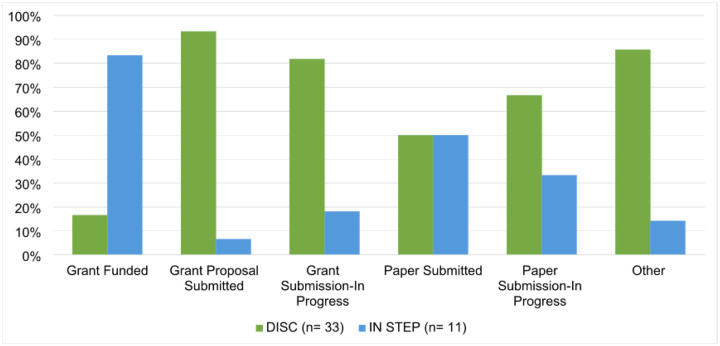 Figure 1
Peer Reviews
No public reviews on file for this paper yet. If you reviewed it on a platform where reviews are public (OpenReview, ICLR, NeurIPS, ICML), you can paste yours below so the community can read it here.
Videos
No videos yet. Explain this paper in a talk, walkthrough, or lecture? Add one.
Taxonomy
TopicsHealth Policy Implementation Science · Evaluation and Performance Assessment · Community Health and Development
Background
Interest in Dissemination and Implementation Science (DIS) and its applications continues to grow, with a variety of efforts emerging to support its advancement (1, 2). DIS capacity building programs enhance DIS skills and competencies through education and training, funding opportunities, consultation, technical assistance, and mentorship (3–12).
Notable programs include the Implementation Research Institute (IRI), which provides intensive training in mental health DIS through a two-year program of didactic sessions, mentored research, and concept paper development (13–15); the Mentored Training for Dissemination and Implementation Research in Cancer (MT-DIRC), targeting postdoctoral researchers with mentorship and project-based learning (16); the Knowledge Translation Summer Institute (KTSI) in Canada, offering short-term, intensive training on implementation frameworks and stakeholder engagement (17); and the Training in Dissemination and Implementation Research in Health (TIDIRH), providing foundational training for health researchers in conducting D&I studies (9, 18). These initiatives reflect a growing ecosystem of DIS training that varies in format (e.g., workshops, fellowships, graduate-level courses etc.), audience, and disciplinary focus (7). Programs are grounded in DIS competencies, which guide development, assessment, and strengthening of DIS skills (19, 20).
In 2015, Padek and colleagues developed 43-core DIS competencies, organized by level of expertise (i.e., beginner, intermediate, and advanced) and across four domains: (1) Definition, Background, and Rationale; (2) Theory and Approaches; (3) Design and Analysis; and (4) Practice-Based Considerations. Hubeschmann et al. (2022) later expanded these with 10 new competencies aimed at advancing rapid and inclusive DIS research. Grounding capacity-building efforts in these competencies enables rigorous standards and measurable benchmarks for DIS training and workforce development.
Our team conducted a systematic review of DIS capacity building programs, identifying 165 programs domestically and globally, and found that DIS consultations made up 67% of capacity building activities (12). This highlights the central role of consultation as a strategy for providing tailored guidance, problem-solving, and real-time support to navigate foundational and complex DIS challenges. Despite their prevalence, little is known about how consultation activities contribute to DIS capacity building nor how they align with DIS competencies.
Understanding DIS consultation content and methods is crucial for identifying best practices and developing evidence-based guidelines (21, 22). Without such knowledge, evaluating, refining, and optimizing consultations remains challenging. Building on prior work (7, 12, 21), this study examines consultation activities at three DIS capacity building programs housed at the University of California, San Diego (UCSD): (1) a DIS program within a clinical and translational science center (NIH UL1TR001442); (2) an HIV implementation science program (NIAID P30-AI036214 CFAR Supplement); and (3) a center focused on team-based implementation strategies in children’s mental health (NIMH P50MH126231). Using consultation notes and program metrics, we aim to identify the core functions (topics) and forms (guidance provided) of DIS consultations, assess their alignment with DIS competencies, and propose best practices to enhance their effectiveness.
Methods
Study Context: Overview of the Three DIS Capacity Building Programs
2.1
UCSD currently houses three DIS capacity building programs that served as data sources for this study.
- The Altman Clinical and Translational Research Institute Dissemination and Implementation Science Center (DISC) – Established in 2020 through the Clinical and Translational Science Award program (NIH Grant UL1TR001442), offers DIS training, technical assistance, and research support through expert consultations tailored to diverse stakeholders.
- San Diego Center for AIDS Research Implementation Science Hub (SD CFAR IS Hub) – Funded by the National Institute of Allergy and Infectious Diseases (NIAID P30-AI036214 CFAR Supplement) and established in 2020, its one of 10 regional IS Hubs that supports Ending the HIV Epidemic (EHE) research through DIS training, mentoring, and technical assistance.
- Implementation Science and Team Effectiveness in Practice (IN STEP) Children’s Mental Health Research Center – Established in 2022 through a National Institute of Mental Health (NIMH) ALACRITY P50 award (P50MH126231), IN STEP develops and tests team-based implementation strategies to improve children’s mental health services across systems and provides consultation in team effectiveness, implementation science, and children’s mental health services research.
Though operating independently, these programs collaborate by sharing resources and consultants, co-hosting events, and referring consultation requests, offering a unique context for examining DIS consultation activities.
Across programs, 23 consultants (20 PhD/MD-level, three Master’s-level Certified Implementation Support Specialists) offer expertise across DIS, public health, HIV/AIDS, gender and sexual minority health, team-effectiveness research, children’s mental health, leadership, policy, and organizational psychology disciplines (DISC n = 11; IS Hub n = 8; IN STEP n = 11). Seven consultants work across the three programs, fostering cross-program synergy.
Consultation mechanisms were conceptualized using the Core Functions and Forms framework, which distinguishes between an intervention’s essential purposes (core functions) and strategies used to achieve them (forms) (23, 24). In the context of this study, this framework offers a structured lens through which to examine how various consultation activities contribute to DIS capacity building (25).
Study Design
2.2
This study employed a multi-stepped mixed-methods approach:
- Data Compilation – Consultation notes were compiled into a database for qualitative coding and analysis. Program metrics (e.g., consultee role, department, experience level) were integrated to enrich interpretation.
- Integration of Program Metrics –Metrics were synthesized with content analysis findings to contextualize consultation activities.
- Content Analysis Using Generative Artificial Intelligence (AI) – A three-step process combined manual coding with validation using a Large Language Model (LLM) (ChatGPT) (26) to systematically identify and categorize consultation core functions (i.e., topics discussed), forms (i.e., types of guidance provided), and resources shared. Results served as the foundation for competency mapping and gap analysis.
- Competency Mapping – Consultation forms were mapped onto updated DIS competencies (21).
- Gap Analysis – Analysis identified competency areas addressed and gaps in consultation support (27).
Data Compilation
2.3
Program coordinators reviewed and added consultation notes to the database, excluding entries lacking sufficient detail. Specifically, consultation notes with a single vague sentence, offering no insight into the discussion content, topics covered, or type of guidance provided during the session. In such cases, these notes did not allow for reliable coding or interpretation and were therefore omitted from the dataset to ensure the integrity and depth of the analysis.
Integration of Program Metrics
2.4
Program metrics across the three programs (e.g., consulting program, type of consultation, consultee role/title, consultee affiliation, consultation follow up data) were synthesized, providing contextual depth to the content analysis.
Consultee and consultation request data were collected through each program’s consultation request system. DISC and IN STEP offer consultation services to a broader audience and capture a range of requested support types. In contrast, the IS Hub provided consultations exclusively to pre-funded projects under the EHE initiative and did not collect comparable support request data due to its consultation scope.
Content Analysis
2.5
The content analysis was completed using three consecutive steps:
Step one – Manual Coding, two trained coders manually assigned consultation functions, forms, and resource types using an iteratively refined codebook. Consultation function codes were initially developed using predefined topic areas listed on each program’s consultation request, where consultees select discussion topics. However, several of these predefined categories were broad and lacked specificity (e.g., DIS methods, designing and evaluating implementation strategies, program design etc.). To enhance analytical clarity, consultation notes were reviewed to identify more granular discussion points and targeted sub-codes under these broader themes and finalized by the larger study team. For example, the broad category of “adaptations” was refined to reflect more specific subtopics such as “adaptation of DIS models,” “intervention tailoring,” and “modification of implementation strategies”. Discrepancies were addressed through discussion and escalation to the larger study team for review and decision-making. The full list of codes is provided in Additional file 1.
Codes for consultation forms and resources shared were generated based on observed content in the notes rather than a predefined list. As with function codes, these were iteratively reviewed and validated by the larger study team to ensure consistency and accuracy. For example, the coding team discussed with the larger study team how to distinguish between “connect with co-investigator” and “identified mentor” when reviewing consultation notes. It was agreed that “connect with co-investigator” would be reserved for projects not associated with K or other career development awards, whereas “identified mentor” would be used exclusively for consultations involving mentorship support tied to early-career development mechanisms (e.g., K awards). In another instance, the broad code “guidance on sustainability” was reviewed and refined to “guidance on sustainability methods”, better reflecting the type of technical support offered (i.e., applying DIS theories, models, and frameworks to sustainability planning and evaluation, methods to address sustainability barriers, identifying adaptations for sustainability etc.).
Step two - Familiarize ChatGPT to Data, using ChatGPT as a tool to facilitate the content analysis, the coding team familiarized ChatGPT to the database, conducting iterative checks to ensure accurate data. ChatGPT was provided with key background information related to the consultation notes (e.g., “these notes are from DIS consultations…”); total number of notes in the database; and a copy of the codebook to use as a reference. It was prompted to summarize the dataset and the coding team used their existing knowledge of the data to question any inconsistencies until an accurate summary was produced. For example, ChatGPT initially miscalculated the number of consultation notes due to formatting errors in the coded entries. Specifically, it misinterpreted commas as delimiters for separate notes rather than as separators between multiple codes within a single entry. To correct this, the team issued a refinement prompt clarifying the structure of the database: “Note: Each row in the dataset represents one individual consultation note. Within each row, codes are separated by commas but do not indicate separate consultation entries. Do not count comma-separated codes as separate notes. Instead, use the row count to determine the total number of consultation notes in the dataset.”. This clarification enabled ChatGPT to correctly compute the total number of consultations and to produce accurate frequency counts of individual codes. The refinement prompt strategy was used throughout the analysis to ensure consistency between the model’s interpretation and the database structure. This iterative process helped mitigate the risks of hallucinations and response degradation, as noted in other AI-supported qualitative analysis research (28, 29).
Step three – AI Assisted Thematic Synthesis, the coding team developed a structured prompt framework to guide the model’s thematic synthesis (29), which included prompting ChatGPT to: (1) analyze the database using the codebook to organize content into overarching categories and (2) summarize the frequency of each code within those categories. To begin, ChatGPT was given explicit instructions to analyze the full list of consultation codes (categorized by consultation function, form, and resources shared) and group them into higher-level content buckets. For example, the coding team provided the following instruction: “Using the codebook, group the consultation forms into broader thematic categories. For each category, include the name, a short label, and a list of the individual codes it contains. Then provide the frequency of each code based on the number of times it appears in the dataset. Ensure the categories are mutually exclusive.”
Using ChatGPT’s interactive design, the coding team asked follow-up questions to gather additional detailed and validate responses. If the coding team was unsure about ChatGPT’s categorization, they would escalate it to the larger study team for review and feedback. For example, the overarching category of “implementation science application” was initially called “implementation strategies & feedback”. However, this overarching theme did not capture all of the other items in the category. The larger study team advised the coding team to have ChatGPT update the name of the overarching category to better capture the application of implementation science principles, not just implementation strategies. The coding team proceeded to instruct ChatGPT to avoid overlapping categories and to suggest revised category names if existing labels were too narrow or broad: “Review the content within the ‘implementation strategies & feedback’ category. Some codes in this group pertain to broader applications of DIS (e.g., implementation outcomes, team science/team effectiveness, dissemination strategies). Propose a more inclusive label for this category that better reflects these elements.”. Then, ChatGPT was prompted to quantify the data by summarizing how many times each code appeared in the dataset: “For each category, list the number of times each individual code appears, and then sum the total number of codes within that category. Output the results in a table format”.
The iterative approach allowed the team to not only leverage the model’s capacity for thematic synthesis but also maintain oversight and analytic accuracy throughout the content analysis process (29, 30).
Competency Mapping
2.6
Consultation forms, representing actionable guidance, were mapped to DIS competencies (21) by linking each form to its most relevant domain (e.g., Theory, Design and Analysis, Practice-Based Considerations). For each form, the study team identified the most closely related competency based on its primary focus. Forms addressing theoretical or conceptual issues were mapped to competencies in Section A (Definition, Background, and Rationale) or Section B (Theory and Approaches). Forms related to methodology and study design were mapped to Section C (Design and Analysis), while those emphasizing community engagement or practical applications were assigned to Section D (Practice-Based Considerations). Forms that did not align with a specific competency were categorized under broader DIS competencies and noted accordingly. Multiple rounds of validation occurred with the study team to ensure the accuracy of the competency mapping.
Gap Analysis
2.7
The gap analysis was conducted by comparing the DIS competencies from Hubeschmann et al. (2022) with the DIS competencies mapped to the identified consultation forms. Competencies were categorized across the four competency domains. The number and percentage of competencies covered in each domain were used to assess gaps in coverage across consultation forms.
Consultation Outcomes
2.8
The DISC and IN STEP programs collect post-consultation outcome data from the consultees through brief surveys (DISC via JotForm and IN STEP via Qualtrics) sent approximately six months after the initial consultation. Since the IS Hub exclusively supports ongoing funded EHE projects, comparable follow-up mechanisms were not in place and therefore excluded from this analysis.
Results
At the time of analysis, the three programs conducted a total of 302 consultations: The DISC completed 238 consultations (2019–2024), the IS Hub completed 33 consultations (2021–2024), and IN STEP completed 31 consultations (2022–2024). Average monthly consultation rates were calculated based on annual volumes for each program, not total divided by years in operation: DISC averaged 4.1/month, IS Hub 3.6/month, and IN STEP 2/month. Not all consultations had associated notes. Of the 302 consultation meetings, 121 consultation notes were identified, and 108 included in the analysis after excluding entries with insufficient detail (e.g., one-sentence notes lacking content). These comprised of 46 from DISC, 38 from IS Hub, and 24 from IN STEP.
Program Metrics
3.1
Consultee demographics
Consultations were requested by a diverse group of consultees with overlapping roles: Assistant Professors (n = 86, 26%), Professors (n = 62, 18%), Associate Professors (n = 55, 16%), Postdoctoral Trainees (n = 35, 10%), Graduate Students (n = 26, 8%), and Clinicians/Healthcare Providers (n = 22, 7%). Disciplines included Medicine (n = 137, 43%), Public Health (n = 68, 21%), Psychiatry (n = 48, 15%), and Psychology (n = 27, 9%). DISC and IN STEP also collected data on consultee affiliations: most were from academic institutions (n = 261, 87%), followed by healthcare systems (n = 18, 6%), and community agencies (n = 12, 4%). (See Table 1).
Additionally, through the DISC and IN STEP consultation requests, consultees are able to self-disclose their experience levels with DIS (DISC-only) and team effectiveness research (TER) (IN STEP-only). DISC consultees reported varying DIS experience: 63% (n = 122) identified as novices (e.g., no prior engagement with DIS activities or frameworks), 47% (n = 91) as advanced beginners (e.g., having participated in some DIS training, contributed to a DIS project, or used DIS frameworks once or twice), 24% (n = 46) as intermediate (e.g. having engaged in DIS activities and applied frameworks multiple times, they had not led a DIS-focused project or proposal), and 13% (n = 26) as advanced (e.g., having led grants or projects with DIS as a central research focus or incorporated DIS frameworks as a core part of study design).
Similarly, among IN STEP consultees, 52% (n = 25) identified as novices (e.g., no prior engagement with TER activities or frameworks), 27% (n = 13) as advanced beginners (e.g., having participated in TER training or contributed to a TER project), 17% (n = 8) as intermediate (e.g., having engaged in TER activities, but not led a TER-focused project or proposal), and 4% (n = 2) as advanced (e.g., having led grants or projects with TER as a central research focus).
Type of support requested
Across 302 consultation requests, 329 distinct support types were reported (requests could include multiple types). Most commonly was support related to grant proposals (n = 177, 54%) and ongoing D&I projects (n = 82, 25%). Additional requests included D&I mentoring and career development (n = 44, 13%), support on publications (n = 17, 5%), general program inquires (n = 4, 1%), other support (e.g., dissertation support) (n = 3, 1%), and Ongoing TER research project (n = 2, 1%).
Content Analysis: Consultation Functions & Forms
3.2
Consultation Functions
A total of 370 topic observations were identified across 108 consultation notes (multiple topics per note). The most common functions included implementation science applications (e.g., implementation strategies; applying DIS theories, models, and frameworks; adaptations etc.) (n = 201, 55%) and grant development (e.g., study design; metrics & measures; identifying a co-investigator etc.) (n = 113, 31%), while topics on analytical methods and evaluation (e.g., data analysis; qualitative/quantitative methods support etc.) (n = 31, 8%) and professional development and training (e.g., publications, discussion of program services, general DIS education etc.) (n = 25, 7%) were also present. (See Table 2).
Consultation Forms
We documented 262 instances of DIS guidance, categorized as consultation forms (not mutually exclusive). The most frequent consultation form was guidance on DIS concepts and methods (n = 124, 47%) (e.g., selecting, applying, evaluating, and adapting implementation strategies, identifying and addressing implementation determinants etc.), followed by study and project guidance (n = 96, 37%) (e.g., feedback on study design, grant proposals, and making connections with DIS co-investigators). Additional forms included community/stakeholder engagement strategies (n = 28, 11%) (e.g., conceptualizing and operationalizing community/stakeholder methods) and mentorship/career development (n = 14, 5%) (e.g., agreeing to be listed as a mentor on career development award). (See Table 2).
Types of Resources Shared
Among 109 documented resources, 45% (n = 51) were relevant readings (e.g., journal articles, grant examples), 22% (n = 25) were DIS-related webtools (e.g., the D&I Models in Health Webtool), 17% (n = 19) were connections to content experts, and 12% (n = 14) were educational resources. Letters of support were shared in two consultations (2%). (See Table 2).
Competency Mapping & Gap Analysis
3.3
Competency Mapping
Of the total 54 DIS competencies (21), 25 were mapped to the consultation forms. Eleven forms aligned with multiple competencies, which were recorded in secondary columns (see Table 3). Sub-forms were also captured (e.g., “Use of DIS tools” was broken down into guidance on logic models and outcomes crosswalks). Notably, of the two uncategorized competencies reported by Huebschmann and colleagues (2022), we were able to map one, “Apply theory and strategies from team science to promote team effectiveness in D&I research”, onto the consultation form “Guidance on team science methods”.
Gap Analysis
Among the 24 mapped competencies with defined expertise levels, most were Intermediate (n = 14, 58%), followed by Beginner (n = 5, 21%) and Advanced (n = 5, 21%). Most frequently observed competencies came from Section C: Design and Analysis (n = 10, 63%) and Section D: Practice-Based Considerations (n = 7, 44%).
For example, “Guidance on study design” mapped to “Identify and articulate the trade-offs between a variety of different study designs for D&I research” (Section C, Intermediate). “Guidance on stakeholder engagement” mapped to “Identify and develop sustainable partnerships for D&I research” (Section D, Intermediate). Fewer competencies were observed in Section A: Definition, Background, and Rationale (n = 4, 36%) and Section B: Theory and Approaches (n = 3, 33%). (see Table 4).
Consultation Follow Up Data
3.4
Consultation Satisfaction
Of the 223 DISC consultation follow up surveys collected, 77 had completed satisfaction questions. Consultees rated their consultation experience using a 5-point Likert scale (1 = Strongly Disagree to 5 = Strongly Agree). Responses were highly positive: 100% agree consultants actively listened (n = 77), 93.4% (n = 71) strongly agreed the consultation was useful, and 90.9% (n = 70) strongly agreed the meeting was timely and that they would recommend the service. Somewhat lower agreement (84.4%, n = 65) was seen for post-meeting collaboration follow-through (See Table 5). One consultee shared: “DISC consultation helped me establish my first connection with a DISC expert, from which a mentor-mentee relationship was developed (and still is). Through this relationship I was able to tailor my K01 proposal with strong Implementation Science focus. The proposal was completed and submitted”.
For IN STEP, there were a total of 13 follow up surveys collected. All respondents selected the highest possible score across satisfaction with the consultation service (“Extremely satisfied”), perceived value of the consultation (“Very valuable”), and likelihood to recommend the service (“Extremely likely”). Due to uniformity in responses, these data are summarized narratively.
Project Outcomes
DISC and IN STEP also collected data on project status. Six non-mutually exclusive categories were shared across the two programs: Grant Proposal Submitted (34.1%, n = 15), Grant Submission-In Progress (25.0%, n = 11), Other (15.9%, n = 7), Grant Funded (13.6%, n = 6), Paper Submission-In Progress (6.8%, n = 3), and Paper Submitted (4.5%, n = 2). (See Fig. 1.)
Discussion
This study expands our understanding of DIS consultations by examining core functions and forms of consultations across three DIS capacity-building programs. While several formal DIS training programs have evaluated educational activities (e.g., coursework, seminars, mentoring), less is known about the consultation services embedded within these programs (3–5, 9, 13–15, 15, 20, 31). Given that consultations represent approximately 67% of DIS capacity-building activities (12), this study fills a critical gap by detailing consultation content, guidance forms, and alignment with DIS competencies (20). These findings contribute to a more nuanced understanding of consultations as a central DIS capacity-building mechanism.
Program metrics showed that most consultees were faculty at academic institutions (ranging from early-career to senior investigators) or clinicians/healthcare professionals working in healthcare systems, often identifying as novices. Consultation largely supported ongoing DIS projects and grant proposals. Notably, the IS Hub’s focus on Ending the HIV Epidemic projects likely contributed to its higher proportion of project-based consultations.
Follow up data from DISC and IN STEP consultations indicated high levels of satisfaction, with strong ratings across satisfaction dimensions. Project outcomes suggested early signs of consultation impact: 34.1% of DISC and IN STEP consultees reported grant proposal submissions, and 13.6% reported funded grants following consultation. These findings reinforce consultations’ potential value not only for education but also for advancing tangible research outputs (32).
Content analysis systematically identified consultation functions (topics discussed), forms (guidance provided), and resources shared (23–25). Implementation science applications and grant development emerged as the most common functions; DIS methods guidance and study/project support were the most frequent forms. Shared resources included relevant readings, DIS web tools, expert connections, and educational opportunities. Although letters of support were infrequently shared during sessions, they remain a resource offered by these programs outside of the consultation service and not explicitly captured through consultation notes.
Mapping consultation forms to DIS competencies allowed objective evaluation of how these consultations align with DIS training standards (7, 19–21, 33). The gap analysis showed concentration in competencies related to Design and Analysis and Practice-Based Considerations, with fewer consultations addressing foundational theory and background. Additionally, consultations were predominantly aligned with intermediate-level competencies, with fewer consultations mapping onto beginner- and advanced-level competencies.
Applying the Core Functions and Forms framework to consultations helped to clarify their role among DIS capacity building efforts (23–25) and offers a framework for evaluation (2, 33). Identifying gaps in consultation coverage presents an opportunity to enhance training and foundational DIS skill development.
Limitations
4.1
Despite generating valuable insights, this study has limitations. First, while the three programs share administrative resources and commonalities, their distinct structures and processes complicated data synthesis. Developing systematic methods to track project outcomes across programs could improve data comparability and capture long-term impacts.
Second, consultation notes varied in detail, limiting the ability to fully capture consultation nuances. Future efforts could involve recording consultations and using AI tools to generate transcripts and meeting summaries to enhance the quality and comprehensiveness of consultation records. This approach could reduce the burden of manual note-taking, ensure consistency, and provide valuable resources for training future consultants. However, AI-generated transcripts and notes must be validated by program coordinators to mitigate inaccuracies. This is because AI transcription tools may struggle with specialized terminology, multiple speakers, or poor audio quality, potentially resulting in incomplete or misleading data (29, 34, 35).
Third, although ChatGPT supported the content analysis (organizing codes, summarizing frequencies, proposing categories), all outputs were reviewed and refined by the study team. Clarification were often needed to avoid misclassification due to database formatting or code ambiguities. While this validation minimized AI biases, reliance on AI tools still poses risks of oversimplification or contextual misinterpretation (29, 30). Future research should continue to explore best practices for integrating generative AI tools into qualitative and mixed methods research, including structured prompts, validation strategies, and mitigation of AI limitations.
Implications for Future Research and Practice
4.2
Findings suggest several practical strategies for optimizing DIS consultation services. First, improving consultation tracking and standardization could enhance program evaluation and demonstrate impact. Pre/post surveys, qualitative interviews, and periodic follow ups would provide richer insights into consultation contributions to skill-building and project outcomes. Second, the gap analysis identified lower coverage of competencies related to Definition, Background, and Rationale and Theory and Approaches. Since these domains serve as the foundation for DIS, consultation services could intentionally integrate theoretical and background content into sessions (e.g., onboarding modules for newcomers) or complementary training activities appropriate across career stages and experience levels (2, 3). Third, formalizing resource-sharing practices, such as curated repositories of recommended readings and webtools, could streamline consultations (36). Expanding mentorship networks and expert connections would also strengthen capacity-building efforts (37). Finally, these results can inform the development of standardized DIS consultation frameworks that can be adapted and scaled across different institutions (2). Shared consultation protocols, structured resource sharing, and standardized evaluation indicators would strengthen individual programs and foster a broader DIS infrastructure.
Conclusion
This study provides foundational insights into DIS consultations, clarifying their functions and forms within capacity-building efforts. By improving consultation tracking, standardizing processes, and tailoring services across skill levels, programs can further enhance DIS training and workforce development. Future research should explore longitudinal consultation outcomes, examine the relationship between guidance types and project success, and re ne scalable consultation models to maximize DIS capacity-building impact.
Supplementary Files
This is a list of supplementary files associated with this preprint. Click to download.
The reference list from the paper itself. Each links out to its DOI / PubMed record.
- 1Norton WE, Lungeanu A, Chambers DA, Contractor N. Mapping the growing discipline of dissemination and implementation science in health. Scientometrics. 2017 Sep;112(3):1367–90.29249842 10.1007/s 11192-017-2455-2PMC 5729761 · doi ↗ · pubmed ↗
- 2Proctor EK, Chambers DA. Training in dissemination and implementation research: a field-wide perspective. Transl Behav Med. 2017 Sep 1;7(3):624–35.27142266 10.1007/s 13142-016-0406-8PMC 5645271 · doi ↗ · pubmed ↗
- 3Baumann AA, Adams DR, Baldwin LM, Tabak RG, Malone S, Kepper MM, A mapping review and critique of the literature on translation, dissemination, and implementation capacity building initiatives for different audiences. Implement Sci Commun. 2025 Apr 3;6(1):34.40181484 10.1186/s 43058-025-00717-w PMC 11970029 · doi ↗ · pubmed ↗
- 4Beidas R, Bennett I, Fleischer L, Day T, Meisel Z. Supporting implementation science capacity in a university setting. Implement Sci. 2015 Aug 14;10(1):A 79.
- 5Brownson RC, Proctor EK, Luke DA, Baumann AA, Staub M, Brown MT, Building capacity for dissemination and implementation research: one university’s experience. Implement Sci. 2017 Dec;12(1):104.28814328 10.1186/s 13012-017-0634-4PMC 5559847 · doi ↗ · pubmed ↗
- 6Chambers DA, Pintello D, Juliano-Bult D. Capacity-building and training opportunities for implementation science in mental health. Psychiatry Res. 2020 Jan 1;283:112511.31439403 10.1016/j.psychres.2019.112511 · doi ↗ · pubmed ↗
- 7Davis R, D’Lima D. Building capacity in dissemination and implementation science: a systematic review of the academic literature on teaching and training initiatives. Implement Sci. 2020 Oct 30;15(1):97.33126909 10.1186/s 13012-020-01051-6PMC 7597006 · doi ↗ · pubmed ↗
- 8Holdheide LR, Osher DD, Cirks VL, Chagnon E. Developing a Set of Standardized Core Principles and Methods Across Multiple Training and Technical Assistance Centers. Eval Health Prof. 2024 Dec 1;47(4):420–36.39422583 10.1177/01632787241291052 · doi ↗ · pubmed ↗