Transpancreatic biliary sphincterotomy using a novel rotatable sphincterotome in a patient with Roux-en-Y gastrectomy
Yuki Tanisaka, Shomei Ryozawa, Masafumi Mizuide, Akashi Fujita, Ryuichi Watanabe, Kengo Komori

Abstract
Genes, proteins, chemicals, diseases, species, mutations and cell lines named across the full text — each resolved to its canonical identifier and authoritative record.
Click any figure to enlarge with its caption.
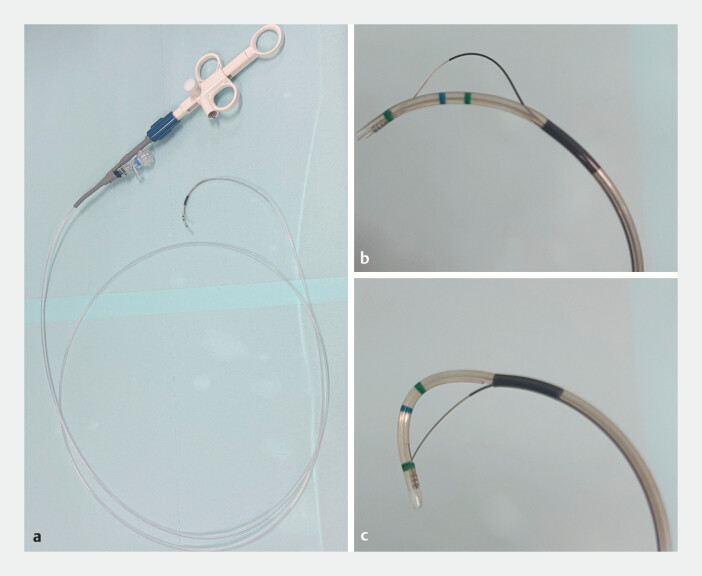 Fig. 1
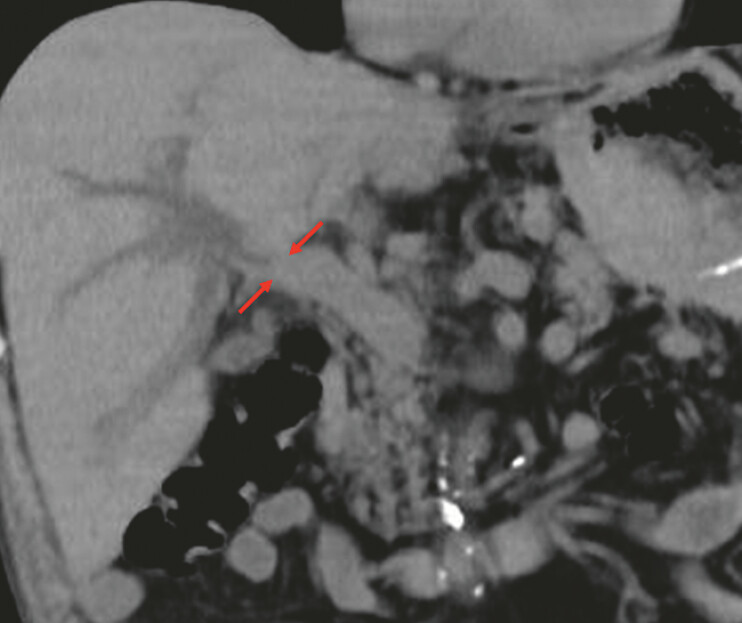 Fig. 2
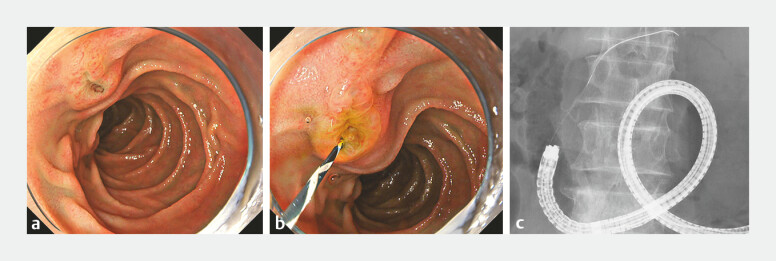 Fig. 3
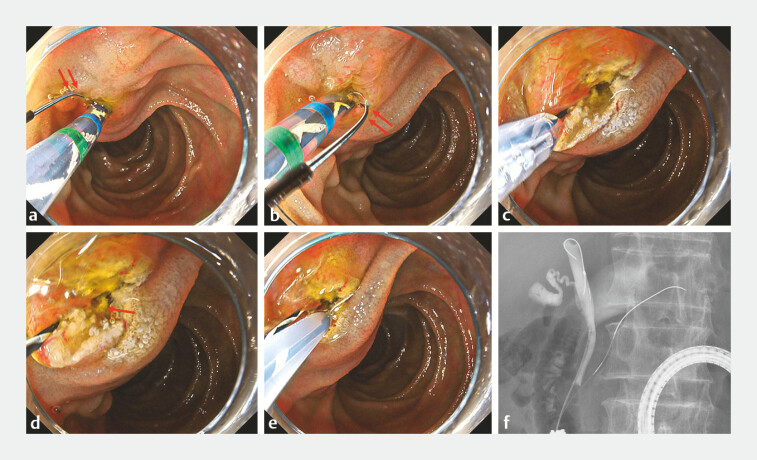 Fig. 4
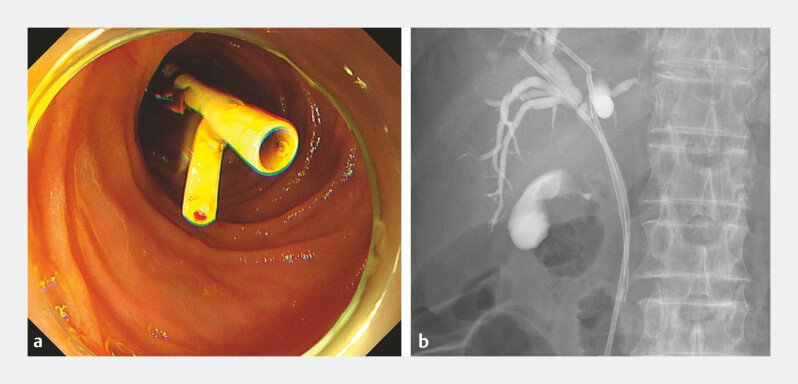 Fig. 5
Peer Reviews
No public reviews on file for this paper yet. If you reviewed it on a platform where reviews are public (OpenReview, ICLR, NeurIPS, ICML), you can paste yours below so the community can read it here.
Videos
No videos yet. Explain this paper in a talk, walkthrough, or lecture? Add one.
Taxonomy
TopicsGallbladder and Bile Duct Disorders · Esophageal and GI Pathology · Gastrointestinal disorders and treatments
Biliary cannulation in patients with Roux-en-Y gastrectomy under balloon enteroscopy is challenging 1 2 . When pancreatic duct cannulation is performed, transpancreatic biliary sphincterotomy is a useful rescue technique for achieving biliary cannulation in difficult cases. However, transpancreatic biliary sphincterotomy in patients with Roux-en-Y gastrectomy is considered difficult as the blade of conventional sphincterotomes does not always face the correct direction for the incision. Recently, a novel rotatable sphincterotome (ENGETSU; Kaneka Corp., Osaka, Japan) was launched, which allows the blade to be rotated in the correct direction for endoscopic sphincterotomy by turning the handle ( Fig. 1 ) 3 4 . We report a case of Roux-en-Y gastrectomy in which transpancreatic biliary sphincterotomy was successfully performed using a novel rotatable sphincterotome to achieve selective biliary cannulation.
The novel rotatable sphincterotome (ENGETSU; Kaneka, Japan). a The product overview. b The blade can be loosened. c The blade can be also stretched.
A 79-year-old man who underwent Roux-en-Y gastrectomy and presented with a biliary stricture caused by the recurrence of gastric cancer was referred to us ( Fig. 2 ). Endoscopic retrograde cholangiopancreatography was performed using a short-type single-balloon enteroscope (SIF-H290; Olympus, Tokyo, Japan) with a working length of 152 cm and a working channel 3.2 mm in diameter 5 ( Video 1 ). Since only pancreatic duct cannulation was successful, the double-guidewire technique was used; however, selective biliary cannulation remained difficult to achieve. ( Fig. 3 a–c ). Subsequently, transpancreatic biliary sphincterotomy was attempted using a novel rotatable sphincterotome. Although the blade of the sphincterotome was initially not facing the 5 oʼclock direction ( Fig. 4 a ), which corresponds to the bile duct, it was adjusted to face 5 oʼclock by turning the handle, and a successful incision was made ( Fig. 4 b, c ). The orifice of the bile duct was identified at the incision site ( Fig. 4 d ), allowing selective biliary cannulation to be achieved ( Fig. 4 e, f ). Finally, biliary drainage was completed ( Fig. 5 ).
Computed tomography revealing biliary stricture (red arrow) in the hilar bile duct.
Successful transpancreatic biliary sphincterotomy using a novel rotatable sphincterotome in a patient with Roux-en-Y gastrectomy.Video 1
Endoscopic retrograde cholangiopancreatography findings. a The finding of the papilla. b, c Selective biliary cannulation is attempted; however, only pancreatic duct cannulation is successful, despite the use of the double-guidewire technique.
Endoscopic retrograde cholangiopancreatography findings. a The blade of the sphincterotome was initially not facing the 5 oʼclock direction (red arrow). b It is adjusted to face the 5 oʼclock direction (red arrow) by turning the handle. c A successful incision is made. d The bile duct orifice is identified at the incision site (red arrow). e, f Selective biliary cannulation is achieved.
Endoscopic retrograde cholangiopancreatography findings. a,b Finally, biliary drainage is completed.
This novel rotatable sphincterotome could improve advanced selective biliary cannulation techniques such as transpancreatic biliary sphincterotomy under balloon enteroscopy.
Endoscopy_UCTN_Code_TTT_1AR_2AC
The reference list from the paper itself. Each links out to its DOI / PubMed record.
- 1Tanisaka Y Ryozawa S Itoi T Efficacy and factors affecting procedure results of short-type single-balloon enteroscopy-assisted ERCP for altered anatomy: a multicenter cohort in Japan Gastrointest Endosc 202295310318034534494 10.1016/j.gie.2021.09.008 · doi ↗ · pubmed ↗
- 2Tanisaka Y Takenaka M Mizuide M Efficacy of texture and color enhancement imaging for short-type single-balloon enteroscopy-assisted biliary cannulation in patients with Roux-en-Y gastrectomy: Multicenter study (with video)Dig Endosc 2024361030104038433317 10.1111/den.14769 · doi ↗ · pubmed ↗
- 3Tanisaka Y Ryozawa S Mizuide M Successful endoscopic sphincterotomy using a novel rotatable sphincterotome in a patient with Roux-en-Y gastrectomy Endoscopy 202456 E 1038 E 103939592099 10.1055/a-2463-3966 PMC 11597894 · doi ↗ · pubmed ↗
- 4Kuraishi Y Shimizu Y Nakamura A Enhanced biliary cannulation and sphincterotomy using a novel rotatable sphincterotome for surgically altered anatomy Endoscopy 202557 E 22E 2410.1055/a-2501-310339809296 PMC 11732370 · doi ↗ · pubmed ↗
- 5Tanisaka Y Ryozawa S Mizuide M Usefulness of the “newly designed” short-type single-balloon enteroscope for ERCP in patients with Roux-en-Y gastrectomy: a pilot study Endosc Int Open 20186 E 1417 E 142230505936 10.1055/a-0754-2290 PMC 6264924 · doi ↗ · pubmed ↗