Invasive angiolipoma of the mediastinum and lung
Ziyin Shang, Yongjie Luo, Xiaoling Kang, Chun Hong, Yuan Si

Abstract
Genes, proteins, chemicals, diseases, species, mutations and cell lines named across the full text — each resolved to its canonical identifier and authoritative record.
Click any figure to enlarge with its caption.
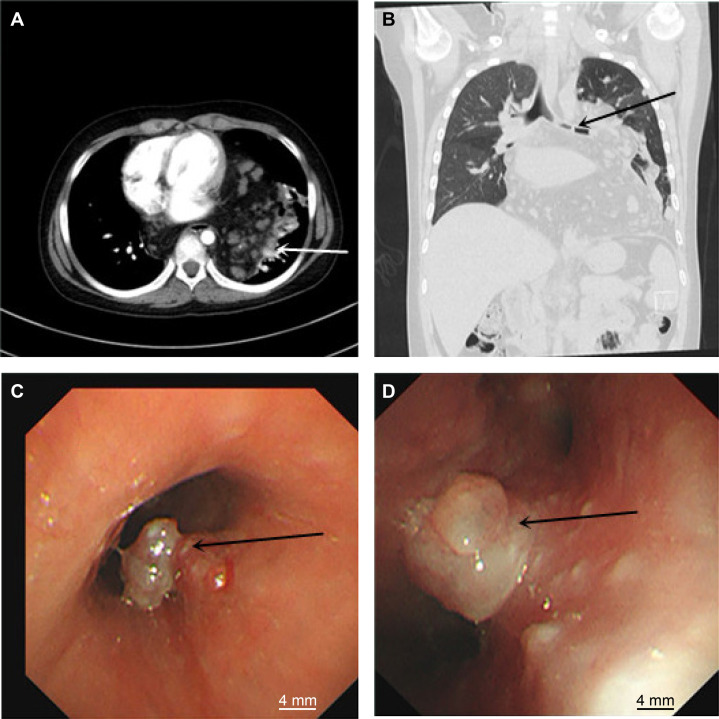 Figure 1
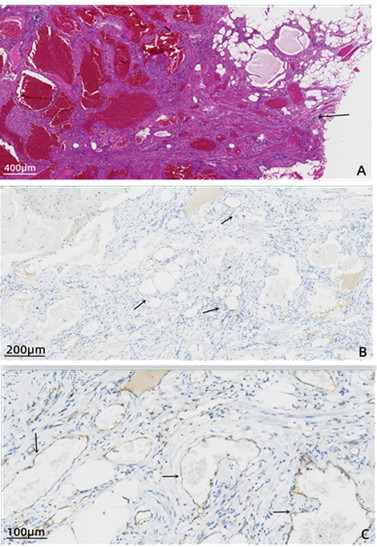 Figure 2
- —The Guangdong Medical Science and Technology Research Fund
Peer Reviews
No public reviews on file for this paper yet. If you reviewed it on a platform where reviews are public (OpenReview, ICLR, NeurIPS, ICML), you can paste yours below so the community can read it here.
Videos
No videos yet. Explain this paper in a talk, walkthrough, or lecture? Add one.
Taxonomy
TopicsSpinal Hematomas and Complications · Case Reports on Hematomas · Ear and Head Tumors
A 12-year-old boy presented with a 1 month history of cough and exertional dyspnoea. Physical examination revealed a heart rate of 106 beats/min, a respiratory rate of 28 breaths/min and an O_2_ saturation of 90–95%. Bilateral breath sounds were coarse with audible rhonchi. Contrast-enhanced chest CT revealed a large mass in the mediastinum and left lung. The mass encased mediastinal structures and protruded into both lung fields, involving the left lung and bronchus along the vascular spaces (figure 1A, B). Bronchoscopy showed a tumour obstructing the left main bronchus and carina, with airway constriction due to external pressure (figure 1C, D). The tumour’s broad base, irregular margins and bleeding tendency prevented tissue biopsy. Angiolipoma is often diagnosed via imaging findings but must be differentiated from adipose-derived tumours, such as liposarcoma and adipoblastoma. For tumour debulking to control tumour compression symptoms and clarifying the pathology to guide further treatment, the patient underwent a left thoracotomy. During the operation, fatty changes were observed on the surface of the tumour, with multiple dark purple irregular protrusions and vasodilation. The tumour was attached to the left lung and diaphragmatic surface, and deep exploration indicated that the tumour had crossed the midline. Most of the mediastinal tumour was removed, and part of the lung tumour was biopsied. Postoperative histopathological examination revealed that the tumour was composed of vascular, adipose and fibrous tissues (figure 2A, B). Immunohistochemistry analysis showed positive results for CD31 (vascular +), CD34 (vascular +), desmin (+), S100 (adipocytes +), SMA (+) and Ki-67 (3%). The patient was diagnosed with angiolipoma of the mediastinum and lung. The patient’s shortness of breath improved postoperatively, and he was discharged 7 days postoperatively. We recommended endobronchial resection of the bronchial tumour at 1 month postoperatively, although the parents refused. The patient did not receive radiotherapy and was not followed up.
Angiolipoma is a rare benign soft tissue tumour, which is divided into invasive and non-invasive angiolipoma, with invasive angiolipoma characterised by the lack of an envelope and infiltration into surrounding tissues. In our patient, the tumour originated from the mediastinum, infiltrating along the vascular spaces into the left lung, pleura and bronchus. This case underscores the invasive nature of the disease. The main treatment options for invasive angiolipoma are surgical resection and transarterial embolisation.1 There is a current controversy over whether radiotherapy should be performed after surgery. Some scholars believe that radiotherapy after surgical resection can reduce the recurrence rate,2 while others argue that it will cause unnecessary side effects. However, postoperative recurrence is rare even if complete resection is not possible.3 In this patient, no obvious cell atypia and nuclear mitosis were found by pathology. Ki-67 was approximately 3%, indicating low proliferative activity of tumour cells. Considering the potential side effects of radiotherapy and the risk of causing more harm than benefit in children, radiotherapy was not used.
The reference list from the paper itself. Each links out to its DOI / PubMed record.
- 1Nakamura D Kobayashi N Miyazawa M et al Primary posterior mediastinal angiolipoma: a case report J Surg Case Rep 20212021 rjab 16810.1093/jscr/rjab 16833981406 PMC 8101613 · doi ↗ · pubmed ↗
- 2Lin JJ Lin F Two entities in angiolipoma. A study of 459 cases of lipoma with review of literature on infiltrating angiolipoma Cancer 197434720710.1002/1097-0142(197409)34:3<720::aid-cncr 2820340331>3.0.co;2-k 4855281 · doi ↗ · pubmed ↗
- 3Gelabert-González M García-Allut A Spinal extradural angiolipoma: report of two cases and review of the literature Eur Spine J 2009183243510.1007/s 00586-008-0858-819127373 PMC 2899409 · doi ↗ · pubmed ↗