A bibliometric analysis of the 50 most cited articles about artificial intelligence in electrocardiogram
Muhammad Arslan Ul Hassan, Sana Mushtaq, Abdul Rehman, Mohammed Abdulkarem Al-Qaisi, Zhen Yang

TL;DR
This paper analyzes the 50 most cited AI-related ECG studies to track trends and key contributors in the field.
Contribution
The study provides a bibliometric overview of top AI in ECG research, highlighting trends and collaboration patterns.
Findings
The 50 most cited AI in ECG articles were published between 2000 and 2020 with an average of 488 citations per article.
‘IEEE Transactions on Biomedical Engineering’ and ‘Computers in Biology and Medicine’ published the most articles in this domain.
The USA and China contributed 14 articles, and Singapore showed the most international collaborations.
Abstract
Artificial intelligence (AI) is a modern tool that increases the diagnostic precision of the classical electrocardiogram (ECG). The objective of this bibliometric analysis was to identify the 50 most cited articles in the domain of AI in ECG, emphasizing publication trends, citation metrics, prominent authors and journals, leading institutions, and significant contributing countries. The 50 most cited articles on AI in ECG were published between 2000 and 2020 across 25 journals. The mean citations per article were 488.0, with the highest citations count being 1870. ‘IEEE Transactions on Biomedical Engineering’ and ‘Computers in Biology and Medicine’ published the highest number of articles, while Rajendra Acharya U and RS Tan were the most contributing authors. The USA and China had a total of 14 publications, and Singapore was the country with most collaborations. This bibliometric…
Genes, proteins, chemicals, diseases, species, mutations and cell lines named across the full text — each resolved to its canonical identifier and authoritative record.
Click any figure to enlarge with its caption.
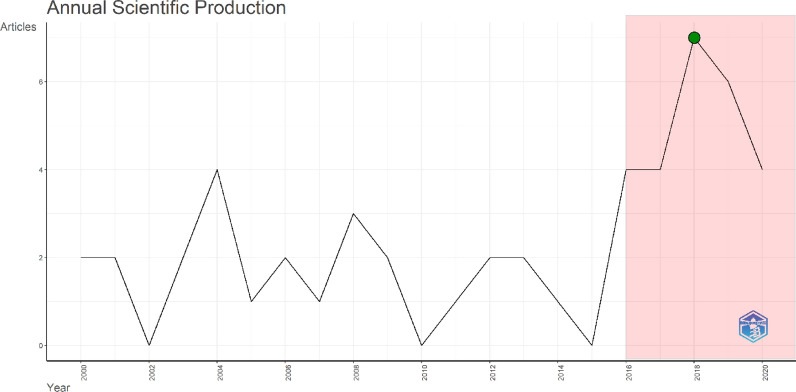 Figure 1
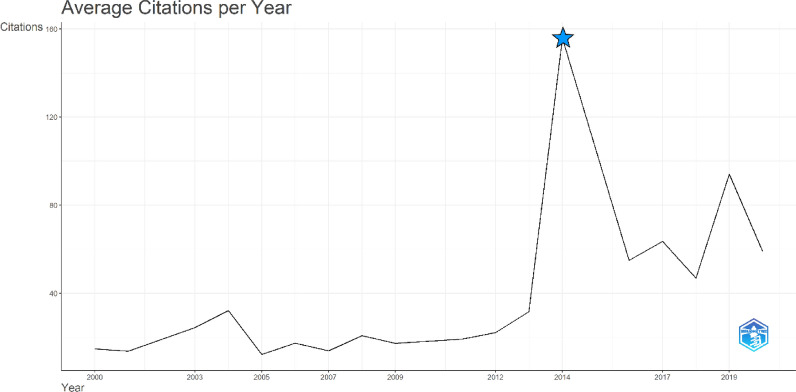 Figure 2
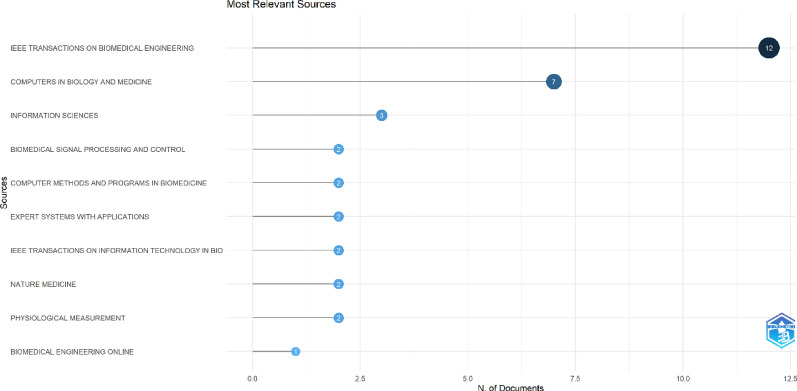 Figure 3
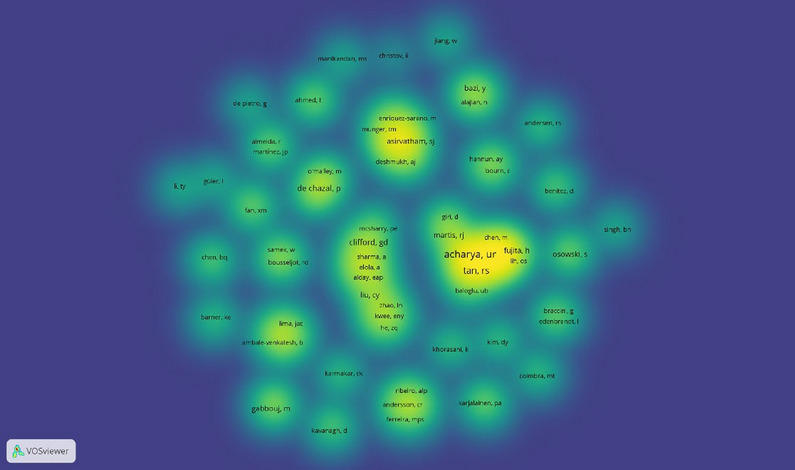 Figure 4
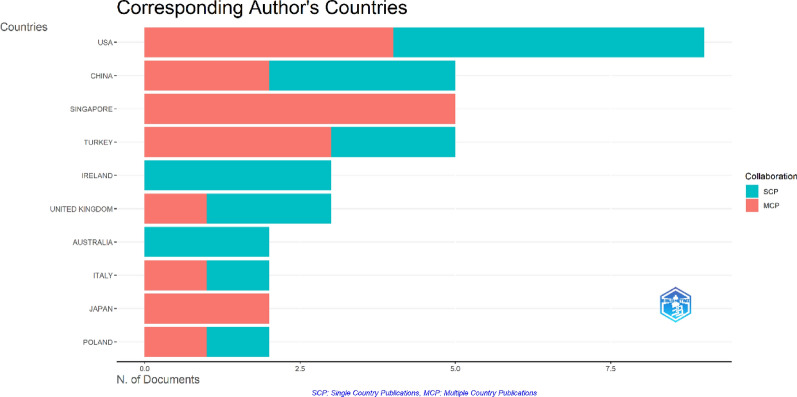 Figure 5
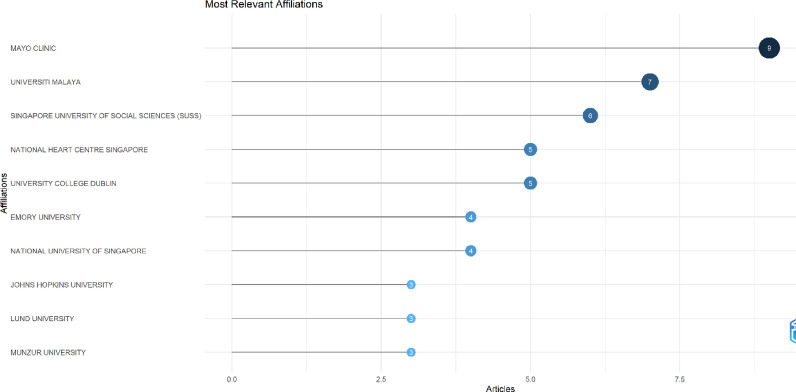 Figure 6
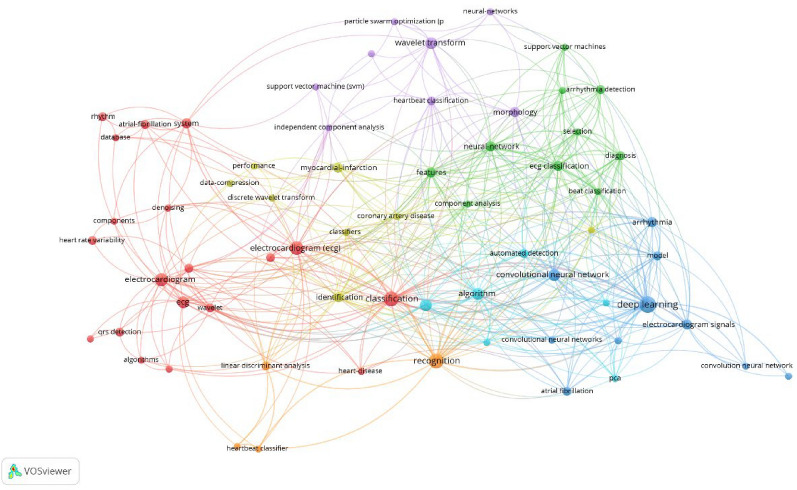 Figure 7
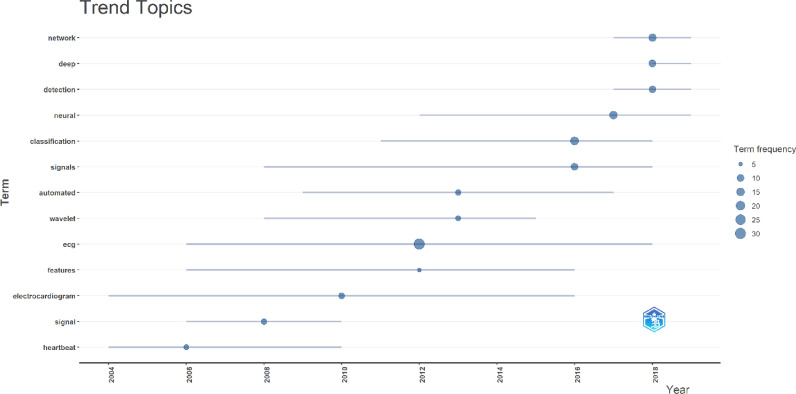 Figure 8
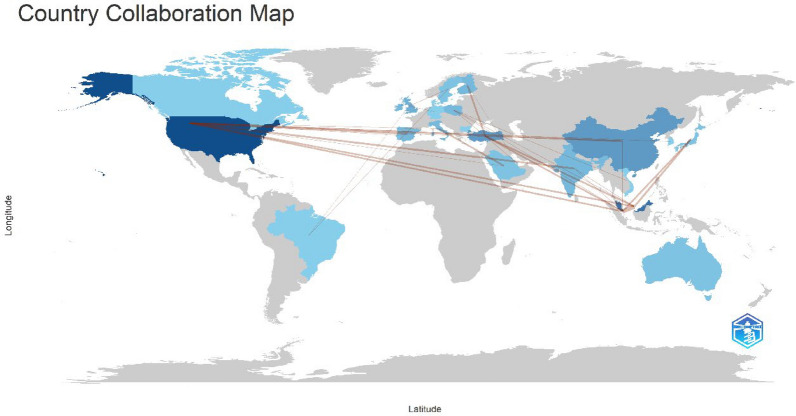 Figure 9
Peer Reviews
No public reviews on file for this paper yet. If you reviewed it on a platform where reviews are public (OpenReview, ICLR, NeurIPS, ICML), you can paste yours below so the community can read it here.
Videos
No videos yet. Explain this paper in a talk, walkthrough, or lecture? Add one.
Taxonomy
TopicsArtificial Intelligence in Healthcare and Education · ECG Monitoring and Analysis · COVID-19 diagnosis using AI
Background
Artificial intelligence (AI) has grown into a revolutionary tool for modern healthcare system, transforming diagnostic accuracy and precision, clinical decision-making, and patient-centered management [1]. AI improves the interpretation of complicated medical data by using machine learning algorithms and neural networks, facilitating precise diagnosis of a variety of diseases [2, 3]. Cardiovascular disorders rank among the top three domains that researchers have focused on in the growing body of literature on AI [4]. Application of AI in cardiovascular domain has gained significant attention in the past, especially in the field of electrocardiogram (ECG) [5].
Since Willem Einthoven's pioneering development of the ECG in the late nineteenth century, cardiovascular system has been profoundly shaped by technological innovation [6]. ECG is a diagnostic technique that entails detecting and measuring electrical activity of the heart, which is subsequently transcribed into a graphical format for analysis in the clinics [7]. ECG serves as a critical tool in clinical practice, not only for identifying conduction abnormalities but also for assessing a wide range of cardiac pathologies, thereby supporting timely diagnosis and patient management. Its versatility in detecting both structural and functional heart irregularities underscores its indispensable role in improving cardiovascular care outcomes [8].
Today, AI emerges as an evolution of Einthoven's legacy, enhancing the ECG's diagnostic capabilities while offering clinicians nuanced insights to improve patient outcomes, streamline workflows, and address complex cardiac challenges with greater precision [9]. Moreover, AI in ECG has also demonstrated promise in risk stratification and patient prognosis prediction, supporting individualized and patient-centered treatment plans [10].
Apart from these advances in the literature, a thorough bibliometric analysis assessing the research patterns and trends, citation analysis, networks of collaboration between authors and countries, and thematic development of AI in ECG is still lacking. Although individual studies have examined and reported about AI usage in ECG, a comprehensive evaluation of worldwide research output and highlighting the significant contributions is still a need. This type of analysis can help in determining the knowledge gaps, directing future research, and maximizing the integration of AI usage in ECG and clinical cardiology.
The aim of this bibliometric analysis is to bridge this gap by systematically analyzing the top 50 most cited articles on AI in ECG. This bibliometric analysis of the 50 most cited articles seeks to delineate this field's conceptual boundaries by analyzing the publication timeline and trends, authorship and institution networks, keyword clusters, and citation dynamics. Moreover, the findings of this analysis will help the researchers, clinicians, and policymakers make informed decisions regarding AI-driven innovations in the field of cardiovascular medicine.
Method
Approval from any ethics committee or the institutional review board was exempted for this bibliometric study as the data utilized for it were available publicly.
Data source
Science Citation Index Expanded database from the Web of Science Core Collection (WoSCC) was utilized to acquire and extract the data for this study. Web of science is one of the most extensive and comprehensive databases available, providing substantially greater journal coverage and assessments of journal quality [11]. Moreover, the majority of bibliometric studies have employed this database to extract data [12].
Search strategy
The search query on WoSCC utilized an advanced mode with topic search, along with the keyword strategy comprising of [TS = (Artificial Intelligence) OR (AI) OR (Machine Learning) OR (Neural Network) OR (Deep Learning) OR (Computational Intelligence) OR (Computer Reasoning) AND (Electrocardiogram) OR (ECG) OR (EKG) OR (Electrocardiography)]. This search strategy produced 87,731 articles, which were further limited to those written exclusively in English language, yielding 84,729 articles. Furthermore, the search was restricted to original articles only, yielding a total of 59,523 articles. Subsequently, the articles were organized by the number of citations, starting with the highest. The date range spanned from the database's inception till March 2025.
Inclusion and exclusion criteria
We carefully reviewed the articles directly on the Web of Science website, assessing their relevance based on the title, abstract, keywords, and the full text when necessary. Only those studies that included both the primary keywords, AI and ECG, were selected. Additionally, we also included studies that described any method used for identifying, classifying, or interpreting ECG through AI.
Conversely, articles that did not focus on AI in ECG were excluded. We also excluded studies related to human or biometric identification through ECG, as well as research involving smartwatches and other wearable devices. Furthermore, review articles, abstracts, guidelines, consensus statements, scientific statements, systematic reviews, and meta-analyses were not included in this study.
Data extraction and analysis
Two authors (MAUH and SM) independently carried out all the steps, ensuring an unbiased selection process of articles. Any disagreements regarding article selection were resolved through discussion or, when needed, by consulting the senior author (ZY). Both authors completed the search independently within a single day on March 19, 2025. Out of the final 59,523 search results, the top 474 were assessed, and 50 articles met the inclusion criteria. The full manuscripts of these selected articles were then obtained and thoroughly reviewed to extract relevant data.
The level of evidence (LOE) was evaluated for all the included articles to assess the relative risk of bias. Both authors independently applied the Oxford Centre for Evidence-Based Medicine guidelines to determine the LOE. Additionally, the citation density of each article, reflecting its impact over time, was calculated by dividing the total number of citations till the date of analysis with the number of years since the publication of the article as done in previous literature. For data analysis, we utilized R program (version 4.4.1), VOSviewer (version 1.6.20), and Statistical package for the social sciences (SPSS for Windows, version 27, IBM corp., Armonk, NY, USA). The R program was used along with the bibliometrix package, integrating"biblioshiny"within RStudio (Version 2024.12.1 + 563) to conduct a comprehensive bibliometric analysis. VOSviewer was used for bibliographic coupling data, while SPSS was used for correlation analysis. The Spearman correlation coefficient (rs) was used to evaluate the strength of relationships, categorized as high (rs > 0.60), moderate (rs > 0.30 ~ < 0.60), and weak (rs < 0.30), with a significance level set at P ≤ 0.05.
Results
Our search strategy for AI in ECG identified a total of 59,523 articles. We then reviewed the top 474 articles with the highest citation counts and were able to select the 50 most relevant and highest cited studies for our analysis. A detailed summary of all the 50 selected articles is presented in Table 1.Table 150 of the most cited articles on AI in ECGRankArticle titleSource titleCitationsPublication yearCitations densityJournal impact factor (journal citation reports 2023)1Kubios HRV—Heart rate variability analysis softwareComputer Methods and Programs in Biomedicine18702014155.84.92Cardiologist-level arrhythmia detection and classification in ambulatory electrocardiograms using a deep neural networkNature Medicine15982019228.358.73Real-Time Patient-Specific ECG Classification by 1-D Convolutional Neural NetworksIEEE Transactions on Biomedical Engineering11672016116.74.44A wavelet-based ECG delineator: Evaluation on standard databasesIEEE Transactions on Biomedical Engineering11222004514.45Automatic classification of heartbeats using ECG morphology and heartbeat interval featuresIEEE Transactions on Biomedical Engineering1040200447.34.46A deep convolutional neural network model to classify heartbeatsComputers in Biology and Medicine838201793.177An artificial intelligence-enabled ECG algorithm for the identification of patients with atrial fibrillation during sinus rhythm: a retrospective analysis of outcome predictionLancet812201911698.48Dynamical model for generating synthetic electrocardiogram signalsIEEE Transactions on Biomedical Engineering794200334.54.49Screening for cardiac contractile dysfunction using an artificial intelligence-enabled electrocardiogramNature Medicine674201996.358.710Application of deep convolutional neural network for automated detection of myocardial infarction using ECG signalsInformation Sciences567201763011A novel wavelet sequence based on deep bidirectional LSTM network model for ECG signal classificationComputers in Biology and Medicine498201862.3712Arrhythmia detection using deep convolutional neural network with long duration ECG signalsComputers in Biology and Medicine495201861.9713Automated detection of arrhythmias using different intervals of tachycardia ECG segments with convolutional neural networkInformation Sciences495201755014ECG beat classification using PCA, LDA, ICA and Discrete Wavelet TransformBiomedical Signal Processing and Control488201337.54.915Automated diagnosis of arrhythmia using combination of CNN and LSTM techniques with variable length heart beatsComputers in Biology and Medicine468201858.5716ECG signal denoising and baseline wander correction based on the empirical mode decompositionComputers in Biology and Medicine467200825.9717Automatic diagnosis of the 12-lead ECG using a deep neural networkNature Communications452202075.314.718PTB-XL, a large publicly available electrocardiography datasetScientific Data436202072.75.819Deep learning approach for active classification of electrocardiogram signalsInformation Sciences416201641.6020Clustering ECG complexes using Hermite functions and self-organizing mapsIEEE Transactions on Biomedical Engineering405200015.64.421Cardiovascular Event Prediction by Machine Learning The Multi-Ethnic Study of AtherosclerosisCirculation Research38720174316.522Optimal selection of wavelet basis function applied to ECG signal denoisingDigital Signal Processing376200618.82.923Wavelet compression of ECG signals by the set partitioning in hierarchical trees algorithmIEEE Transactions on Biomedical Engineering360200013.84.424Classification of electrocardiogram signals with support vector machines and particle swarm optimizationIEEE Transactions on Information Technology in Biomedicine358200819.9025An Open Access Database for Evaluating the Algorithms of Electrocardiogram Rhythm and Morphology Abnormality DetectionJournal of Medical Imaging and Health Informatics356201844.5026Heartbeat Classification Using Morphological and Dynamic Features of ECG SignalsIEEE Transactions on Biomedical Engineering349201224.94.427Support vector machine-based expert system for reliable heartbeat recognitionIEEE Transactions on Biomedical Engineering349200415.94.428ECG beat recognition using fuzzy hybrid neural networkIEEE Transactions on Biomedical Engineering348200113.94.429A Generic and Robust System for Automated Patient-Specific Classification of ECG SignalsIEEE Transactions on Biomedical Engineering337200921.14.430The use of the Hilbert transform in ECG signal analysisComputers in Biology and Medicine337200113.5731Automated diagnosis of Coronary Artery Disease affected patients using LDA, PCA, ICA and Discrete Wavelet TransformKnowledge-Based Systems334201325.77.232Automated processing of the single-lead electrocardiogram for the detection of obstructive sleep apnoeaIEEE Transactions on Biomedical Engineering330200314.44.433A patient-adapting heartbeat classifier using ECG morphology and heartbeat interval featuresIEEE Transactions on Biomedical Engineering318200615.94.434ECG Arrhythmia Classification Using STFT-Based Spectrogram and Convolutional Neural NetworkIEEE Access317201945.33.435Real time electrocardiogram QRS detection using combined adaptive thresholdBiomedical Engineering Online317200414.42.936ECG Classification Using Wavelet Packet Entropy and Random ForestsEntropy312201631.22.137Arrhythmia recognition and classification using combined linear and nonlinear features of ECG signalsComputer Methods and Programs in Biomedicine304201630.44.938Robust heart rate estimation from multiple asynchronous noisy sources using signal quality indices and a Kalman filterPhysiological Measurement296200816.42.339Applying neural network analysis on heart rate variability data to assess driver fatigueExpert Systems with Applications288201119.27.540Multi-class Arrhythmia detection from 12-lead varied-length ECG using Attention-based Time-Incremental Convolutional Neural NetworkInformation Fusion278202046.314.741Deep Convolutional Neural Networks and Learning ECG Features for Screening Paroxysmal Atrial Fibrillation PatientsIEEE Transactions on Systems Man Cybernetics-Systems278201834.88.642Classification of myocardial infarction with multi-lead ECG signals and deep CNNPattern Recognition Letters277201939.63.943A deep learning approach for real-time detection of atrial fibrillationExpert Systems with Applications275201939.37.544A deep learning approach for ECG-based heartbeat classification for arrhythmia detectionFuture Generation Computer Systems-The International Journal of Escience271201833.96.245A novel method for detecting R-peaks in electrocardiogram (ECG) signalBiomedical Signal Processing and Control270201219.34.946Block-based neural networks for personalized ECG signal classificationIEEE Transactions on Neural Networks263200713.810.247Application of stacked convolutional and long short-term memory network for accurate identification of CAD ECG signalsComputers in Biology and Medicine256201832748ECG beat classifier designed by combined neural network modelPattern Recognition256200512.27.549Classification of 12-lead ECGs: the PhysioNet/Computing in Cardiology Challenge 2020Physiological Measurement251202041.82.350Support Vector Machines for Automated Recognition of Obstructive Sleep Apnea Syndrome From ECG RecordingsIEEE Transactions on Information Technology in Biomedicine251200914.80
Publication timeline
The publication timeline of the included 50 articles on AI usage in ECG ranged from 2000 to 2020 and showed fluctuations. The first one and half decade of the publication timeline from 2000 to 2015 saw 25 (50%) publications in total, with 2004 having the highest (4) publications in this field. The publication timeline from 2016 till 2020 saw a huge increase in interest in this field with half (25) of the publications in these five years only. The highest number of publications in a year were 7, which were noted in 2018. The most cited article in our analysis, with 1870 citations, was published in 2014, while the least cited article, with 251 citations, was published in 2009. Furthermore, the results of Spearman correlation analysis revealed that there is a weak, non-significant correlation between publication year and number of citations (rs = 0.002, P = 0.990), indicating that the year of publication does not influence how many citations an article receives in this dataset. Figure 1 illustrates the publication trend of the 50 most highly cited articles in this field.Fig. 1. Annual scientific production timeline where red area presents the period of incremental increase in publications, while green dot represents the most publications in a year
Citation analysis
The 50 most cited articles in our dataset on AI in ECG gathered 24,401 citations in total till the date of our analysis. The highest citations of an article in our dataset were 1870, whereas the lowest citations an article had were 251. The mean citations of all the 50 articles in our dataset were 488.0 ± 340.7. The year 2014 saw the highest mean total citations per article of 1870.0 citations, and also the highest mean total citations per year of 155.8 citations. Figure 2 demonstrates the mean number of citations received per year by the 50 most cited articles.Fig. 2. Average citations per year map where blue star represents the peak of citations
The highest citations density recorded for an article was 228.3 published in 2019, while the lowest was 12.2 published in 2005. Moreover, Spearman correlation analysis was also conducted to examine the relationship between the impact factor of a journal and citation counts of the article in that journal. The findings showed a weak correlation (rₛ = 0.065, P = 0.655), indicating that there is no substantial evidence of a meaningful association between citations count and impact factor of a journal in this dataset.
Journal and author analysis
The 50 most cited articles on AI in ECG in our dataset were published across a total of 25 journals. The journal with most publications was ‘IEEE Transactions on Biomedical Engineering’ with 12 articles, followed by ‘Computers in Biology and Medicine’ journal with 7 publications. Other notable journals included ‘Biomedical Signal Processing and Control,’ ‘Nature Medicine,’ and ‘Expert Systems with Applications.’ The journal with highest impact factor according to journal citation reports 2023 was ‘Lancet’ with an impact factor of 98.4. Lancet was followed by ‘Nature Medicine’ with 2 articles and an impact factor of 58.7. Figure 3 lists the top ten journals in this field with most publications.Fig. 3. Journals with highest number of publications among the 50 articles
The authors which contributed the most in this field according to our dataset were 199 in total. Among these 199 authors, the author with most contribution and publications was ‘Professor Rajendra Acharya U’ with 9 publications and total citations count exceeding 4200. Professor Acharya was followed by ‘RS Tan’ with 5 publications and total citations count of 2334. Other notable authors include M Adam, Y Hagiwara, SL Oh, and JH Tan with 4 publications each. Table 2 shows the contributions of top ten authors in this field.Table 2. Top 10 authors with most contributions in the fieldAuthorH-indexM-indexTotal citationsNumber of publicationsPublication start yearAcharya UR90.692421892013Tan RS50.556233452017Adam M40.444215642017Hagiwara Y40.444215642017Oh SL40.444212942017Tan JH40.444215642017Clifford GD30.13134132003DE Chazal P30.13168832003Asirvatham SJ20.286148622019Attia Zi20.286148622019
Moreover, author collaborations within the field were analyzed, which are presented as density visualization map in Fig. 4. The collaboration network map offers a detailed representation of the scholarly connections and joint research efforts among authors. This analysis highlights the influence of individual authors and researchers and their collaborative networks in driving knowledge advancement and innovation within the field of AI in ECG.Fig. 4. Visualization map of the most common keywords
Analysis of countries and institutions
A total of 21 countries contributed to this field according to our dataset. Among these 21 countries, the USA had the highest number of publications, with a total of nine articles. The USA was followed by China, Singapore, and Turkey with 5 publications each. Other notable countries were Ireland and the UK. List of top 10 countries with multiple country publication and single country publication is shown in Fig. 5.Fig. 5. Top ten countries with the highest number of publications
On the other hand, a total of 113 institutions contributed in this field, with Mayo clinic topping the list of publications. Mayo clinic contributed 9 articles and was followed by University of Malaya with 7 articles. Other notable institutions included Singapore University of Social Sciences, National Heart Centre Singapore, and University College Dublin. A detailed list of top ten institutions is shown in Fig. 6.Fig. 6. Institutions contributing the most publications in the field of AI in ECG
Studies and keywords analysis
As the focus of this study was to highlight the most cited articles on AI use in ECG, so the included studies were mostly methodological or technical validation studies with LOE of 5. Other notable study types were cross-sectional studies, diagnostic accuracy studies, and cohort studies with LOE of 2b or more. Furthermore, the most common keywords used in the selected 50 articles included recognition, electrocardiogram, deep learning, classification, and neural network, among others. Figure 7 demonstrates the map of most common keywords. Moreover, a summary of trending topics is given in Fig. 8.Fig. 7. Network map of the most common keywords used in the 50 articlesFig. 8Top trending topics according to the most cited 50 articles
Collaboration analysis
The global collaboration on research exploring AI usage in ECG demonstrated a complex and well-connected network. Notably, strong partnerships between Singapore and Malaysia, Italy and Saudi Arabia, Turkey and Finland, as well as the USA and China, underscore the shared commitment of these nations to advancing knowledge in this specialized field. A world collaboration map of the 50 most cited studies on AI in ECG is given in Fig. 9.Fig. 9. Country collaboration map of the countries
Discussion
This bibliometric analysis aimed to highlight the 50 most cited articles on application of AI in ECG, and it revealed that this domain has vast existing literature and is continuously growing. Without any timeline restrictions, our analysis revealed that the field experienced ups and downs between the early 2000 s and 2010, but that interest in it saw a huge upward trend after 2016. The 5 years starting from 2016 had half (25/50) of the 50 most cited articles included in our analysis. These results can be associated with the increased recognition of AI in the field of ECG and other healthcare domains.
ECG is a diagnostic tool that is of significant importance and use of AI in it might further increase its diagnostic accuracy. The sharp increase in number of publications from 2016 aligns with the results of previous literature and shows the interest of researchers in AI usage in ECG [13]. Our analysis revealed no significant association between an article's publication year and its citation count, challenging the assumption that earlier publications accumulate more citations over time. Further analysis examining citations density demonstrated similar non-significant relation. Additionally, no significant relationship was observed between a journal's impact factor and the scholarly influence of individual articles as measured by citation frequency [14, 15]. These findings collectively suggest that temporal factors and the journal metrics may exert less deterministic influence on citation patterns than conventionally presumed within this research context.
The journals included in our analysis predominantly encompassed the fields of medicine and informatics, with prominent examples including IEEE Transactions on Biomedical Engineering, Computers in Biology and Medicine, Biomedical Signal Processing and Control, Nature Medicine, and Expert Systems with Applications. This distribution underscores the relevance of these journals as prospective platforms for disseminating research on AI applications in ECG. Furthermore, most of the included studies were methodological or validation studies with low LOE, highlighting the need of higher LOE studies in the field.
This is the first bibliometric analysis according to our knowledge which analyzed the 50 most cited articles on AI in ECG. Citation analysis serves as a principal methodology for identifying influential literature, as highly cited works reflect both their substantive disciplinary influence and foundational role in advancing research within a respective field [16]. Our analysis offers a systematic approach to streamline identification of seminal publications within the domain of AI in ECG, enabling researchers, scholars and clinicians to prioritize prominent works without requiring exhaustive review of existing literature. This analytical strategy may enhance efficiency in accessing high impact evidence while eliminating the necessity for comprehensive literature reviews, potentially supporting more targeted and evidence-based decision-making processes.
Although AI has seen many improvements in ECG and healthcare, there are still many areas that require more research. The integration of AI into routine clinical practice necessitates comprehensive training of healthcare professionals alongside systemic operational adjustments, representing a multifaceted and incremental transition; thus, advancing this field requires targeted research to address existing implementation barriers and optimize its adoption [17]. Future research should also prioritize establishing unified, interoperable platforms capable of integrating multi-modal ECG data into harmonized repositories. Building on existing resources, such infrastructures would accelerate AI innovation by enabling robust analysis of comprehensive datasets while promoting global collaboration through standardized data-sharing protocols [18].
We also want to highlight the limitations of our bibliometric analysis. First, our analysis relied on quantitative data, yielding overall insights into the studies within the field, rather than focusing on the clinical findings or implications of these studies. Second, we included only original articles and top 50 most cited articles, excluding review articles, systematic reviews, meta-analyses, conference papers, abstracts and even articles that satisfied the inclusion criteria but did not have enough citations; this may have resulted in the omission of some significant studies. Lastly, articles with high citations continue to get more citations in long run regardless of their relevance or integrity over the time known as the Matthew effect. To deal with this, we used citations density to check the impact of all the studies over time.
Conclusion
This analysis highlighted the 50 most cited articles on AI usage in ECG that gathered over 24 thousand citations. The focus of researchers has shifted toward this domain in the last decade, especially after 2016. The USA, China, and several other Asian and European countries lead the field, reflecting their strong research infrastructures and commitment to advancing healthcare through technological innovation. The implementation of AI in diverse domains of ECG and cardiovascular system is anticipated to be a research priority in the forthcoming years.