A novel treatment for radiation proctopathy using monopolar spray coagulation with a polypectomy snare tip
Diego Cadena-Aguirre, Luciano Lenz, Marcelo Simas de Lima, Amanda Aquino Miranda Pombo, Rafael Sartori Balbinot, Adriana Vaz Safatle-Ribeiro, Fauze Maluf-Filho

Abstract
Genes, proteins, chemicals, diseases, species, mutations and cell lines named across the full text — each resolved to its canonical identifier and authoritative record.
Click any figure to enlarge with its caption.
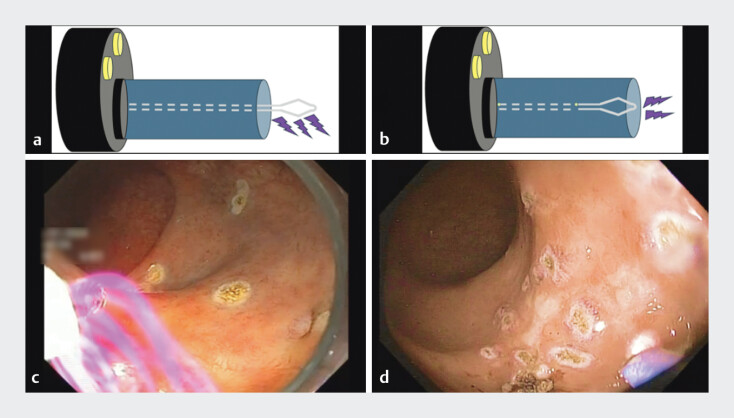 Fig. 1
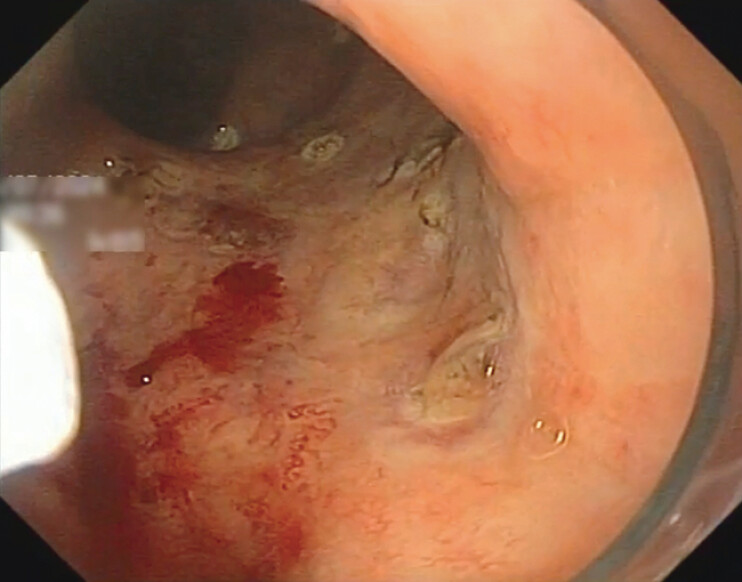 Fig. 2
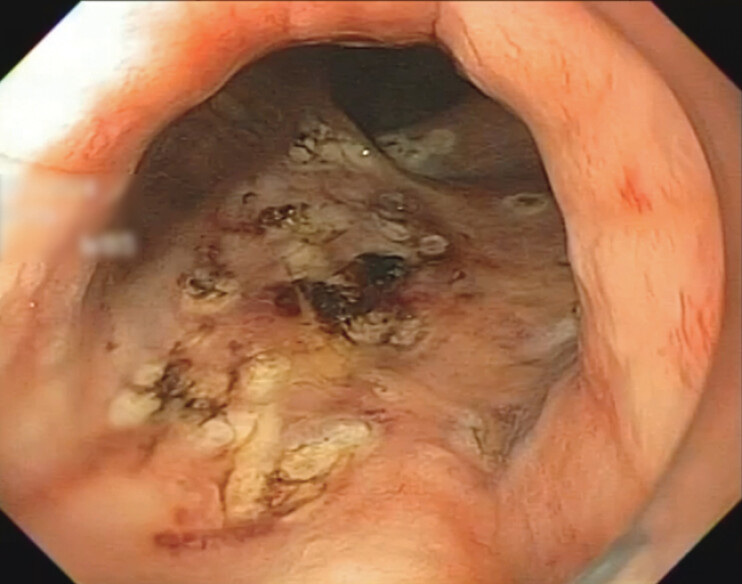 Fig. 3
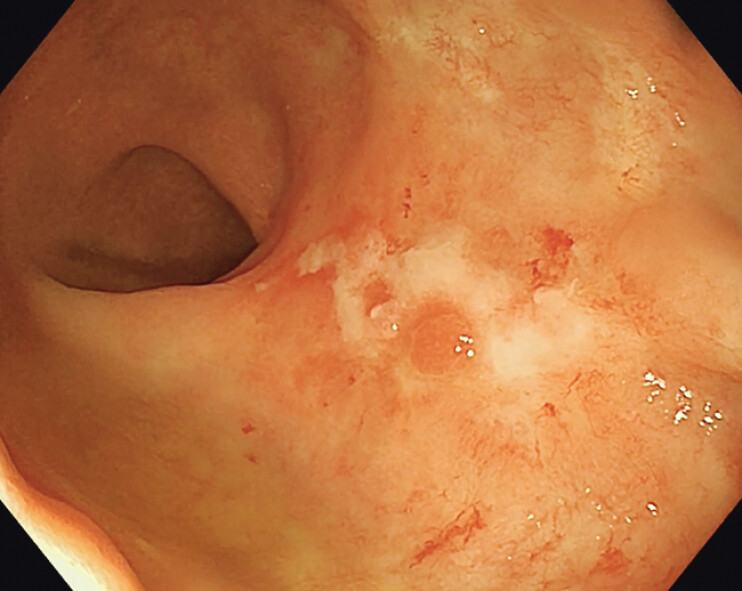 Fig. 4
Peer Reviews
No public reviews on file for this paper yet. If you reviewed it on a platform where reviews are public (OpenReview, ICLR, NeurIPS, ICML), you can paste yours below so the community can read it here.
Videos
No videos yet. Explain this paper in a talk, walkthrough, or lecture? Add one.
Taxonomy
TopicsDermatologic Treatments and Research · Urologic and reproductive health conditions · Genital Health and Disease
Radiation proctopathy (RP) is recognized as injury to the rectum due to pelvic radiotherapy 1 . A variety of endoscopic therapies have been used for the management of bleeding from chronic RP, and argon plasma coagulation (APC) is probably the most widely used technique 2 . Spray coagulation (SC) is a novel, non-contact technique for treating vascular lesions. Like APC, SC uses monopolar diathermy to achieve precise, superficial tissue penetration through the tip of a conventional polypectomy snare 3 . However, SC offers several advantages, such as eliminating the need for argon gas, specialized catheters, and dedicated generators, making it more accessible and easier to perform 1 .
During APC, bowel distension and catheter malfunction can occur. The snare-tip SC technique addresses these challenges by providing comparable thermal effects using only a polypectomy snare and spray-mode coagulation (Effect 1, 40 watts). Preclinical data suggest that SC achieves tissue penetration like APC, ensuring effective hemostasis while maintaining a high level of safety profile 4 .
This technique reduces equipment dependency and procedural costs, making it an attractive option, especially in resource-limited settings. The snare-tip SC technique requires a 2–3 mm distance from the lesion. Two configurations are possible: exposing 1–2 mm of the snare tip, so the beam spreads laterally ( Fig. 1 a, c ), or keeping the snare tip inside the sheath, so the beam spreads forward ( Fig. 1 b, d ) 5 .
Different beam spreads according to snare-tip exposure. a, c Minimal snare-tip exposure (1–2 mm) with lateral beam spreading. b, d Snare tip under the sheath with forward beam spreading.
The next video ( Video 1 ) shows a male patient with rectal bleeding after radiotherapy ( Fig. 2 ) due to prostate cancer and aims to show the snare-tip SC technique for treating RP ( Fig. 3 ). Follow-up colonoscopy after 4 weeks shows healing ulcers with adequate endoscopic and clinical response ( Fig. 4 ). More clinical studies are needed to establish its safety and efficacy.
Treatment for radiation proctopathy using monopolar spray coagulation with a polypectomy snare tip.Video 1
Oozing bleeding due to radiation proctopathy.
Final aspect after snare-tip spray coagulation of rectal angioectasia.
Follow-up colonoscopy after 4 weeks of spray coagulation hemostasis.
Endoscopy_UCTN_Code_TTT_1AQ_2AZ
The reference list from the paper itself. Each links out to its DOI / PubMed record.
- 1Lee JE Agrawal D Thosani NASGE guideline on the role of endoscopy for bleeding from chronic radiation proctopathy Gastrointest Endosc 201990171182031235260 10.1016/j.gie.2019.04.234 · doi ↗ · pubmed ↗
- 2Lenz L Rohr R Nakao F Chronic radiation proctopathy: A practical review of endoscopic treatment World J Gastrointest Surg 2016815116010.4240/wjgs.v 8.i 2.15126981189 PMC 4770169 · doi ↗ · pubmed ↗
- 3Parsi MA Schulman AR Aslanian H Devices for endoscopic hemostasis of nonvariceal GI bleeding (with videos)Video GIE 2019428529931334417 10.1016/j.vgie.2019.02.004PMC 6616320 · doi ↗ · pubmed ↗
- 4Fetz A Farnell D Irani S Spray coagulation with snare-tip versus argon plasma coagulation: An ex vivo study evaluating tissue effects Endosc Int Open 20219 E 790E 79534079859 10.1055/a-1373-4162 PMC 8159595 · doi ↗ · pubmed ↗
- 5Alburquerque M Vargas A Ledezma C Use of spray coagulation in first-space endoscopy: a case seriesi GIE 20243182185