Endoscopic septotomy for a rare colorectal anastomotic complication after elective laparoscopic sigmoidectomy for diverticular disease
Mario Gagliardi, Carmela Abbatiello, Mariano Sica, Carlo Soldaini, Michele Fusco, Attilio Maurano, Claudio Zulli

Abstract
Genes, proteins, chemicals, diseases, species, mutations and cell lines named across the full text — each resolved to its canonical identifier and authoritative record.
Click any figure to enlarge with its caption.
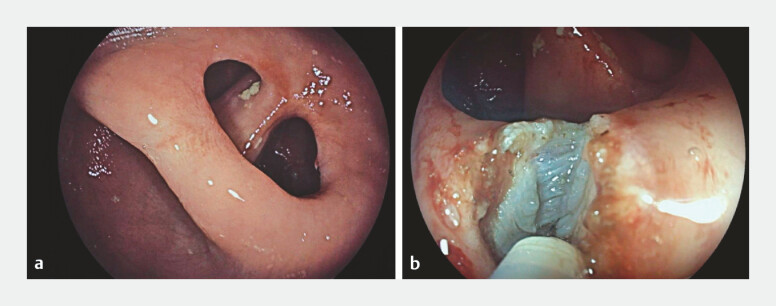 Fig. 1
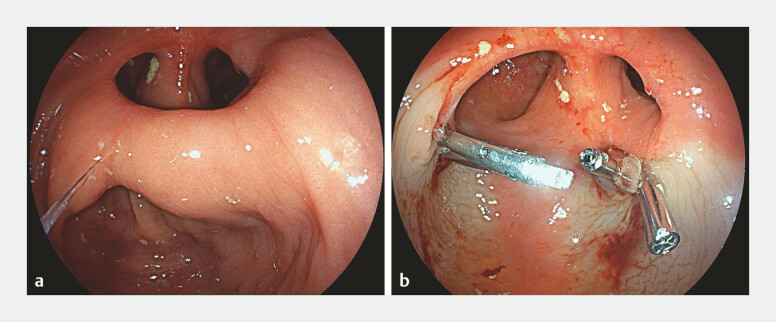 Fig. 2
Peer Reviews
No public reviews on file for this paper yet. If you reviewed it on a platform where reviews are public (OpenReview, ICLR, NeurIPS, ICML), you can paste yours below so the community can read it here.
Videos
No videos yet. Explain this paper in a talk, walkthrough, or lecture? Add one.
Taxonomy
TopicsDiverticular Disease and Complications · Colorectal Cancer Surgical Treatments · Gastric Cancer Management and Outcomes
A 55-year-old woman who complained of colicky pain, constipation, and abdominal fullness was referred to our endoscopy center by the surgical unit. The patient had undergone elective sigmoidectomy for diverticular disease 5 weeks previously and had received 1 week of polyethylene glycol (PEG)-based laxatives and antispasmodic therapy without clinical improvement.
As a colorectal anastomotic stricture was suspected, rectoscopy was scheduled and performed, showing a thick septum that was partially occluding the colorectal anastomosis, which appeared to be freely passable with a gastroscope ( Fig. 1 a ). During the same procedure, an endoscopic septotomy was performed using a single-use Triangle Tip electrosurgical knife ( Fig. 1 b ). A minimal amount of intraprocedural bleeding occurred and was treated by the application of through-the-scope clips ( Fig. 2 ). No other complications were observed ( Video 1 ).
Rectoscopic views showing: a a thick septum that was partially occluding the colorectal anastomosis; b endoscopic septotomy being performed with a single-use Triangle Tip electrosurgical knife.
The efficacy of endoscopic septotomy is shown in comparable images: a pre-procedure; b 4 weeks after the treatment.
Endoscopic septotomy is performed for a rare colorectal anastomotic complication after elective laparoscopic sigmoidectomy for diverticular disease.Video 1
The patient returned 4 weeks later to undergo a follow-up rectoscopy, which showed the septotomy scarring and a wide anastomotic lumen. No bleeding, tenesmus, or constipation were reported by the patient over the next weeks.
Anastomotic stricture/stenosis is a common complication after colorectal anastomosis 1 but, to the best of our knowledge, we here report for the first time endoscopic septotomy for the treatment of a colorectal anastomotic septum. This treatment may become a valid alternative to revisional surgery for this rare colorectal anastomotic complication after elective laparoscopic sigmoidectomy.
Endoscopy_UCTN_Code_TTT_1AQ_2AF
The reference list from the paper itself. Each links out to its DOI / PubMed record.