Adolescents Caught Between the Temptation and the Habit of Smoking
Ana-Maria Dadulescu, Cristiana Susana Glavce, Suzana Turcu, Adriana Borosanu

TL;DR
This study explores how smoking behaviors among Romanian adolescents aged 15-19 changed during the pandemic, finding that most who tried smoking did not become regular users.
Contribution
The study identifies the vulnerable age for developing smoking habits and examines the impact of sociodemographic factors during the pandemic.
Findings
Approximately 45% of adolescents were tempted to smoke, but only 17.3% became regular smokers.
The vulnerable age for developing regular smoking behavior was between 13 and 14 years.
Family income was correlated with tobacco consumption, with higher or average income groups reporting higher use.
Abstract
Background: Adolescence is a stage characterized by behaviors that pose significant risks to long-term health, and smoking is one of the most prominent risks among young people. This period is also considered a stage with an increased need for interaction and acceptance from peer groups, which can lead adolescents to take on new risks. In this context, smoking, in various forms (cigarettes, cigarillos, vape/e-cigarettes, chewing tobacco, etc.), is a major public health issue among young people. Tobacco use, perceived as a socializing factor, provides adolescents with the opportunity to integrate more easily into groups. Objective: The objective of this research was to identify potential changes in adolescents' smoking behaviour during the COVID-19 pandemic, based on sociodemographic data. Additionally, we aimed to identify the existence of vulnerabilities that could lead to the later…
Genes, proteins, chemicals, diseases, species, mutations and cell lines named across the full text — each resolved to its canonical identifier and authoritative record.
Click any figure to enlarge with its caption.
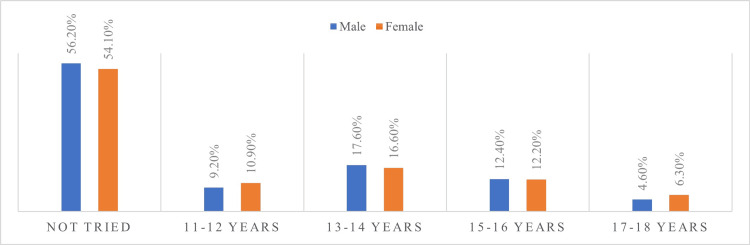 Figure 1
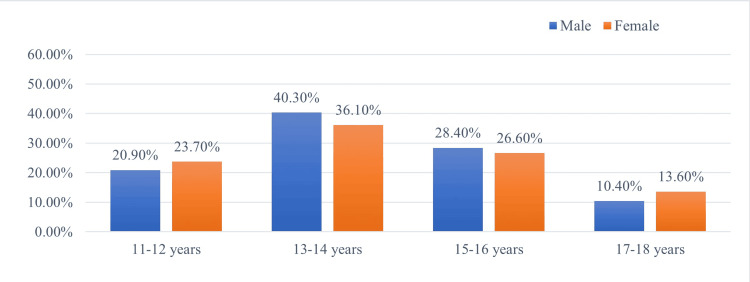 Figure 2
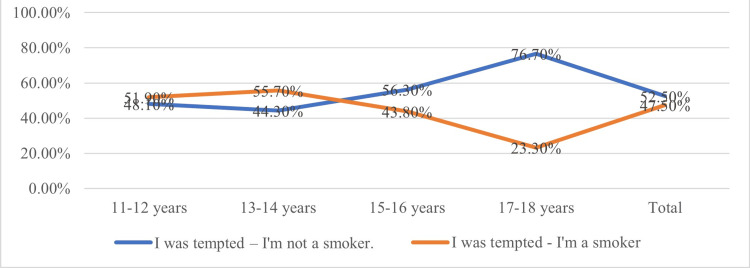 Figure 3
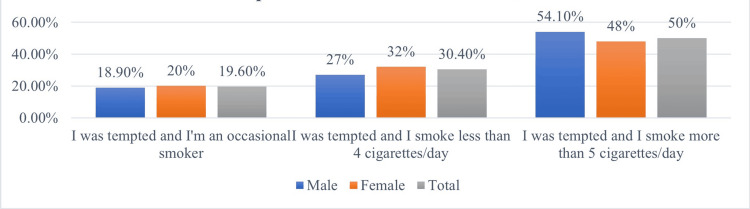 Figure 4
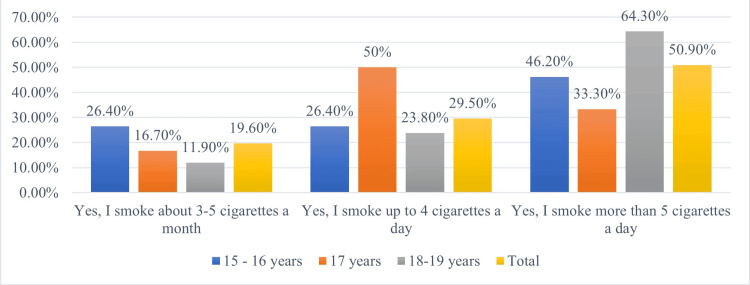 Figure 5
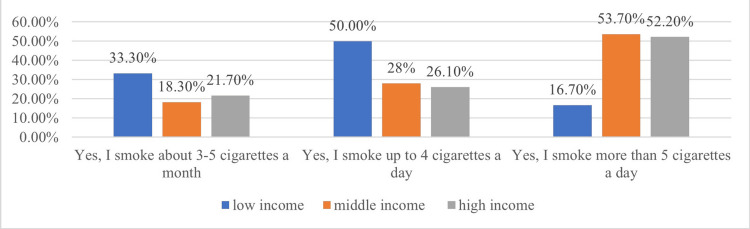 Figure 6
| Temptation to smoke | ||||||
| Gender | I was tempted, and I'm not a smoker | I was tempted, and I'm a smoker | Total | |||
| N | % | N | % | N | % | |
| Male | 30 | 44.8% | 37 | 55.2% | 67 | 100% |
| Female | 94 | 55.6% | 75 | 44.4% | 169 | 100% |
| Total | 124 | 52.5% | 112 | 47.5% | 236 | 100% |
Peer Reviews
No public reviews on file for this paper yet. If you reviewed it on a platform where reviews are public (OpenReview, ICLR, NeurIPS, ICML), you can paste yours below so the community can read it here.
Videos
No videos yet. Explain this paper in a talk, walkthrough, or lecture? Add one.
Taxonomy
TopicsHealth and Wellbeing Research
Introduction
Adolescence is perceived as a period during which the need for direct interaction and acceptance from the peer group becomes more pronounced [1]. Within the peer group, the openness to risky behaviours increases, among which smoking is one of the most common. Tobacco use is a facilitator of socialization and group integration and is often influenced by peers, friends, and family, especially if they smoke [2,3].
One of the most consumed substances during adolescence is tobacco [4]. The negative effects of tobacco use are manifold and can seriously affect quality of life [5]. Smoking exposes the body to more than 7,000 toxic substances, including 70 carcinogens that affect almost every organ system in the body [6]. Recent studies have identified a higher risk for smokers regarding COVID-19 infection and the severity of symptoms.
Adolescents start to smoke for various reasons (curiosity, spirit of adventure, integration into a group of friends) and tend to diminish the existence of risks and harmful effects on their health [7], which can lead to the adoption and maintenance of smoking behaviour. As with other categories of drugs, smoking causes neurobiological changes in the adolescent brain [8]. The age of onset of the temptation to smoke is becoming increasingly lower, thereby raising the risk that adolescents will later become smokers [9,10].
In 2017, data were collected from 12,328 subjects aged between 13 and 17 years from 11 European countries, with Romania being part of the study. Of the Romanian subjects analyzed, 21.5% were daily smokers, placing them below the European average for this category of 30.9% [11]. Regarding regular tobacco consumption, studies highlight that if a person has not become a smoker by the age of 25, they have a lower risk of becoming a smoker later in life [12,13].
The development of technology has transformed direct human-to-human interaction into a virtual reality, where unhealthy habits, including tobacco use, are often promoted (advertisements promoting tobacco and the new range of tobacco products, vaping devices, electronic cigarettes, heated cigarettes that do not contain tobacco but contain other harmful substances, etc.). This type of advertising targets vulnerable groups, including adolescents [14]. It has been noted that the socioeconomic status of the family, as well as the adolescent's perception of the family's financial condition, influences tobacco consumption [15]. Furthermore, early initiation of smoking has numerous repercussions on both physical and mental health, thus becoming a public health issue due to the increasing number of smokers globally [16].
In this context, the World Health Organization (WHO) [17], through the Global Youth Tobacco Survey (GYTS), provides data regarding tobacco use among adolescents aged 13-15 years. In Romania, the GYTS 2017 [18] reports that 14.6% of students (16.4% boys and 12.5% girls) consume some form of tobacco, marking an increase compared to the GYTS 2013 [19], which indicated that 11.2% of students (12.2% boys and 10.1% girls) were tobacco users.
In the Organization for Economic Cooperation and Development (OECD) report, Health at a Glance 2023 [20], it is mentioned that 18.9% of young people in Romania aged 15 and over are smokers, which is in line with the European average of young people who smoke. The 2019 report from the European Statistical Office (Eurostat) [21] includes data regarding Romanian youth aged 15-16 years, with 31% reporting that they had smoked in the past month, which is above the European average of 21% [22]. For the age group 15-19 years, the data shows that 6.9% smoke less than 20 cigarettes a day, while 1.4% smoke more than 20 cigarettes per day [21].
According to the 2019 report from the European School Survey Project on Alcohol and Other Drugs (ESPAD), the prevalence of smoking onset at the age of 13 or younger is 18% at the European level, while in Romania, it reaches 20%. Within the report, the average by gender is 20% for boys and 15% for girls. Adolescents in Romania have a higher rate of smoking initiation than the average of the 35 countries participating in the study, with 23% of boys and 17% of girls having started smoking for the first time at the age of 13 or earlier [23].
In a doctoral thesis presented in 2019, which focused on adolescents in Romania, including 10,114 subjects aged between 14 and 17 years, it was found that 44% were non-smokers, 52.9% reported themselves as smokers, 2% as e-cigarette smokers, and 1% did not respond. In relation to the entire study sample, the proportion of non-smokers was relatively equal by gender (boys: 42.5%, girls: 45%). The most frequent attempt to smoke was among 14-year-olds (17.1%), followed by 15-year-olds (13.1%). Regarding the number of cigarettes smoked daily, 18.9% reported smoking between 5-10 cigarettes, 16.7% smoked between 10-15 cigarettes, and 4.1% smoked more than 20 cigarettes [24].
In order to observe the extent to which adolescents' tobacco use behaviour was influenced by the context generated by the COVID-19 pandemic, it was necessary to provide a brief overview of national and international research conducted prior to this period. This approach will allow us to identify possible changes in adolescents’ smoking behaviour as a result of the social and educational reality imposed by the health crisis.
Materials and methods
Study design
The data used in this article were based on a quantitative study and were collected through an anthropological questionnaire administered online (Google Drive (Google LLC, Mountain View, USA)) during the COVID-19 pandemic period (April-May 2021). During this time, adolescents were required to stay with their family of origin, regardless of their place of origin (rural or urban), as all study participants were enrolled in high school education conducted exclusively online due to pandemic-related restrictions.
An excerpt of the questionnaire, including only items relevant to this study, is presented in the Appendices.
At the time the questionnaire was distributed, the participants were informed and gave their consent in accordance with legal regulations regarding personal data protection. Adolescents accessing the survey who stated they were under the age of 16 years were prompted to seek opt-out parental consent. They were directed to ask their parent/guardian to read some information about the study and were asked to tick a box to indicate they had done so before being permitted to proceed to the survey. The selection of study participants was voluntary, did not involve the risk of identifying individuals, and offered the possibility of withdrawal at any stage of completing the questionnaire. Respondents could complete the questionnaire at any time.
Participants and data collection
The participants were selected based on their voluntary agreement to participate in the study, geographical region, age range, and educational status (convenience sampling). A pilot test with 15 adolescents assessed the questionnaire's clarity and content, and the feedback collected improved the final version.
Initially, 550 subjects responded, randomly selected among students belonging to a form of secondary education in the two counties (Olt and Suceava). The completion of the questionnaire was carried out at home, and only participants who completed the questionnaire in full were included in the sample. Thus, the study included 521 male (N=153) and female (N=368) adolescents aged 15-19 years, from rural (N=313) and urban (N=208) areas, from the Olt (South) (N=224) and Suceava (North) (N=297) regions of Romania.
In this context, the study did not aim to evaluate the entire student population in the country; therefore, it is not representative, and the results obtained cannot be generalized.
Variables and measurements
The questionnaire, comprising 69 items, was used to collect sociodemographic data, information about the family, and to assess risk behaviours with health effects (tobacco use, alcohol consumption, energy drink consumption, diet, sedentary lifestyle, sleep duration). Time spent on social networks or using their mobile phones, leisure time activities, documented medical conditions, and body appearance self-perception were also investigated.
This study assessed modifications in adolescents' smoking behaviour during the COVID-19 pandemic and evaluated potential susceptibility to future smoking habits based on the responses regarding tobacco use received in the questionnaire (smoking initiation, smoking frequency).
Data analysis
To achieve the research objectives, inferential statistics (chi-squared test with a significance level of p < 0.05 and crosstabulation) were applied, and data processing was carried out using IBM SPSS Statistics, version 26 (IBM Corp., Armonk, USA) and Excel (Microsoft Corp., Redmond, USA).
Before conducting the research, approval was obtained from the Ethics Committee of the Francisc I Rainer Institute of Anthropology, Romanian Academy (254/2021). The participants were informed and gave their consent in accordance with legal regulations regarding personal data protection. The selection of study participants was voluntary, did not involve the risk of identifying individuals, and offered the possibility of withdrawal at any stage of completing the questionnaire.
Results
More than half of the adolescents aged 15-18 years old, both boys (M) and girls (F), stated that they were not tempted and did not attempt to smoke (M = 56.2%; F = 54.1%). Adolescents were tempted to experiment with smoking as early as 11-12 years old (M = 9.2%; F = 10.9%), but the majority first attempted smoking between the ages of 13-14 (M = 17.6%; F = 16.6%), followed by the 15-16 age group (M = 12.4%; F = 12.2%). A decrease in those attempting smoking for the first time was noted at the age of 17-18 (M = 4.6%; F = 6.3%) (Figure 1).
Age at which adolescents smoked their first cigarette, by gender
Among adolescents who had tried smoking, it was observed that the vulnerable age regarding the temptation to smoke was during the 13-14 age stage for both genders (M = 40.3%; F = 36.1%). The initiation of smoking behaviour in the studied sample began at the 11-12 age stage, which was more commonly encountered among girls (Figure 2).
Age at which adolescents were tempted to smoke a cigarette, by gender
The results indicated a significant relationship between the age at which adolescents were tempted to smoke and their subsequent tendency to continue smoking. We found that adolescents who were tempted to smoke at younger ages (11-12 years and 13-14 years) were more likely to become smokers. The chi-squared statistical test confirmed that the younger the age of temptation to try smoking, the higher the risk of becoming a smoker (χ² = 2.0; p = 0.017, df = 3, N = 236). Thus, the results suggested a statistically significant correlation between the age at which adolescents were tempted to smoke and the stabilization of this behaviour. These criteria were marginally differentiated by the place of origin (rural/urban) and geographical area (Olt/Suceava) (Figure 3).
Temptation and consolidation of the smoking habit by age of first cigarette smoked
In the entire study sample, the subjects who had never tried smoking represented 54.7% (N = 285), while another proportion experimented with smoking without becoming regular smokers (23.8%, N = 124). The remaining subjects adopted smoking behaviour (21.5%, N = 112). Among the smoking subjects, some were only occasional smokers, consuming 3-5 cigarettes/month (19.6%, N = 22), others smoked up to four cigarettes/day (30.4%, N = 34), and half of them smoked more than five cigarettes/day (50%, N = 56). Regarding the subjects who tried smoking, some continued to be regular smokers (47.5%, N = 112), while others did not become smokers (52.5%, N = 124). From a gender dimorphism perspective, it was observed that boys tended to remain regular smokers more frequently than girls (M = 55.2%, F = 44.4%) (Table 1).
Analyzing the quantity of cigarettes smoked, it was observed that 19.6% of individuals smoked occasionally (M = 18.9%; F = 20%), 30.4% smoked four cigarettes/day (M = 27%; F = 32%), and 50% smoked more than five cigarettes/day (M = 54.1%; F = 48%). Thus, boys were more frequent smokers of more than five cigarettes/day, while girls were more likely to be occasional smokers or smoked up to five cigarettes/day (Figure 4).
Amount of cigarettes consumed daily, by gender
In analyzing adolescents who smoked more than five cigarettes a day, a consistent upward trend was observed as age increased. At 15-16 years, 46.2% represented all smokers, while at 18-19 years, this proportion rose to 64.3%. An exception to this trend was seen among 17-year-olds (50%), who limited their consumption to four cigarettes a day (Figure 5).
Proportion of smokers, by age
More than half of adolescents who perceived themselves as coming from families with average (A) and high (H) incomes smoked more than five cigarettes/day (A = 53.7% and H = 52.2%), while those who considered their family income to be low (L) were predominantly regular smokers of up to four cigarettes/day (L = 50%) and occasional smokers consuming 3-5 cigarettes/month (L = 33.3%) (Figure 6).
Smoking habit and family income
Discussion
An important aspect is that nicotine dependence develops more quickly and after less cigarette consumption in young people than in adults [25]. This puts adolescents who experiment with smoking, even occasionally, at considerably higher risk of becoming daily smokers.
An early onset of smoking significantly increases adolescents' risk of developing addiction and continuing to smoke in the long term. According to the ESPAD report, the age of smoking onset is 13 years or earlier for 18% of young people in Europe, while in Romania, this figure reaches 20%. Adolescents in Romania have a higher rate of smoking initiation compared to the average of the 35 countries that participated in the study, with 23% of boys and 17% of girls smoking for the first time at the age of 13 or earlier [23]. Several recent studies indicate that a substantial proportion of young people smoke their first cigarette before the age of 14: the Global Youth Survey shows that 32% of school children smoked their first cigarette before the age of 14 [26], and successive studies conducted in Romania report that 56% of young smokers first smoked around the age of 12 [27]. In our study, we found that the proportion of adolescents experimenting with tobacco use at the age of 14 or earlier was 26.8% for boys and 27.5% for girls, compared to those who tried smoking at the age of 15 or later, with 17% of boys and 18.4% of girls, respectively.
Comparing the age stages, we found that subjects started smoking at 11-12 years (10.4%), 13-14 years (16.9%), 15-16 years (12.3%), and 17-18 years (5.8%). The results are relatively similar to those obtained in the doctoral thesis [24] defended at the doctoral school of the Romanian Academy in 2019, where at the age of 12, 7.1% tried smoking, at 13 years 11.7%, at 14 years 17.1%, at 15 years 13.1%, at 16 years 8.6%, and at ages over 16 years 11%. In our research group, smokers of various categories represented 21.4% in 2021, which is similar to the results of a study conducted in 11 European countries, including Romania, in 2017, i.e., 21.5% [11]. We were also close in terms of the results of the OECD studies conducted in 2019 (18.9%) [20].
We were interested in whether adolescents have the desire (temptation) to try smoking and whether all those who try smoking become regular smokers. We observed that 45.3% were tempted to experiment with smoking, but only 21.5% declared themselves as regular smokers, while 23.8% had only tried. The subjects who had not experimented with smoking at all represented 54.7%.
The GYTS study provides relevant data regarding tobacco use among adolescents in Romania, indicating that 14.6% of students consume tobacco (M = 16.4%, F = 12.5%) [19]. Another study highlights tobacco consumption among adolescents aged 15-19, with 8.3% of them smoking daily, 6.9% smoking fewer than 20 cigarettes/day, and 1.4% smoking more than 20 cigarettes/day [21]. With regard to the quantity of tobacco consumed, the reported figures refer exclusively to the behaviour of adolescent smokers, in contrast to previous studies, which considered the entire adolescent sample, including both smokers and non-smokers. The results showed that 19.6% smoked occasionally (M = 18.9%, F = 20%), 30.4% smoked up to four cigarettes per day (M = 27%, F = 32%), and 50% consumed more than five cigarettes per day (M = 54.1%, F = 48%). These data suggest that boys are more likely to consume larger quantities of tobacco daily, while girls are more inclined to smoke occasionally or in smaller quantities.
We observed changes in smoking behaviour by age that revealed a steady upward trend in the percentage of those who smoked more than five cigarettes/day as age increases. Thus, at the age of 15-16, they accounted for 46.2% of all smokers, while at the age of 18-19, this rose to 64.3%. An exception to this trend was among 17-year-olds, 50% of whom limited their consumption to four cigarettes/day.
Studies clearly indicate that a younger age at the time of the first cigarette is a significant risk factor for developing nicotine addiction and continuing to smoke throughout adolescence and into adulthood. The results obtained in our research suggest that the age at which young people experience the temptation to smoke is significantly associated with their subsequent smoking behavior, with the most vulnerable age being 13-14 years, which marks the onset of adolescence. This highlights the importance of smoking prevention through early interventions (such as anti-tobacco campaigns and health education), which should address adolescents' motivation not to experiment with smoking.
The restrictions generated by the COVID-19 pandemic seem to have reduced tobacco consumption in our study compared to the data from the previously mentioned doctoral thesis. This reduction could be due to the fact that young people spent more time with their families and the influence of the peer group diminished [1]. Compared to the official Eurostat or OECD data, the percentage of teenagers smoking during the mentioned period (which also includes a crisis situation) seems to be similar, or perhaps slightly higher, in the results of our study.
Study limitations
The research sample focused on a group of high school students characterized by their commitment to study and financial support from their families. In this context, the study did not aim to evaluate the entire adolescent population in the counties of Olt and Suceava; therefore, it is not representative, and the results obtained cannot be generalized. Additionally, causality cannot be determined based on this study. The study was conducted during the COVID-19 pandemic, with no subsequent follow-up to assess whether the results hold in a normal context. The data were self-reported through an online questionnaire, which may introduce potential errors in the participants' assessment of the information and may be subject to self-reporting bias.
Recommendations for further research
Further studies are needed to replicate the research in order to validate the results, including other categories of adolescents in the context of their usual lives, unrestricted by crisis-related circumstances.
Conclusions
The study highlights that more than half of adolescents, regardless of gender, are not tempted to experiment with smoking. Boys continue to smoke at a higher rate than girls, and adolescents from families with medium and high incomes tend to consume greater amounts of tobacco compared to those from low-income families. Additionally, the results indicate that most adolescents who try smoking at the age of 14 or younger are more likely to become long-term smokers. Regarding the impact of the restrictions imposed by the COVID-19 pandemic on tobacco use, the study did not identify significant differences in adolescent smoking behavior compared to studies conducted prior to the health crisis at the European level. However, a decrease in tobacco consumption was observed in comparison with data from a study conducted on Romanian adolescents. These results suggest that the limitation of social interactions did not significantly influence smoking behavior during that period.
The reference list from the paper itself. Each links out to its DOI / PubMed record.
- 1Peer influence in adolescence: public-health implications for COVID-19Trends Cogn Sci Andrews JL Foulkes L Blakemore SJ 5855872420203244420010.1016/j.tics.2020.05.001PMC 7205648 · doi ↗ · pubmed ↗
- 2The social-politic consideration about youngmen’s drinking and smoking J Korean Med Assoc Park HK 545548101967
- 3Smoking and adolescent health Korean J Pediatr Park SH 4014045420112223262110.3345/kjp.2011.54.10.401PMC 3250592 · doi ↗ · pubmed ↗
- 4Disabilities, quality of life, and mental disorders associated with smoking and nicotine dependence Am J Psychiatry Schmitz N Kruse J Kugler J 1670167616020031294434410.1176/appi.ajp.160.9.1670 · doi ↗ · pubmed ↗
- 5Prevalence and factors associated with the co-occurrence of health risk behaviors in adolescents Rev Paul Pediatr da Silva Brito AL Hardman CM de Barros MV 423430332015 https://www.sciencedirect.com/science/article/pii/S 23593482150004452629865610.1016/j.rpped.2015.02.002PMC 4685562 · doi ↗ · pubmed ↗
- 6Health effects 1 2025 2022 https://tobaccoatlas.org/challenges/health-effects
- 7Perceived risks and benefits of smoking: differences among adolescents with different smoking experiences and intentions Prev Med Halpern-Felsher BL Biehl M Kropp RY Rubinstein ML 5595673920041531309610.1016/j.ypmed.2004.02.017 · doi ↗ · pubmed ↗
- 8Adolescent drug exposure: a review of evidence for the development of persistent changes in brain function Brain Res Bull Salmanzadeh H Ahmadi-Soleimani SM Pachenari N Azadi M Halliwell RF Rubino T Azizi H 10511715620203192630310.1016/j.brainresbull.2020.01.007 · doi ↗ · pubmed ↗