Roles of oral anticoagulant use on the risk of 28-day mortality and in-hospital mortality in patients with acute respiratory distress syndrome
Jiayang Huang, Huijie An, Lin Cheng, Wangsheng Li, Ke Zhang, Dan Su

TL;DR
This study found that using oral anticoagulants may lower the risk of death in patients with acute respiratory distress syndrome.
Contribution
The study is the first to compare the effects of Warfarin and novel oral anticoagulants on mortality in ARDS patients.
Findings
Oral anticoagulant use was associated with a 68% reduced risk of 28-day mortality in ARDS patients.
In-hospital mortality risk was reduced by 73% for ARDS patients using oral anticoagulants.
Warfarin and novel anticoagulants showed no significant difference in mortality outcomes after adjusting for confounding factors.
Abstract
This study was to investigate the association between oral anticoagulant use and 28-day mortality and in-hospital mortality in patients with acute respiratory distress syndrome (ARDS). A total of 1754 ARDS patients were identified in database from 2008 to 2022 in this cohort study. Univariable and multivariable cox regression models were applied to assess the associations of oral anticoagulant use with the risk of 28-day mortality and in-hospital mortality. Propensity score matching (PSM) was performed in ARDS patients according to whether they were taking oral anticoagulants or not to control potential bias. Subgroup analysis was performed according to severity of ARDS (mild, moderate, and severe), and comorbidities (atrial fibrillation, sepsis, and AKI). Hazards ratio (HR) and respective confidence interval (CI) were presented. In total, 7758 patients not receiving oral…
Genes, proteins, chemicals, diseases, species, mutations and cell lines named across the full text — each resolved to its canonical identifier and authoritative record.
Click any figure to enlarge with its caption.
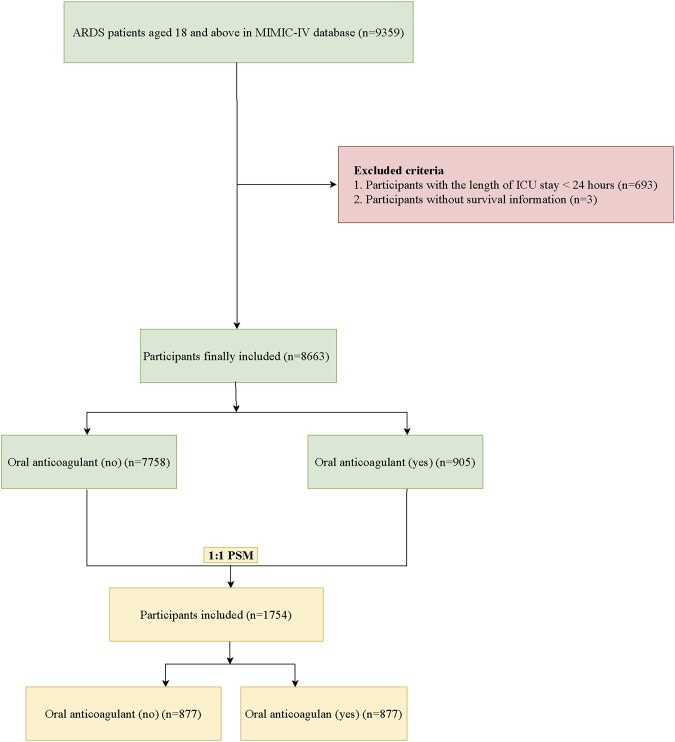 FIGURE 1
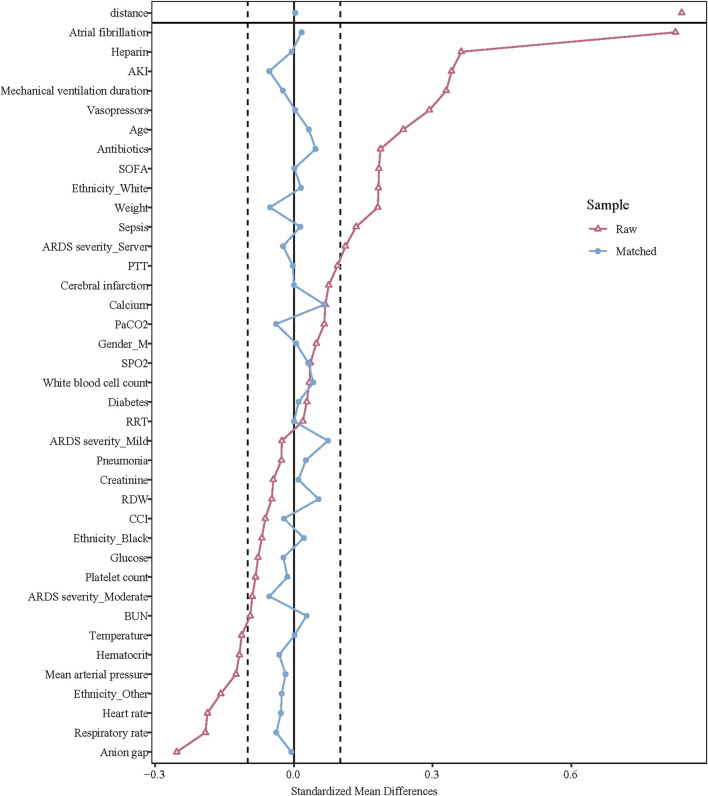 FIGURE 2
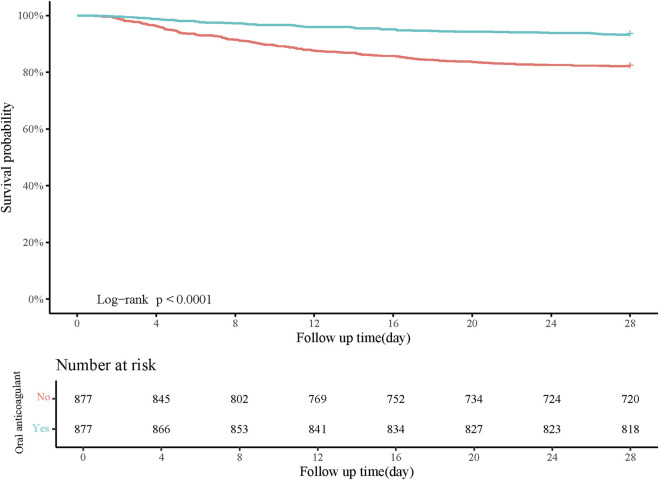 FIGURE 3
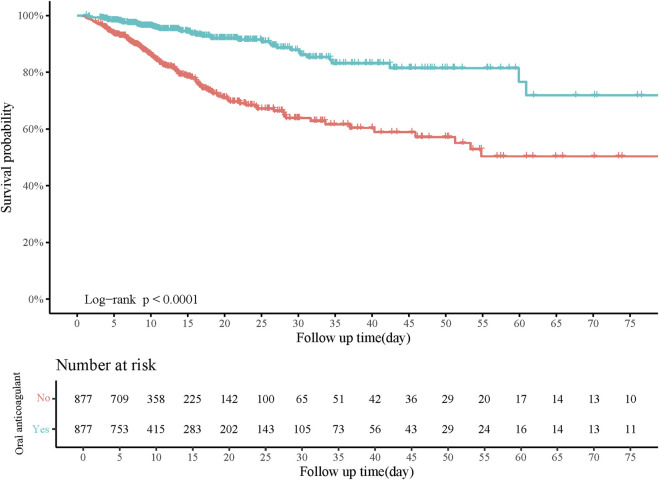 FIGURE 4
| Variables | Before PSM | After PSM | ||||||||
|---|---|---|---|---|---|---|---|---|---|---|
| Total (n = 8,663) | Oral anticoagulant:No (n = 7758) | Oral anticoagulant:Yes (n = 905) | Statistics |
| Total (n = 1754) | Oral anticoagulant:No (n = 877) | Oral anticoagulant:Yes (n = 877) | Statistics |
| |
| Age (years), mean ± SD | 61.63 ± 15.16 | 61.29 ± 15.26 | 64.59 ± 13.97 | t = −6.66 | <0.001 | 64.33 ± 14.14 | 64.11 ± 14.24 | 64.56 ± 14.05 | t = −0.67 | 0.506 |
| Gender, n (%) | χ2 = 1.833 | 0.176 | χ2 = 0.010 | 0.920 | ||||||
| Female | 3,077 (35.52) | 2,774 (35.76) | 303 (33.48) | 592 (33.75) | 297 (33.87) | 295 (33.64) | ||||
| Male | 5,586 (64.48) | 4,984 (64.24) | 602 (66.52) | 1,162 (66.25) | 580 (66.13) | 582 (66.36) | ||||
| Ethnicity, n (%) | χ2 = 24.142 | <0.001 | χ2 = 0.440 | 0.803 | ||||||
| White | 5,461 (63.04) | 4,823 (62.17) | 638 (70.50) | 1,222 (69.67) | 608 (69.33) | 614 (70.01) | ||||
| Black | 548 (6.33) | 503 (6.48) | 45 (4.97) | 86 (4.90) | 41 (4.68) | 45 (5.13) | ||||
| Other | 2,654 (30.64) | 2,432 (31.35) | 222 (24.53) | 446 (25.43) | 228 (26.00) | 218 (24.86) | ||||
| Weight (kg), mean ± SD | 87.79 ± 25.31 | 87.29 ± 25.12 | 92.10 ± 26.52 | t = −5.19 | <0.001 | 89.00 (75.34, 105.23) | 89.00 (76.43, 104.78) | 88.81 (74.84, 106.00) | Z = 0.529 | 0.597 |
| ARDS severity, n (%) | χ2 = 12.072 | 0.002 | χ2 = 2.570 | 0.277 | ||||||
| Mild | 3,286 (37.93) | 2,953 (38.06) | 333 (36.80) | 619 (35.29) | 294 (33.52) | 325 (37.06) | ||||
| Moderate | 2,736 (31.58) | 2,483 (32.01) | 253 (27.96) | 515 (29.36) | 268 (30.56) | 247 (28.16) | ||||
| Severe | 2,641 (30.49) | 2,322 (29.93) | 319 (35.25) | 620 (35.35) | 315 (35.92) | 305 (34.78) | ||||
| Atrial fibrillation, n (%) | χ2 = 648.340 | <0.001 | χ2 = 0.118 | 0.731 | ||||||
| No | 6,298 (72.70) | 5,963 (76.86) | 335 (37.02) | 677 (38.60) | 342 (39.00) | 335 (38.20) | ||||
| Yes | 2,365 (27.30) | 1795 (23.14) | 570 (62.98) | 1,077 (61.40) | 535 (61.00) | 542 (61.80) | ||||
| Diabetes, n (%) | χ2 = 0.633 | 0.426 | χ2 = 0.045 | 0.832 | ||||||
| No | 6,290 (72.61) | 5,643 (72.74) | 647 (71.49) | 1,256 (71.61) | 630 (71.84) | 626 (71.38) | ||||
| Yes | 2,373 (27.39) | 2,115 (27.26) | 258 (28.51) | 498 (28.39) | 247 (28.16) | 251 (28.62) | ||||
| Cerebral infarction, n (%) | - | 0.001 | χ2 = 0.000 | 1.000 | ||||||
| No | 8,641 (99.75) | 7744 (99.82) | 897 (99.12) | 1742 (99.32) | 871 (99.32) | 871 (99.32) | ||||
| Yes | 22 (0.25) | 14 (0.18) | 8 (0.88) | 12 (0.68) | 6 (0.68) | 6 (0.68) | ||||
| Pneumonia, n (%) | χ2 = 0.578 | 0.447 | χ2 = 0.295 | 0.587 | ||||||
| No | 6,885 (79.48) | 6,157 (79.36) | 728 (80.44) | 1,413 (80.56) | 711 (81.07) | 702 (80.05) | ||||
| Yes | 1778 (20.52) | 1,601 (20.64) | 177 (19.56) | 341 (19.44) | 166 (18.93) | 175 (19.95) | ||||
| Sepsis, n (%) | χ2 = 15.124 | <0.001 | χ2 = 0.083 | 0.774 | ||||||
| No | 5,172 (59.70) | 4,686 (60.40) | 486 (53.70) | 944 (53.82) | 475 (54.16) | 469 (53.48) | ||||
| Yes | 3,491 (40.30) | 3,072 (39.60) | 419 (46.30) | 810 (46.18) | 402 (45.84) | 408 (46.52) | ||||
| AKI, n (%) | χ2 = 51.673 | <0.001 | χ2 = 1.320 | 0.251 | ||||||
| No | 1,461 (16.86) | 1,385 (17.85) | 76 (8.40) | 139 (7.92) | 63 (7.18) | 76 (8.67) | ||||
| Yes | 7202 (83.14) | 6,373 (82.15) | 829 (91.60) | 1,615 (92.08) | 814 (92.82) | 801 (91.33) | ||||
| Heart rate (bpm), mean ± SD | 88.78 ± 19.79 | 89.12 ± 20.01 | 85.84 ± 17.50 | t = 5.25 | <0.001 | 86.13 ± 18.23 | 86.38 ± 18.87 | 85.88 ± 17.57 | t = 0.57 | 0.569 |
| Mean arterial pressure (mmHg), mean ± SD | 83.90 ± 17.43 | 84.12 ± 17.54 | 82.06 ± 16.40 | t = 3.55 | <0.001 | 82.34 ± 16.88 | 82.48 ± 17.40 | 82.19 ± 16.35 | t = 0.37 | 0.711 |
| Respiratory rate (insp/min), M (Q1, Q3) | 17.00 (15.00, 22.00) | 18.00 (15.00, 22.00) | 16.00 (14.00, 20.00) | Z = −5.975 | <0.001 | 16.00 (14.00, 20.00) | 16.00 (14.00, 21.00) | 16.00 (14.00, 20.00) | Z = 1.599 | 0.110 |
| Temperature (Deg.C), mean ± SD | 36.57 ± 1.04 | 36.58 ± 1.05 | 36.47 ± 0.93 | t = 3.18 | 0.002 | 36.47 ± 1.01 | 36.47 ± 1.09 | 36.47 ± 0.93 | t = −0.02 | 0.985 |
| SOFA, M (Q1, Q3) | 2.00 (1.00, 4.00) | 2.00 (0.00, 4.00) | 3.00 (1.00, 5.00) | Z = 6.106 | <0.001 | 3.00 (1.00, 4.00) | 2.00 (1.00, 4.00) | 3.00 (1.00, 5.00) | Z = −0.533 | 0.594 |
| CCI, M (Q1, Q3) | 2.00 (1.00, 3.00) | 2.00 (1.00, 3.00) | 2.00 (1.00, 3.00) | Z = 0.120 | 0.905 | 2.00 (1.00, 3.00) | 2.00 (1.00, 3.00) | 2.00 (1.00, 3.00) | Z = −0.596 | 0.551 |
| White blood cell count (K/uL), M (Q1, Q3) | 12.50 (8.90, 16.80) | 12.40 (8.80, 16.80) | 12.90 (9.70, 16.90) | Z = 2.760 | 0.006 | 12.70 (9.30, 16.90) | 12.40 (9.00, 16.80) | 12.90 (9.70, 16.90) | Z = −1.940 | 0.052 |
| Platelet count (K/uL), M (Q1, Q3) | 169.00 (124.00, 233.00) | 171.00 (124.00, 234.00) | 159.00 (122.00, 220.00) | Z = −2.496 | 0.013 | 160.00 (121.00, 224.00) | 164.00 (118.00, 228.00) | 159.00 (123.00, 222.00) | Z = 0.323 | 0.747 |
| RDW (%), mean ± SD | 14.51 ± 2.04 | 14.52 ± 2.08 | 14.44 ± 1.74 | t = 1.34 | 0.181 | 14.37 ± 1.74 | 14.32 ± 1.75 | 14.42 ± 1.73 | t = −1.11 | 0.265 |
| Hematocrit (%), mean ± SD | 32.82 ± 6.91 | 32.91 ± 6.92 | 32.11 ± 6.74 | t = 3.28 | 0.001 | 32.25 ± 6.75 | 32.36 ± 6.81 | 32.14 ± 6.69 | t = 0.67 | 0.504 |
| Creatinine (mg/dL), M (Q1, Q3) | 0.90 (0.70, 1.30) | 0.90 (0.70, 1.30) | 0.90 (0.70, 1.30) | Z = −0.776 | 0.438 | 0.90 (0.70, 1.30) | 0.90 (0.70, 1.20) | 0.90 (0.70, 1.30) | Z = 0.259 | 0.795 |
| BUN (mg/dL), M (Q1, Q3) | 17.00 (13.00, 26.00) | 17.00 (13.00, 26.00) | 17.00 (12.00, 24.00) | Z = −1.640 | 0.101 | 17.00 (13.00, 24.00) | 17.00 (13.00, 24.00) | 17.00 (12.00, 25.00) | Z = 0.100 | 0.920 |
| Glucose (mg/dL), M (Q1, Q3) | 140.00 (115.00, 176.00) | 140.00 (115.00, 177.00) | 142.00 (116.00, 171.00) | Z = 0.031 | 0.975 | 143.00 (117.00, 172.00) | 143.00 (118.00, 173.00) | 142.00 (116.00, 172.00) | Z = 0.657 | 0.511 |
| Anion gap (mEq/L), M (Q1, Q3) | 13.00 (11.00, 16.00) | 13.00 (11.00, 16.00) | 12.00 (10.00, 15.00) | Z = −5.948 | <0.001 | 12.00 (10.00, 15.00) | 12.00 (10.00, 15.00) | 12.00 (10.00, 15.00) | Z = −0.289 | 0.773 |
| Calcium (mg/dL), mean ± SD | 8.11 ± 0.94 | 8.10 ± 0.95 | 8.16 ± 0.83 | t = −1.90 | 0.058 | 8.13 ± 0.83 | 8.10 ± 0.83 | 8.16 ± 0.83 | t = −1.38 | 0.167 |
| SpO2 (%), mean ± SD | 97.49 ± 4.38 | 97.48 ± 4.41 | 97.62 ± 4.10 | t = −1.00 | 0.317 | 97.54 ± 4.28 | 97.48 ± 4.41 | 97.60 ± 4.15 | t = −0.62 | 0.536 |
| PaCO2 (mmHg), mean ± SD | 43.43 ± 11.40 | 43.35 ± 11.35 | 44.13 ± 11.86 | t = −1.94 | 0.052 | 44.38 ± 11.63 | 44.61 ± 11.33 | 44.15 ± 11.92 | t = 0.83 | 0.407 |
| PTT (sec), M (Q1, Q3) | 30.40 (27.00, 36.40) | 30.30 (27.00, 36.00) | 31.50 (27.60, 38.50) | Z = 4.918 | <0.001 | 31.10 (27.60, 38.00) | 30.80 (27.50, 37.40) | 31.50 (27.60, 38.50) | Z = −1.622 | 0.105 |
| Mechanical ventilation duration (hours), n (%) | χ2 = 79.732 | <0.001 | χ2 = 0.250 | 0.617 | ||||||
| <48 | 4,222 (48.74) | 3,908 (50.37) | 314 (34.70) | 616 (35.12) | 303 (34.55) | 313 (35.69) | ||||
| ≥48 | 4,441 (51.26) | 3,850 (49.63) | 591 (65.30) | 1,138 (64.88) | 574 (65.45) | 564 (64.31) | ||||
| Vasopressors, n (%) | χ2 = 57.768 | <0.001 | χ2 = 0.003 | 0.957 | ||||||
| No | 3,344 (38.60) | 3,100 (39.96) | 244 (26.96) | 485 (27.65) | 243 (27.71) | 242 (27.59) | ||||
| Yes | 5,319 (61.40) | 4,658 (60.04) | 661 (73.04) | 1,269 (72.35) | 634 (72.29) | 635 (72.41) | ||||
| Antibiotics, n (%) | χ2 = 20.573 | <0.001 | χ2 = 0.896 | 0.344 | ||||||
| No | 1,447 (16.70) | 1,344 (17.32) | 103 (11.38) | 215 (12.26) | 114 (13.00) | 101 (11.52) | ||||
| Yes | 7216 (83.30) | 6,414 (82.68) | 802 (88.62) | 1,539 (87.74) | 763 (87.00) | 776 (88.48) | ||||
| Heparin, n (%) | χ2 = 177.990 | <0.001 | χ2 = 0.012 | 0.914 | ||||||
| No | 7420 (85.65) | 6,778 (87.37) | 642 (70.94) | 1,280 (72.98) | 639 (72.86) | 641 (73.09) | ||||
| Yes | 1,243 (14.35) | 980 (12.63) | 263 (29.06) | 474 (27.02) | 238 (27.14) | 236 (26.91) | ||||
| RRT, n (%) | χ2 = 0.314 | 0.575 | χ2 = 0.000 | 1.000 | ||||||
| No | 7790 (89.92) | 6,981 (89.98) | 809 (89.39) | 1,564 (89.17) | 782 (89.17) | 782 (89.17) | ||||
| Yes | 873 (10.08) | 777 (10.02) | 96 (10.61) | 190 (10.83) | 95 (10.83) | 95 (10.83) | ||||
| In-hospital mortality, n (%) | χ2 = 81.901 | <0.001 | χ2 = 57.980 | <0.001 | ||||||
| Alive | 7204 (83.16) | 6,355 (81.92) | 849 (93.81) | 1,537 (87.63) | 716 (81.64) | 821 (93.61) | ||||
| Dead | 1,459 (16.84) | 1,403 (18.08) | 56 (6.19) | 217 (12.37) | 161 (18.36) | 56 (6.39) | ||||
| Follow-up of in-hospital mortality, M (Q1, Q3) | 7.34 (4.69, 14.84) | 7.21 (4.40, 14.49) | 9.22 (5.99, 18.57) | Z = 9.462 | <0.001 | 8.59 (5.34, 16.81) | 8.07 (5.22, 15.16) | 9.22 (5.95, 18.88) | Z = −3.932 | <0.001 |
| 28-day mortality, n (%) | χ2 = 83.901 | <0.001 | χ2 = 50.707 | <0.001 | ||||||
| Alive | 7138 (82.40) | 6,293 (81.12) | 845 (93.37) | 1,538 (87.69) | 720 (82.10) | 818 (93.27) | ||||
| Dead | 1,525 (17.60) | 1,465 (18.88) | 60 (6.63) | 216 (12.31) | 157 (17.90) | 59 (6.73) | ||||
| Follow-up of 28-day mortality, M (Q1, Q3) | 28.00 (28.00, 28.00) | 28.00 (28.00, 28.00) | 28.00 (28.00, 28.00) | Z = 9.380 | <0.001 | 28.00 (28.00, 28.00) | 28.00 (28.00, 28.00) | 28.00 (28.00, 28.00) | Z = −7.184 | <0.001 |
| Variables | 28-day mortality | In-hospital mortality | ||
|---|---|---|---|---|
| HR (95%CI) |
| HR (95%CI) |
| |
| Age (years) | 1.01 (1.00–1.02) | 0.050 | 1.01 (1.01–1.02) | 0.008 |
| Gender | ||||
| Female | Ref | Ref | ||
| Male | 0.64 (0.49–0.84) | 0.001 | 0.69 (0.52–0.90) | 0.006 |
| Ethnicity | ||||
| White | Ref | Ref | ||
| Black | 1.42 (0.80–2.51) | 0.226 | 1.03 (0.59–1.80) | 0.903 |
| Other | 1.46 (1.09–1.95) | 0.011 | 1.20 (0.90–1.60) | 0.214 |
| Weight (kg) | 1.00 (0.99–1.00) | 0.110 | 1.00 (0.99–1.00) | 0.659 |
| ARDS severity | ||||
| Mild | Ref | Ref | ||
| Moderate | 1.72 (1.22–2.44) | 0.002 | 1.36 (0.95–1.94) | 0.090 |
| Severe | 1.56 (1.11–2.19) | 0.011 | 1.29 (0.91–1.83) | 0.156 |
| Atrial fibrillation | ||||
| No | Ref | Ref | ||
| Yes | 1.11 (0.84–1.46) | 0.478 | 1.19 (0.90–1.57) | 0.214 |
| Diabetes | ||||
| No | Ref | Ref | ||
| Yes | 0.89 (0.65–1.20) | 0.438 | 0.87 (0.64–1.18) | 0.367 |
| Cerebral infarction | ||||
| No | Ref | Ref | ||
| Yes | 3.08 (1.14–8.27) | 0.026 | 1.84 (0.59–5.75) | 0.296 |
| Pneumonia | ||||
| No | Ref | Ref | ||
| Yes | 2.40 (1.81–3.17) | <0.001 | 1.37 (1.03–1.82) | 0.028 |
| Sepsis | ||||
| No | Ref | Ref | ||
| Yes | 1.33 (1.02–1.73) | 0.038 | 0.95 (0.72–1.25) | 0.709 |
| AKI | ||||
| No | Ref | Ref | ||
| Yes | 6.40 (2.05–19.99) | 0.001 | 3.51 (1.12–11.01) | 0.031 |
| Heart rate (bpm) | 1.02 (1.01–1.02) | <0.001 | 1.01 (1.01–1.01) | 0.004 |
| Mean arterial pressure (mmHg) | 1.00 (1.00–1.01) | 0.220 | 1.00 (0.99–1.00) | 0.420 |
| Respiratory rate (insp/min) | 1.07 (1.06–1.09) | <0.001 | 1.05 (1.03–1.07) | <0.001 |
| Temperature (Deg.C) | 1.07 (0.93–1.22) | 0.360 | 0.95 (0.84–1.07) | 0.424 |
| SOFA | 1.10 (1.05–1.15) | <0.001 | 1.09 (1.04–1.14) | <0.001 |
| CCI | 1.27 (1.20–1.34) | <0.001 | 1.17 (1.10–1.24) | <0.001 |
| White blood cell count (K/uL) | 1.01 (1.01–1.02) | 0.002 | 1.01 (1.01–1.02) | 0.008 |
| Platelet count (K/uL) | 1.00 (1.00–1.00) | 0.193 | 1.00 (1.00–1.00) | 0.445 |
| RDW (%) | 1.30 (1.24–1.38) | <0.001 | 1.22 (1.16–1.29) | <0.001 |
| Hematocrit (%) | 1.02 (1.00–1.04) | 0.078 | 1.01 (0.99–1.03) | 0.342 |
| Creatinine (mg/dL) | 1.21 (1.12–1.29) | <0.001 | 1.11 (1.03–1.19) | 0.005 |
| BUN (mg/dL) | 1.02 (1.02–1.03) | <0.001 | 1.02 (1.01–1.02) | <0.001 |
| Glucose (mg/dL) | 1.01 (1.01–1.01) | <0.001 | 1.00 (1.00–1.00) | 0.054 |
| Anion gap (mEq/L) | 1.11 (1.09–1.13) | <0.001 | 1.08 (1.06–1.10) | <0.001 |
| Calcium (mg/dL) | 0.88 (0.75–1.04) | 0.129 | 0.95 (0.82–1.10) | 0.506 |
| SPO2 (%) | 0.96 (0.94–0.98) | <0.001 | 0.98 (0.96–1.01) | 0.131 |
| PaCO2 (mmHg) | 1.00 (0.99–1.01) | 0.839 | 1.00 (0.99–1.01) | 0.490 |
| PTT (sec) | 1.01 (1.01–1.02) | <0.001 | 1.01 (1.01–1.01) | <0.001 |
| Mechanical ventilation duration (hours) | ||||
| <48 | Ref | Ref | ||
| ≥48 | 1.96 (1.42–2.71) | <0.001 | 0.93 (0.64–1.34) | 0.697 |
| Vasopressors | ||||
| No | Ref | Ref | ||
| Yes | 1.27 (0.93–1.75) | 0.135 | 1.32 (0.96–1.83) | 0.090 |
| Antibiotics | ||||
| No | Ref | Ref | ||
| Yes | 0.69 (0.48–0.99) | 0.045 | 0.85 (0.59–1.24) | 0.407 |
| Heparin | ||||
| No | Ref | Ref | ||
| Yes | 1.12 (0.84–1.51) | 0.440 | 0.94 (0.70–1.27) | 0.704 |
| RRT | ||||
| No | Ref | Ref | ||
| Yes | 3.88 (2.90–5.21) | <0.001 | 2.23 (1.67–2.99) | <0.001 |
| Outcomes | Variable | Model 1 | Model 2 | ||
|---|---|---|---|---|---|
| HR (95%CI) |
| HR (95%CI) |
| ||
| 28-day mortality | Oral anticoagulant | ||||
| No | Ref | Ref | |||
| Yes | 0.35 (0.26–0.47) | <0.001 | 0.32 (0.24–0.44) | <0.001 | |
| In-hospital mortality | Oral anticoagulant | ||||
| No | Ref | Ref | |||
| Yes | 0.29 (0.22–0.40) | <0.001 | 0.27 (0.20–0.37) | <0.001 | |
| Outcomes | Variable | ARDS (mild) (n = 619) | ARDS (moderate/severe) (n = 1,135) | ||
|---|---|---|---|---|---|
| HR (95%CI) |
| HR (95%CI) |
| ||
| 28-day mortality | Oral anticoagulant | ||||
| No | Ref | Ref | |||
| Yes | 0.31 (0.16–0.58) | <0.001 | 0.33 (0.23–0.47) | <0.001 | |
| In-hospital mortality | Oral anticoagulant | ||||
| No | Ref | Ref | |||
| Yes | 0.34 (0.18–0.65) | 0.001 | 0.25 (0.18–0.36) | <0.001 | |
| Outcomes | Variables | Model 1 | Model 2 | ||
|---|---|---|---|---|---|
| HR (95%CI) |
| HR (95%CI) |
| ||
| 28-day mortality | Oral anticoagulant | ||||
| New | Ref | Ref | |||
| Warfarin | 0.35 (0.20–0.61) | <0.001 | 0.58 (0.30–1.12) | 0.105 | |
| In-hospital mortality | Oral anticoagulant | ||||
| New | Ref | Ref | |||
| Warfarin | 0.53 (0.30–0.95) | 0.033 | 0.69 (0.36–1.35) | 0.282 | |
Peer Reviews
No public reviews on file for this paper yet. If you reviewed it on a platform where reviews are public (OpenReview, ICLR, NeurIPS, ICML), you can paste yours below so the community can read it here.
Videos
No videos yet. Explain this paper in a talk, walkthrough, or lecture? Add one.
Taxonomy
TopicsRespiratory Support and Mechanisms · Sepsis Diagnosis and Treatment · Intensive Care Unit Cognitive Disorders
Introduction
Acute respiratory distress syndrome (ARDS) is a clinical syndrome characterized by acute respiratory failure resulting from non-cardiogenic pulmonary edema (Bos and Ware, 2022). ARDS is among the most prevalent conditions in intensive care units and constitutes a significant cause of short-term mortality, imposing an enormous disease burden globally (Meyer et al., 2021). ARDS is defined by inflammatory lung injury and is associated with a global mortality rate approaching 40% (Bellani et al., 2016). To identify factors associated with short-term mortality was essential for improving the prognosis of these patients.
Pulmonary coagulopathy is a vital participant in the pathophysiology of ARDS, which is characterized by activated coagulation and decreased fibrinolysis (Camprubí-Rimblas et al., 2018; Nieuwenhuizen et al., 2009). Previous evidence indicated that coagulation function is an important factor affecting organ failure and in-hospital mortality in ARDS patients, which may be related to the increased level of inflammation associated with hypercoagulability (Gando et al., 2020; Li and Pan, 2024). Thus, the function of anticoagulants has been explored. Studies have found that early use of heparin may be associated with a reduced risk of short-term death in patients with ARDS (Xiao et al., 2024), but the conclusions are not consistent (Hofstra et al., 2012). Previous evidence also indicated that the impact of chronic oral anticoagulation therapy on the clinical outcomes of hospitalized patients with COVID-19 remains a subject of ongoing debate (Flam et al., 2021; Denas et al., 2021). Russo et al. revealed that oral anticoagulation therapy did not influence the risk of ARDS or death in patients hospitalized with COVID-19 (Russo et al., 2022). Wenzler et al. identified that apixaban for therapeutic anticoagulation was safe and efficacious in ICU patients with severe COVID-19 respiratory disease (Wenzler et al., 2020). Thus, the role of oral anticoagulation use on the prognosis of ARDS patients still require investigation. In addition, due to the need for injection of heparin and its possible adverse reactions such as heparin-induced thrombocytopenia (HIT), oral anticoagulants are gradually being used in critically ill patients (Wahab et al., 2021). In critically ill patients with both atrial fibrillation and sepsis or atrial fibrillation and acute kidney injury, the use of oral anticoagulants was found to be significantly associated with reduced 30-day mortality risk, whereas no significant difference was found between warfarin and novel oral anticoagulants (Ge et al., 2024; Bo et al., 2023). To date, no studies have investigated the relationship between the use of oral anticoagulants and the short-term prognosis of patients with ARDS.
The objectives of this study were to investigate the association between oral anticoagulant use and 28-day mortality and in-hospital mortality in patients with ARDS. The effects of warfarin and novel oral anticoagulants on short-term mortality in patients with ARDS were also compared.
Materials and methods
Study design and population
A total of 9359 participants ≥18 years diagnosed as ARDS were identified in database from 2008 to 2022 in this cohort study. The MIMIC-IV database consists of comprehensive and high-quality medical records from patients admitted to the intensive care units of Beth Israel Deaconess Medical Center (Johnson et al., 2023). In our study, the included criteria were that 1) age ≥ 18 years, 2) diagnosis of ARDS at admission (Berlin criteria). The Berlin criteria for ARDS included acute onset, partial pressure of oxygen (PaO_2_)/fraction of inspired oxygen (FiO_2_) ≤300 mmHg, positive end-expiratory pressure (PEEP) ≥ 5 cm H_2_O, bilateral infiltrates on chest radiograph, and absence of heart failure. Mild, moderate, and severe ARDS were classified based on the PaO_2_/FiO_2_ ratios of the patients: mild (200 mmHg < PaO_2_/FiO_2_ ≤ 300 mmHg), moderate (100 mmHg < PaO_2_/FiO^2^ ≤ 200 mmHg), and severe (PaO_2_/FiO_2_ ≤ 100 mmHg) (Ranieri et al., 2012). The severity of ARDS was defined as mild 200 mmHg < PaO_2_/FIO_2_ ≤ 300 mmHg with PEEP or CPAP≥5 cm H_2_O, moderate 100 mmHg < PaO_2_/FIO_2_ ≤ 200 mmHg with PEEP ≥5 cm H_2_O, and severe PaO2/FIO2 ≤ 100 mmHg with PEEP ≥5 cm H_2_O (Ranieri et al., 2012). Patients were excluded if they stayed in ICU < 24 h, and missing the survival information.
Potential covariables and definitions
Age (years), gender (female or male), ethnicity (White, Black or other), weight (kg), ARDS severity (mild, moderate, or severe), atrial fibrillation or not, diabetes or not, cerebral infarction or not, pneumonia or not, sepsis or not, acute kidney injury (AKI) or not, heart rate (bpm), mean arterial pressure (mmHg), respiratory rate (insp/min), temperature (Deg.C), sepsis related organ failure assessment (SOFA), Charlson comorbidity index (CCI), white blood cell count (K/uL), red blood cell volume distribution width (RDW) (%), hematocrit (%), creatinine (mg/dL), blood urea nitrogen.
(BUN) (mg/dL), glucose (mg/dL), anion gap (mEq/L), calcium (mg/dL), oxygen saturation (SpO_2_) (%), partial pressure of carbon dioxide in arterial blood (PaCO_2_) (mmHg), partial thromboplastin time (PTT) (sec), mechanical ventilation duration (<48 h or ≥48 h), using vasopressors or not, using antibiotics or not, and using renal replacement therapy (RRT) or not were potential confounding factors. All the data were analyzed used the first measurement during 24 h ICU admission.
Mechanical ventilation were calculated based on parameters including peak inspiratory pressure (Ppeak), positive end-expiratory pressure, measured respiratory rate, and tidal volume. Atrial fibrillation was diagnosed based on International Classification of Diseases (ICD)-9 codes (42,731, and 42,732), and ICD-10 with first three digits of I48. Diabetes was diagnosed based on ICD-9 with first three digits of 250, and ICD-10 with first three digits of E10, E11, E12, E13, and E14. Cerebral infarction was diagnosed based on ICD-9 (433.01-433.91, and 434.01-91), and ICD-10 (I63). Pneumonia was diagnosed based on ICD-9 with first three digits of 480 to 486, and ICD10 with first three digits of J12 to J18.
Main variable
Data on anticoagulant drugs were extracted based on the Prescription list in MIMIC-IV database. Patients with the use oral anticoagulant drugs including Warfarin, Apixaban, Rivaroxaban, and Dabigatran during the time from ICU admission to ICU discharge were regarded to have oral anticoagulant use. Patients used Apixaban, Rivaroxaban, or Dabigatran were regraded to use novel oral anticoagulant drugs.
Outcome variables
The 28-day mortality and in-hospital mortality were outcomes. The follow-up of 28-day mortality was ended if the patients died within 28 days or follow-up to 28-day if the patients survived. The median follow-up time of 28-day mortality was 28 days. In-hospital mortality was followed-up to the time of in-hospital death or time of discharge from the hospital. The median follow-up time of in-hospital mortality was 7.34 days.
Statistical analysis
The measurement data with normal distribution were described by Mean ± standard deviation (Mean ± SD), and the t-test was used to compare the differences between groups. The median and quartiles were used to describe the distribution of measurement data that did not obey the normal distribution, and the Wilcoxon rank sum test was used to compare the differences between group. The enumeration data were described as number and percentage, and the chi-square test was used to compare the differences between groups. Missing values were presented in Supplementary Table S1. The missing variables were filled by multiple interpolation method, and data were compared before and after missing value imputation (Supplementary Table S2). Univariable cox regression model was constructed to evaluate the covariables associated with 28-day mortality and in-hospital mortality, respectively. Univariable and multivariable cox regression models were applied to assess the associations of oral anticoagulant use with the risk of 28-day mortality and in-hospital mortality. Propensity score matching (PSM) was performed in ARDS patients according to whether they were taking oral anticoagulants or not to control potential bias. Subgroup analysis was performed according to severity of ARDS (mild, moderate, and severe), and comorbidities (atrial fibrillation, sepsis, and AKI). Hazards ratio (HR) and respective confidence interval (CI) were presented. Kaplan-Meier curves were plotted to compare the survival probability of patients receiving oral anticoagulant or not. Data analysis was conducted using R [R version 4.4.0 (2024-04–24 ucrt)]. P < 0.05 was regarded to be statistically significant.
Results
Comparisons of characteristics of participants receiving oral anticoagulant or not receiving oral anticoagulant
In total, 9359 ARDS patients aged ≥18 years were identified in the MIMIC-IV database. Among them, patients who stayed in ICU < 24 h were excluded. Also, those without survival information were not included. Finally, 8,663 participants were included with 7758 patients not receiving oral anticoagulant and 905 patients receiving oral anticoagulant. After PSM, 1754 participants were analyzed. The screening process of participants was shown Figure 1.
The screening process of participants.
Before PSM, the mean age of the oral anticoagulant group was older than the non-oral anticoagulant group (64.59 years vs. 61.29 years). The percentage of atrial fibrillation patients was higher in the oral anticoagulant group relative to the non-oral anticoagulant group (62.98% vs. 23.14%). The percentage of cerebral infarction patients was higher in the oral anticoagulant group compared to the non-oral anticoagulant group (0.88% vs. 0.18%). The median SOFA score in the oral anticoagulant group was higher than the non-oral anticoagulant group (3.00 vs. 2.00). After PSM, the data in the oral anticoagulant group and the non-oral anticoagulant group were equilibrium. More information of the characteristics was exhibited in Table 1. The standardized mean difference (SMD) of data before PSM and after PSM was presented in Figure 2.
The SMD of data before PSM and after PSM.
Association between oral anticoagulant use with the risk of 28-day and in-hospital mortality
As delineated in gender, ethnicity, ARDS severity, cerebral infarction, pneumonia, sepsis, AKI, heart rate, respiratory rate, SOFA, CCI, WBC, creatinine, BUN, glucose, anion gap, SpO_2_, PTT, mechanical ventilation duration, antibiotics, and RRT were confounding factors related to 28-day mortality (Table 2). Compared to ARDS patients without oral anticoagulant use, the risk of 28-day mortality might be reduced in those receiving oral anticoagulant use (HR = 0.35, 95%CI: 0.26–0.47). After adjusting for the confounding factors, the reduced risk of 28-day mortality in ARDS patients was identified in those undergoing oral anticoagulant use (HR = 0.32, 95%CI: 0.24–0.44).
Age, gender, pneumonia, AKI, heart rate, respiratory rate, SOFA, CCI, WBC, RDW, creatinine, BUN, anion gap, PTT, and RRT were confounding factors associated with in-hospital mortality (Table 2). The risk of in-hospital mortality might be decreased in patients who had oral anticoagulant in comparison with those did not have (HR = 0.29, 95%CI: 0.22–0.40). In the adjusted model, the association of oral anticoagulant use with reduced risk of in-hospital mortality was significant (HR = 0.27, 95%CI: 0.20–0.37) (Table 3). The 28-day survival probability of patients receiving oral anticoagulant was higher than those without oral anticoagulant use (Figure 3). ARDS patients had oral anticoagulant showed higher in-hospital survival probability than patients who did not use oral anticoagulant (Figure 4).
Kaplan-Meier curve of 28-day survival probability of patients receiving oral anticoagulant or not.
Kaplan-Meier curve of in-hospital survival probability of patients receiving oral anticoagulant or not.
Subgroup analysis on the association between oral anticoagulant use with the risk of 28-day and in-hospital mortality
The risk of 28-day mortality was identified to be decreased in both the ARDS mild (HR = 0.31, 95%CI: 0.16–0.58) or moderate/severe (HR = 0.33, 95%CI: 0.23–0.47) patients who received oral anticoagulant. In both the ARDS mild group (HR = 0.34, 95%CI: 0.18–0.65) and the moderate/severe group (HR = 0.25, 95%CI: 0.18–0.36), the risk of in-hospital mortality was reduced in patients with oral anticoagulant use. In ARDS patients complicated with sepsis or not, the risk of 28-day mortality and in-hospital mortality was decreased. Also, regardless ARDS patients complicated with atrial fibrillation or not, the risk of 28-day mortality and in-hospital mortality was decreased in those with oral anticoagulant use (Table 4).
Comparisons of the effect of warfarin with novel oral anticoagulants on the risk of 28-day and in-hospital mortality
In total, 777 patients receiving warfarin, and 116 patients receiving novel oral anticoagulants. The percentage of participants receiving mechanical ventilation duration ≥48 h was lower in warfarin group relative to novel oral anticoagulants group (62.93% vs. 78.45%). The percentage of patients receiving antibiotics was higher in warfarin group than novel oral anticoagulants group (91.63% vs. 68.97%). Detailed information on the characteristics of patients receiving warfarin and novel oral anticoagulants was presented in Supplementary Table S3.
According to the data in Supplementary Table S4, age, weight, ARDS severity, cerebral infarction, pneumonia, heart rate, respiratory rate, CCI, RDW, creatinine, BUN, anion gap, SpO_2_, PaCO_2_, and RRT were covariates related to 28-day mortality. Age, gender, weight, pneumonia, sepsis, heart rate, respiratory rate, CCI, RDW, BUN, and anion gap were covariates related to in-hospital mortality. In the crude model, Warfarin might be related to decreased risk of 28-day mortality (HR = 0.35, 95%CI: 0.20–0.61) and in-hospital mortality (HR = 0.53, 95%CI: 0.30–0.95). After adjusting for the respective confounding factors, the associations of Warfarin with decreased risk of 28-day and in-hospital mortality were not significant (P > 0.05) (Table 5).
Discussion
The present study evaluated the association between oral anticoagulant use and 28-day and in-hospital mortality in patients with ARDS. We also compared the effects of warfarin and novel oral anticoagulants on 28-day and in-hospital mortality in patients with ARDS. The results indicated that oral anticoagulant use was related to reduced 28-day and in-hospital mortality risk in patients with ARDS. No significant difference on the 28-day and in-hospital mortality risk was observed between patients receiving warfarin and novel oral anticoagulants. The findings might provide a reference for making future medication strategies to improve the prognosis of ARDS patients.
Previously, increasing evidence has demonstrated the effect of anticoagulation administration on several lung-related diseases. Tang et al. revealed that anticoagulation therapy mainly with low molecular weight heparin was correlated with a reduced risk of mortality in patients with severe forms of coronavirus disease 2019 (COVID-19) (Tang et al., 2020). In hospitalized COVID-19 patients in the absence of contraindications, pharmacological antithrombotic prophylaxis was recommended (Thachil et al., 2020; American Society of Hematology, 2025). Nebulised unfractionated heparin was found to have strong scientific and biological rationale of its therapeutic potential, for patients with COVID‐19 requiring invasive mechanical ventilation (van Haren et al., 2022). Also, in patients with or at risk of ARDS, nebulised heparin was well tolerated and exploratory outcomes suggest less progression of lung injury and earlier return home (Dixon et al., 2021). The lungs of ARDS patients are characterized by inflammation and elevated levels of procoagulant factors, the absence of hydrostatic pulmonary edema, and disruption of the alveolar-capillary barrier, leading to increased permeability of proteins (Ware and Matthay, 2000; Gonzales et al., 2015). This leads to the activation of pulmonary macrophages toward a proinflammatory phenotype, an increase in both intravascular and extravascular neutrophils, platelets, and fibrin, as well as endothelial and epithelial damage (Camprubí-Rimblas et al., 2018). The severe inflammatory response and disseminated intravascular coagulation, in conjunction with virus-induced local inflammatory reactions, impairing endothelial cell function, results in vessel wall damage and subsequent microvascular thrombosis (Scudiero et al., 2021). Functional implications encompass a progressively deteriorating ventilation/perfusion mismatch and a diminished hypoxic pulmonary vasoconstriction reflex, accompanied by a significant component of microvascular pulmonary thrombosis (Ciceri et al., 2020). This mechanism, primarily characterized by endothelial injury and microvascular thrombosis, indicates that microvascular obstructive thrombo-inflammatory syndrome in the lungs may represent an atypical form of ARDS in patients with COVID-19 (Ciceri et al., 2020). Pulmonary coagulopathy in the pathophysiology of ARDS is characterized by an activation of the coagulation system and a concurrent reduction in fibrinolytic activity (Schultz et al., 2004; Tuinman et al., 2012). Various pathways of the coagulation cascade, such as the tissue factor (TF) pathway, the protein C pathway, and the regulation of fibrinolysis through the plasminogen activator (PA) and inhibitor pathways, play crucial roles in the pathophysiology of ARDS (Camprubí-Rimblas et al., 2018). The pathophysiological roles of the coagulation and fibrinolysis systems in ARDS have been extensively investigated through both experimental and clinical studies (Sonobe et al., 2023). Patients with coagulopathy exhibited adverse outcomes and persistent hypoxemia, indicating a significant association between coagulopathy and the development of ARDS. Given the established association between coagulopathy and inflammation as reported in prior studies, ARDS accompanied by coagulopathy may manifest as a hyperinflammatory phenotype. This condition is linked to multiple organ dysfunction syndrome and adverse outcomes (Shankar-Hari et al., 2019; Gando et al., 2019). Pulmonary and extrapulmonary microvascular thrombosis may significantly contribute to the development of acute lung injury and multiple organ dysfunction (Russo et al., 2020). In the present study, oral anticoagulant was identified to be related to more favorable short-term prognosis.
In addition, we found that novel oral anticoagulants had similar effect with warfarin on the risk of 28-day and in-hospital mortality. Previous evidence has suggested that the incidence of major and minor bleeding complications among patients in the emergency department who are on novel oral anticoagulants is comparable to that of patients receiving warfarin therapy as no significant differences between the warfarin and novel oral anticoagulants groups in the frequency of minor bleeding complications, major bleeding complications, and intracranial bleeding were identified (Dogan et al., 2022). Anderson et al. demonstrated that both novel oral anticoagulants and warfarin are safe and effective options for anticoagulation in patients experiencing postoperative atrial fibrillation (POAF) following coronary artery bypass grafting (CABG), and neither group had a major bleeding event during the initial hospitalization (Anderson et al., 2015).
This study explored the relationship between the use of oral anticoagulants and the risk of short-term mortality in patients with ARDS, which provided a reference for the formulation of medication strategies to improve the prognosis of ARDS patients. The study population was based on a large sample of critically ill patients with MIMICIV, and a variety of possible confounding factors including comorbidities, laboratory indicators, treatment and so on were controlled by PSM. There were several limitations. Firstly, this was a retrospective cohort study, the potential recall bias cannot be avoided. Secondly, the study population was from a single center in the United States, and the generalization of the results to other population should be conducted with caution. Thirdly, the total dose of patients receiving oral anticoagulant could not be calculated based on the data from the MIMIC-IV database, and the results from our study still requires verification in more studies. Fourthly, the number of patients with COVID ARDS was limited (n = 2), and whether COVID-9 caused ARDS could not be future analyzed. Fifthly, the cause of ARDS was not specific, which might affect the results. The association between oral anticoagulants and short-term prognosis in patients with ARDS still needs further validation in randomized controlled trials.
Conclusions
The association between oral anticoagulant use and 28-day/in-hospital mortality in patients with ARDS was explored in the current study. The results delineated that oral anticoagulant was related to decreased risk of 28-day/in-hospital mortality in patients with ARDS. Warfarin and novel oral anticoagulants showed no significant difference on 28-day/in-hospital mortality in patients with ARDS. The findings might provide a reference for making future medical strategies for ARDS to improve the prognosis of these patients.
The reference list from the paper itself. Each links out to its DOI / PubMed record.
- 1American Society of Hematology (2025). COVID-19-Hematology.org sgouoaipw. Available online at: https://www.hematology.org:443/education/clinicians/guidelines-and-quality-care/clinical-practice-guidelines/venous-thromboembolism-guidelines/ash-guidelines-on-use-of-anticoagulation-in-patients-with-covid-19.
- 2Anderson E.Johnke K.Leedahl D.Glogoza M.Newman R.Dyke C. (2015). Novel oral anticoagulants vs warfarin for the management of postoperative atrial fibrillation: clinical outcomes and cost analysis. Am. J. Surg. 210 (6), 1095–1103. 10.1016/j.amjsurg.2015.07.005 26482512 · doi ↗ · pubmed ↗
- 3Bellani G.Laffey J. G.Pham T.Fan E.Brochard L.Esteban A. (2016). Epidemiology, patterns of care, and mortality for patients with acute respiratory distress syndrome in intensive care units in 50 countries. Jama 315 (8), 788–800. 10.1001/jama.2016.0291 26903337 · doi ↗ · pubmed ↗
- 4Bo D.Wang X.Wang Y. (2023). Survival benefits of oral anticoagulation therapy in acute kidney injury patients with atrial fibrillation: a retrospective study from the mimic-iv database. BMJ open 13 (1), e 069333. 10.1136/bmjopen-2022-069333 PMC 980924636593000 · doi ↗ · pubmed ↗
- 5Bos L. D. J.Ware L. B. (2022). Acute respiratory distress syndrome: causes, pathophysiology, and phenotypes. Lancet 400 (10358), 1145–1156. 10.1016/s 0140-6736(22)01485-4 36070787 · doi ↗ · pubmed ↗
- 6Camprubí-Rimblas M.TantinyàN.BringuéJ.Guillamat-Prats R.Artigas A. (2018). Anticoagulant therapy in acute respiratory distress syndrome. Ann. Transl. Med. 6 (2), 36. 10.21037/atm.2018.01.08 29430453 PMC 5799142 · doi ↗ · pubmed ↗
- 7Ciceri F.Beretta L.Scandroglio A. M.Colombo S.Landoni G.Ruggeri A. (2020). Microvascular covid-19 lung vessels obstructive thromboinflammatory syndrome (microclots): an atypical acute respiratory distress syndrome working hypothesis. Crit. care Resusc. J. Australas. Acad. Crit. Care Med. 22 (2), 95–97. 10.51893/2020.2.pov 2 PMC 1069245032294809 · doi ↗ · pubmed ↗
- 8Denas G.Gennaro N.Ferroni E.Fedeli U.Lorenzoni G.Gregori D. (2021). Reduction in all-cause mortality in COVID-19 patients on chronic oral anticoagulation: a population-based propensity score matched study. Int. J. Cardiol. 329, 266–269. 10.1016/j.ijcard.2020.12.024 33309764 PMC 7833678 · doi ↗ · pubmed ↗