Correction: BMP2 expression in oral squamous cell carcinoma and its effects on SCC9 cell biological behavior
Fuao Xing, Yimin Liu, Faming Tian, Xiaoli Hou, Qiangqiang Lian, Yunpeng Hu, Lei Xing, Jing Yuan Gao, Xinhao Fan

Abstract
Genes, proteins, chemicals, diseases, species, mutations and cell lines named across the full text — each resolved to its canonical identifier and authoritative record.
Click any figure to enlarge with its caption.
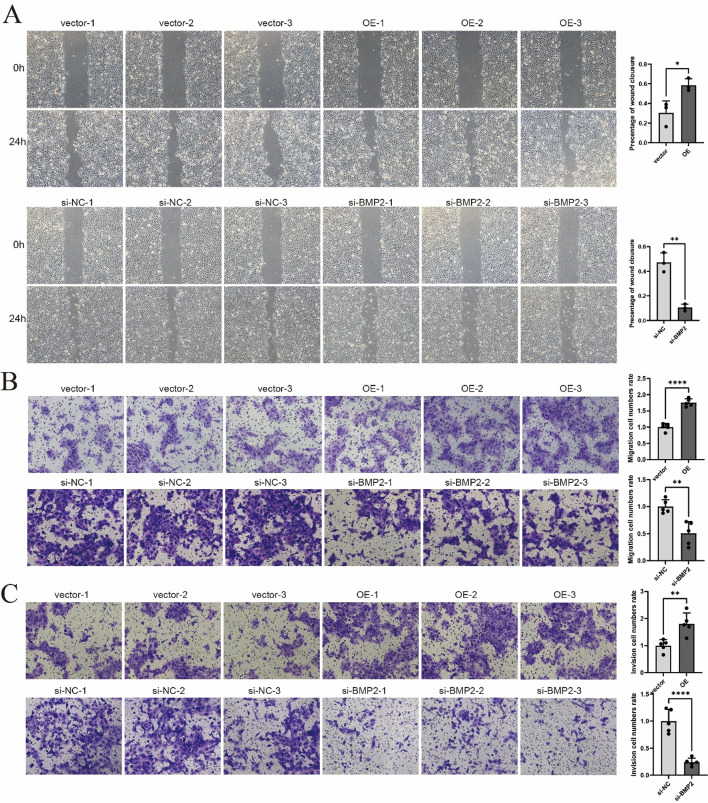 Figure 1
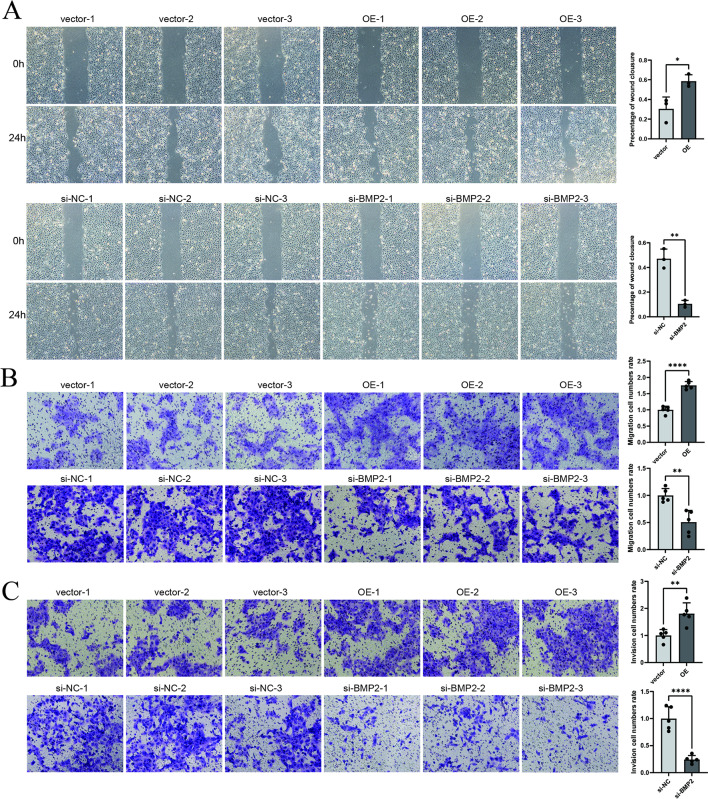 Figure 2
Peer Reviews
No public reviews on file for this paper yet. If you reviewed it on a platform where reviews are public (OpenReview, ICLR, NeurIPS, ICML), you can paste yours below so the community can read it here.
Videos
No videos yet. Explain this paper in a talk, walkthrough, or lecture? Add one.
Taxonomy
TopicsKruppel-like factors research
Correction to: Scientific Reports 10.1038/s41598-025-96274-2, published online 04 April 2025
The original version of this Article contained errors where Fig. 5 was a duplication of Fig. 4. As a result, the designated Fig. 5 was omitted. Furthermore, Fig. 4 contained errors where a previous version of this figure was published. The original Figs. 4 and 5 and accompanying legends appear below.
Fig. 4BMP2 knockdown suppresses SCC9 cell migration and invasion, whereas its overexpression enhances these oncogenic properties. A Post-transfection wound healing assay assessing OSCC cell migration capacity. B Quantitative assessment of migratory potential through Transwell migration assays following transfection. C Matrigel-coated Transwell invasion assays with quantitative analysis of invasive capability post-transfection. *p < 0.05, **p < 0.01, ****p < 0.0001 Fig. 5. Flow cytometric quantification of Annexin V-FITC/PI dual staining demonstrated augmented apoptotic cell fractions in BMP2-knockdown populations (si-BMP2 vs si-NC controls), with conversely attenuated apoptosis observed in BMP2-overexpressing cohorts (OE vs vector controls). Representative density plots illustrate distinct quadrant distributions corresponding to viable (Annexin V^−^/PI^−^), early apoptotic (Annexin V⁺/PI^−^), and late apoptotic (Annexin V⁺/PI⁺) cellular states. *p < 0.05
The original Article has been corrected.