Vitamin Status and Risk of Age-Related Diseases Among Adult Residents of the Pearl River Delta Region
Yongze Zhao, Siqian Zheng, Bohan Wang, Wenhui Xiao, Ping He, Ying Bian

TL;DR
This study examines how vitamin levels in adults from the Pearl River Delta region relate to age-related diseases like hypertension and diabetes, finding complex associations that vary with age and vitamin type.
Contribution
The study identifies specific vitamin thresholds and J-shaped relationships with age-related diseases, highlighting the need for personalized vitamin assessments in older adults.
Findings
Blood concentrations of nine vitamins showed a right-skewed distribution among participants.
A J-shaped relationship was observed between vitamin levels and age-related diseases, except for Vitamin A-HTN/T2DM showing Maximum Effective Concentration.
The protective effect of vitamins against age-related diseases decreased with age, and higher levels of vitamins A and B1 correlated with increased hypertension risk in older adults.
Abstract
Background: The Pearl River Delta (PRD) region in Guangdong, China, is urbanized and economically significant. Rapid development has shaped diverse dietary habits. In this densely populated area, there is an urgent need to assess vitamin status and its impact on age-related diseases. Methods: A total of 2646 participants (age: 50.92 ± 9.30 years; male: 64.06%) were recruited from the Pearl River Delta (PRD) region. Participants were included from 1 December 2020 to 30 November 2021. Three restricted cubic spline logistic models, interaction terms, and mediated effects analyses were used to assess the association between vitamin A, B, E, B1, B2, B3, B5, B6, and B9 between five age-related diseases: cerebrovascular disease (CVD), coronary heart disease (CHD), hypertension (HTN), dyslipidemia (DYS), and type 2 diabetes mellitus (T2DM). Results: Blood concentrations of nine vitamins showed…
Genes, proteins, chemicals, diseases, species, mutations and cell lines named across the full text — each resolved to its canonical identifier and authoritative record.
Click any figure to enlarge with its caption.
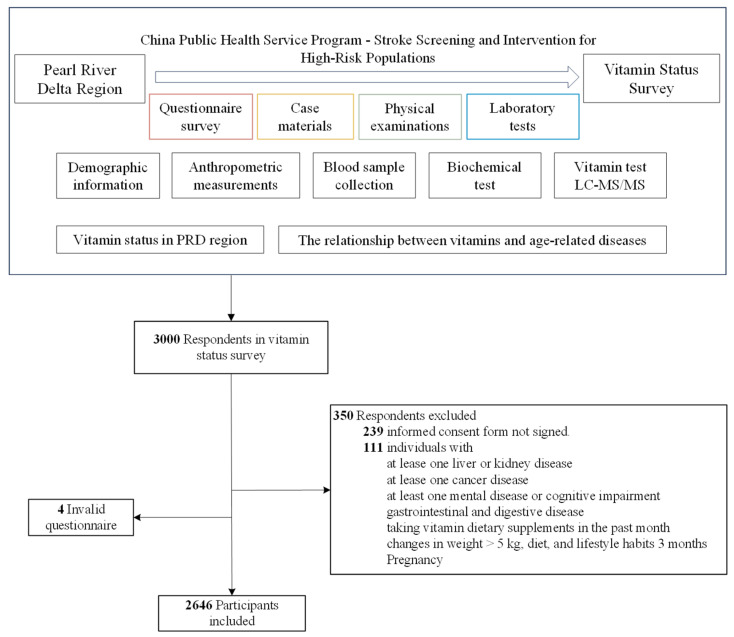 Figure 1
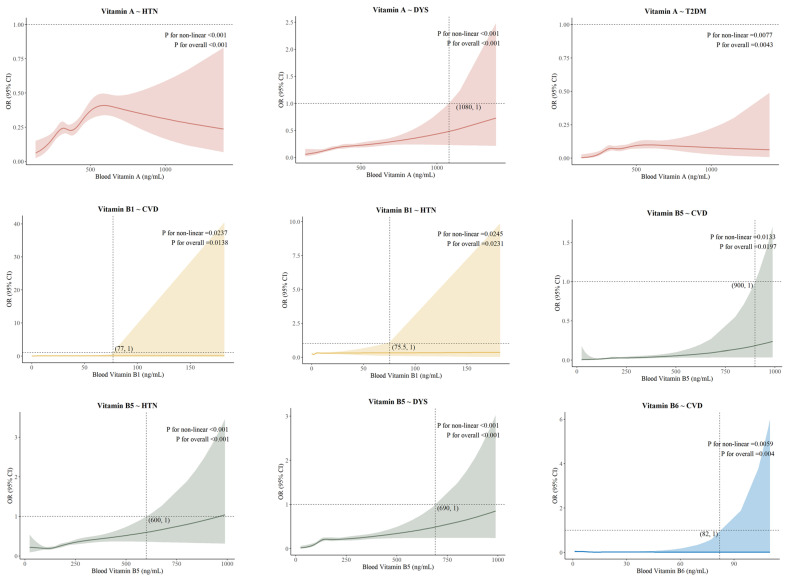 Figure 2
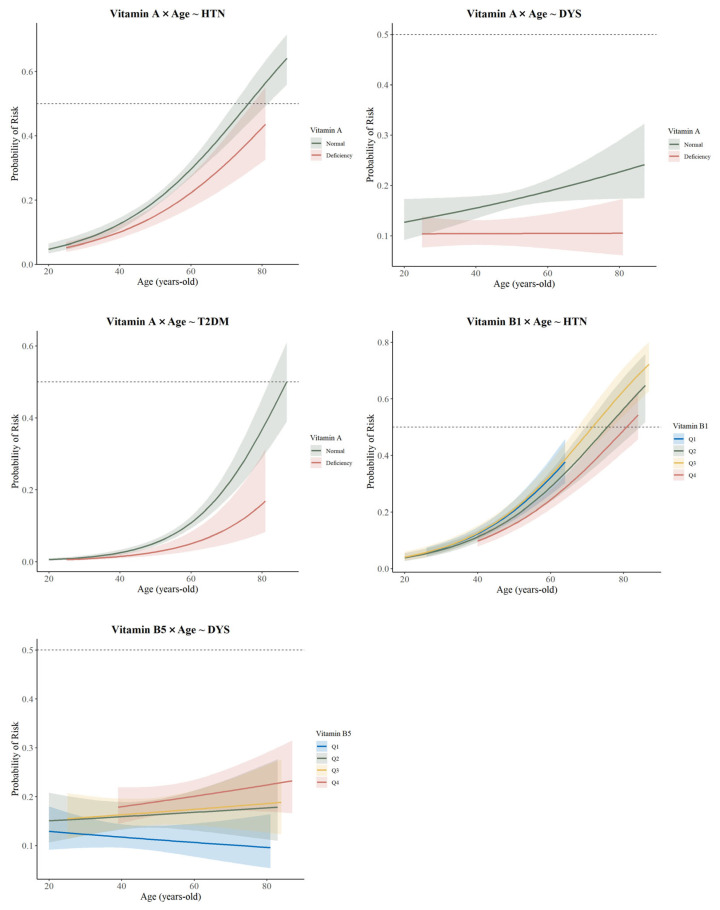 Figure 3
Peer Reviews
No public reviews on file for this paper yet. If you reviewed it on a platform where reviews are public (OpenReview, ICLR, NeurIPS, ICML), you can paste yours below so the community can read it here.
Videos
No videos yet. Explain this paper in a talk, walkthrough, or lecture? Add one.
Taxonomy
TopicsVitamin C and Antioxidants Research