Variants in Neurotransmitter-Related Genes Are Associated with Alzheimer’s Disease Risk and Cognitive Functioning but Not Short-Term Treatment Response
Tirso Zúñiga-Santamaría, Blanca Estela Pérez-Aldana, Ingrid Fricke-Galindo, Margarita González-González, Zoila Gloria Trujillo-de los Santos, Marie Catherine Boll-Woehrlen, Rosalía Rodríguez-García, Marisol López-López, Petra Yescas-Gómez

TL;DR
This study finds some genetic variants linked to Alzheimer's risk and cognitive function in Mexican patients, but no genetic factors affect treatment response.
Contribution
The study identifies novel genetic associations with Alzheimer's disease risk in an admixed Mexican population.
Findings
Variants in ABCB1, ACHE, and CHAT are associated with Alzheimer's disease risk.
BCHE rs1803274 is linked to worse cognitive functioning.
No genetic or non-genetic factors influence short-term treatment response to ChEIs or memantine.
Abstract
Background/Objectives: Several genetic factors are related to the risk of Alzheimer’s disease (AD) and the response to cholinesterase inhibitors (ChEIs) (donepezil, galantamine, and rivastigmine) or memantine. However, findings have been controversial, and, to the best of our knowledge, admixed populations have not been previously evaluated. We aimed to determine the impact of genetic and non-genetic factors on the risk of AD and the short-term response to ChEIs and memantine in patients with AD from Mexico. Methods: This study included 117 patients from two specialty hospitals in Mexico City, Mexico. We evaluated cognitive performance via clinical evaluations and neuropsychological tests. Nineteen variants in ABCB1, ACHE, APOE, BCHE, CHAT, CYP2D6, CYP3A5, CHRNA7, NR1I2, and POR were assessed through TaqMan assays or PCR. Results: Minor alleles of the ABCB1 rs1045642, ACHE rs17884589,…
Genes, proteins, chemicals, diseases, species, mutations and cell lines named across the full text — each resolved to its canonical identifier and authoritative record.
Click any figure to enlarge with its caption.
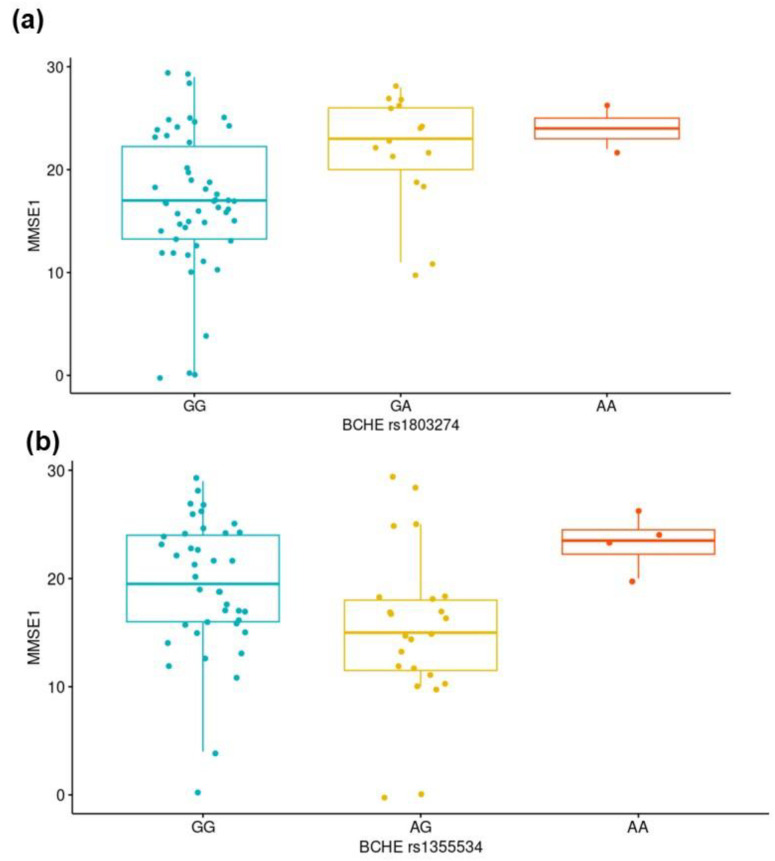 Figure 1
 Figure 2
 Figure 3
Peer Reviews
No public reviews on file for this paper yet. If you reviewed it on a platform where reviews are public (OpenReview, ICLR, NeurIPS, ICML), you can paste yours below so the community can read it here.
Videos
No videos yet. Explain this paper in a talk, walkthrough, or lecture? Add one.
Taxonomy
TopicsAlzheimer's disease research and treatments · Tryptophan and brain disorders · Dementia and Cognitive Impairment Research