Development and Evaluation of Multi-Module Retinal Devices for Artificial Vision Applications
Kuang-Chih Tso, Yoshinori Sunaga, Yuki Nakanishi, Yasuo Terasawa, Makito Haruta, Kiyotaka Sasagawa, Jun Ohta

TL;DR
This paper presents a new flexible retinal device designed to improve artificial vision by using a CMOS system and multiple modules for effective stimulation.
Contribution
The novel contribution is the development of a parylene-based multi-module retinal device with a CMOS system for suprachoroidal transretinal stimulation.
Findings
The device successfully generated expected current stimulation waveforms in vitro and in vivo.
Optimized encapsulation and silane coupling improved fabrication reliability.
The CMOS system reduced wiring complexity, enhancing the device's practicality.
Abstract
Artificial retinal devices require a high-density electrode array and mechanical flexibility to effectively stimulate retinal cells. However, designing such devices presents significant challenges, including the need to conform to the curvature of the eyeball and cover a large area using a single platform. To address these issues, we developed a parylene-based multi-module retinal device (MMRD) integrating a complementary metal-oxide semiconductor (CMOS) system. The proposed device is designed for suprachoroidal transretinal stimulation, with each module comprising a parylene-C thin-film substrate, a CMOS chip, and a ceramic substrate housing seven platinum electrodes. The smart CMOS system significantly reduces wiring complexity, enhancing the device’s practicality. To improve fabrication reliability, we optimized the encapsulation process, introduced multiple silane coupling…
Genes, proteins, chemicals, diseases, species, mutations and cell lines named across the full text — each resolved to its canonical identifier and authoritative record.
Click any figure to enlarge with its caption.
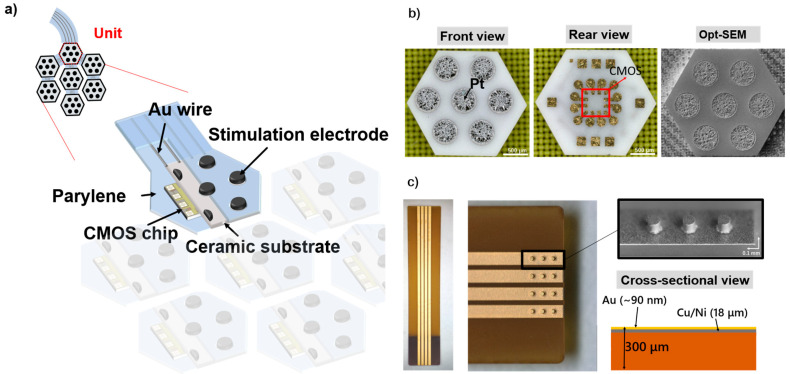 Figure 1
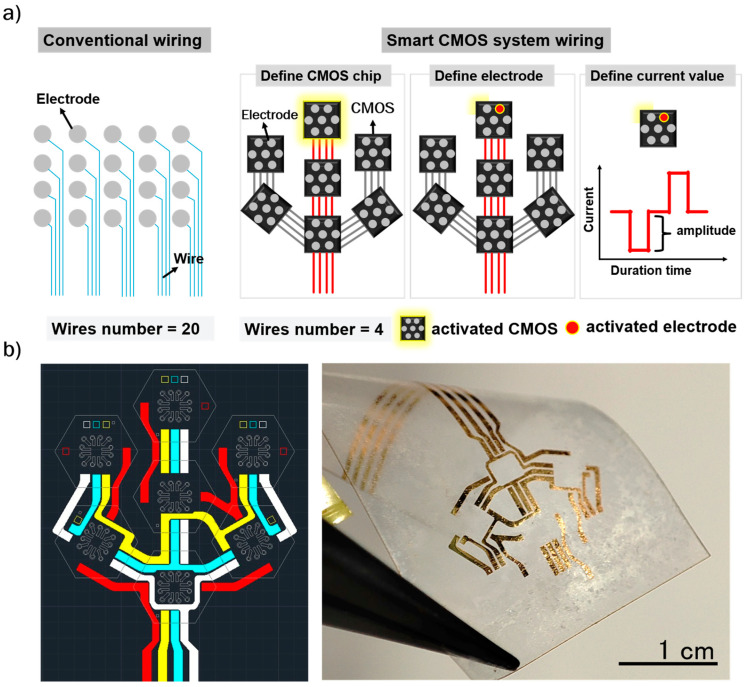 Figure 2
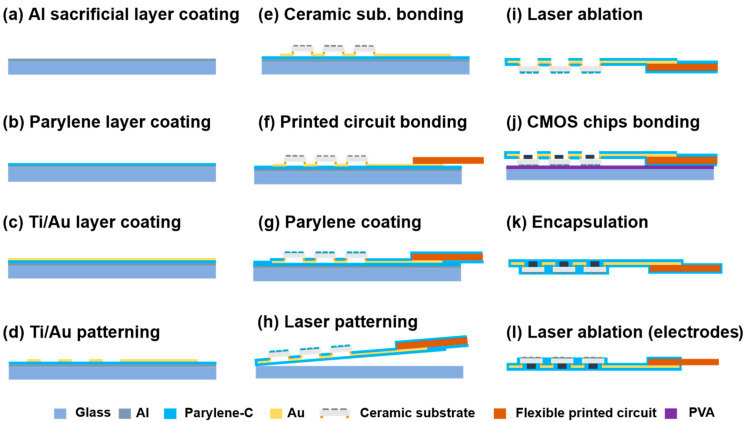 Figure 3
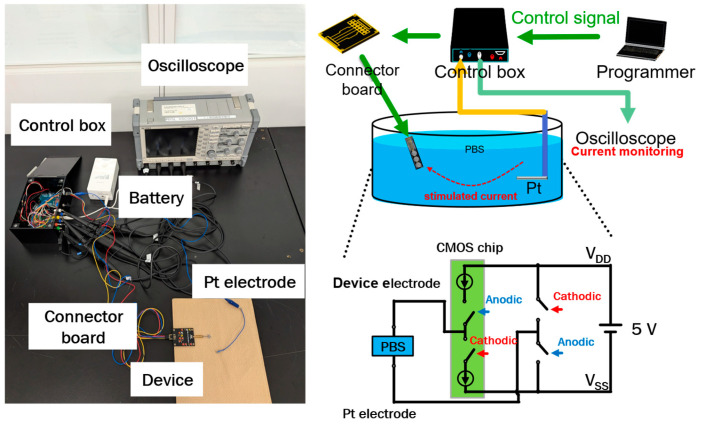 Figure 4
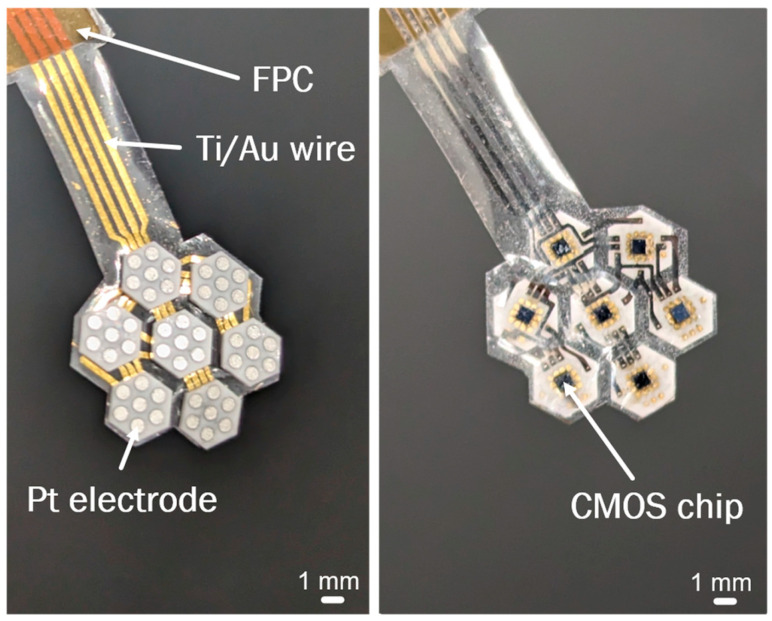 Figure 5
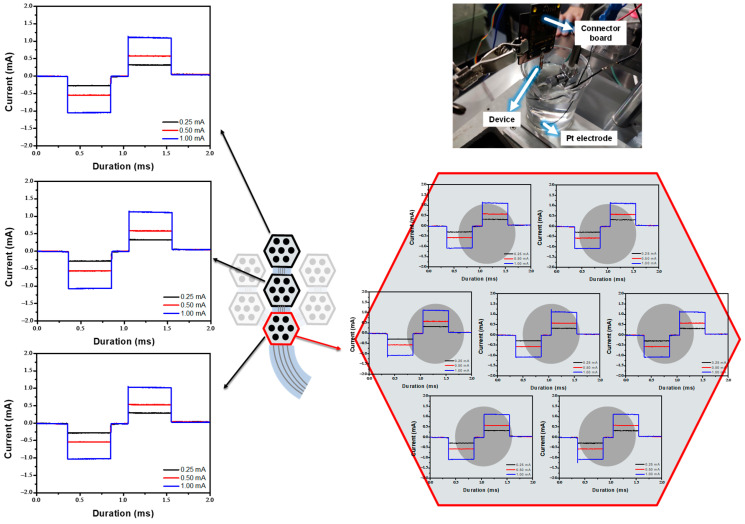 Figure 6
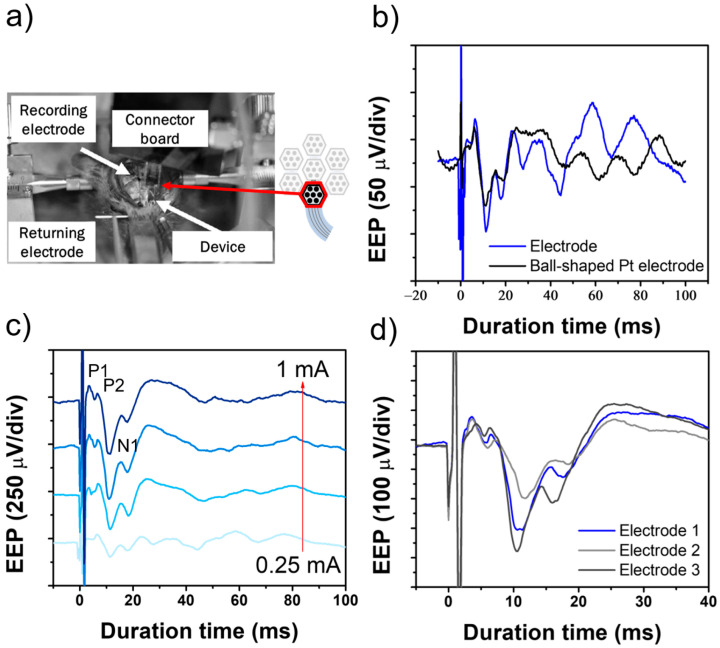 Figure 7
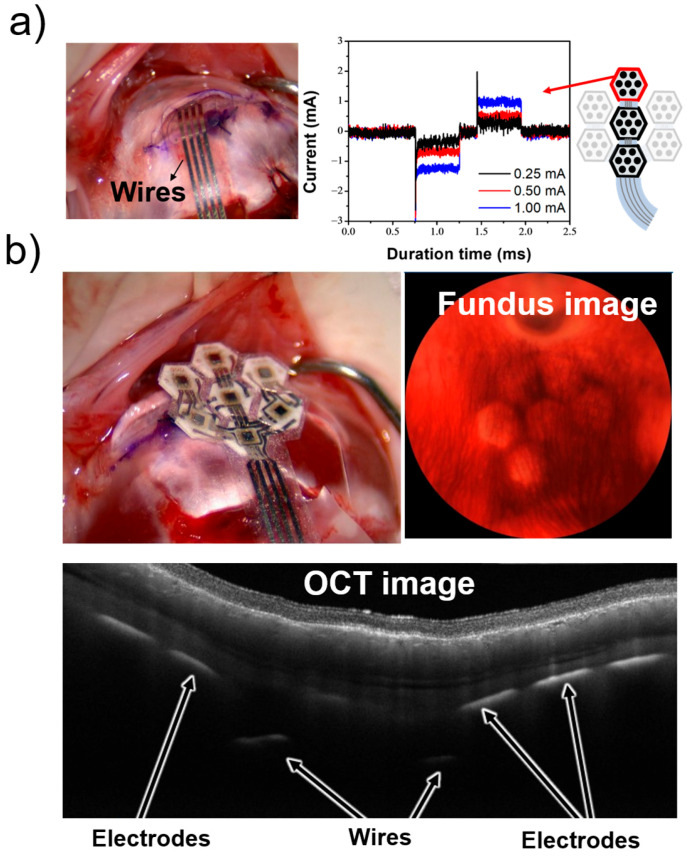 Figure 8
Peer Reviews
No public reviews on file for this paper yet. If you reviewed it on a platform where reviews are public (OpenReview, ICLR, NeurIPS, ICML), you can paste yours below so the community can read it here.
Videos
No videos yet. Explain this paper in a talk, walkthrough, or lecture? Add one.
Taxonomy
TopicsNeuroscience and Neural Engineering · CCD and CMOS Imaging Sensors · Photoreceptor and optogenetics research