Primary Cutaneous Nocardiosis (Lymphangitic Type) in an Immunocompetent Patient: A Case Report
Hilayali Aguilar-Molina, Sonia Toussaint-Caire, Roberto Arenas, Juan Xicohtencatl-Cortes, Luary C. Martínez-Chavarría, Rigoberto Hernández-Castro, Carmen Rodriguez-Cerdeira

TL;DR
This case report describes a rare skin infection caused by Nocardia bacteria in an elderly woman who had a recent injury.
Contribution
The report presents a rare case of primary cutaneous nocardiosis in an immunocompetent individual confirmed by molecular identification.
Findings
The infection was identified as Nocardia brasiliensis through 16S rDNA gene sequencing.
The patient presented with nodules showing lymphangitic spread following a traumatic injury.
Molecular biology techniques are crucial for accurate diagnosis of such infections.
Abstract
Cutaneous nocardiosis is an uncommon bacterial infection caused by Nocardia spp.; Nocardia brasiliensis is the agent involved in most cases. This infection is acquired through the direct traumatic inoculation of soil, plants, or other substrates where the bacteria are found. Clinically, it usually manifests as an erythematous ulcerated nodule. In one-third of cases, nodules or gummas are distributed over the lymphatic pathways that resemble lymphocutaneous sporotrichosis. Its manifestations vary and can present acutely or more frequently with a latent clinical picture over time. Diagnosis is established mainly by Gram staining, biopsy, exudate culture, and molecular biology. Nocardia infections can recur, implying that antimicrobial therapy must be prolonged (between 6 and 12 months) and involve monitoring patients for at least 6 months after the end of treatment. Early diagnosis and…
Genes, proteins, chemicals, diseases, species, mutations and cell lines named across the full text — each resolved to its canonical identifier and authoritative record.
Click any figure to enlarge with its caption.
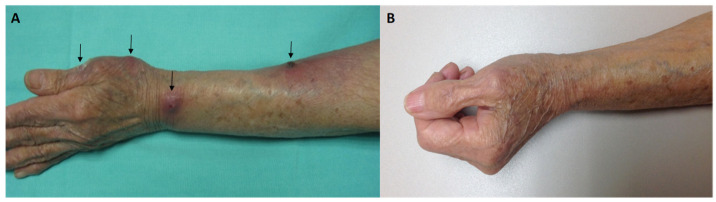 Figure 1
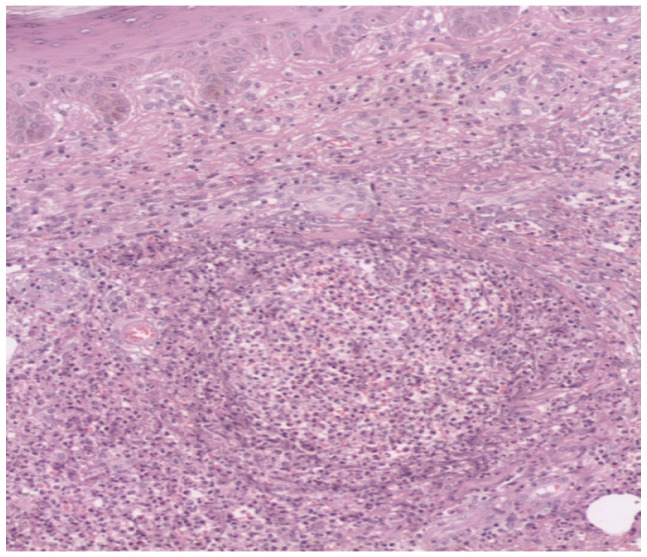 Figure 2
Peer Reviews
No public reviews on file for this paper yet. If you reviewed it on a platform where reviews are public (OpenReview, ICLR, NeurIPS, ICML), you can paste yours below so the community can read it here.
Videos
No videos yet. Explain this paper in a talk, walkthrough, or lecture? Add one.
Taxonomy
TopicsActinomycetales infections and treatment · Fungal Infections and Studies · Infectious Diseases and Mycology