Transcriptomic and Immunopathological Profiles of Inflammasomes in Different Clinical Forms of American Cutaneous Leishmaniasis
Larissa dos Santos Alcântara, Marliane Batista Campos, Ana Carolina Stocco Lima, Alessandra Pontillo, Kamilla Batista da Silva Souza, Aurea Favero Ferreira, Cristina Pires Camargo, Sueli Mieko Oba-Shinjo, Márcia Dalastra Laurenti, Carlos Eduardo Pereira Corbett

TL;DR
This study explores how inflammasomes contribute to different forms of American cutaneous leishmaniasis, revealing distinct immune patterns that could lead to better treatments.
Contribution
The study identifies distinct transcriptomic and immunopathological profiles of inflammasome components across clinical forms of ACL.
Findings
Inflammasome-related genes like NLRP3, AIM2, and IL-1β are highly expressed in mucocutaneous leishmaniasis.
Anergic diffuse cutaneous leishmaniasis shows increased NLRP12 and NLRC4 with reduced GSDMD.
Localized leishmaniasis exhibits transitional profiles, indicating a complex pathogenesis.
Abstract
American cutaneous leishmaniasis (ACL), caused by Leishmania (Leishmania) amazonensis and L. (Viannia) braziliensis, presents a wide spectrum of clinical and immunopathological manifestations, ranging from localized cutaneous leishmaniasis (LCL) to severe forms like anergic diffuse cutaneous (ADCL) and mucocutaneous leishmaniasis (MCL). Despite evidence of the immune response’s complexity, the role of inflammasomes in disease severity and parasite persistence remains unclear. We investigated the transcriptomic and immunopathological profiles of inflammasome components in patient lesions across the clinical spectrum. Genes such as NLRP3, AIM2, NLRP12, NLRC4, CASP1, CASP5, GSDMD, and IL1B and all evaluated proteins, showed higher expression in ACL compared to healthy controls. Distinct inflammasome activation patterns were observed: MCL, the hyperreactive form, showed elevated NLRP3,…
Genes, proteins, chemicals, diseases, species, mutations and cell lines named across the full text — each resolved to its canonical identifier and authoritative record.
Click any figure to enlarge with its caption.
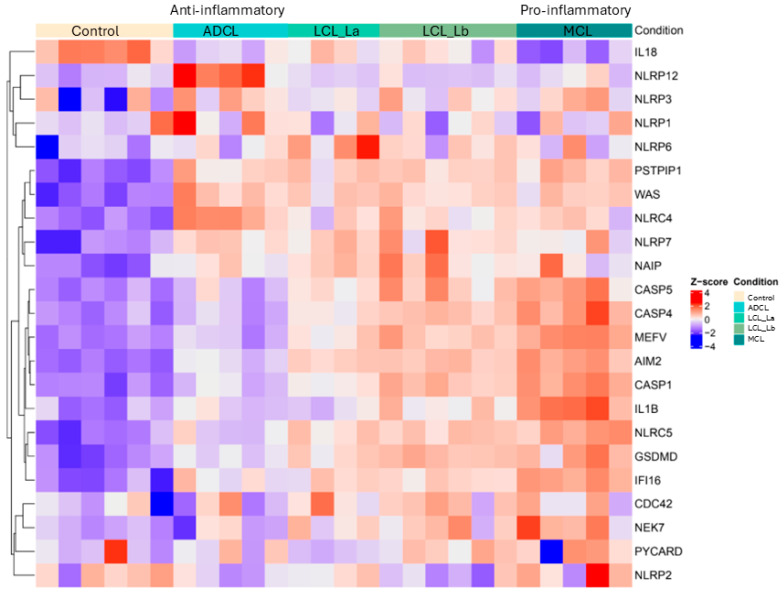 Figure 1
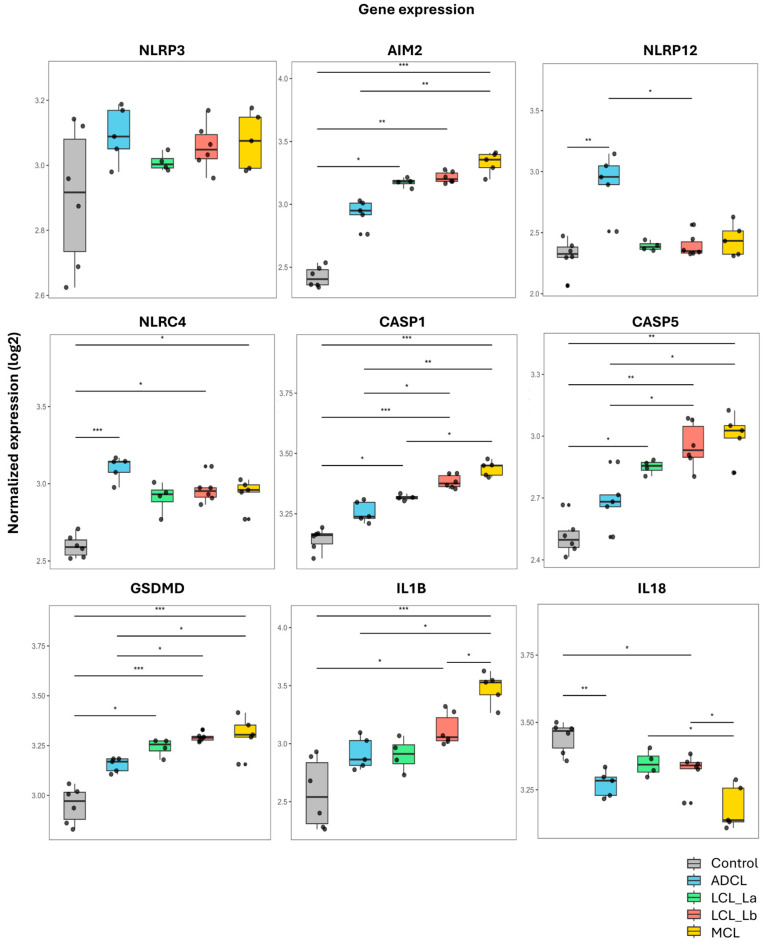 Figure 2
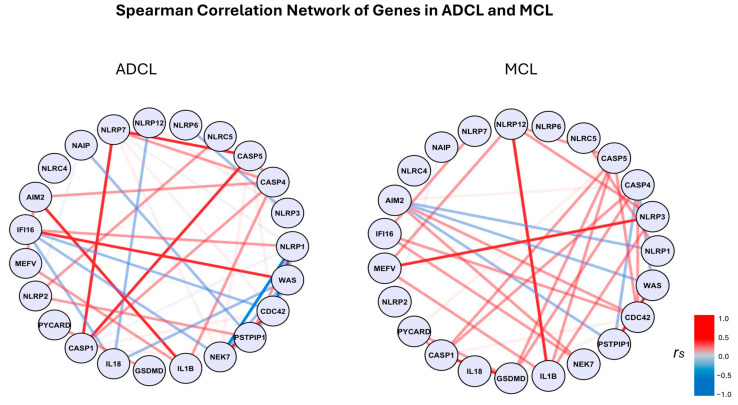 Figure 3
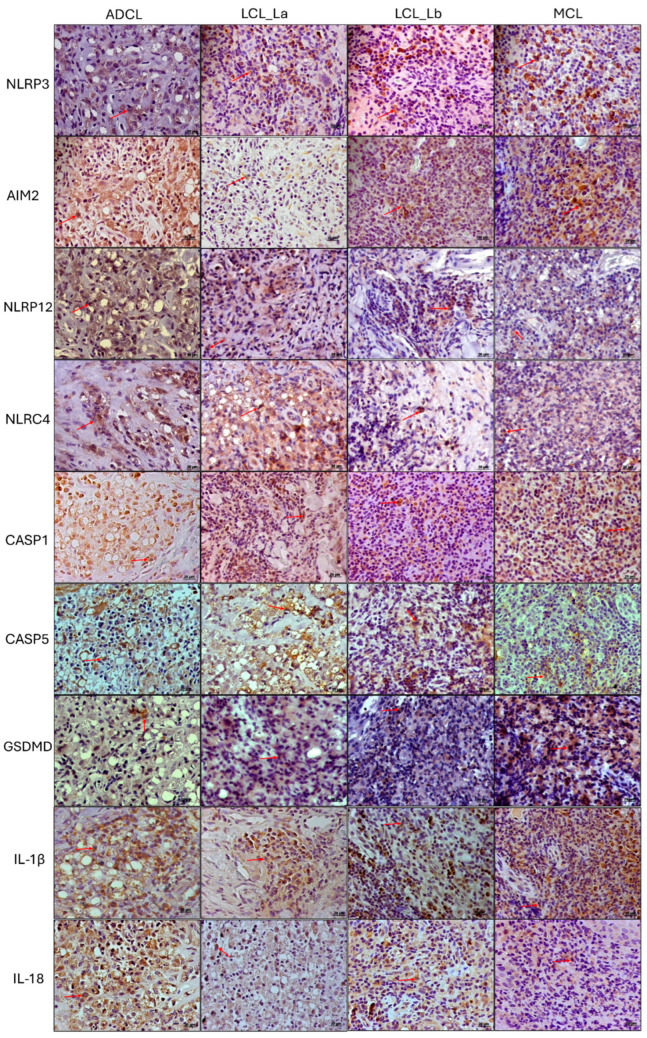 Figure 4
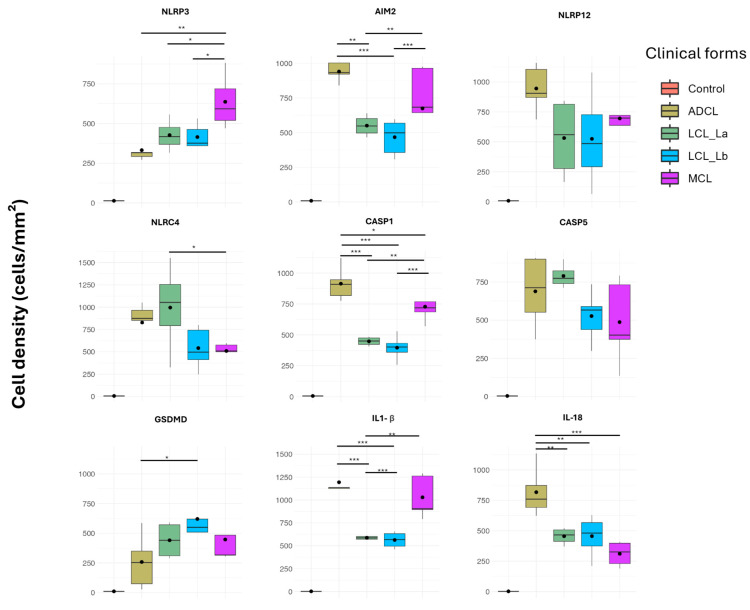 Figure 5
Peer Reviews
No public reviews on file for this paper yet. If you reviewed it on a platform where reviews are public (OpenReview, ICLR, NeurIPS, ICML), you can paste yours below so the community can read it here.
Videos
No videos yet. Explain this paper in a talk, walkthrough, or lecture? Add one.
Taxonomy
TopicsResearch on Leishmaniasis Studies · Inflammasome and immune disorders · Autoimmune and Inflammatory Disorders Research