Synthesis, Structural Characterization, Luminescent Properties, and Antibacterial and Anticancer Activities of Rare Earth-Caffeic Acid Complexes
Nguyen Thi Hien Lan, Hoang Phu Hiep, Tran Van Quy, Pham Van Khang

TL;DR
Scientists created new luminescent complexes using rare earth metals and caffeic acid, which show promise for biomedical imaging and fighting bacteria and cancer.
Contribution
The study introduces novel rare earth-caffeic acid complexes with combined luminescent and biological activities for potential biomedical applications.
Findings
The complexes showed intense visible light emission and decay lifetimes of 0.054–0.064 ms.
They exhibited strong antibacterial effects against E. coli, S. aureus, and P. aeruginosa.
Sm(Caf)3·4H3O had the lowest IC50 of 15.5 µM against MCF7 breast cancer cells.
Abstract
Rare earth elements (Ln: Sm, Eu, Tb, Dy) were complexed with caffeic acid (Caf), a natural phenolic compound, to synthesize novel luminescent complexes with enhanced biological activities. The complexes, formulated as Ln(Caf)3·4H2O, were characterized using infrared spectroscopy (IR), thermogravimetric analysis (TGA/DTA), mass spectrometry (MS), and fluorescence spectroscopy. Structural studies confirmed the coordination of caffeic acid via carboxylate and hydroxyl groups, forming stable hexacoordinate complexes. Luminescence analysis revealed intense emission bands in the visible spectrum (480–700 nm), attributed to f-f transitions of Ln3+ ions, with decay lifetimes ranging from 0.054 to 0.064 ms. Biological assays demonstrated significant antibacterial activity against Escherichia coli, Staphylococcus aureus, and Pseudomonas aeruginosa, with inhibition zones up to 44 mm at 200 µg/mL.…
Genes, proteins, chemicals, diseases, species, mutations and cell lines named across the full text — each resolved to its canonical identifier and authoritative record.
Click any figure to enlarge with its caption.
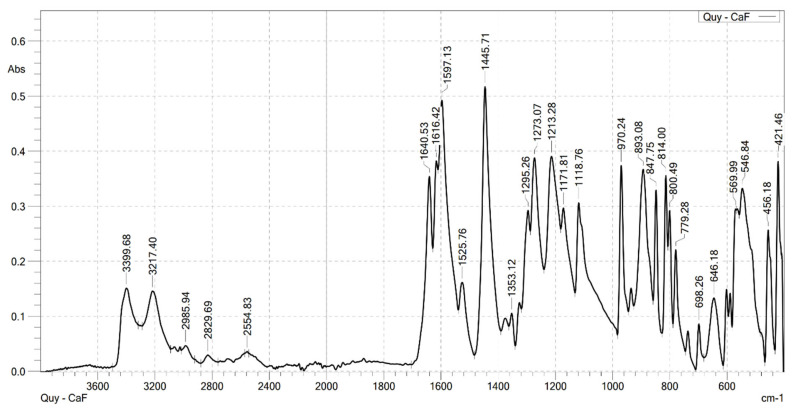 Figure 1
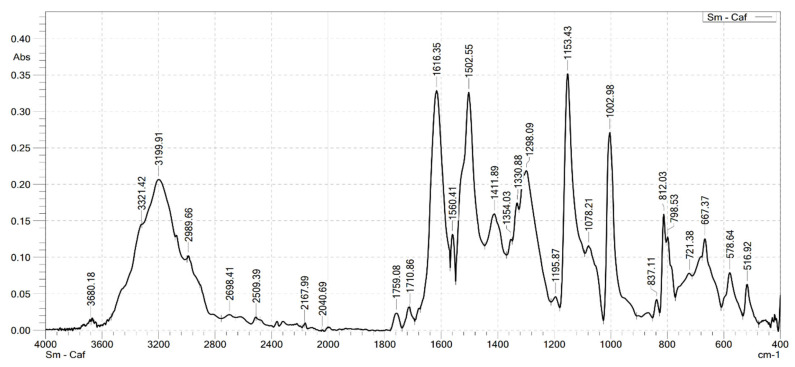 Figure 2
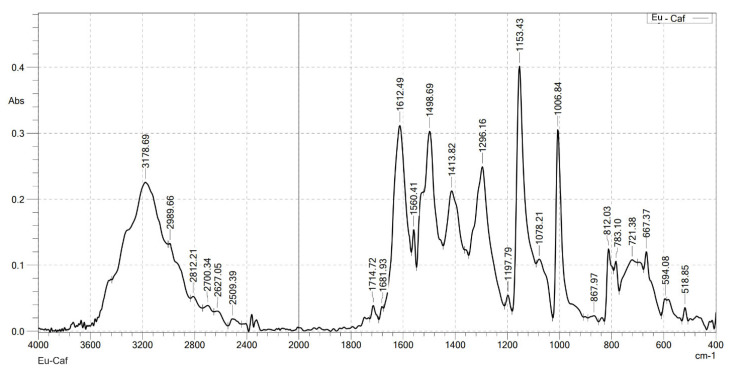 Figure 3
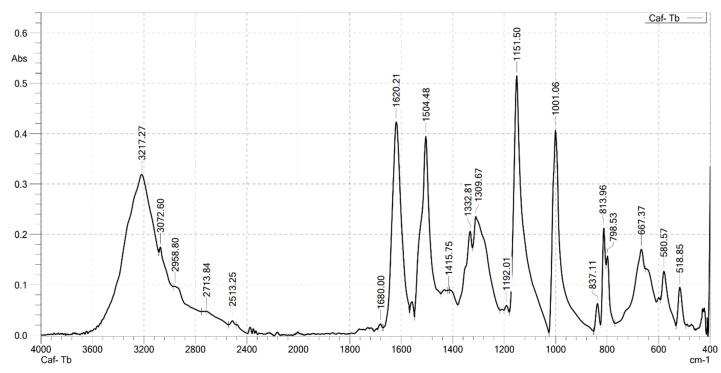 Figure 4
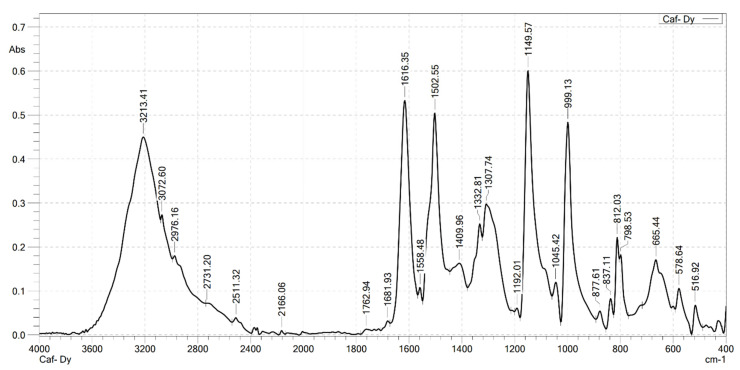 Figure 5
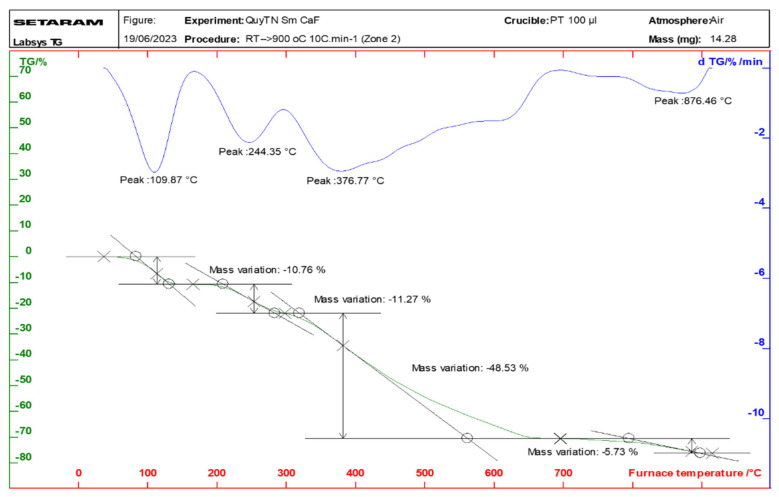 Figure 6
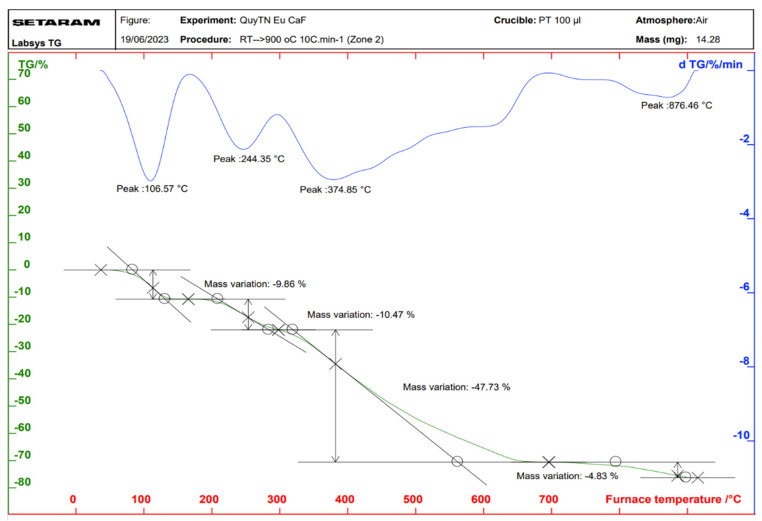 Figure 7
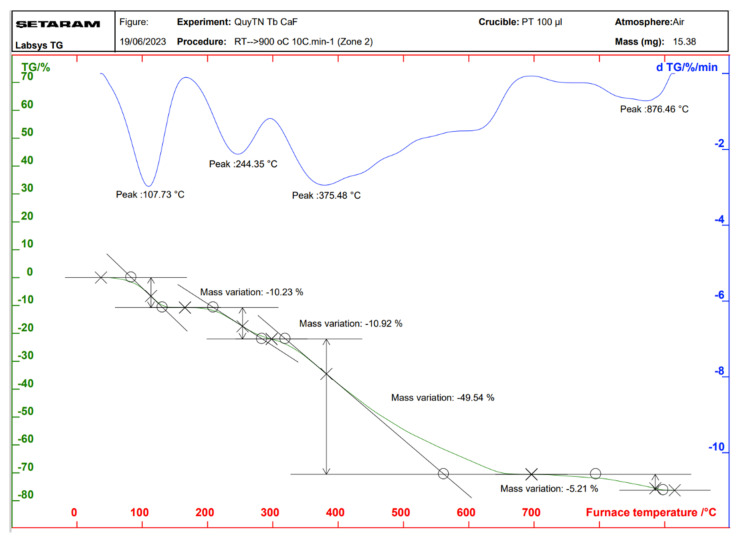 Figure 8
 Figure 9
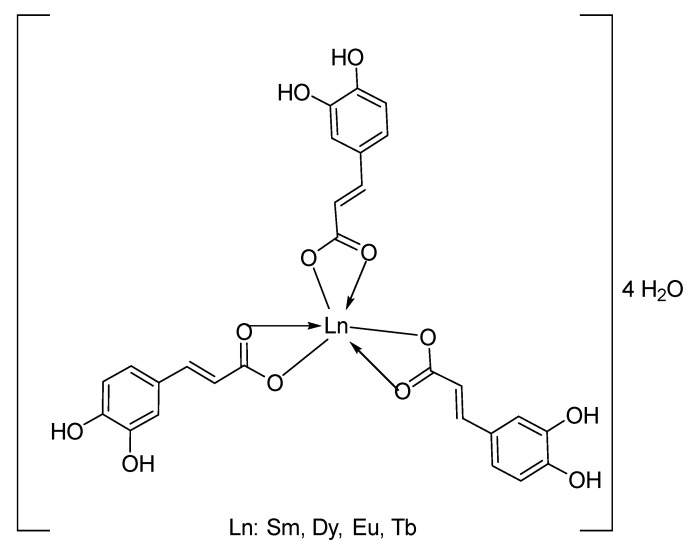 Figure 10
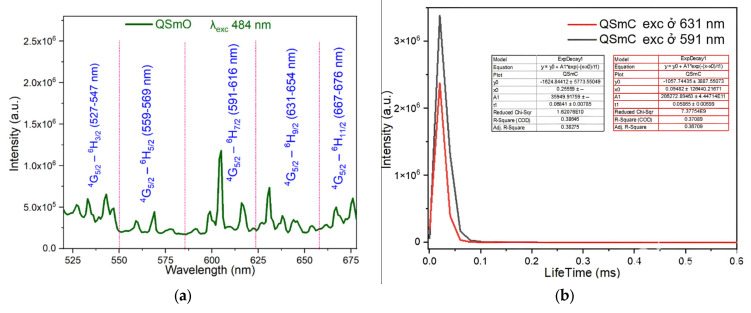 Figure 11
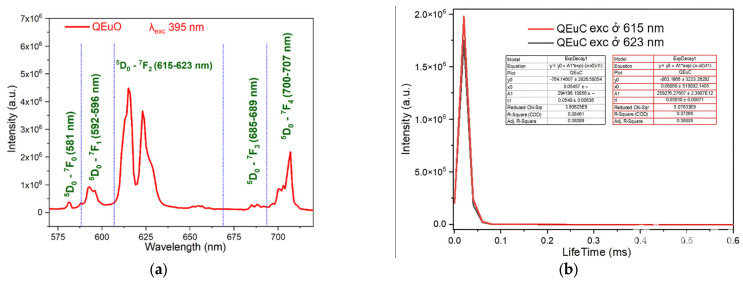 Figure 12
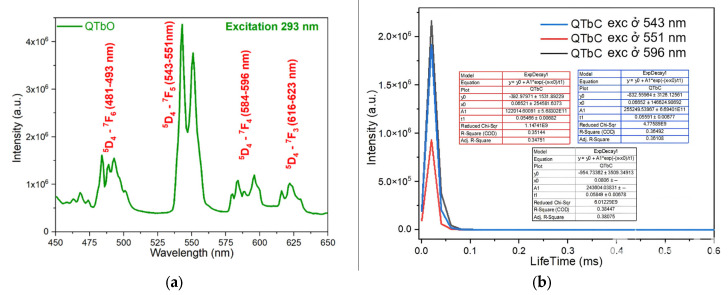 Figure 13
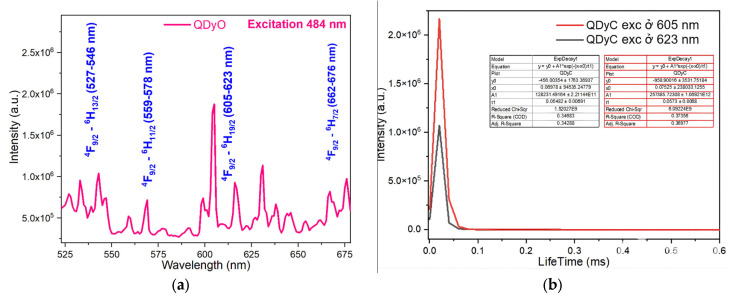 Figure 14
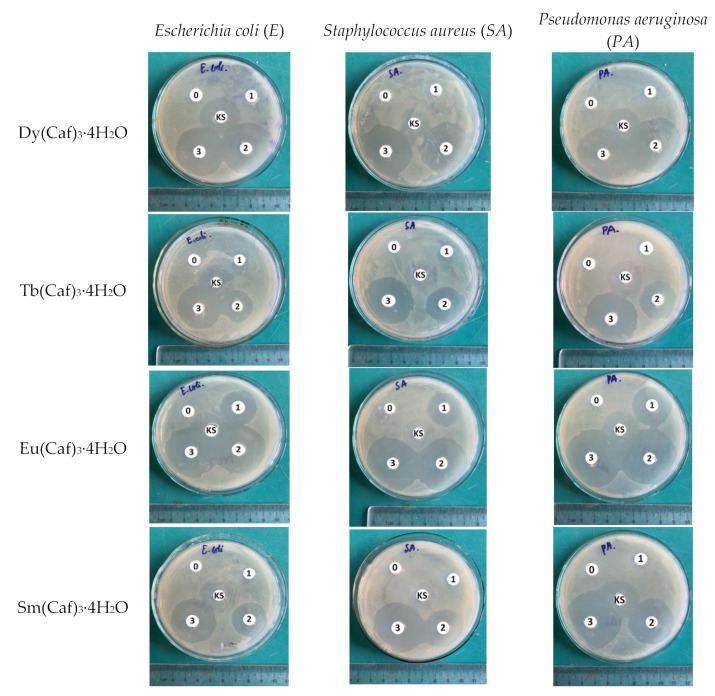 Figure 15
Peer Reviews
No public reviews on file for this paper yet. If you reviewed it on a platform where reviews are public (OpenReview, ICLR, NeurIPS, ICML), you can paste yours below so the community can read it here.
Videos
No videos yet. Explain this paper in a talk, walkthrough, or lecture? Add one.
Taxonomy
TopicsLanthanide and Transition Metal Complexes · Magnetism in coordination complexes · Metal complexes synthesis and properties