Processing and Characterization of High-Density Fe-Silicide/Si Core–Shell Quantum Dots for Light Emission
Katsunori Makihara, Yuji Yamamoto, Markus Andreas Schubert, Andreas Mai, Seiichi Miyazaki

TL;DR
Researchers developed high-density Fe-silicide/Si quantum dots that emit light at room temperature, which could be useful for future silicon-based photonic devices.
Contribution
The fabrication and characterization of high-density β–FeSi2–core/Si–shell quantum dots with stable room-temperature light emission.
Findings
β–FeSi2–core/Si–shell quantum dots emit stable light at room temperature.
Quantum dots were fabricated with an areal density of ~10^11 cm−2 using a self-aligned silicide process.
The quantum dots show potential for photonic signal processing and integration with electronic components.
Abstract
Si-based photonics has garnered considerable attention as a future device for complementary metal–oxide–semiconductor (CMOS) computing. However, few studies have investigated Si-based light sources highly compatible with Si ultra large-scale integration processing. In this study, we observed stable light emission at room temperature from superatom-like β–FeSi2–core/Si–shell quantum dots (QDs). The β–FeSi2–core/Si–shell QDs, with an areal density as high as ~1011 cm−2 were fabricated by self-aligned silicide process of Fe–silicide capped Si–QDs on ~3.0 nm SiO2/n–Si (100) substrates, followed by SiH4 exposure at 400 °C. From the room temperature photoluminescence characteristics, β–FeSi2 core/Si–shell QDs can be regarded as active elements in optical applications because they offer the advantages of photonic signal processing capabilities and can be combined with electronic logic control…
Genes, proteins, chemicals, diseases, species, mutations and cell lines named across the full text — each resolved to its canonical identifier and authoritative record.
Click any figure to enlarge with its caption.
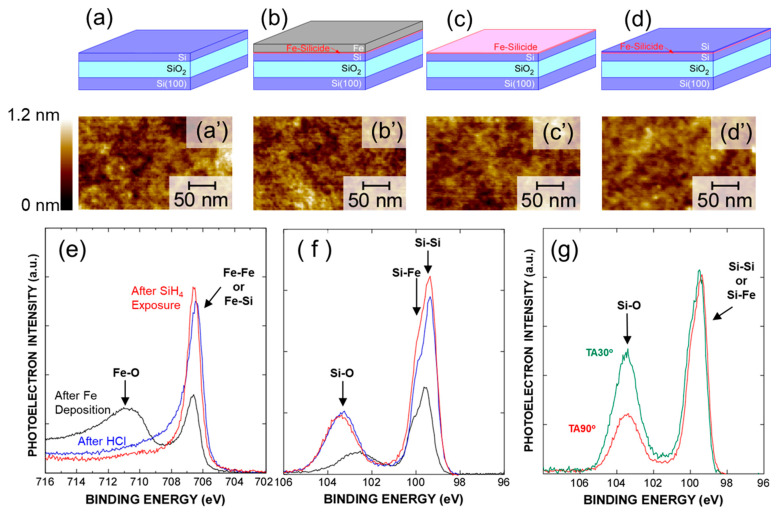 Figure 1
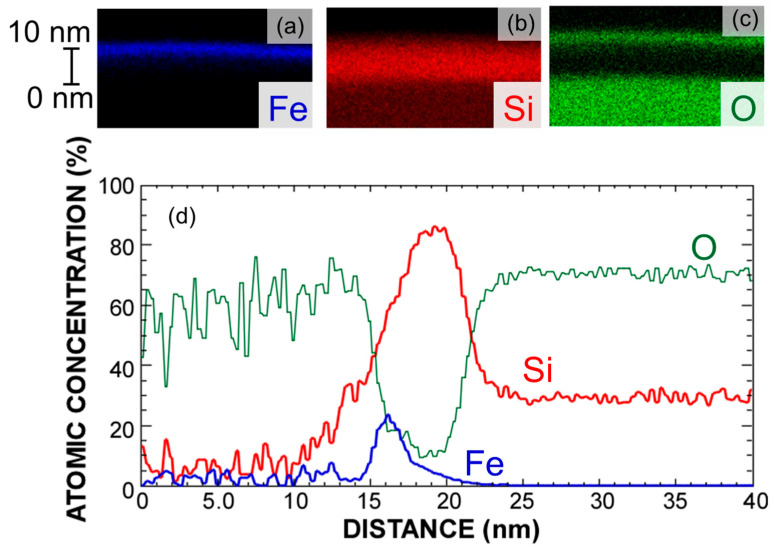 Figure 2
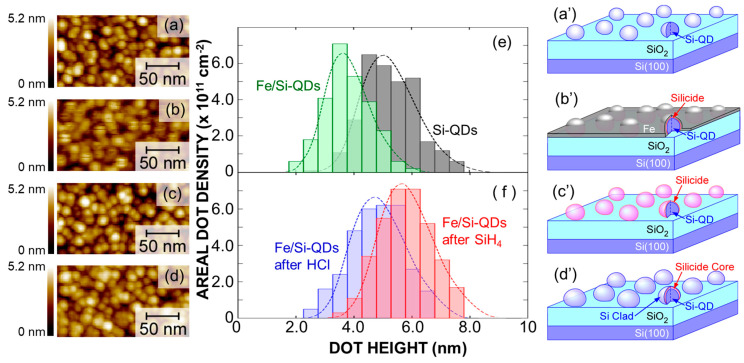 Figure 3
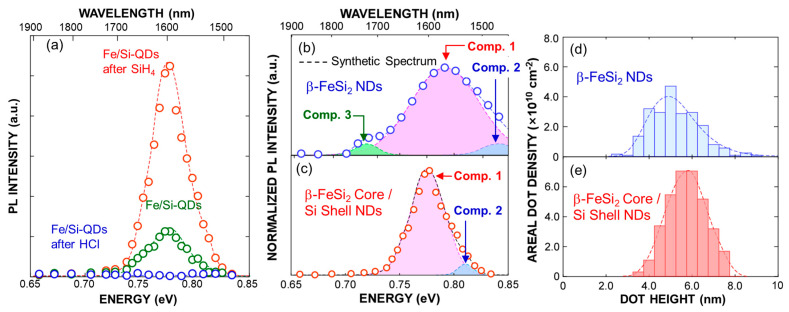 Figure 4
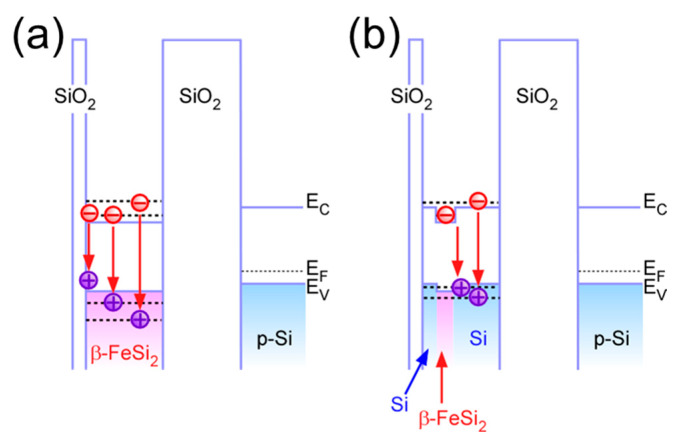 Figure 5
Peer Reviews
No public reviews on file for this paper yet. If you reviewed it on a platform where reviews are public (OpenReview, ICLR, NeurIPS, ICML), you can paste yours below so the community can read it here.
Videos
No videos yet. Explain this paper in a talk, walkthrough, or lecture? Add one.
Taxonomy
TopicsSemiconductor materials and interfaces · Silicon Nanostructures and Photoluminescence · Nanowire Synthesis and Applications