Identification and Feeding Characterization of Sterkiella histriomuscorum (Protozoa, Ciliophora, Hypotrichia) Isolated from Outdoor Mass Culture of Scenedesmus dimorphus
Mengyun Wang, Pei Chen, Hongxia Wang, Qiong Deng, Xiaonan Zhang, Guoqing Yuan, Mixue Jiang, Lingling Zheng, Zixuan Hu, Zemao Gu, Denis V. Tikhonenkov, Yingchun Gong

TL;DR
This study identifies and characterizes the ciliate Sterkiella histriomuscorum, which grazes on algae in outdoor cultures and may impact algal growth.
Contribution
The study provides new insights into the morphology, excystment, and feeding preferences of Sterkiella histriomuscorum in algal cultures.
Findings
Sterkiella histriomuscorum occurs frequently in Scenedesmus cultures during spring and summer.
The ciliate prefers to graze on chlorophytes and the diatom Phaeodactylum tricornutum.
Molecular analysis shows that Sterkiella and S. histriomuscorum are non-monophyletic.
Abstract
Herbivorous protistan grazers are ubiquitous and abundant in marine and temperate freshwater environments. However, little is known about the algivorous ciliates and their feeding habits in outdoor mass algal cultures. In this study, we report on one hypotrich ciliate, identified as Sterkiella histriomuscorum, from the outdoor mass culture of Scenedesmus in Arizona, USA. A long-term field survey revealed that this species often occurs in Scenedesmus culture in spring and summer, and can graze very heavily on Scenedesmus cells. By isolating Sterkiella cells and then observing them via light microscopy and electron microscopy, detailed information about the morphology, ultrastructure, excystment process, and feeding characteristics of the ciliate was obtained. Specifically, it seems that S. histriomuscorum has a range of different strategies for excystment, and the sharp change in the ion…
Genes, proteins, chemicals, diseases, species, mutations and cell lines named across the full text — each resolved to its canonical identifier and authoritative record.
Click any figure to enlarge with its caption.
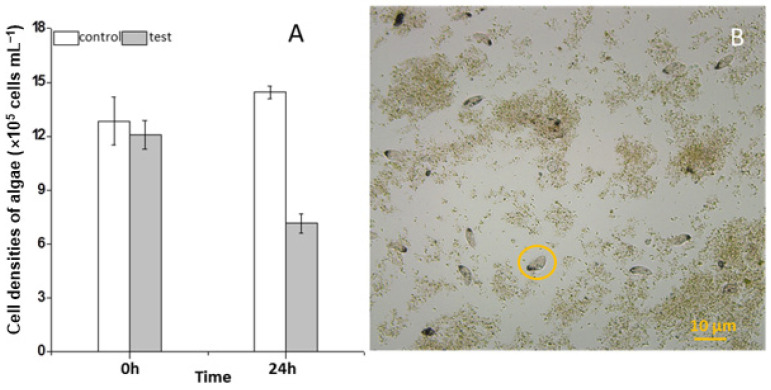 Figure 1
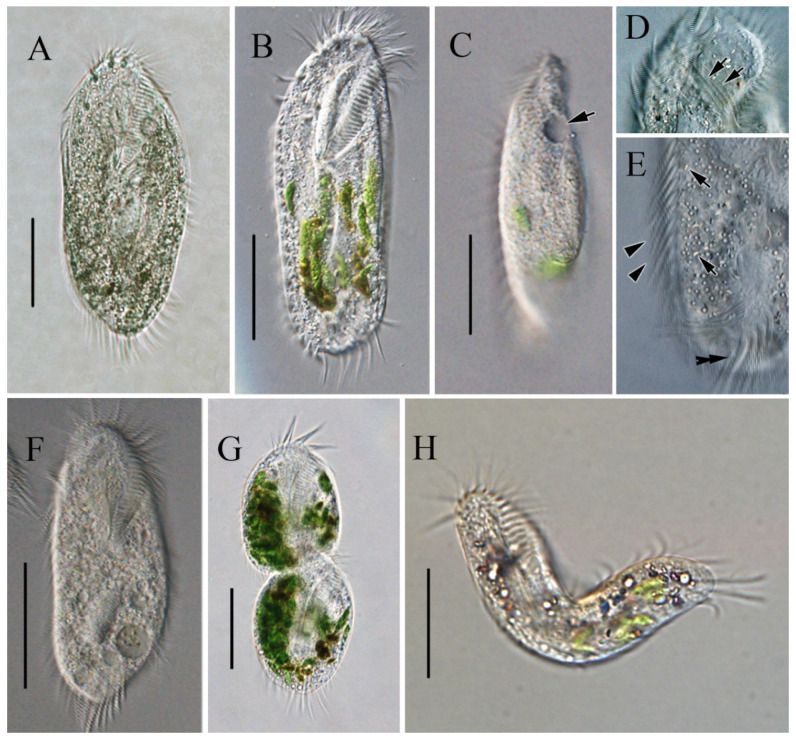 Figure 2
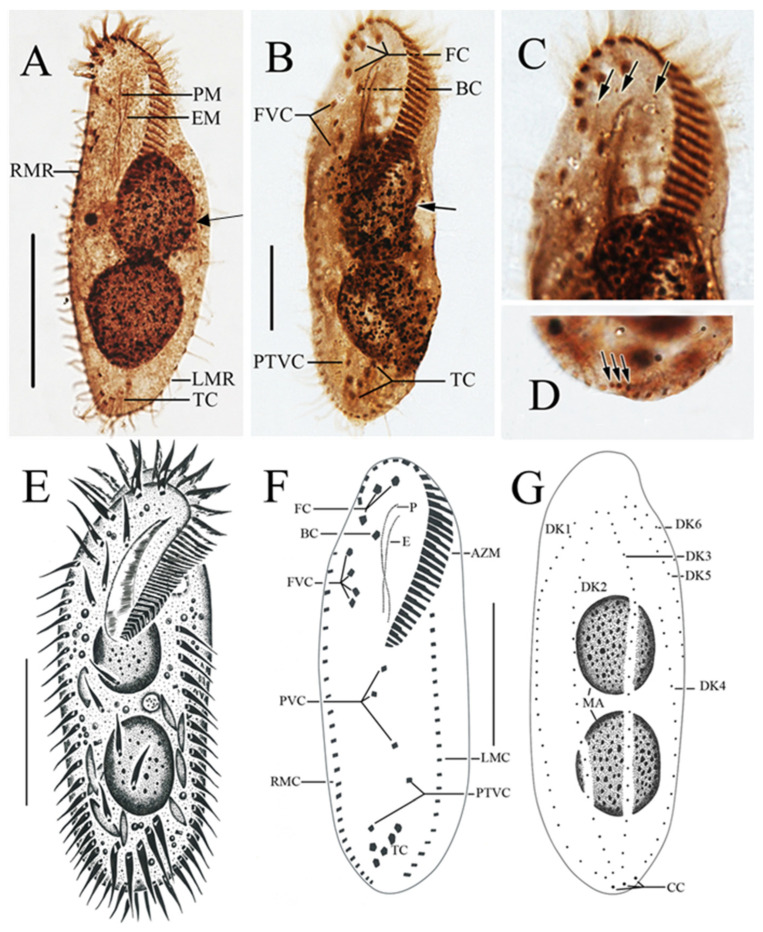 Figure 3
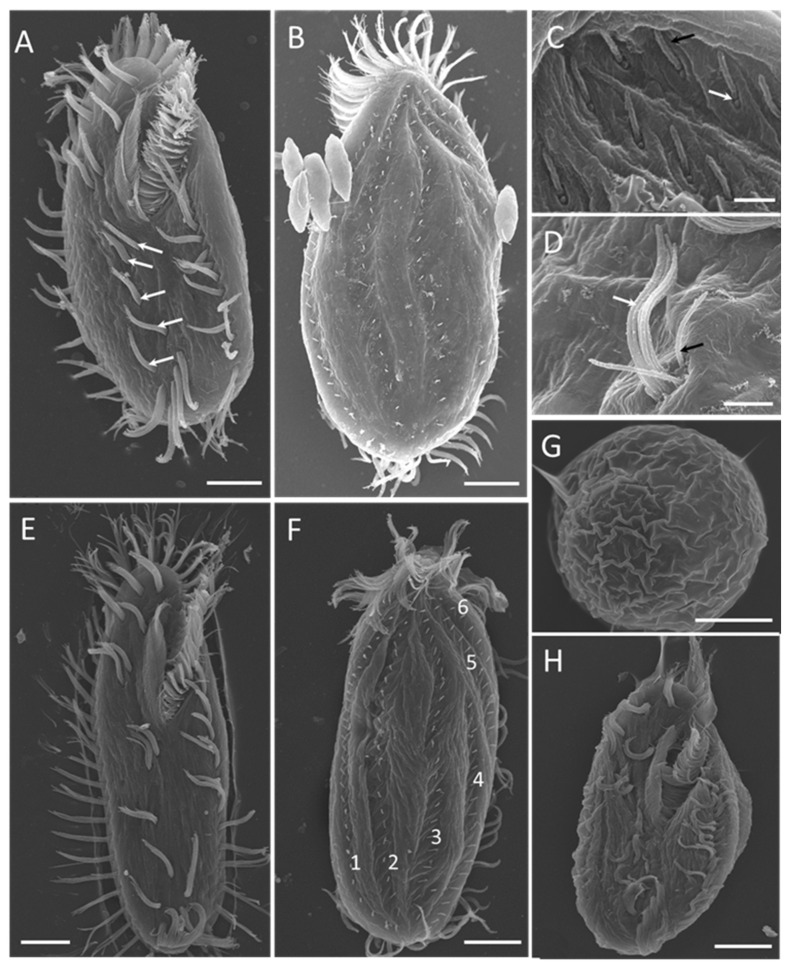 Figure 4
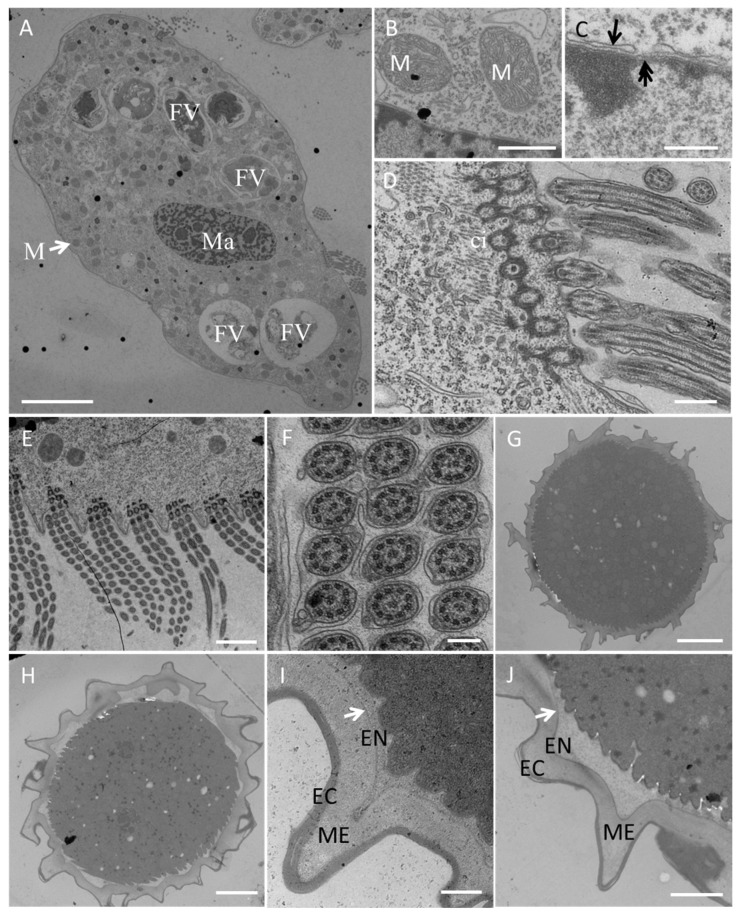 Figure 5
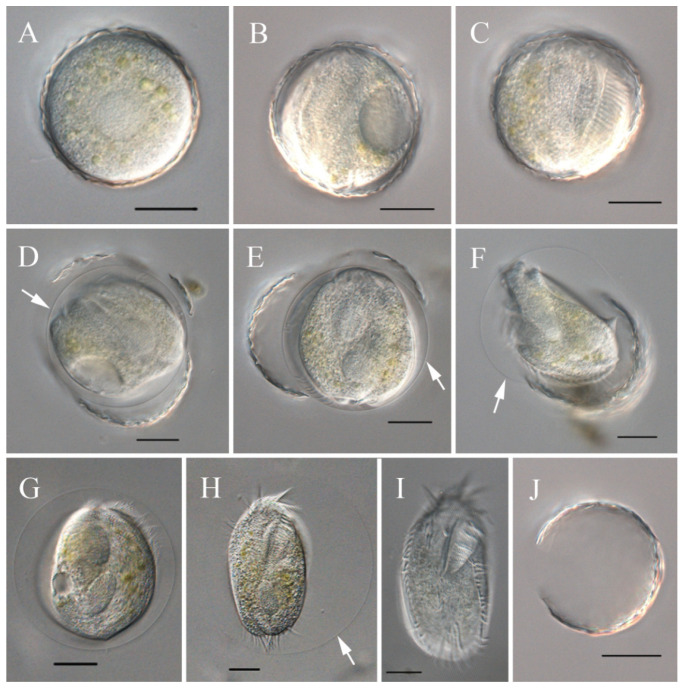 Figure 6
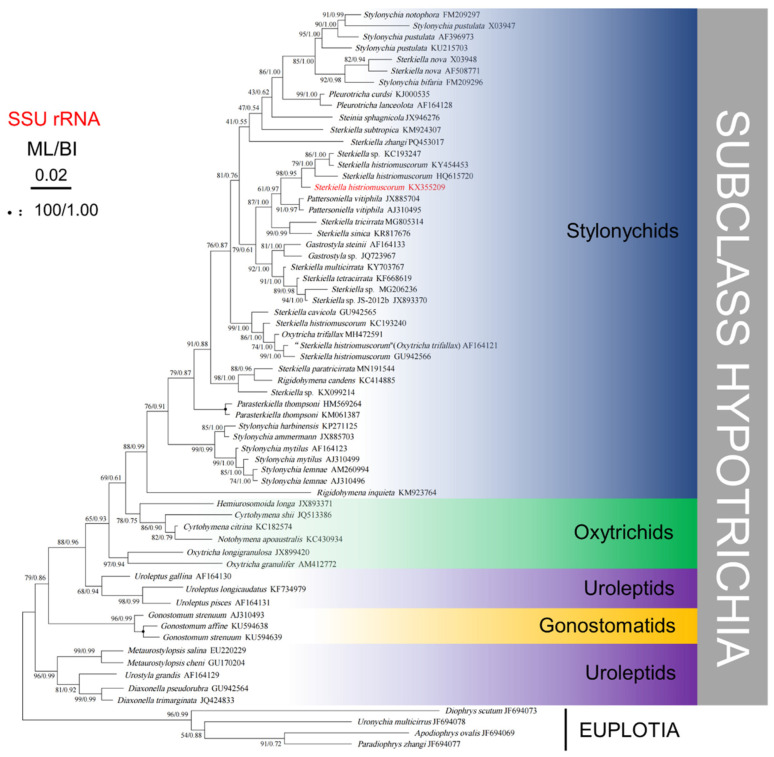 Figure 7
Peer Reviews
No public reviews on file for this paper yet. If you reviewed it on a platform where reviews are public (OpenReview, ICLR, NeurIPS, ICML), you can paste yours below so the community can read it here.
Videos
No videos yet. Explain this paper in a talk, walkthrough, or lecture? Add one.
Taxonomy
TopicsProtist diversity and phylogeny · Microbial Community Ecology and Physiology · Marine and coastal ecosystems