Shock Wave-Induced Degradation of Polyethylene and Polystyrene: A Reactive Molecular Dynamics Study on Nanoplastic Transformation in Aqueous Environments
Tomasz Panczyk, Marcin Cichy, Monika Panczyk

TL;DR
This study uses simulations to show how shock waves cause polyethylene and polystyrene nanoparticles to degrade in water, forming new chemical groups and structures.
Contribution
A novel reactive molecular dynamics approach to simulate nanoplastic degradation under shock waves in aqueous environments.
Findings
Polyethylene forms surface hydroxyl and ether groups and releases polyhydroxy alcohols during degradation.
Polystyrene undergoes dearomatization with hydroxyl addition to benzene rings and forms crosslinks between aromatic rings.
Degradation leads to chemically distinct branched and dearomatized forms of polystyrene.
Abstract
Degradation of polyethylene and polystyrene was studied theoretically using reactive molecular dynamics based on the ReaxFF force field. The degradation reactions were carried out on nanoparticles (approximately 2 nm in diameter) composed of ideal low-density polyethylene and polystyrene in the presence of water. The reactions leading to degradation were triggered by applying a shock wave through the simulation box. This approach allowed the energy to be transferred to the sample in a controllable manner and initiated the reactions. The state of the nanoparticles after the shock wave passage was investigated in detail, focusing on the type and quantities of new surface functional groups and new chemical connections in the bulk samples. It was found that polyethylene predominantly reveals surface hydroxyl groups (some of which can be protonated) and has the ability to release linear…
Genes, proteins, chemicals, diseases, species, mutations and cell lines named across the full text — each resolved to its canonical identifier and authoritative record.
Click any figure to enlarge with its caption.
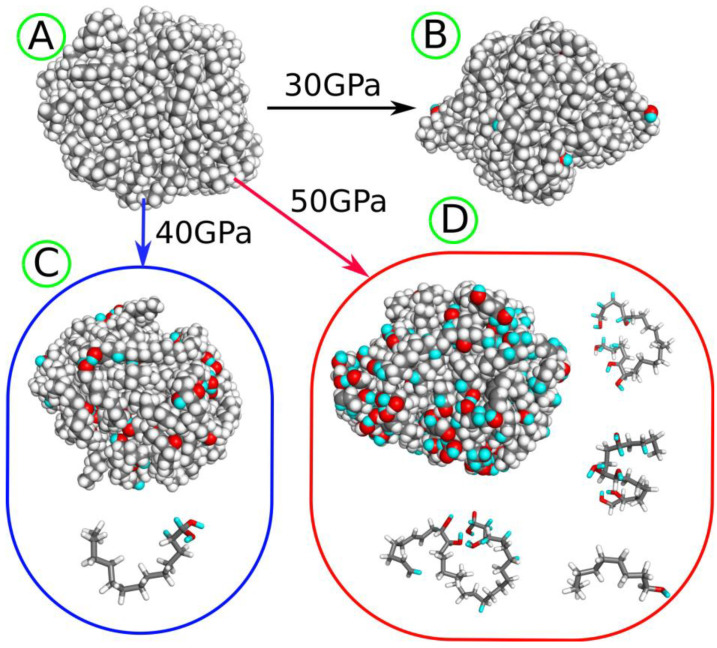 Figure 1
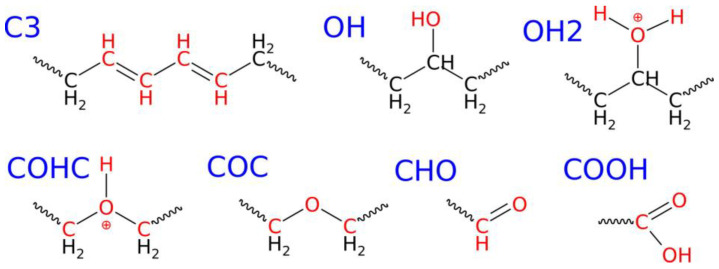 Figure 2
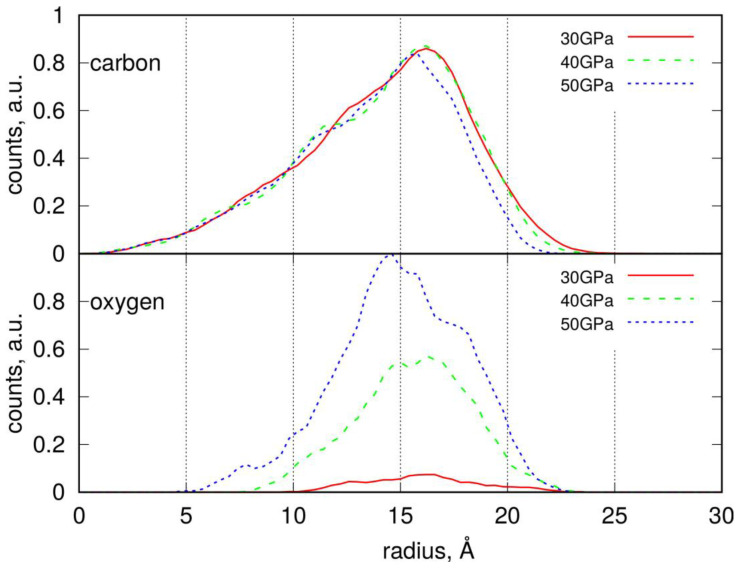 Figure 3
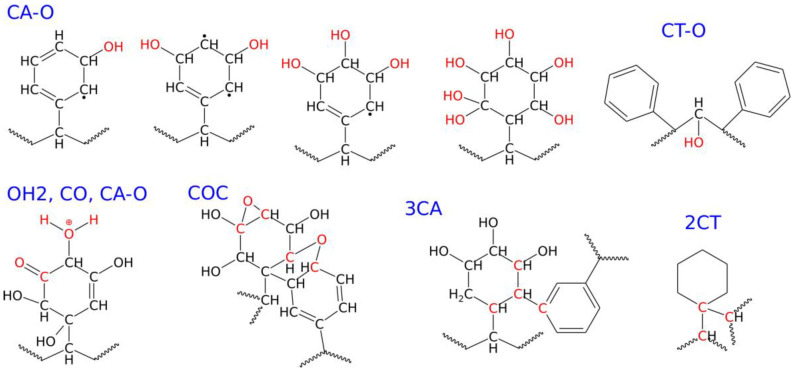 Figure 4
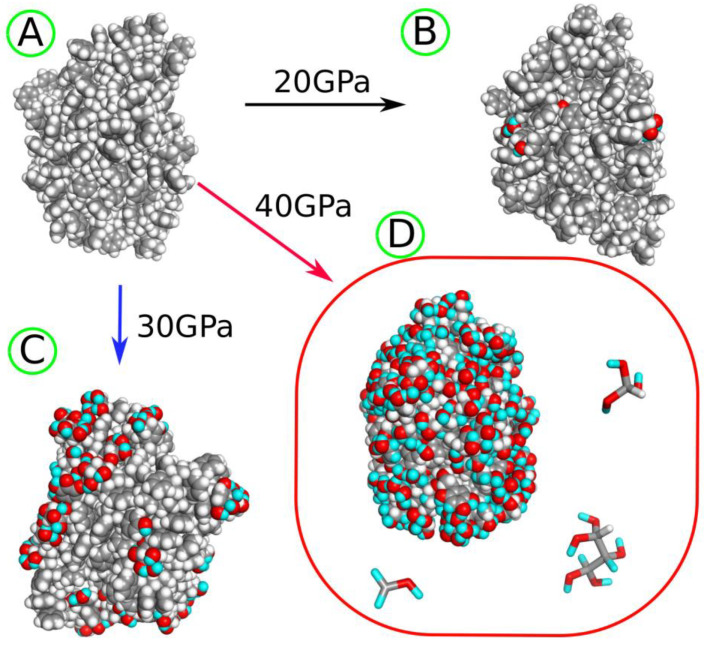 Figure 5
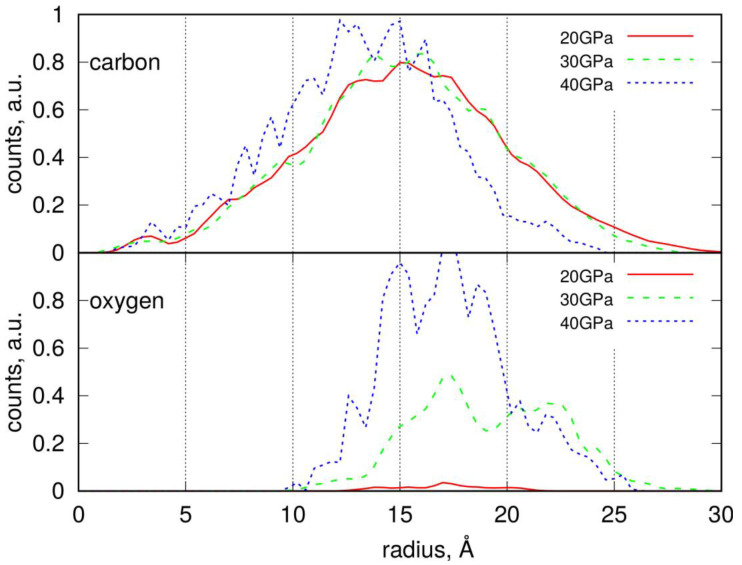 Figure 6
Peer Reviews
No public reviews on file for this paper yet. If you reviewed it on a platform where reviews are public (OpenReview, ICLR, NeurIPS, ICML), you can paste yours below so the community can read it here.
Videos
No videos yet. Explain this paper in a talk, walkthrough, or lecture? Add one.
Taxonomy
TopicsMicroplastics and Plastic Pollution · Polymer crystallization and properties · Energetic Materials and Combustion