Occurrence of Echinococcus felidis in Apex Predators and Warthogs in Tanzania: First Molecular Evidence of Leopards as a New, Definitive Host and Implications for Ecosystem Health
Barakaeli Abdieli Ndossi, Eblate Ernest Mjingo, Mary Wokusima Zebedayo, Seongjun Choe, Hansol Park, Lee Dongmin, Keeseon S. Eom, Mohammed Mebarek Bia

TL;DR
This study provides the first molecular evidence of Echinococcus felidis in leopards and warthogs in Tanzania, highlighting risks of disease spillover and the need for ecosystem-based surveillance.
Contribution
The study confirms leopards as a new definitive host for E. felidis and identifies warthogs as potential intermediate hosts in Tanzania.
Findings
E. felidis was molecularly confirmed in leopards and warthogs in Tanzania for the first time.
Thirteen unique haplotypes were identified, showing high haplotype diversity (Hd = 0.9485).
Lions and leopards are confirmed as definitive hosts, with warthogs as potential intermediate hosts.
Abstract
(1) Background: Limited information on Echinococcus species among the wildlife in Tanzania has created a significant knowledge gap regarding their distribution, host range, and zoonotic potential. This study aimed to enhance the understanding of Echinococcus felidis transmission dynamics within the great Serengeti ecosystem. (2) Methods: A total of 37 adult Echinococcus specimens were collected from a leopard (Panthera pardus) (n = 1) in Maswa Game Reserve and 7 from a lion (Panthera leo) (n = 1) in Loliondo. Two hydatid cysts were also obtained from warthogs (n = 2) in the Serengeti National Park. (3) Results: Morphological examination revealed infertile cysts in warthogs that were molecularly identified as E. felidis. This marks the first molecular evidence of E. felidis in leopards and warthogs in Tanzania. Pairwise similarity analysis showed 98.7%–99.5% identity between Tanzanian,…
Genes, proteins, chemicals, diseases, species, mutations and cell lines named across the full text — each resolved to its canonical identifier and authoritative record.
Click any figure to enlarge with its caption.
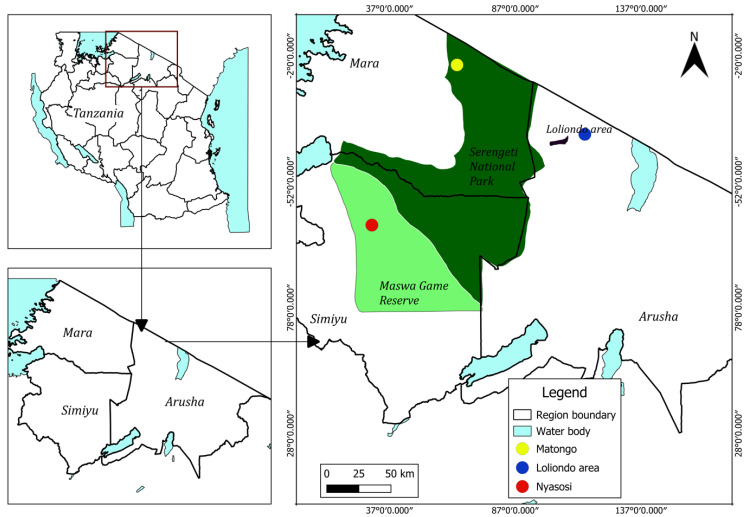 Figure 1
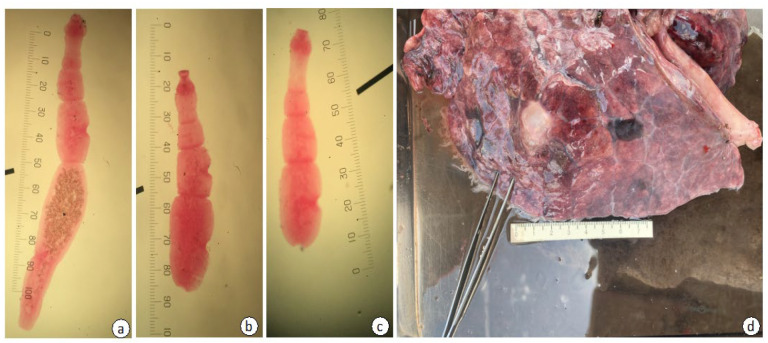 Figure 2
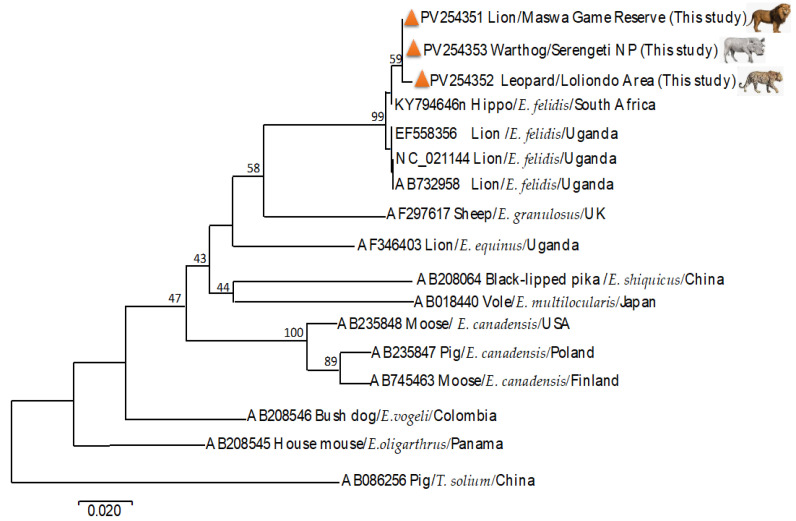 Figure 3
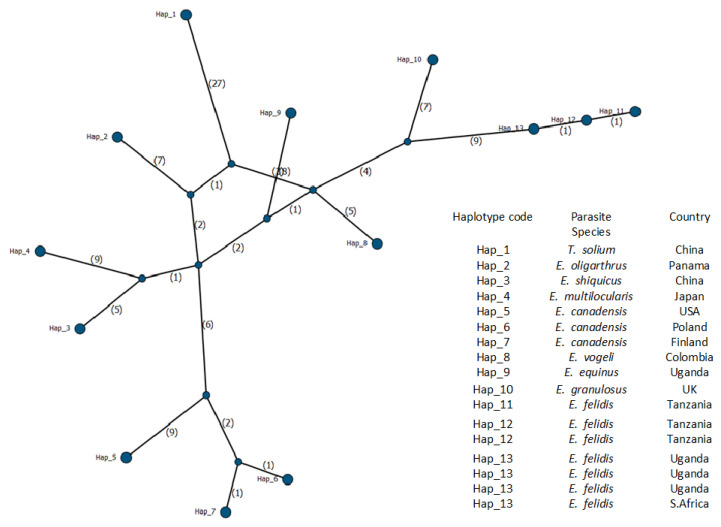 Figure 4
Peer Reviews
No public reviews on file for this paper yet. If you reviewed it on a platform where reviews are public (OpenReview, ICLR, NeurIPS, ICML), you can paste yours below so the community can read it here.
Videos
No videos yet. Explain this paper in a talk, walkthrough, or lecture? Add one.
Taxonomy
TopicsParasitic infections in humans and animals · Congenital Anomalies and Fetal Surgery · Parasite Biology and Host Interactions