The Overlooked Nucleocapsid Response: A Cohort Study of SARS-CoV-2 Vaccines in Brazil
Fatima de Cássia Evangelista de Oliveira, Ana Carolina Matias Dinelly Pinto, Maria Francilene Souza Silva, Max Moreira Lizano Garcia, Maria da Conceição Rodrigues Fernandes, Gabriela Alexandria Damasceno, Amanda Campelo Lima de Melo, Tamires Cardoso Matsui

TL;DR
This study examines immune responses to SARS-CoV-2 vaccines in Brazil, focusing on antibodies against the Nucleocapsid protein and how they change after booster doses.
Contribution
The study reveals how CoronaVac and a BNT162b2 booster affect anti-Nucleocapsid antibody dynamics, which are often overlooked.
Findings
CoronaVac increases anti-N antibodies up to 62.09% after two doses, but levels decline over time.
A BNT162b2 booster significantly boosts anti-S antibodies to 31,394 AU/mL.
Monitoring antibody dynamics can help optimize vaccination strategies for high-risk groups.
Abstract
SARS-CoV-2 has caused global disruptions, prompting studies on immune responses to COVID-19 vaccines, particularly antibodies against the Spike (S) protein. However, responses to the Nucleocapsid (N) protein remain less explored. This study evaluated whether CoronaVac induces anti-N antibodies, and analyzed antibody dynamics after a BNT162b2 booster, given that CoronaVac targets both S and N proteins, while BNT162b2 targets only the S protein. Serum samples were collected at multiple intervals post-vaccination. The percentage of participants with positive anti-N antibodies increased from 40.26% to 62.09% after two doses of CoronaVac, but declined over time, reaching 29.07% and 18.87% after the second and third doses, respectively. However, seropositivity rose to 43.48% three months after the booster. Anti-S antibody levels peaked at 31,394 AU/mL after the booster, compared to 723.4…
Genes, proteins, chemicals, diseases, species, mutations and cell lines named across the full text — each resolved to its canonical identifier and authoritative record.
Click any figure to enlarge with its caption.
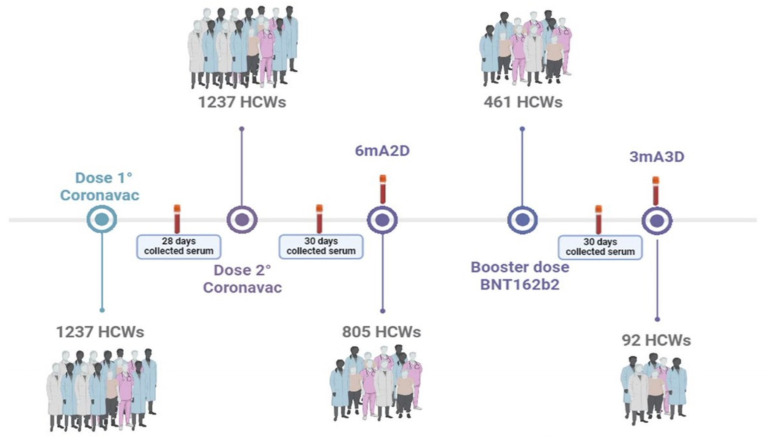 Figure 1
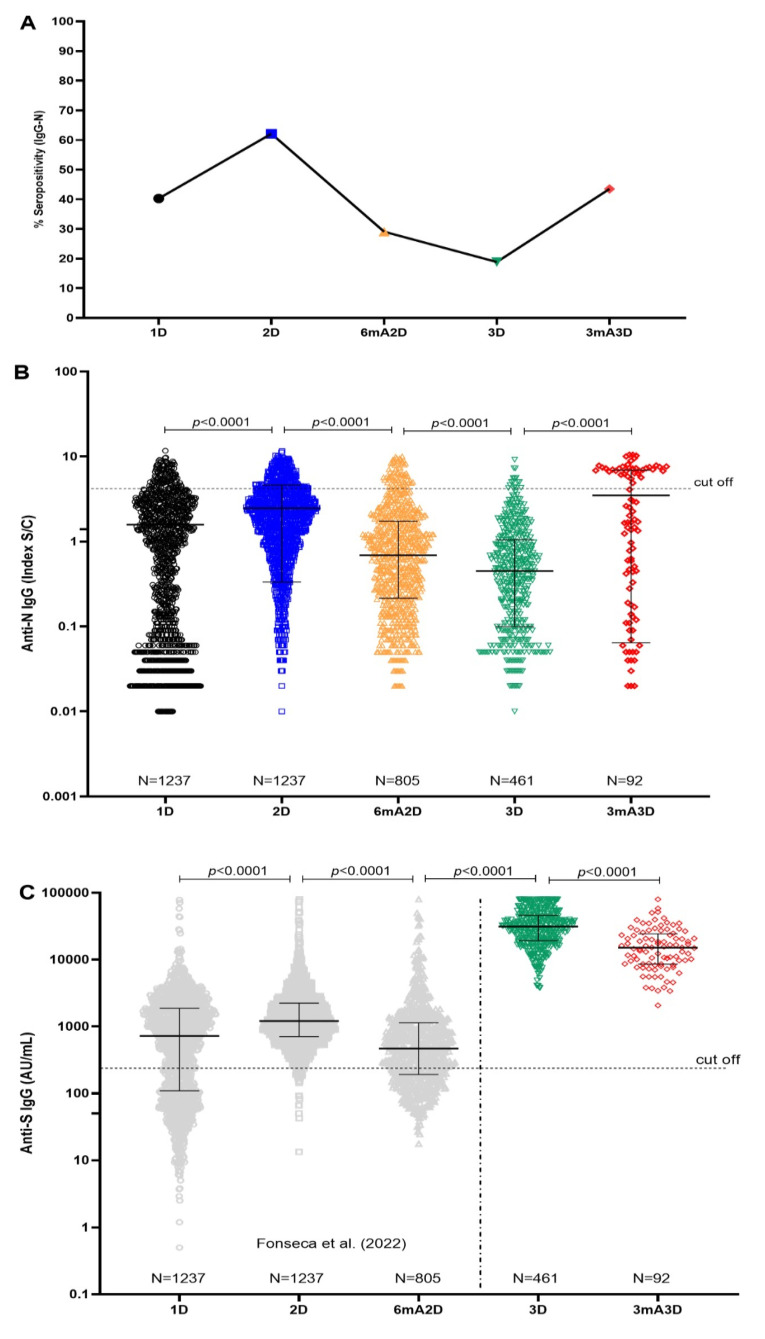 Figure 2
Peer Reviews
No public reviews on file for this paper yet. If you reviewed it on a platform where reviews are public (OpenReview, ICLR, NeurIPS, ICML), you can paste yours below so the community can read it here.
Videos
No videos yet. Explain this paper in a talk, walkthrough, or lecture? Add one.
Taxonomy
TopicsSARS-CoV-2 and COVID-19 Research · COVID-19 Clinical Research Studies · Animal Virus Infections Studies