The Role of High-Sensitivity C-Reactive Protein in Activities of Daily Living Among Middle-Aged and Older Adults: A Prospective Cohort Study
Shu-Min Lai, Ling Kuang, Xu-Lian Tang, Cheng-Shen Qiu, Hong-Xuan Huang, Dan-Qing Liao, Hong-Min Li, Li-Ying Du, Zhi-Yuan Xiong, Bing-Yun Zhang, Hao-Jie Chen, Zhi-Hao Li

TL;DR
High levels of a protein called hsCRP are linked to a higher risk of losing the ability to perform daily tasks in middle-aged and older adults, especially those with obesity.
Contribution
This study identifies hsCRP as a potential biomarker for predicting disability in daily living activities among middle-aged and older adults.
Findings
Elevated hsCRP concentrations are associated with a 25% higher risk of ADL disability after adjusting for covariates.
The association between hsCRP and ADL disability is stronger in individuals under 65 years old and those with a BMI ≥ 30 kg/m².
Abstract
Background: The association between high-sensitivity C-reactive protein (hsCRP) and activities of daily living (ADL) disability remains unclear. Our study aimed to comprehensively explore the relationship between hsCRP concentrations and the risk of ADL disability, while also identifying potential modifiers of this association in middle-aged and older adults. Methods: We conducted a prospective study involving 16,342 participants aged 50 years and older (mean age: 64 ± 10 years) from the Health and Retirement Study. To investigate the longitudinal association between hsCRP and the risk of ADL disability, we employed Cox proportional hazard regression models, adjusting for a wide range of potential confounders. Subgroups analyses were further conducted to examine interactions across factors such as gender, age, body mass index, smoking status, and drinking status. Results: This study…
Genes, proteins, chemicals, diseases, species, mutations and cell lines named across the full text — each resolved to its canonical identifier and authoritative record.
Click any figure to enlarge with its caption.
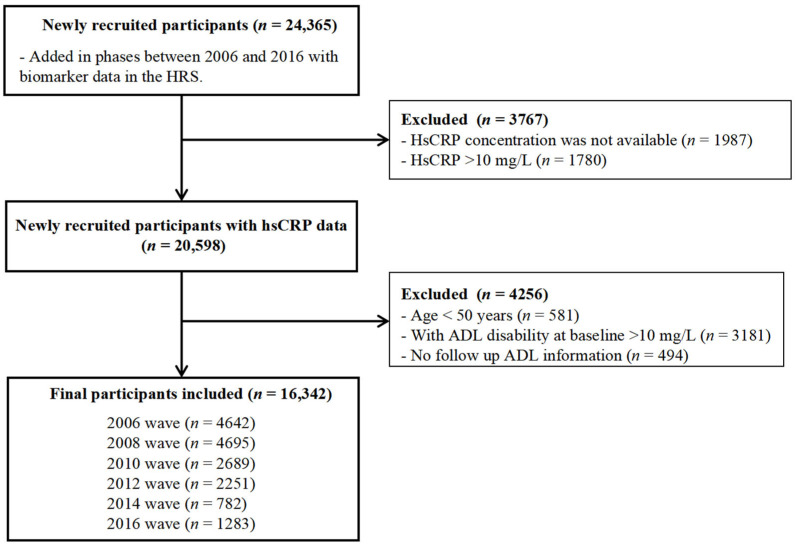 Figure 1
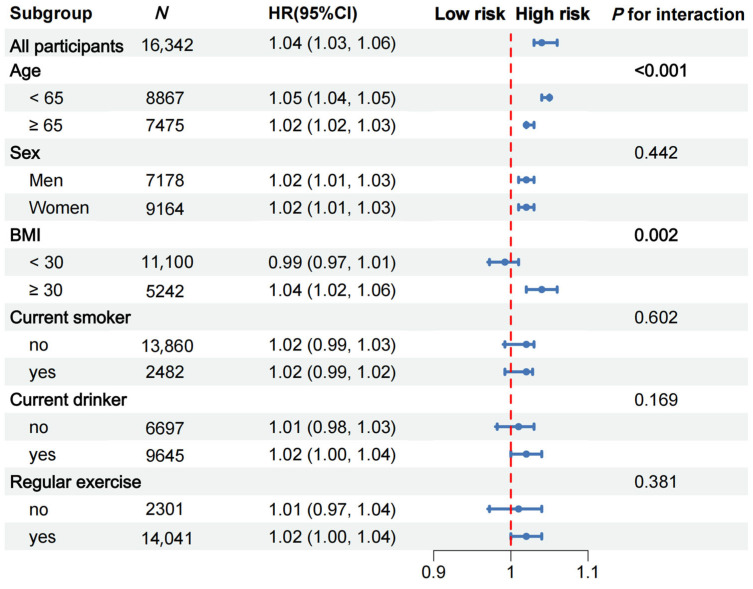 Figure 2
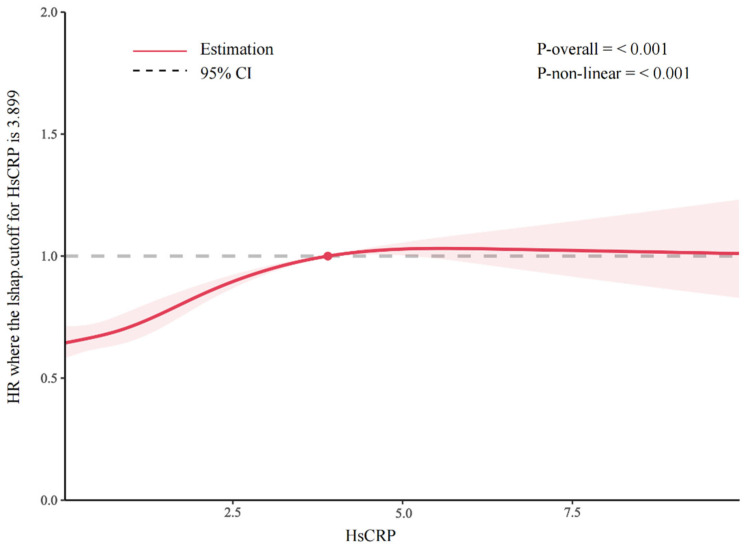 Figure 3
Peer Reviews
No public reviews on file for this paper yet. If you reviewed it on a platform where reviews are public (OpenReview, ICLR, NeurIPS, ICML), you can paste yours below so the community can read it here.
Videos
No videos yet. Explain this paper in a talk, walkthrough, or lecture? Add one.
Taxonomy
TopicsAdipokines, Inflammation, and Metabolic Diseases · Health and Lifestyle Studies · Physical Activity and Health