F-p Hybridization-Induced Ferromagnetism for Ultrathin Two-Dimensional Ferromagnetic Half-Metal (EuN) Monolayer: A First-Principles Study
Wenxue Sun, Yan Hu, Yuling Song, Yuhong Huang, Shuyao Cao

TL;DR
This study predicts a new 2D magnetic material, EuN monolayer, which shows strong ferromagnetism and high stability at low temperatures.
Contribution
The paper introduces a novel 2D ferromagnetic half-metal, EuN, with high magnetic anisotropy and Curie temperature due to f-p orbital hybridization.
Findings
EuN monolayer is a ferromagnetic half-metal with a 1.69 eV band gap and 6 μB magnetic moments per Eu ion.
EuN has a magneto-crystalline anisotropy energy of −3.72 meV per Eu ion, much higher than CrI3.
The Curie temperature of EuN is above 100 K and increases with biaxial strain due to enhanced f-p hybridization.
Abstract
By performing first-principles calculations, we predicted a kind of novel ultrathin two-dimensional (2D) ferromagnet, single-atomic-layer EuN. EuN monolayer is a ferromagnetic half-metal with a large band gap of 1.69 eV; Eu ions in EuN are in the highest spin state and have large magnetic moments of 6 μB, much larger compared with the non-rare-earth (RE) metal ions. The magneto-crystalline anisotropy energy (MCE) of EuN monolayer is −3.72 meV per Eu ion, which is much higher than that of CrI3 monolayer (0.685 meV per Cr ion); the magnetic dipolar energy (MDE) enhances magnetic anisotropy for EuN monolayer; large magnetic anisotropy energy (MAE) is beneficial to stabilizing the long-range ferromagnetic ordering. More importantly, different from many RE metal monolayers, hybridization between Eu-f and N-p orbitals induces ferromagnetism for EuN monolayer; the Curie temperature of EuN…
Genes, proteins, chemicals, diseases, species, mutations and cell lines named across the full text — each resolved to its canonical identifier and authoritative record.
Click any figure to enlarge with its caption.
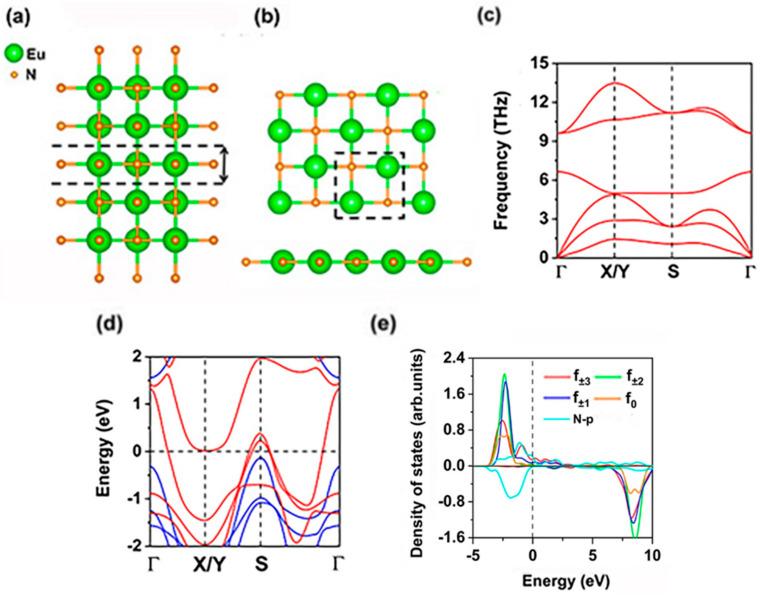 Figure 1
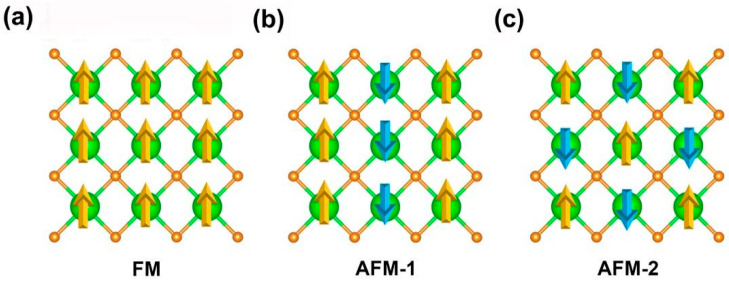 Figure 2
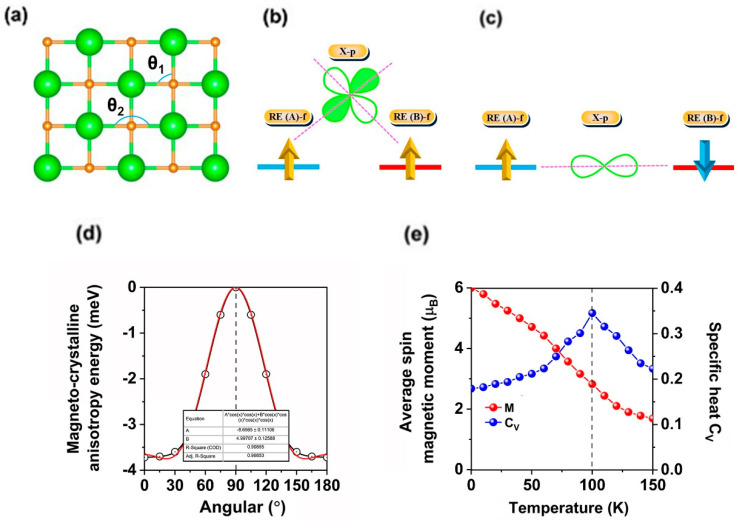 Figure 3
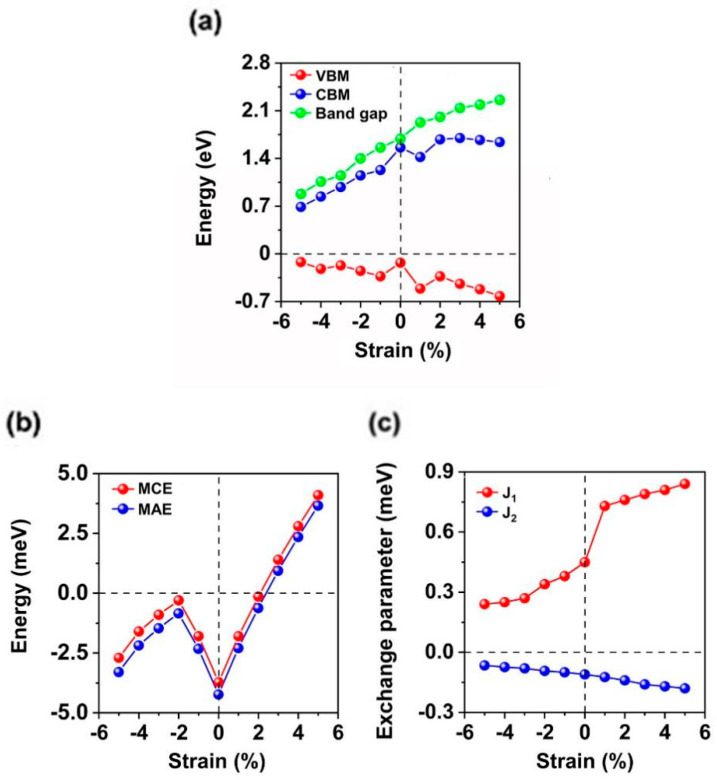 Figure 4
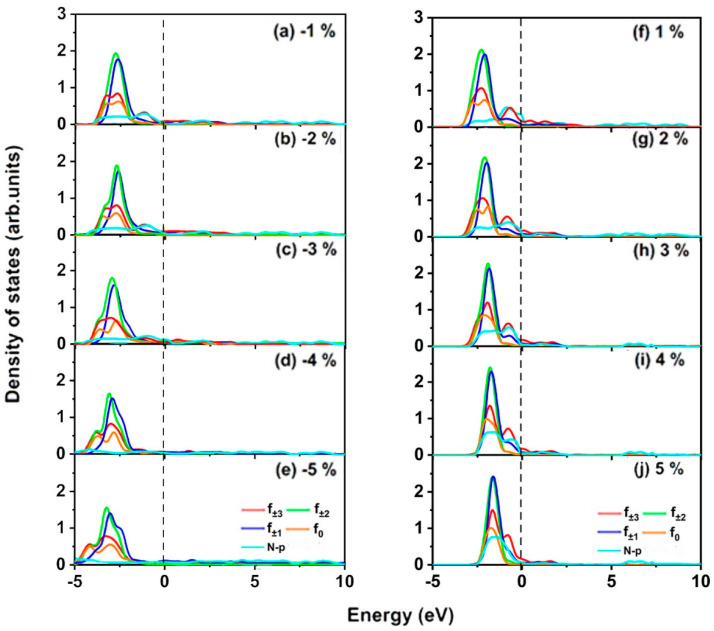 Figure 5
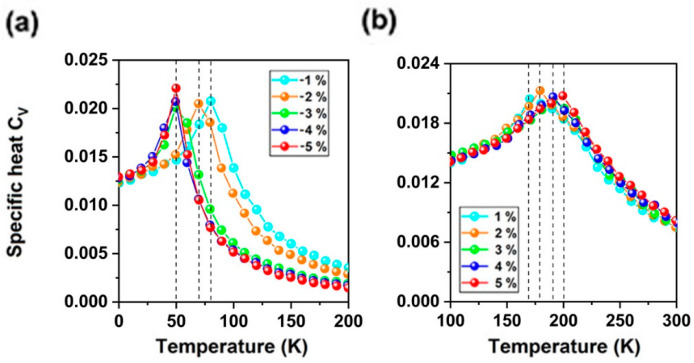 Figure 6
Peer Reviews
No public reviews on file for this paper yet. If you reviewed it on a platform where reviews are public (OpenReview, ICLR, NeurIPS, ICML), you can paste yours below so the community can read it here.
Videos
No videos yet. Explain this paper in a talk, walkthrough, or lecture? Add one.
Taxonomy
Topics2D Materials and Applications · MXene and MAX Phase Materials · Graphene research and applications