Cryobacterium Inferilacus sp. nov., a Pshychrophilic Ureolitic Bacterium From Lake Untersee in Antarctica
Yulia Yu. Berestovskaya, Tatyana P. Tourova, Denis S. Grouzdev, Natalyia V. Potekhina, Dmitry S. Kopitsyn, Nikolay V. Pimenov, Lina V. Vasilyeva

TL;DR
A new cold-loving bacterium, Cryobacterium inferilacus, was discovered in Antarctica's Lake Untersee and characterized based on its genetic and physical traits.
Contribution
The discovery and classification of a novel psychrophilic species, Cryobacterium inferilacus, within the genus Cryobacterium.
Findings
Strain 1639T grows optimally at 10°C and uses urea as a nitrogen source.
Phylogenetic analysis shows high 16S rRNA similarity to other Cryobacterium species but distinct genomic differences.
Genomic and phenotypic data confirm it as a new species within the Cryobacterium genus.
Abstract
The psychrophilic aerobic heterotrophic bacterium, strain 1639T, was isolated from the low-temperature Lake Untersee in Antarctica. The bacterium was Gram-positive, non-motile, yellow–green-pigmented, non-spore-forming, and a pleomorphic rod. Growth was observed at temperatures of 0–25 °C with an optimum at 10 °C. The strain used urea as a nitrogen source. The major fatty acids were i-C16:0 (49.69%), ai-C15:0 (17.59%), and C16:1 branched (12.03%). Identified polar lipids were phosphatidylglycerols and a glycolipid. The respiratory quinone was determined to be MK-10. The genomic DNA G+C content was 68.03 mol%. Phylogenetic analysis based on 16S rRNA gene sequences indicated that strain 1639T was a member of the genus Cryobacterium, with the highest sequence similarity to C. arcticum SK1T (98.4%), C. soli GCJ02T (98.4%), C. lactosi Sr59T (98.3%), C. zongtaii TMN-42T (98.2%), and C.…
Genes, proteins, chemicals, diseases, species, mutations and cell lines named across the full text — each resolved to its canonical identifier and authoritative record.
Click any figure to enlarge with its caption.
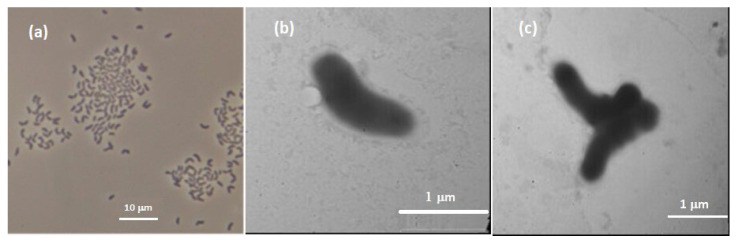 Figure 1
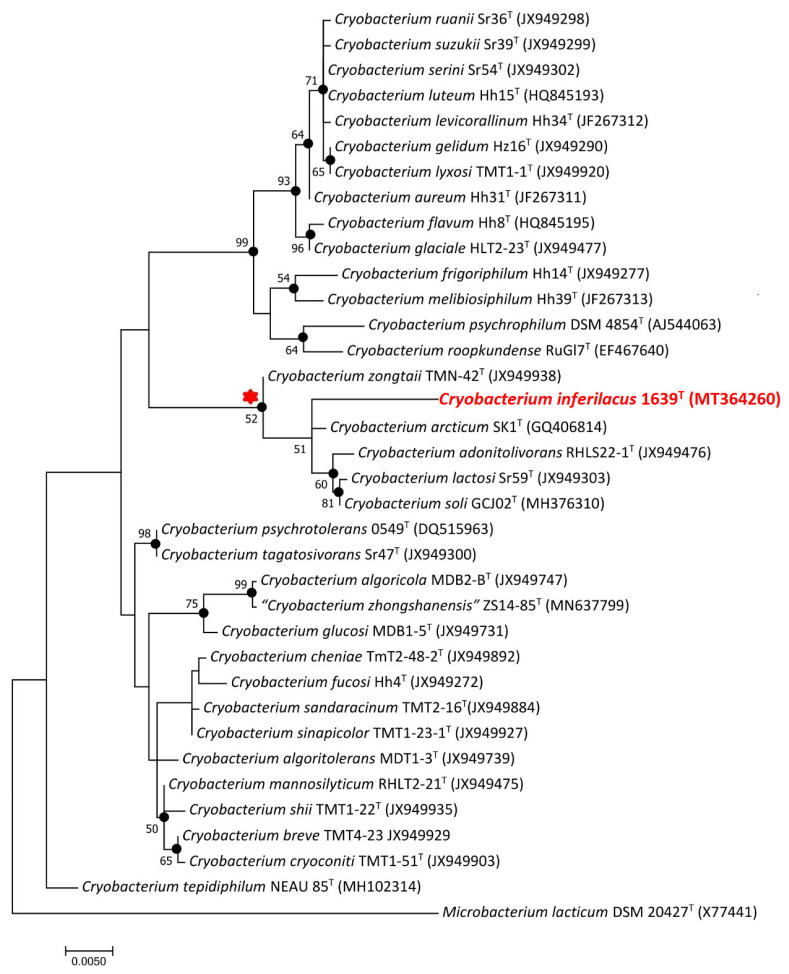 Figure 2
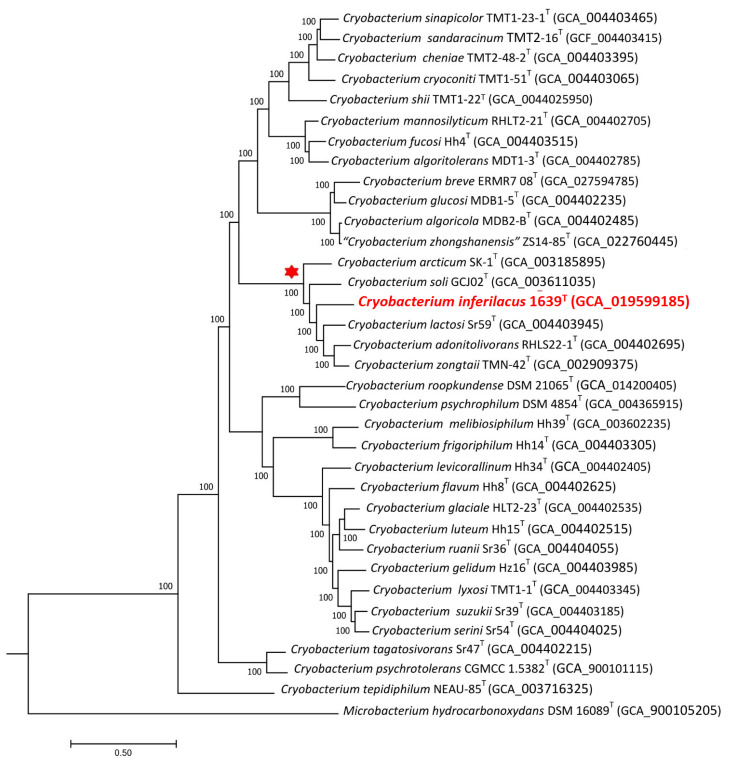 Figure 3
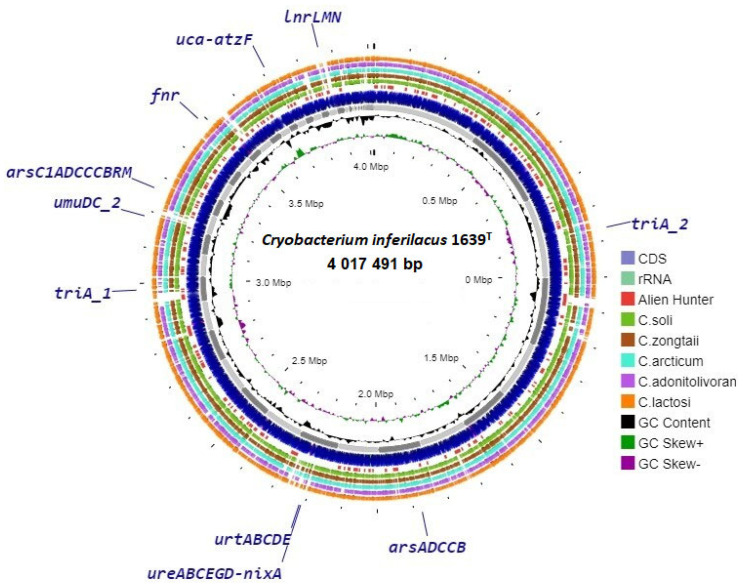 Figure 4
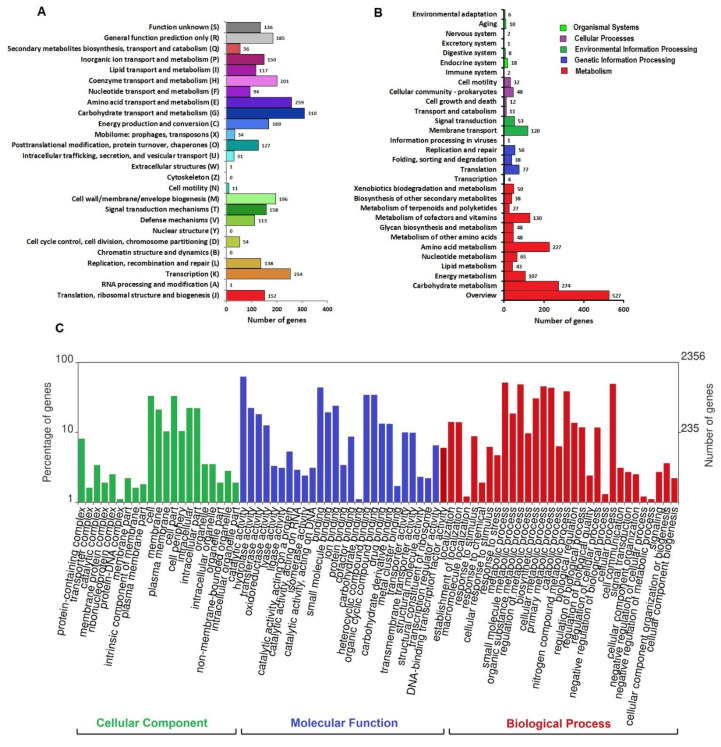 Figure 5
 Figure 6
 Figure 7
Peer Reviews
No public reviews on file for this paper yet. If you reviewed it on a platform where reviews are public (OpenReview, ICLR, NeurIPS, ICML), you can paste yours below so the community can read it here.
Videos
No videos yet. Explain this paper in a talk, walkthrough, or lecture? Add one.
Taxonomy
TopicsMicrobial Community Ecology and Physiology · Genomics and Phylogenetic Studies · Polar Research and Ecology