Deciphering the Language of Intestinal Microbiota Associated with Sepsis, Organ Failure, and Mortality in Patients with Alcohol-Related Acute-on-Chronic Liver Failure (ACLF): A Pioneer Study in Latin America
Paula Alejandra Castaño-Jiménez, Tonatiuh Abimael Baltazar-Díaz, Luz Alicia González-Hernández, Roxana García-Salcido, Ksenia Klimov-Kravtchenko, Jaime F. Andrade-Villanueva, Kevin Javier Arellano-Arteaga, Mayra Paola Padilla-Sánchez, Susana Del Toro-Arreola

TL;DR
This study explores how gut bacteria in patients with alcohol-related liver failure in Latin America are linked to sepsis, organ failure, and mortality.
Contribution
The study is the first to investigate intestinal microbiota in ACLF patients in Latin America and identifies potential biomarkers for mortality and sepsis.
Findings
Patients with ACLF showed significant changes in gut microbiota diversity compared to healthy controls.
The Klebsiella/Faecalibacterium ratio effectively predicted sepsis, and certain bacteria were linked to mortality and multiorgan failure.
Higher levels of Proteobacteria and LPS correlated with disease severity and organ dysfunction.
Abstract
ACLF is a severe stage of liver cirrhosis, characterized by multiple organ failure, systemic inflammation, and high short-term mortality. The intestinal microbiota (IM) influences its pathophysiology; however, there are currently no studies in Latin American populations. Therefore, we analyzed IM and its relationships with sepsis, organ failure, and mortality. In parallel, we quantified serum lipopolysaccharides as a marker of bacterial translocation. Fecal samples from 33 patients and 20 healthy controls (HCs) were obtained. The IMs were characterized by 16S-rRNA amplicon sequencing, the metagenomic functional predictive profiles were analyzed by PICRUSt2, and LPS quantification was performed by ELISA. Patients with ACLF showed significant alterations in alpha and beta diversity compared to the HCs. A strong dominance index accurately predicted 28-day and 90-day mortalities. The IMs…
Genes, proteins, chemicals, diseases, species, mutations and cell lines named across the full text — each resolved to its canonical identifier and authoritative record.
Click any figure to enlarge with its caption.
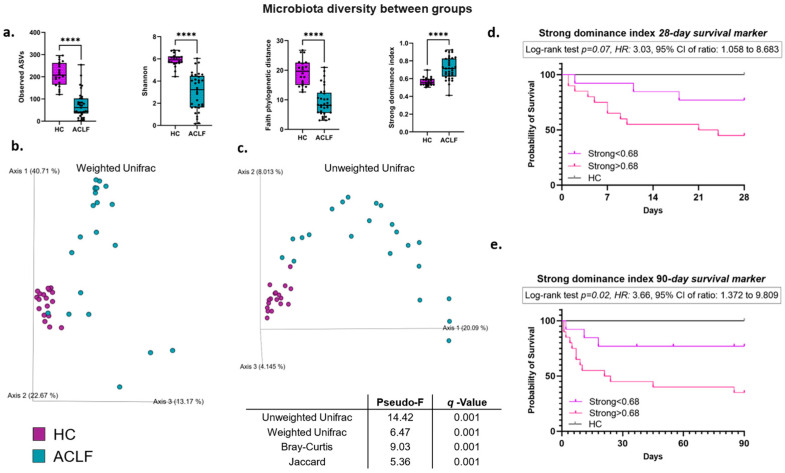 Figure 1
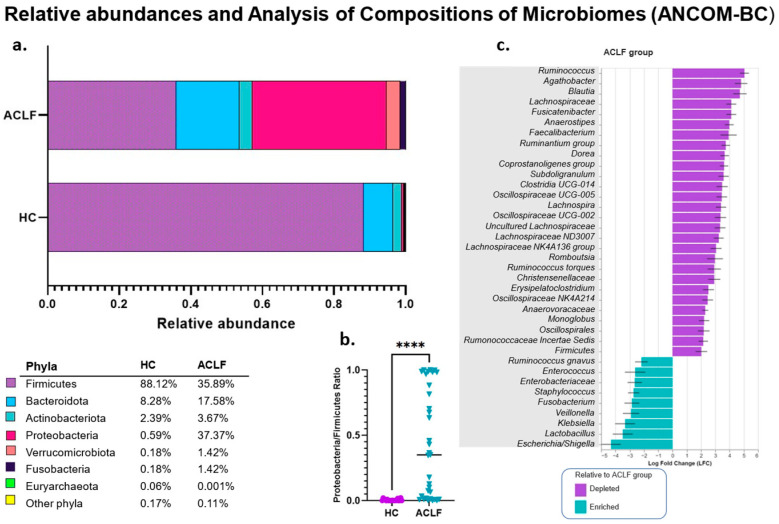 Figure 2
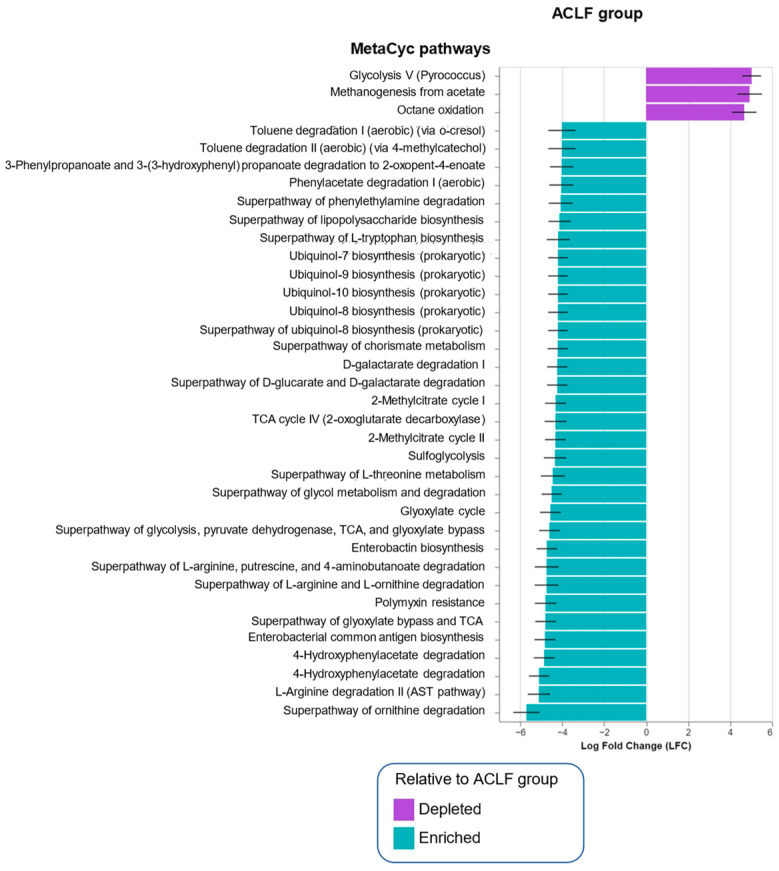 Figure 3
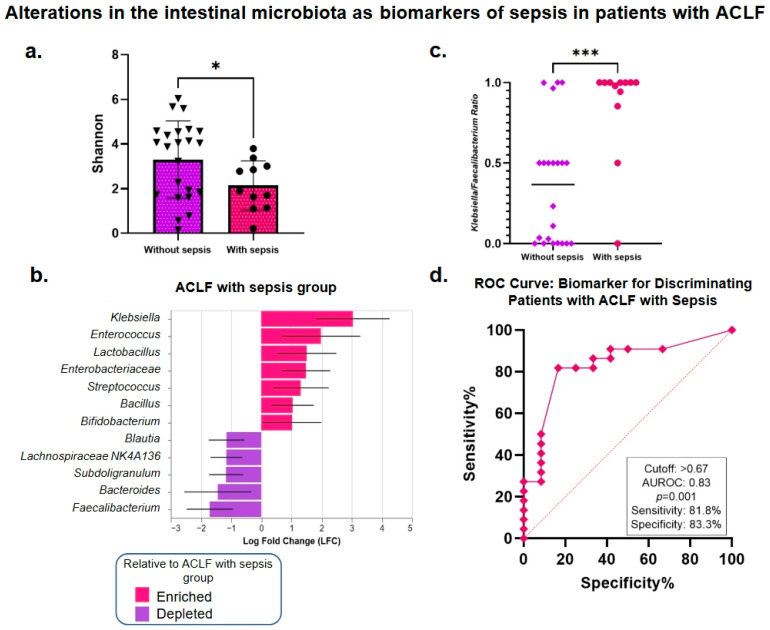 Figure 4
 Figure 5
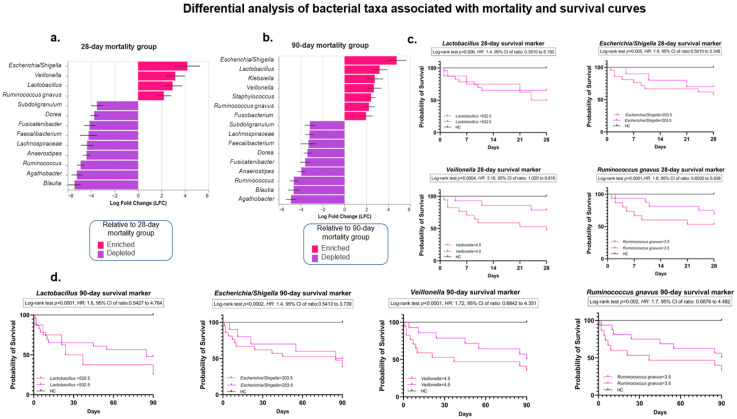 Figure 6
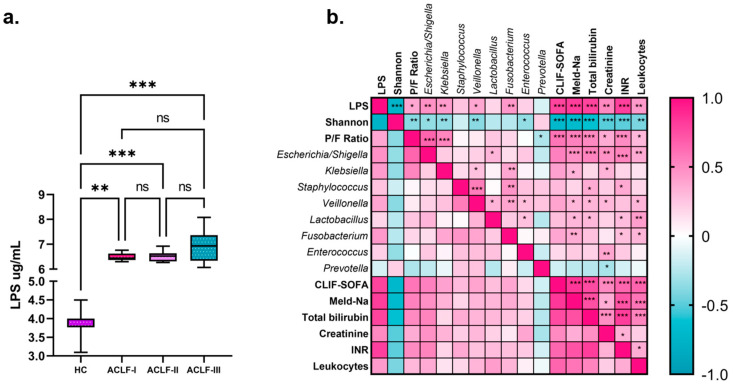 Figure 7
Peer Reviews
No public reviews on file for this paper yet. If you reviewed it on a platform where reviews are public (OpenReview, ICLR, NeurIPS, ICML), you can paste yours below so the community can read it here.
Videos
No videos yet. Explain this paper in a talk, walkthrough, or lecture? Add one.
Taxonomy
TopicsGut microbiota and health · Clostridium difficile and Clostridium perfringens research · Diet and metabolism studies