Lignocellulosic Byproducts as Bio-Adsorbents for Lead Removal
Morgana Macena, Helena Pereira, Lucas Grosche, Bruno Esteves, Isabel Santos-Vieira, Luísa Cruz-Lopes

TL;DR
This study shows that lignocellulosic byproducts can effectively remove lead from water, offering a sustainable solution to metal pollution.
Contribution
The study evaluates the adsorption potential of four lignocellulosic byproducts for lead removal, highlighting their efficiency and mechanisms.
Findings
Lead removal rates of 97–99% were achieved under optimized conditions.
The pseudo-second-order model best describes the adsorption kinetics, indicating chemisorption as the main mechanism.
Both Langmuir and Freundlich isotherms fit the data well, showing strong adsorption capacity.
Abstract
Water pollution by toxic metals, especially by lead ions, is a serious environmental concern due to these metals’ persistence, bioaccumulation, and toxicity. Aiming to reduce metal concentrations to non-toxic levels, this study analyzed the removal of lead from water through adsorption with bio-adsorbents. The adsorbent potential of the following four lignocellulosic byproducts were tested: walnut and chestnut shells, pine wood, and burnt pine wood. Removal rates of 97–99% were achieved at optimized conditions, i.e., at a pH of approximately 7, adsorbent dose of 4 g L−1, and 12 h of reaction. The BET specific surface area was between 1.74 and 4.85 m2 g−1. The pore size of the wood bio-adsorbent was 26.54 nm, and those of the remaining materials were between 5.40 and 7.33 nm. With R2 = 0.998–1.000, the kinetics fit the pseudo-second-order model better, suggesting that chemisorption is…
Genes, proteins, chemicals, diseases, species, mutations and cell lines named across the full text — each resolved to its canonical identifier and authoritative record.
Click any figure to enlarge with its caption.
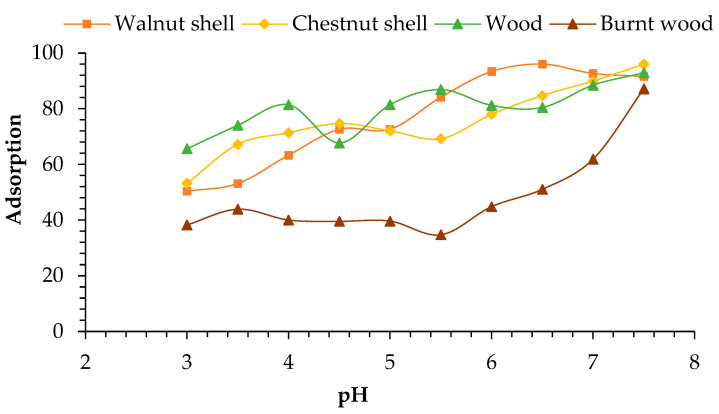 Figure 1
 Figure 2
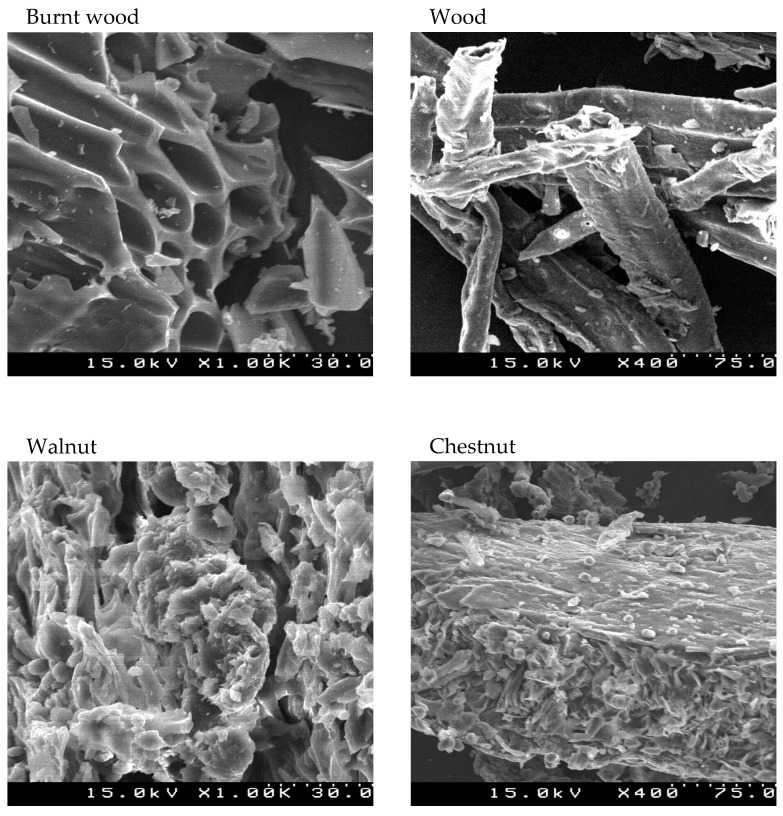 Figure 3
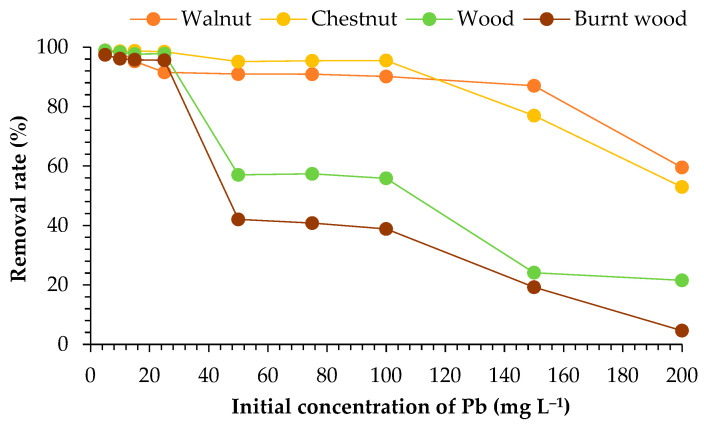 Figure 4
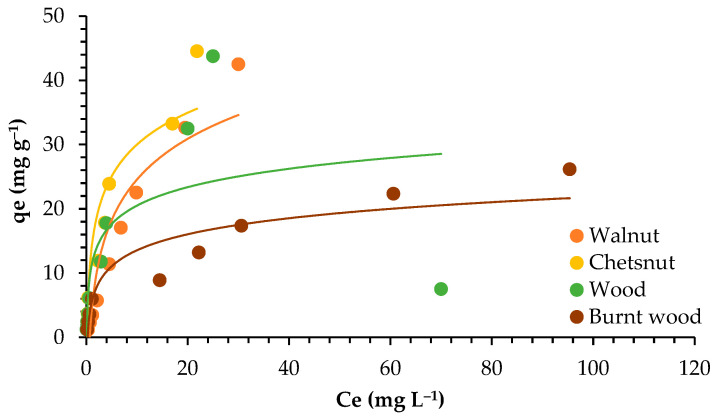 Figure 5
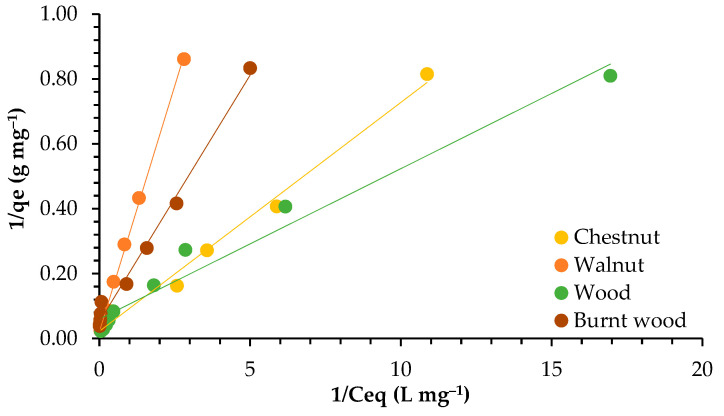 Figure 6
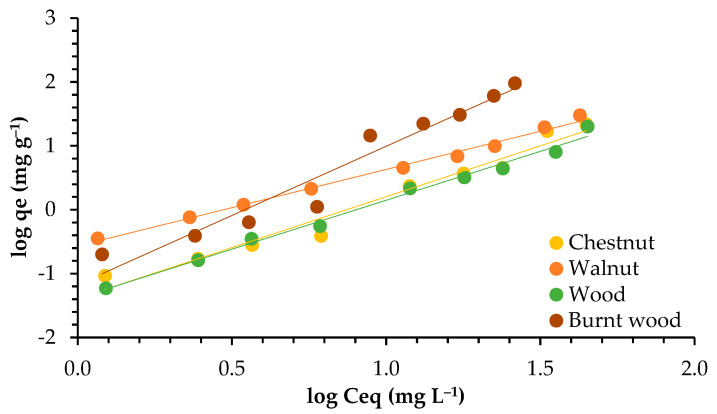 Figure 7
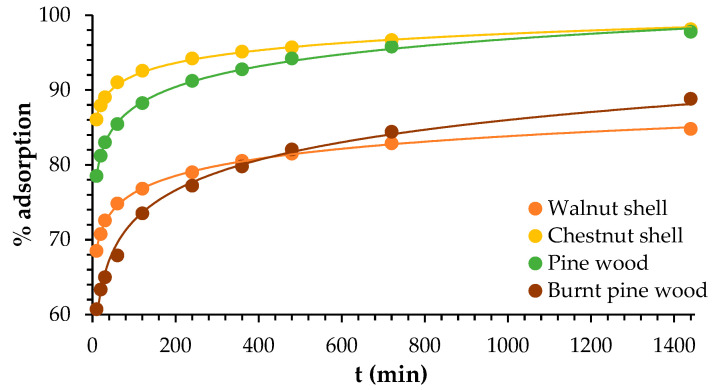 Figure 8
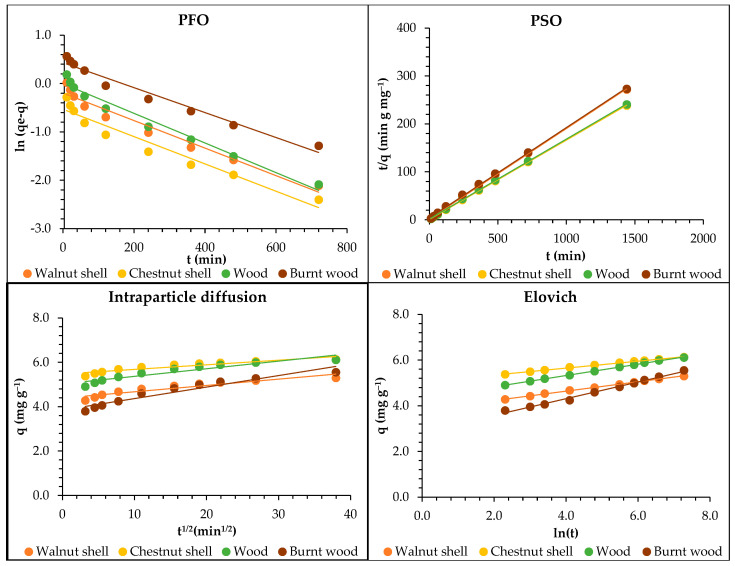 Figure 9
Peer Reviews
No public reviews on file for this paper yet. If you reviewed it on a platform where reviews are public (OpenReview, ICLR, NeurIPS, ICML), you can paste yours below so the community can read it here.
Videos
No videos yet. Explain this paper in a talk, walkthrough, or lecture? Add one.
Taxonomy
TopicsAdsorption and biosorption for pollutant removal · Nanomaterials for catalytic reactions · Phosphorus and nutrient management