Real-Life Treatment Intervals and Morphological Outcomes Following the Switch to Faricimab Therapy in Neovascular Age-Related Macular Degeneration
Katrin Löw, Vasilena Sitnilska, Yuhe Tang, Jeany Q. Lammert, Tim U. Krohne, Lebriz Altay

TL;DR
Switching to faricimab therapy can resolve fluid in the eyes of patients with neovascular age-related macular degeneration who did not respond to other treatments.
Contribution
Demonstrates the efficacy of faricimab in resolving retinal fluid and extending treatment intervals in refractory nAMD cases.
Findings
Complete resolution of intraretinal and subretinal fluid was observed in 29.3% of eyes after the first faricimab dose.
Treatment intervals were extended beyond 4 weeks in 80.7% of patients after switching to faricimab.
Central retinal thickness decreased significantly after 12 months of faricimab treatment.
Abstract
Objectives: To evaluate the efficacy of faricimab in patients with neovascular age-related macular degeneration (nAMD) that did not respond to other VEGF inhibitors. Methods: This retrospective study included the eyes of patients diagnosed with nAMD who had been switched to faricimab treatment due to the persistence of intraretinal fluid (IRF) and/or subretinal fluid (SRF), despite monthly anti-VEGF treatment with aflibercept, bevacizumab, or ranibizumab using the treat and extend regimen, and who had received at least three faricimab injections following the switch. Best-corrected visual acuity (BCVA) measurement and optical coherence tomography (OCT) analysis were performed at each visit, and the OCT results were graded by two independent readers. Results: We included 41 eyes of 39 patients (21 male, 18 female) with a mean age of 80.5 ± 8.1 years. The median duration of anti-VEGF…
Genes, proteins, chemicals, diseases, species, mutations and cell lines named across the full text — each resolved to its canonical identifier and authoritative record.
Click any figure to enlarge with its caption.
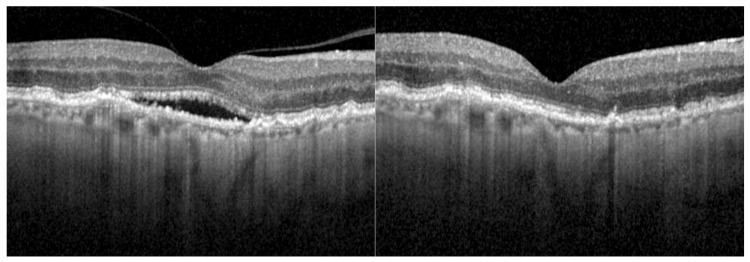 Figure 1
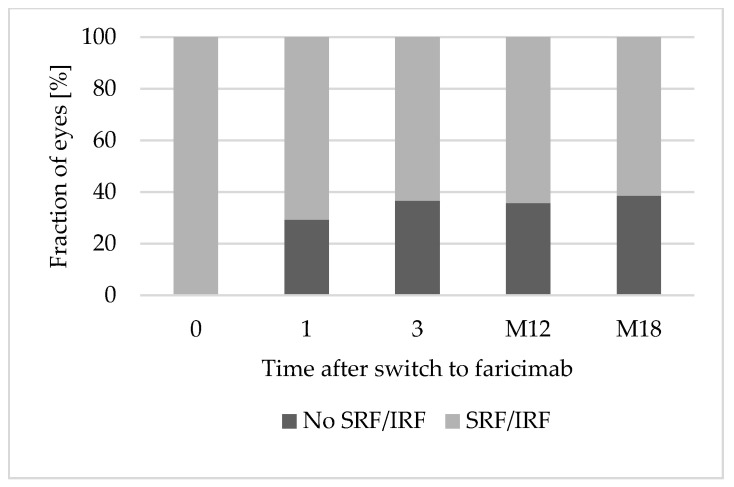 Figure 2
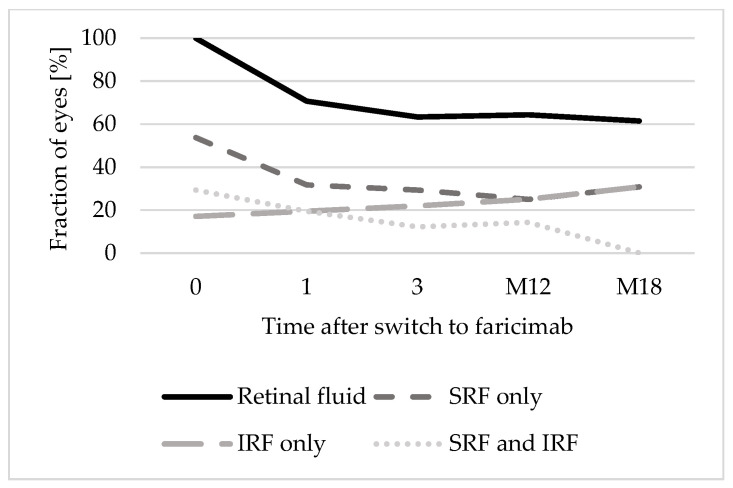 Figure 3
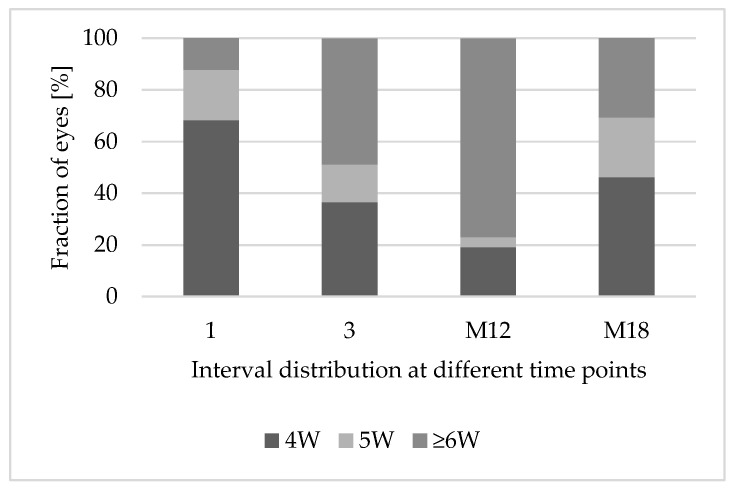 Figure 4
Peer Reviews
No public reviews on file for this paper yet. If you reviewed it on a platform where reviews are public (OpenReview, ICLR, NeurIPS, ICML), you can paste yours below so the community can read it here.
Videos
No videos yet. Explain this paper in a talk, walkthrough, or lecture? Add one.
Taxonomy
TopicsRetinal Diseases and Treatments · Retinal Imaging and Analysis · Retinal and Optic Conditions