The Relationship Between Driving Performance and Lower Limb Motor Function After Total Knee Arthroplasty Using a Driving Simulator: A Pilot Study on Elucidating Factors Influencing Accelerator and Brake Operations
Kazuya Okazawa, Satoshi Hamai, Tsutomu Fujita, Yuki Nasu, Shinya Kawahara, Yasuharu Nakashima, Hitoshi Ishikawa, Hiromi Fujii, Hiroshi Katoh

TL;DR
This study explores how lower limb function affects driving performance after knee replacement surgery, using a driving simulator to measure accelerator and brake operations.
Contribution
The study identifies walking ratio and pain levels as key factors influencing driving performance after total knee arthroplasty.
Findings
Movement time was significantly correlated with knee extension strength and walking ratio.
Brake pedal force was significantly associated with walking ratio and pain levels.
Walking ratio was a significant predictor for both movement time and brake pedal force.
Abstract
Background: The aging population in Japan has led to an increase in traffic accidents involving elderly drivers, highlighting the need for measures to enhance driving safety. Post-total knee arthroplasty (TKA) patients must regain their driving ability to maintain independence; however, clear guidelines for driving resumption are lacking. This study assessed the movement time (MT) and brake pedal force (BPF) using a driving simulator and investigated their associations with lower limb motor function. Methods: This single-center prospective cohort study included 21 patients (mean age: 66.7 ± 7.4 years) who underwent right TKA and intended to resume driving. Driving ability was assessed on postoperative day 13 using a driving simulator to measure MT and BPF. Physical function was evaluated using the following parameters: range of motion (ROM), muscle strength, gait parameters, and pain…
Genes, proteins, chemicals, diseases, species, mutations and cell lines named across the full text — each resolved to its canonical identifier and authoritative record.
Click any figure to enlarge with its caption.
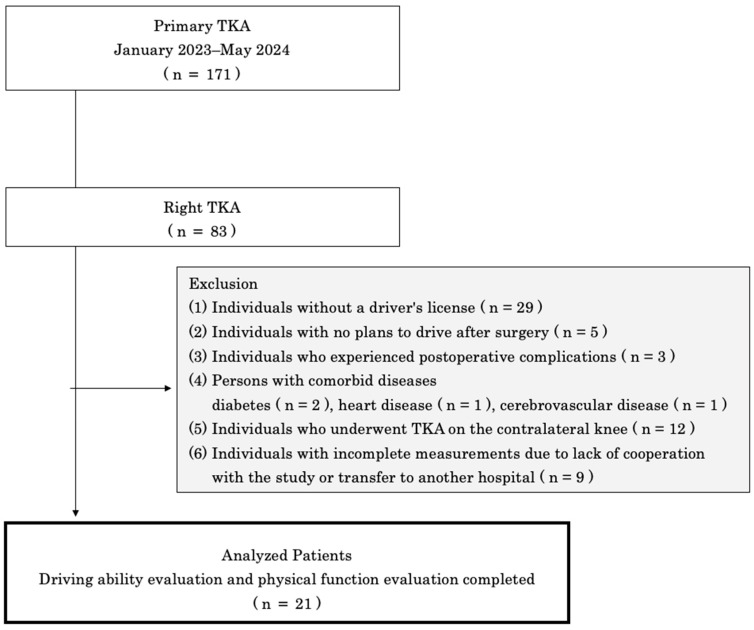 Figure 1
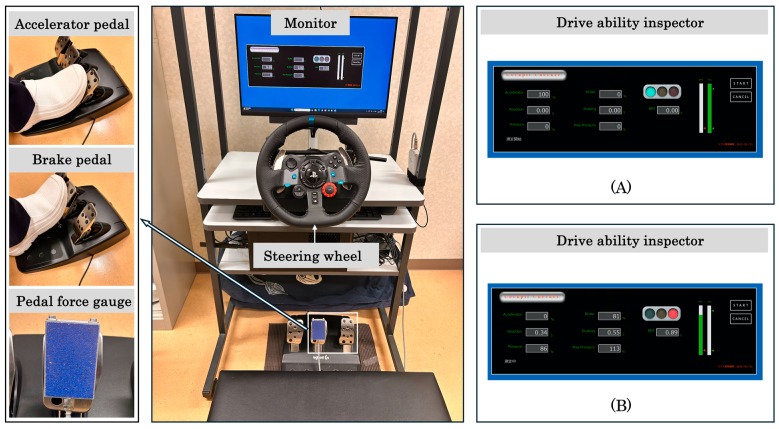 Figure 2
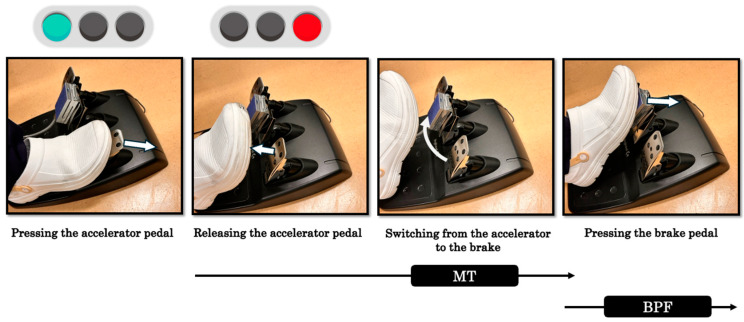 Figure 3
Peer Reviews
No public reviews on file for this paper yet. If you reviewed it on a platform where reviews are public (OpenReview, ICLR, NeurIPS, ICML), you can paste yours below so the community can read it here.
Videos
No videos yet. Explain this paper in a talk, walkthrough, or lecture? Add one.
Taxonomy
TopicsMusculoskeletal pain and rehabilitation · Stroke Rehabilitation and Recovery · Spine and Intervertebral Disc Pathology