Influence of the Cortical Layer Thickness and Trabecular Layer Pattern Density on 3D-Printed Femur Strength
Aleksander Znaczko, Krzysztof Żerdzicki, Paweł Kłosowski

TL;DR
This study explores how varying the thickness of a 3D-printed femur's outer layer and the density of its inner layer affects the bone's compressive strength.
Contribution
The novelty lies in systematically analyzing how cortical layer thickness and trabecular pattern density influence the mechanical strength of 3D-printed femurs.
Findings
A 3D-printed femur with 3.0 mm outer layer thickness and 30% infill showed the highest compressive strength of 4778 N.
The lowest compressive strength was observed in a femur with 1.2 mm outer thickness and 20% infill, at 2116 N.
Failure patterns predominantly involved fractures at the proximal end of the femur.
Abstract
This paper presents the process of preparing and conducting a uniaxial compression test, developing the results, and determining the compressive strength of a femur made using 3D printing technology. The study considers the variable thickness of the outer layer—imitating cortical bone tissue—and the varying density of the inner layer—imitating trabecular bone tissue—which, with further analysis, may aim to replicate different states of osteoporosis. The compressive strength of the bones varied depending on the thickness of the outer layer and the filling degree. Failure patterns were observed, corresponding to different variants of the produced bones. The predominant failure pattern was the fracture of the femoral head or neck at the proximal end of the femur. The results were compared with previous studies on commercial femur bones, as well as those created using 3D printing technology…
Genes, proteins, chemicals, diseases, species, mutations and cell lines named across the full text — each resolved to its canonical identifier and authoritative record.
Click any figure to enlarge with its caption.
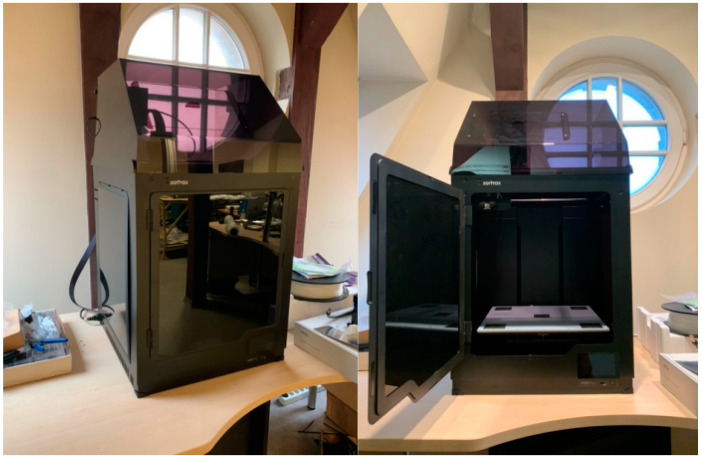 Figure 1
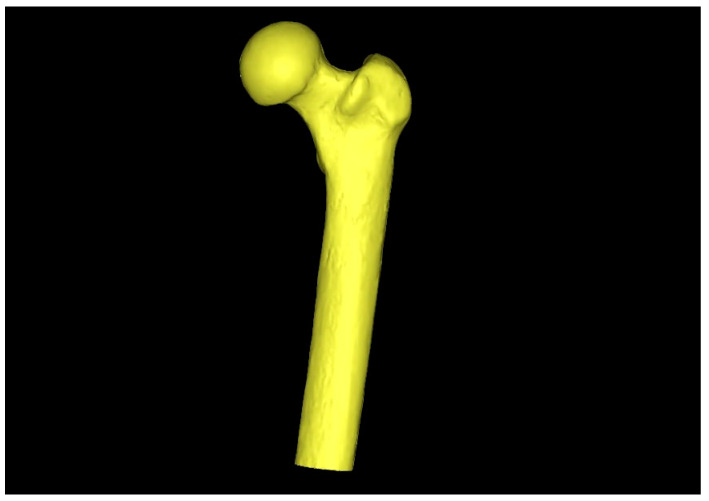 Figure 2
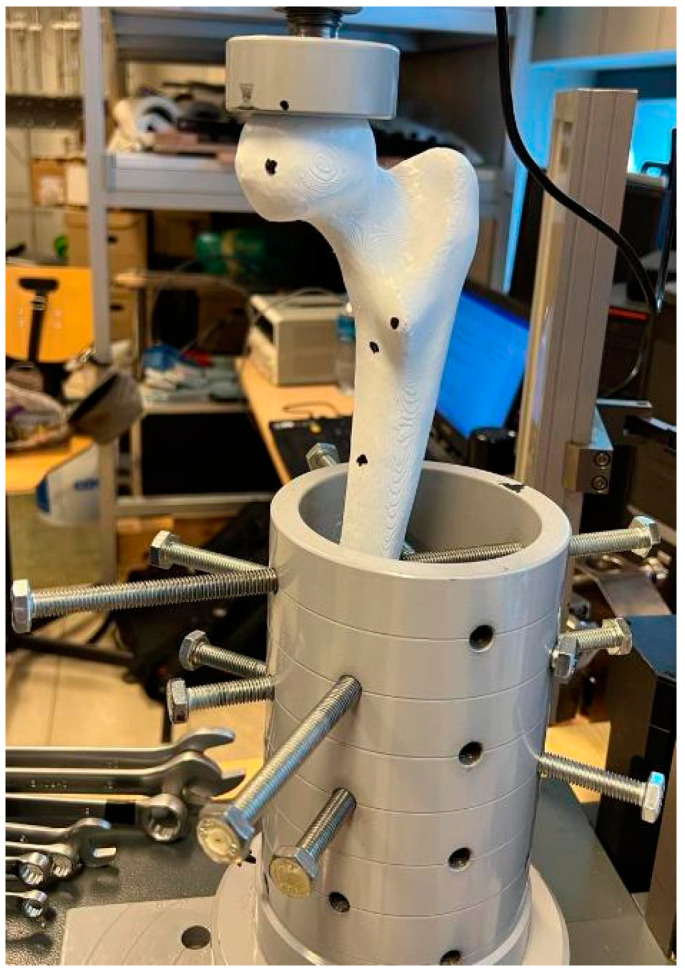 Figure 3
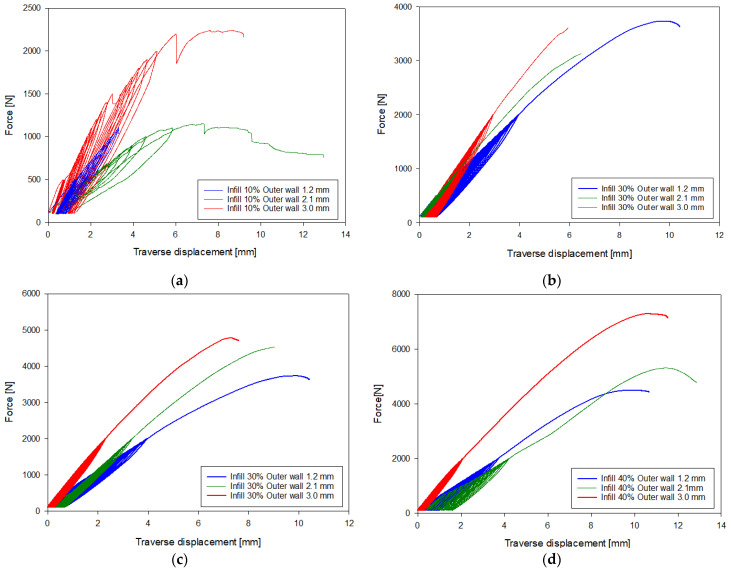 Figure 4
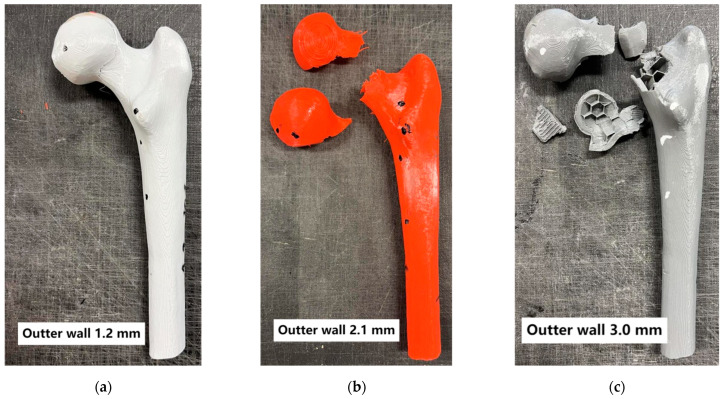 Figure 5
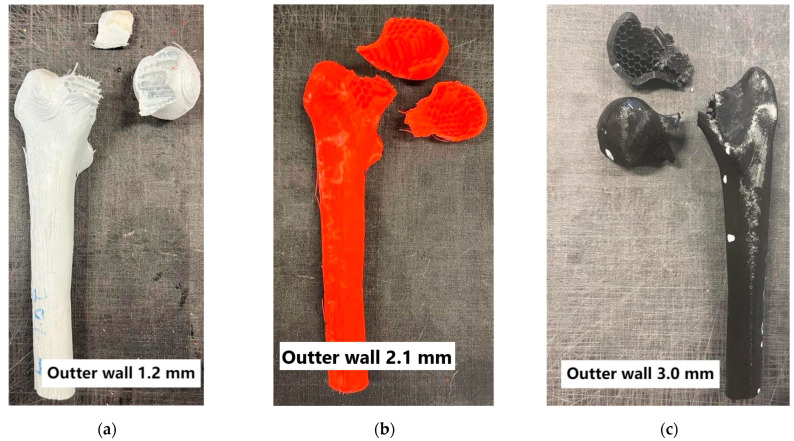 Figure 6
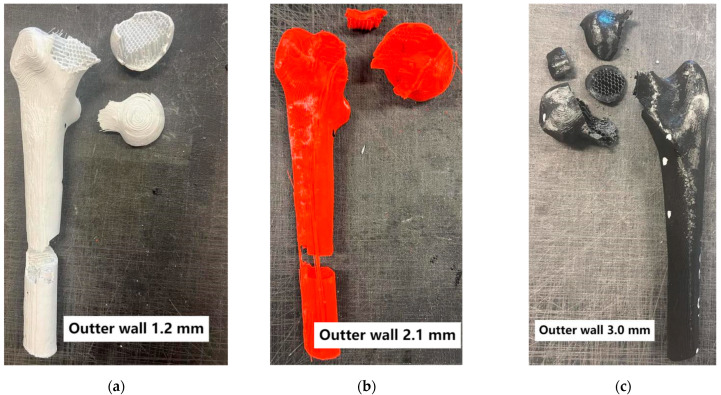 Figure 7
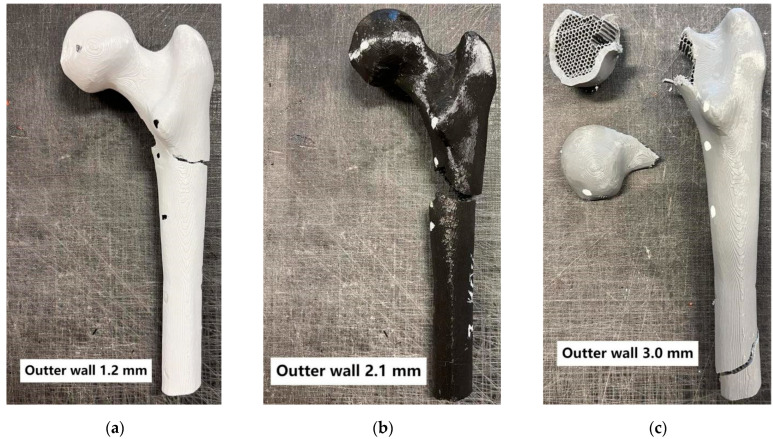 Figure 8
Peer Reviews
No public reviews on file for this paper yet. If you reviewed it on a platform where reviews are public (OpenReview, ICLR, NeurIPS, ICML), you can paste yours below so the community can read it here.
Videos
No videos yet. Explain this paper in a talk, walkthrough, or lecture? Add one.
Taxonomy
TopicsOrthopaedic implants and arthroplasty · Bone Tissue Engineering Materials · Anatomy and Medical Technology