A novel approach to explore common prime divisor graphs and their degree based topological descriptor
Ali N. A. Koam, Azeem Haider, Ali Ahmad, Moin Akhtar Ansari, Deepak Singh, Deepak Singh, Deepak Singh

TL;DR
This paper introduces a new type of graph based on common prime divisors and explores its properties and symmetry indices.
Contribution
The paper introduces common prime divisor graphs and computes symmetry indices for these graphs.
Findings
Common prime divisor graphs are defined based on the divisors of an integer and their prime factors.
Symmetry indices are calculated for a class of these graphs.
The study opens a new area for exploring graph invariants in different classes of these graphs.
Abstract
For the construction of a common prime divisor graph, we consider an integer ζ=∏i=1kpiγi≥2 with its prime factorization, where pi′s are distinct primes and γi′s are fixed positive integers. Every divisor of the integer ζ has the form x=∏i=1kpixi, with 0≤xi≤γi. There are ∏i=1k(γi+1) distinct divisors of integer ζ. Let D(ζ) be the collection of all positive divisors of ζ other than integer 1. Then we can define a simple graph on the set of divisors D(ζ) of ζ, called a common prime divisor graph ℨ(ζ) with D(ζ) as the vertex set, and we insert an edge between two distinct divisors x and y of ζ if the gcd(x,y)=pi. In this article, we will introduce and discuss some basic properties of common prime divisor graphs and we will compute some indices of symmetries associated with a class of such graphs. This study will open a new domain of graphs to investigate their invariant and to explore such…
Genes, proteins, chemicals, diseases, species, mutations and cell lines named across the full text — each resolved to its canonical identifier and authoritative record.
Click any figure to enlarge with its caption.
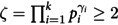 Figure 1
 Figure 2
 Figure 3
 Figure 4
 Figure 5
 Figure 6
 Figure 7
 Figure 8
 Figure 9
 Figure 10
 Figure 11
 Figure 12
 Figure 13
 Figure 14
 Figure 15
 Figure 16
 Figure 17
 Figure 18
 Figure 19
 Figure 20
 Figure 21
 Figure 22
 Figure 23
 Figure 24
 Figure 25
 Figure 26
 Figure 27
 Figure 28
 Figure 29
 Figure 30
 Figure 31
 Figure 32
 Figure 33
 Figure 34
 Figure 35
 Figure 36
 Figure 37
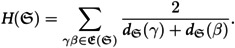 Figure 38
 Figure 39
 Figure 40
 Figure 41
 Figure 42
 Figure 43
 Figure 44
 Figure 45
 Figure 46
 Figure 47
 Figure 48
 Figure 49
 Figure 50
- —http://dx.doi.org/10.13039/100009388Jazan University
Peer Reviews
No public reviews on file for this paper yet. If you reviewed it on a platform where reviews are public (OpenReview, ICLR, NeurIPS, ICML), you can paste yours below so the community can read it here.
Videos
No videos yet. Explain this paper in a talk, walkthrough, or lecture? Add one.
Taxonomy
TopicsGraph theory and applications · Rings, Modules, and Algebras · Advanced Topics in Algebra
Introduction
Topological indices represent an integral aspect of computational chemistry and provide quantitative descriptors for molecular structures that facilitate the analysis of complex chemical relationships. These indices, rooted in graph theory, offer insights into molecular connectivity without considering spatial arrangement. This summary will delve into the foundational contributions, diverse applications, and recent advancements in topological indices, referencing the key literature [1–6]. Some geometrical properties of annihilator intersection graph of commutative rings are explored in [7] and the embedding of the extended zero-divisor graph of commutative rings are explored in [8].
A pioneering topological index, the Wiener index, was initiated by Harry Wiener in 1947. In fact, this index is the sum of the pairwise shortest distances of paths between atoms in a given molecular graph, offering a calculation of molecular size with its complexity. Wiener, in his seminal paper, “Structural Determination of Paraffin Boiling Points," laid the groundwork for subsequent developments in topological indices by demonstrating the significance of graph-based descriptors for understanding molecular properties [9].
As the field progressed, various topological indices emerged, to capture different aspects of the molecular structure. In 1975, the Randic index, introduced by Milan Randic, concentrated on the balance between high- and low-degree nodes in a molecule, providing a different perspective on its structural features [10]. Additionally, indices such as Zagreb indices [11, 12], eccentricity based indices [13, 14], distance based indices [15], Sombor indices [16, 17], M-polynomial [18] and resistance-based indices [19] contribute to a comprehensive characterization of the molecular structure [20–23].
Topological indices have various application across scientific disciplines. For example, in medicinal chemistry, these indices are used for a fundamental index, that is, "Quantitative Structure-Activity Relationship", also called "QSAR". “Molecular Descriptors for Chemoinformatics," introduced by Todeschini-Consonni, that are used to explore the applications of topological indices modeling of QSAR, has a key role for predicting the toxicity or bioactivity of chemical compounds [24]. Using these structures, researchers have managed to unravel the relationships amongst the molecular structure and its biological activity and, provide the fundamental design of drugs [25, 26].
In particular, degree based topological indices have significant applications including drug design, modeling of quantitative structure-activity relationships (QSARs), and molecular similarity analysis. A rapid and effective technique was developed to compare the connectivity of atoms in various compounds. Moreover, these indices are comparatively easy to compute and compare [27, 28]. Chemical species and chemical processes can be represented as nodes and edges in a graph, which can then be used to depict a chemical network. Chemical reactions link the reactants and products of the reaction at their respective nodes. This enables the chemical network to be described as a directed graph, where each node represents a particular chemical species and each edge for a particular chemical process [29–31].
Owing to the extensive interest in topological concepts related to graphs for ring structures, many researchers have shown their interest in indices studied on zero-divisor graphs defined over rings [15, 32–34].
Topological indices are useful in chemoinformatics for molecular similarity analysis, clustering, and virtual screening. The work of Dehmer and Varmuza in “Advances in Quantitative Structure-Property Relationships" comprehensively discusses the role of topological indices in chemoinformatics, showcasing their versatility in handling large chemical datasets [35].
1 Preliminaries
Consider a connected simple graph with and representing the set of vertices and edges of respectively. Todesehini et al. [36] defined for such that is named the degree of a vertex and are connection number of the vertex
We define the index or the general Randić index:
where is a real number and for , we first obtain the Randić index, then the second modified Zagreb index, and finally second Zagreb index. Here we define index or general sum-connectivity index;
where is a real number and for , we get firstly the sum-connectivity, then the first Zagreb index and lastly the hyper-Zagreb index.
We define the GA (geometric-arithmetic) index:
We define the ABC (atom bond connectivity) index as:
We define the AZI (augmented Zagreb) index as:
We define the H (harmonic) index as:
We define the SDD (symmetric division degree) index as:
We define the ReZG1 (first redefined Zagreb) index as:
We define the ReZG2 (second redefined Zagreb) index as:
We define the ReZG3 (third redefined Zagreb) index as:
2 Main results
Consider a positive integer with the prime factorization where are distinct prime numbers and each is a fixed positive integer. Any divisor x of has the form where Note that, the integer has number of distinct divisors.
Let be the set of all positive divisors of Then we define a graph on the set of divisors of called a common prime divisor graph with the vertex set with an edge between any two divisor and divisor if for any
One can easily see that the order of the graph is
Lemma 2.1. Let be a positive integer. Then for any two vertices and of the common prime divisor graph , the distance or the distance Moreover, if then the diameter,
Proof: If for any prime number p, then If such that then for any prime we obtained a path x–p–y implies that the distance If , then for a prime p and a prime q, we see that if p divides x and q divides y, then we have a path x–pq–y and hence
Moreover, if k = 1 and then we have, Clearly in this case, and if then .
For any divisor of we partition the set of indices for x into three sets and This partition will help us to construct the following results on the degrees of the common prime divisor graph .
Theorem 2.2. Let be a positive integer. Then in the graph
For any with
Proof:
The vertex pj is connected to if and only if for each and if Since therefore we exclude the case if yi = 0 for all Clearly, The vertex for is connected to y if and only if for all Clearly, For every prime pj|x, we will have one of these two cases.Case 1: If pj|x and then the vertex x is clearly adjacent to vertices for all and for Hence x is adjacent to number of vertices for every .Case 2: If pj|x and then x is adjacent to for all Hence x is adjacent to number of vertices for every .Since both cases are exclusively independent, therefore, the required degree is the sum of both cases.
Corollary 2.3. For any positive integer if be a common prime divisor graphs, where p and q are distinct prime numbers, then the of each vertex of the common prime divisor graph is,
and if
In the following results, we will compute degree-based topological descriptors for common prime divisor graphs using the data from the vertex partition and the edge partitions with degree of vertices. In [37,38], the authors defined the various topological indices based of degrees that contribute intensively in studies of QSAR and QSPR [39–41].
During the proof of following results we may simply denote common prime divisor graph by
Lemma 2.4. Let be a common prime divisor graphs. Then
Proof: The common prime divisor graph has order and the size Each vertex of the common prime divisor graph has degree 2, , , or , vertices of be partitioned with respect to their degrees. The degree of vertices are given in Corollary 2.3 as:
Let
It implies is containing all the those vertices that have degree i. Correspondingly, we classify all;
From Eqs (11)–(12), we get and In the following Eq 13, the desired edge partition is given.
Note that, The cardinality of all edges incident with degree 2 and to a vertex with degree , , are precisely respectively. So The cardinality of all edges incident with degree and to a vertex with degree is exactly 1. Therefore, Similarly, he cardinality of all edges incident with degree and to a vertex with degree is also 1. Therefore,
Hence,
Theorems given below determine the degree-based topological descriptors of common prime divisor graphs .
Theorem 2.5. Let be a common prime divisor graphs. Then the index or the general Randić index of the common prime divisor graph is;
the Randić index of the common prime divisor graph is;
the second Zagreb index of the common prime divisor graph is;
the second modified Zagreb index of the common prime divisor graph is;
the index or the general sum-connectivity index of the common prime divisor graph is;
the sum-connectivity index of the common prime divisor graph is;
the first Zagreb index of the common prime divisor graph is;
and the hyper-Zagreb index of the common prime divisor graph is;
Proof: In order to find the general Randić index of we obtain
So
Thus by Lemma 2.4,
For we obtain the Randić index;
Also, for the second Zagreb index is;
Similarly, the second modified Zagreb index for is;
We can obtain the index related to general sum-connectivity as; of we get So
Thus by Lemma 2.4,
If then the index related to sum-connectivity is,
If then we get the first Zagreb index as;
In the case if then the index related to hyper-Zagreb is;
Theorem 2.6. Let be a common prime divisor graphs. Then the GA index of the graph is;
the ABC index of the graph is;
the AZI index or the augmented Zagreb index of the graph is;
the H index or the harmonic index of the graph is;
the SDD index of the graph is;
Proof: The GA or the geometric-arithmetic index of the common prime divisor graph we get, So and
Thus by Lemma 2.4,
For the ABC index of the common prime divisor graph we obtained
So and Thus by Lemma 2.4,
For the AZI index or the augmented Zagreb index of the common prime divisor graph we obtain So and Thus by Lemma 2.4,
For the H index or the harmonic index of the common prime divisor graph we obtain
So and Thus by Lemma 2.4,
For the SDD index or the symmetric division degree index of the common prime divisor graph we obtain
So and
Thus by Lemma 2.4,
Theorem 2.7. Let be a common prime divisor graphs. Then the ReZG1 index of the graph is; the ReZG2 index of the graph is;
the ReZG3 index of the graph is;
Proof: For the ReZG1 index or first redefined Zagreb index of the common prime divisor graph we obtain So and Thus by Lemma 2.4,
For the ReZG2 index or the second redefined Zagreb index of the common prime divisor graph we obtain So finally
Thus by Lemma 2.4,
For the ReZG3 index or the third redefined Zagreb index of the common prime divisor graph we obtain So and Thus by Lemma 2.4, .
3 Conclusion
In this article, we have defined a new class of graphs associated with positive integers called the common prime divisor graphs. We have also explored algebraic formulations and novel topological descriptors related to common prime divisor graphs. The methodology begins by defining the graph for common prime divisor of a fix positive integer and a few results to elucidate the algebraic properties, specifically addressing topological indices function. Subsequently, leveraging those results, we have studied a few degree-based indices for various parameters, including alpha, geometric arithmetic, atom-bond connectivity, augmented Zagreb, Albertson, and redefined Zagreb indices, applied specifically to common prime divisor graphs. This study remains opens to explore for other topological indices and graph invariant associated with the different classes of common prime divisor graphs associated to positive integers.
The reference list from the paper itself. Each links out to its DOI / PubMed record.
- 1Ullah A, Qasim M, Zaman S, Khan A. Computational and comparative aspects of two carbon nanosheets with respect to some novel topological indices. Ain Shams Eng J. 2022;13(4):101672. doi: 10.1016/j.asej.2021.101672 · doi ↗
- 2Nadeem MF, Imran M, Afzal Siddiqui HM, Azeem M, Khalil A, Ali Y. Topological aspects of metal-organic structure with the help of underlying networks. Arab J Chem. 2021;14(6):103157. doi: 10.1016/j.arabjc.2021.103157 · doi ↗
- 3Khabyah AA, Zaman S, Koam ANA, Ahmad A, Ullah A. Minimum Zagreb eccentricity indices of two-mode network with applications in boiling point and benzenoid hydrocarbons. Mathematics. 2022;10(9):1393. doi: 10.3390/math 10091393 · doi ↗
- 4Koam ANA, Ansari MA, Haider A, Ahmad A, Azeem M. Topological properties of reverse-degree-based indices for sodalite materials network. Arab J Chem. 2022;15(10):104160. doi: 10.1016/j.arabjc.2022.104160 · doi ↗
- 5Koam ANA, Ahmad A, Haider A, Ansari MA. Computation of eccentric topological indices of zero-divisor graphs based on their edges. MATH. 2022;7(7):11509–18. doi: 10.3934/math.2022641 · doi ↗
- 6Bashir Y, Aslam A, Kamran M, Qureshi MI, Jahangir A, Rafiq M, et al. On forgotten topological indices of some dendrimers structure. Molecules. 2017;22(6):867. doi: 10.3390/molecules 22060867 28538687 PMC 6152758 · doi ↗ · pubmed ↗
- 7Khabyah A, Ansari MA. Exploring geometrical properties of annihilator intersection graph of commutative rings. Axioms. 2025;14(5):336.
- 8Al Khabyah A, Ansari MA. Exploring the embedding of the extended zero-divisor graph of commutative rings. Axioms. 2025;14(3):170. doi: 10.3390/axioms 14030170 · doi ↗