Greater Omentum Abscess Revealing an Upper Genital Infection
Romain L’Huillier, Alexandra Braillon

TL;DR
A case report shows an upper genital infection revealed by an abscess in the greater omentum, diagnosed using imaging and bacterial testing.
Contribution
This case introduces an upper genital infection as a new cause of epiploic abscesses.
Findings
An upper genital infection was identified as the source of a greater omentum abscess.
The same bacteria, Parvimonas micra, were found in both the abscess and endocervical swabs.
This case expands the known causes of epiploic abscesses beyond infarction.
Abstract
In this clinical case, we report an upper genital infection revealed on Computed Tomography by a greater omentum abscess. The infection was confirmed by endocervical swabs and ultrasound-guided sampling of the epiploic abscess, which found the same bacteria (Parvimonas micra). Omental absecesses are most often secondary to spontaneous or post-operative infarction of the greater omentum, and this observation provides a new cause for epiploic abscesses.
Genes, proteins, chemicals, diseases, species, mutations and cell lines named across the full text — each resolved to its canonical identifier and authoritative record.
Click any figure to enlarge with its caption.
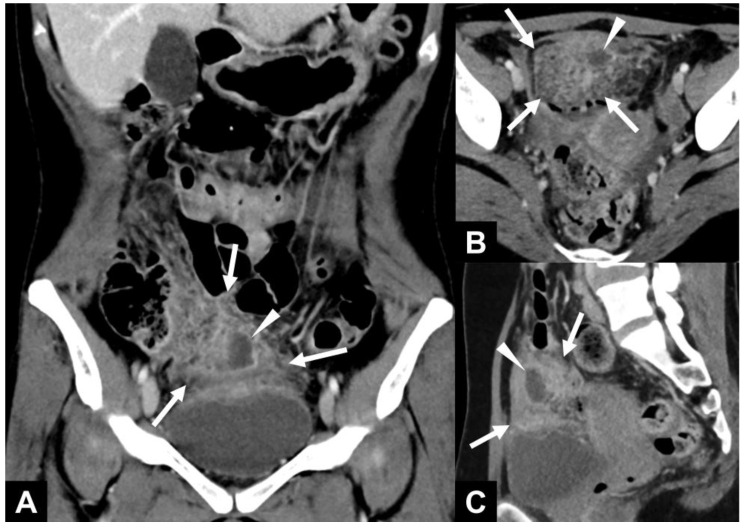 Figure 1
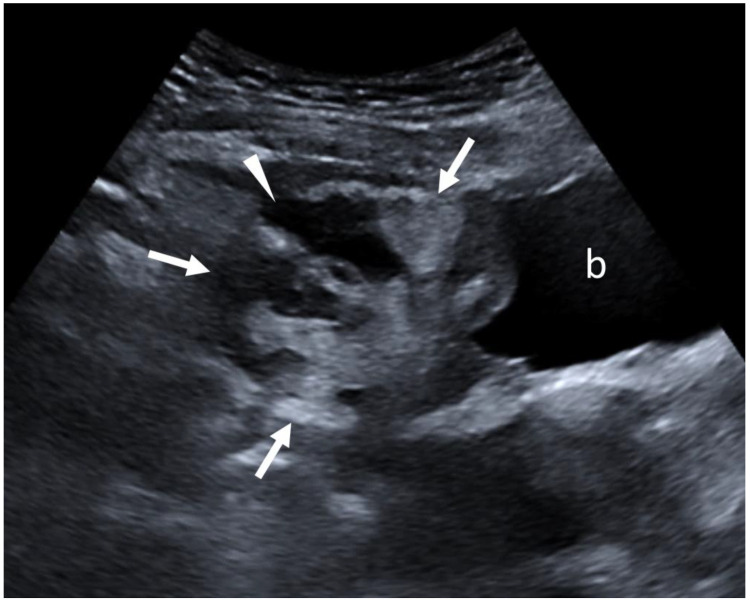 Figure 2
Peer Reviews
No public reviews on file for this paper yet. If you reviewed it on a platform where reviews are public (OpenReview, ICLR, NeurIPS, ICML), you can paste yours below so the community can read it here.
Videos
No videos yet. Explain this paper in a talk, walkthrough, or lecture? Add one.
Taxonomy
TopicsOmental and Epiploic Conditions · Endometriosis Research and Treatment · Hidradenitis Suppurativa and Treatments
The reference list from the paper itself. Each links out to its DOI / PubMed record.
- 1Otagiri N. Soeda J. Yoshino T. Chisuwa H. Aruga H. Kasai H. Komatsu M. Ohmori T. Tauchi K. Koike H. Primary Abscess of the Omentum: Report of a Case Surg. Today 20043426126410.1007/s 00595-003-2672-614999541 · doi ↗ · pubmed ↗
- 2Kamaya A. Federle M.P. Desser T.S. Imaging Manifestations of Abdominal Fat Necrosis and Its Mimics Radio Graphics 2011312021203410.1148/rg.31711504622084185 · doi ↗ · pubmed ↗
- 3Charifi Y. Lamrani Y. Chbani L. Maaroufi M. Alami B. Acute Abdomen in Adult Revealing Unusual Complicated Epiploic Appendagitis: A Case Report Int. J. Surg. Case Rep.20207511211610.1016/j.ijscr.2020.09.04132949909 PMC 7502787 · doi ↗ · pubmed ↗
- 4Singh A.K. Gervais D.A. Hahn P.F. Sagar P. Mueller P.R. Novelline R.A. Acute Epiploic Appendagitis and Its Mimics Radio Graphics 2005251521153410.1148/rg.25605503016284132 · doi ↗ · pubmed ↗
- 5Pemmada V. Shetty A. Koteshwar P. Rajpurohit S. Bhat G. Primary Omental Infarction—A Benign Cause of Acute Abdomen Pleura Peritoneum 20249636810.1515/pp-2023-003738948329 PMC 11211648 · doi ↗ · pubmed ↗
- 6Chappell C.A. Wiesenfeld H.C. Pathogenesis, Diagnosis, and Management of Severe Pelvic Inflammatory Disease and Tuboovarian Abscess Clin. Obstet. Gynecol.20125589390310.1097/GRF.0b 013e 318271468123090458 · doi ↗ · pubmed ↗
- 7Czeyda-Pommersheim F. Kalb B. Costello J. Liau J. Meshksar A. Arif Tiwari H. Martin D. MRI in Pelvic Inflammatory Disease: A Pictorial Review Abdom. Radiol.20174293595010.1007/s 00261-016-1004-427933478 · doi ↗ · pubmed ↗